

Motmot

ビロードキンクロ 対 クロガモ

Melanitta stejnegeri 対 Melanitta americana

ビロードキンクロとクロガモのクイズ
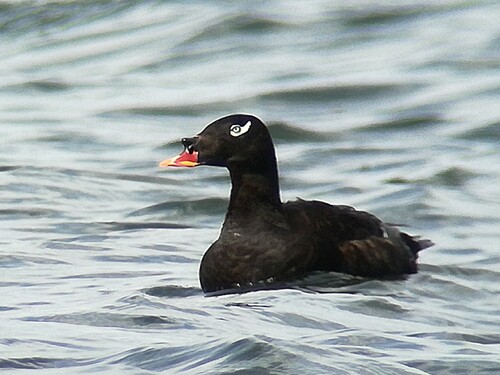
ビロードキンクロ (Melanitta stejnegeri) ビロードキンクロ
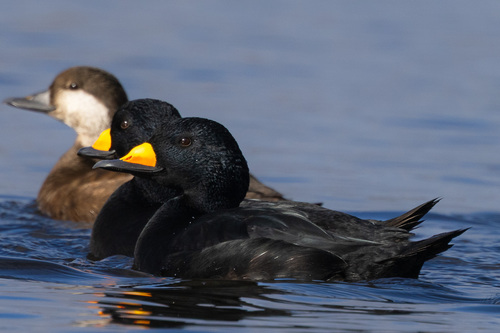
クロガモ (Melanitta americana) クロガモ

メディア

読み込み中…

要点

ビロードキンクロとクロガモはどちらも大きく、暗い海ガモですが、成鳥のオスはくちばしの形と色で最も区別されます:ビロードキンクロは高く目立つノブと主にオレンジ-黄色のくちばしを持ち、クロガモのくちばしは膨らんでいて主に黄色です。両種のメスは淡い頬を持つ茶色ですが、クロガモのメスはより広範囲に淡い部分を示します。飛行中や遠くからは、構造と頭のプロファイルが重要で、羽毛は一般的に似ており、両方とも翼に白色がありません。未成熟の鳥とメスは特に難しいため、可能な限りくちばしの形と頭のプロファイルに焦点を当ててください。両種は沿岸水域で密な冬の群れを形成しますが、その分布は西アラスカと他の場所での迷鳥にのみ重なります。

識別のコツ

  1. 成鳥オスのくちばしの形と色:ビロードキンクロは主にオレンジ-黄色のくちばしの基部に非常に高いノブを持ち、クロガモは膨らんだ主に黄色のくちばしを持っています。これは近距離での成鳥オスの最も信頼できるフィールドマークです。
  2. 頭のプロファイル(オス):ビロードキンクロはホンケワタガモに似た長く傾斜のある「ローマ鼻」のプロファイルを示し、クロガモの頭はより丸みを帯びていて細長くありません。くちばしのノブが見えにくいときにこれを使用してください。
  3. メスの羽毛:両方とも淡い頬を持つ茶色ですが、クロガモのメスはより広範囲に淡い部分を持っています。しかし、これは微妙で、遠くや悪い光の中ではしばしば信頼できません。
  4. くちばしの基部の羽毛(オス):上くちばしの基部に沿った羽毛は、ビロードキンクロでは鋭角を形成し、クロガモでは直角を形成します。これは細かい詳細で、良い写真や近くの視点で最もよく見えます。
  5. 翼の白色の欠如(すべての年齢):両種は翼に白色がないため、これは区別には役立ちません。
  6. 未成熟/初冬の鳥:どちらの種にも特徴的な上翼や飛行マークは記載されていないため、構造とくちばしの形に頼ってください。
  7. サイズと体格:両方とも大きくて体格の良い海ガモで、サイズは信頼できる区別にはなりません。
  8. 群れでの行動:両方とも水面で密で同期した群れを形成し、一緒に飛び立つため、群れの行動では区別できません。
  9. 分布と文脈:北アメリカでは、ビロードキンクロは西アラスカ以外では珍しく、クロガモは広く分布しています。アラスカ以外で見られた場合、ビロードキンクロは例外的で、注意深い記録が必要です。
  10. オスのディスプレイ:クロガモのオスは翼を伸ばすときに下向きの頭の動きを示すことがありますが、これは区別のための強いフィールドマークではありません。
  11. 生息地:両方とも冬に沿岸水域を利用します。クロガモは保護された湾を好むかもしれませんが、これは診断的ではありません。
  12. フィールドでの性別判別:成鳥のオスはメスや未成熟よりもはるかに簡単に区別できます。茶色の鳥の場合、構造的な手がかりが重要ですが、近くで見ないと識別はしばしば不確かです。
  13. 写真レビュー:珍しい迷鳥の場合、くちばしの形と頭のプロファイルの高品質な写真が確認に不可欠です。
  14. 羽毛の落とし穴:特に悪い光や遠くでのフィールドIDには微妙な茶色のトーンや頬のパッチのわずかな違いに頼らないでください。
  15. 疑わしい場合:くちばしの形や頭のプロファイルがはっきり見えず、鳥が明らかな成鳥のオスでない場合、フィールドでこれらの種を自信を持って区別することはできないかもしれません。

大きさ

両種はサイズと体格が似ており、クロガモのオスは平均49 cm、1100 g、メスは約45 cm、980 gです [wikipedia]。ビロードキンクロは大きな海ガモとして記載されていますが、メモには直接的な測定値は記載されていません。フィールドでは、サイズだけではこれら二つの間の信頼できる区別にはなりません。

羽色

どちらの種にも飛行中に簡単に区別できる特徴的な幼鳥や未成熟の上翼パターンは記載されていません。両方とも翼に白色がなく、全体的に暗いです。成鳥のオスのビロードキンクロは全体が黒で、高いオレンジ-黄色のくちばしのノブを持ち、クロガモのオスは全体が黒で、膨らんだ主に黄色のくちばしを持っています。両方のメスは淡い頬を持つ茶色ですが、クロガモのメスはより広範囲に淡い部分を持っています。どちらの種にも年齢特有の飛行マークは記載されていないため、フィールドでの区別は特に未成熟とメスのために頭とくちばしの構造に依存します。

行動

両種は食べ物のために潜り、冬に沿岸水域で密に詰まった群れを形成し、一緒に飛び立つことがよくあります。クロガモのオスは翼を伸ばすときに診断的な下向きの頭の動きを示すことがありますが、これは微妙で常に見えるわけではありません。繁殖期には、クロガモはあまり社交的ではなく、ビロードキンクロの繁殖行動はメモに詳細が記載されていません。

生息環境

両種は冬に沿岸水域で見られ、大きく密な群れで最もよく見られます。クロガモは保護された入り江や混合深度の水を好むかもしれませんが、これは強いフィールドマークではありません。ビロードキンクロは北アジアで繁殖し、アラスカ以外の北アメリカでは珍しいのに対し、クロガモは北アメリカで繁殖します。重なりは西アラスカと他の場所での迷鳥記録に限られています。

より良い説明を送る

比較と同じ項目を使ってください。文章はすぐに公開されます。

Stejneger's Scoter and Black Scoter are both large, dark sea ducks, but adult males are best separated by bill shape and color: Stejneger's has a tall, prominent knob and mostly orange-yellow bill, while Black Scoter's bill is bulbous and mostly yellow. Females of both are brown with pale cheeks, but Black Scoter females show more extensive pale areas. In flight and at a distance, structure and head profile are key, as plumage is generally similar and both lack white in the wing. Immature and female birds are especially challenging, so focus on bill shape and head profile when possible. Both species form tight winter flocks on coastal waters, but their ranges only overlap in western Alaska and as vagrants elsewhere.

  1. Adult male bill shape and color: Stejneger's Scoter has a very tall knob at the base of its mostly orange-yellow bill, while Black Scoter has a bulbous, mostly yellow bill. This is the most reliable field mark for adult males at close range.
  2. Head profile (males): Stejneger's shows a long, sloping 'Roman nose' profile, similar to Common Eider, while Black Scoter's head is more rounded and less elongated. Use this when the bill knob is hard to see.
  3. Female plumage: Both are brown with pale cheeks, but Black Scoter females have more extensive pale areas. However, this is subtle and often unreliable at distance or in poor light.
  4. Bill base feathering (males): The feathering along the base of the upper mandible forms an acute angle on Stejneger's, but a right angle on Black Scoter. This is a fine detail, best seen in good photos or close views.
  5. Absence of white in wing (all ages): Both species lack white in the wing, so this is not useful for separation.
  6. Immature/first-winter birds: No distinctive upperwing or flight marks are described for either species, so rely on structure and bill shape.
  7. Size and bulk: Both are large and bulky sea ducks; size is not a reliable separator.
  8. Behavior in flocks: Both form dense, synchronized flocks on the water and take off together, so flocking behavior does not separate them.
  9. Range and context: In North America, Stejneger's is rare outside western Alaska; Black Scoter is widespread. If seen outside Alaska, a Stejneger's is exceptional and requires careful documentation.
  10. Male display: Black Scoter males may perform a downward head movement when stretching wings, but this is not a strong field mark for separation.
  11. Habitat: Both use coastal waters in winter; Black Scoter may prefer sheltered bays, but this is not diagnostic.
  12. Sexing in the field: Adult males are much easier to separate than females or immatures; for brown birds, structural clues are key, but identification is often uncertain without close views.
  13. Photographic review: For rare vagrants, high-quality photos of bill shape and head profile are essential for confirmation.
  14. Plumage pitfalls: Do not rely on subtle brown tones or slight differences in cheek patch for field ID, especially in poor light or at distance.
  15. When in doubt: If you cannot see the bill shape or head profile clearly, and the bird is not an obvious adult male, it may not be possible to separate these species with confidence in the field.

Both species are similar in size and bulk, with Black Scoter males averaging 49 cm and 1100 g, and females about 45 cm and 980 g [wikipedia]. Stejneger's Scoter is described as a large sea duck, but no direct measurements are given in the notes. In the field, size alone is not a reliable separator between these two.

There are no distinctive juvenile or immature upperwing patterns described for either species that would allow for easy separation in flight. Both lack white in the wing and are generally dark overall. Adult male Stejneger's Scoter is all black with a tall, orange-yellow bill knob, while Black Scoter males are all black with a bulbous, mostly yellow bill. Females of both are brown with pale cheeks, but Black Scoter females have more extensive pale areas. No age-specific flight marks are noted for either species, so field separation relies on head and bill structure, especially for immatures and females.

Both species dive for food and form tightly packed flocks on coastal waters in winter, often taking off together. Black Scoter males may show a diagnostic downward head movement when stretching their wings, but this is subtle and not always visible. In breeding season, Black Scoter is less social, while Stejneger's Scoter's breeding behavior is not detailed in the notes.

Both species winter on coastal waters and are most often seen in large, dense flocks. Black Scoter may show a preference for sheltered embayments and mixed-depth waters, but this is not a strong field mark. Stejneger's Scoter breeds in northern Asia and is rare in North America outside Alaska, while Black Scoter breeds in North America. Overlap is limited to western Alaska and vagrant records elsewhere.

変更を破棄しますか?

保存していない編集があります。今離れると失われます。

ビロードキンクロ · クロガモ · 苦手な鳥