

Stejneger's Scoter vs Black Scoter
Melanitta stejnegeri contro Melanitta americana
Fai un quiz con Stejneger's Scoter e Black Scoter
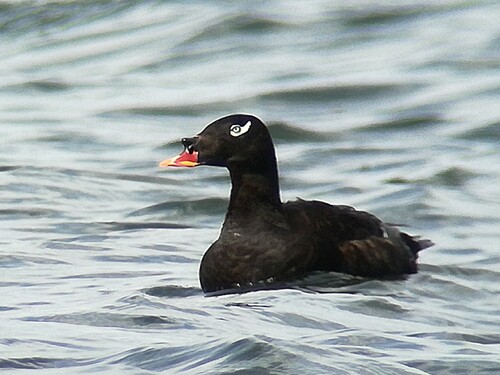 Stejneger's Scoter
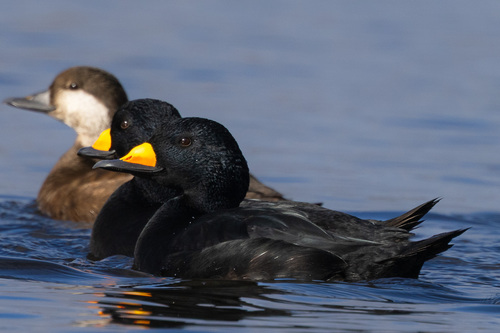 Black Scoter
In breve
Stejneger's Scoter e Black Scoter sono entrambi grandi anatre marine scure, ma i maschi adulti si distinguono meglio per la forma e il colore del becco: Stejneger's ha un pomello alto e prominente e un becco per lo più arancio-giallo, mentre il becco di Black Scoter è bulboso e per lo più giallo. Le femmine di entrambe sono marroni con guance chiare, ma le femmine di Black Scoter mostrano aree chiare più estese. In volo e a distanza, la struttura e il profilo della testa sono fondamentali, poiché il piumaggio è generalmente simile e entrambe mancano di bianco nell'ala. Gli uccelli immaturi e femminili sono particolarmente difficili da distinguere, quindi concentrati sulla forma del becco e sul profilo della testa quando possibile. Entrambe le specie formano stormi invernali compatti nelle acque costiere, ma i loro areali si sovrappongono solo nell'Alaska occidentale e come vagabondi altrove.
Consigli di identificazione
- Forma e colore del becco del maschio adulto: Stejneger's Scoter ha un pomello molto alto alla base del suo becco per lo più arancio-giallo, mentre Black Scoter ha un becco bulboso, per lo più giallo. Questo è il segno di campo più affidabile per i maschi adulti a distanza ravvicinata.
- Profilo della testa (maschi): Stejneger's mostra un profilo lungo e inclinato a 'naso romano', simile all'Edredone, mentre la testa di Black Scoter è più arrotondata e meno allungata. Usa questo quando il pomello del becco è difficile da vedere.
- Piumaggio femminile: Entrambi sono marroni con guance chiare, ma le femmine di Black Scoter hanno aree chiare più estese. Tuttavia, questo è sottile e spesso inaffidabile a distanza o in scarsa illuminazione.
- Piumaggio alla base del becco (maschi): Il piumaggio lungo la base del mandibolo superiore forma un angolo acuto su Stejneger's, ma un angolo retto su Black Scoter. Questo è un dettaglio fine, meglio visibile in buone foto o viste ravvicinate.
- Assenza di bianco nell'ala (tutte le età): Entrambe le specie mancano di bianco nell'ala, quindi questo non è utile per la separazione.
- Uccelli immaturi/primo inverno: Non sono descritti segni distintivi sulle ali superiori o di volo per nessuna delle due specie, quindi fai affidamento sulla struttura e sulla forma del becco.
- Dimensioni e volume: Entrambi sono grandi e voluminosi; la dimensione non è un separatore affidabile.
- Comportamento negli stormi: Entrambi formano stormi densi e sincronizzati sull'acqua e decollano insieme, quindi il comportamento di stormo non li separa.
- Areale e contesto: In Nord America, Stejneger's è raro al di fuori dell'Alaska occidentale; Black Scoter è diffuso. Se visto al di fuori dell'Alaska, un Stejneger's è eccezionale e richiede documentazione accurata.
- Esibizione maschile: I maschi di Black Scoter possono eseguire un movimento della testa verso il basso quando allungano le ali, ma questo non è un segno di campo forte per la separazione.
- Habitat: Entrambi utilizzano acque costiere in inverno; Black Scoter può preferire baie riparate, ma questo non è diagnostico.
- Identificazione sul campo: I maschi adulti sono molto più facili da separare rispetto a femmine o immaturi; per gli uccelli marroni, gli indizi strutturali sono fondamentali, ma l'identificazione è spesso incerta senza viste ravvicinate.
- Revisione fotografica: Per vagabondi rari, foto di alta qualità della forma del becco e del profilo della testa sono essenziali per la conferma.
- Trappole del piumaggio: Non fare affidamento su toni marroni sottili o lievi differenze nella macchia della guancia per l'ID sul campo, specialmente in scarsa illuminazione o a distanza.
- Quando hai dubbi: Se non riesci a vedere chiaramente la forma del becco o il profilo della testa, e l'uccello non è un ovvio maschio adulto, potrebbe non essere possibile separare queste specie con fiducia sul campo.
Taglia
Entrambe le specie sono simili in dimensioni e volume, con i maschi di Black Scoter che misurano in media 49 cm e 1100 g, e le femmine circa 45 cm e 980 g [wikipedia]. Stejneger's Scoter è descritto come una grande anatra marina, ma non sono fornite misurazioni dirette nelle note. Sul campo, la dimensione da sola non è un separatore affidabile tra queste due.
Piumaggio
Non ci sono modelli distintivi di ali superiori giovanili o immaturi descritti per nessuna delle due specie che consentirebbero una facile separazione in volo. Entrambi mancano di bianco nell'ala e sono generalmente scuri nel complesso. Il maschio adulto di Stejneger's Scoter è completamente nero con un alto pomello arancio-giallo, mentre i maschi di Black Scoter sono completamente neri con un becco bulboso, per lo più giallo. Le femmine di entrambe sono marroni con guance chiare, ma le femmine di Black Scoter hanno aree chiare più estese. Non sono notati segni di volo specifici per età per nessuna delle due specie, quindi la separazione sul campo si basa sulla struttura della testa e del becco, specialmente per immaturi e femmine.
Comportamento
Entrambe le specie si tuffano per cercare cibo e formano stormi compatti sulle acque costiere in inverno, spesso decollando insieme. I maschi di Black Scoter possono mostrare un movimento diagnostico della testa verso il basso quando allungano le ali, ma questo è sottile e non sempre visibile. Durante la stagione di riproduzione, Black Scoter è meno sociale, mentre il comportamento riproduttivo di Stejneger's Scoter non è dettagliato nelle note.
Habitat
Entrambe le specie svernano nelle acque costiere e sono più spesso viste in grandi stormi densi. Black Scoter può mostrare una preferenza per baie riparate e acque a profondità mista, ma questo non è un segno di campo forte. Stejneger's Scoter nidifica nel nord dell'Asia ed è raro in Nord America al di fuori dell'Alaska, mentre Black Scoter nidifica in Nord America. La sovrapposizione è limitata all'Alaska occidentale e ai registri di vagabondi altrove.
Stejneger's Scoter · Black Scoter · I miei uccelli difficili