

Motmot

ウスズミハシブトシトド 対 ズアカアリフウキンチョウ

Arremon crassirostris 対 Habia rubica

ウスズミハシブトシトドとズアカアリフウキンチョウのクイズ

ウスズミハシブトシトド (Arremon crassirostris) ウスズミハシブトシトド
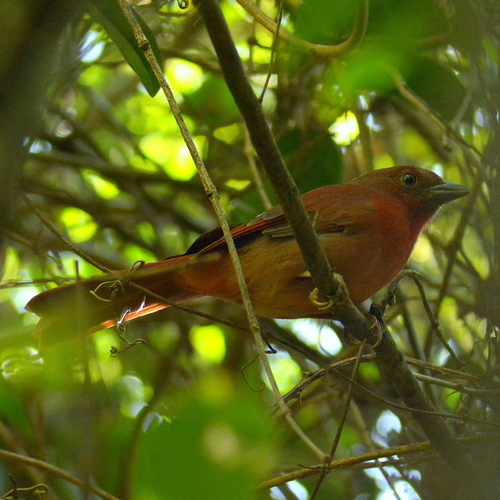
ズアカアリフウキンチョウ (Habia rubica) ズアカアリフウキンチョウ

メディア

読み込み中…

要点

ウスズミハシブトシトドとズアカアリフウキンチョウを区別するための最も信頼できるフィールドマークは、ウスズミハシブトシトドの目を引く頭の模様です:錆色の冠、太い白い「口ひげ」、そしてそれ以外は黒っぽい灰色の頭があり、これはアリフウキンチョウにはありません。幼鳥のウスズミハシブトシトドは濃いオリーブブラウンで、黒く汚れた鈍い黄色の腹を持っていますが、アリフウキンチョウの幼鳥にはこれらの特定の模様がありません。両種は全体的なサイズが似ていますが、シトドの方がやや重いです。フィールドでは、頭部と腹部の色、さらにくちばしの色と構造の微妙な違いに注目してください。生息地の重複は可能ですが、特に中米では文脈が助けになるかもしれません。

識別のコツ

  1. Juvenile plumage: ウスズミハシブトシトドの幼鳥は、上面が濃いオリーブブラウンで、黒く汚れた鈍い黄色の腹を持っています。この組み合わせの若い鳥を見た場合、それはズアカアリフウキンチョウではありません。
  2. Adult head pattern: ウスズミハシブトシトドの錆色の冠、太い白い「口ひげ」、黒っぽい灰色の頭と後頭部を探してください。ズアカアリフウキンチョウは白い口ひげがなく、顔がより地味です;オスだけが赤い冠の斑点を示し、さらにその頭の残りはそれほど対照的ではありません。
  3. Underparts: ウスズミハシブトシトドは、暗いオリーブグリーンの側面と上胸からはっきりと区別される黄色の腹を持っています。ズアカアリフウキンチョウは、下部がより均一な色合いで、はっきりとした対比がありません。
  4. Bill color: ウスズミハシブトシトドは二色のくちばし(上部が暗い灰色、下部が淡い黄色または白っぽい)を持っていますが、ズアカアリフウキンチョウのくちばしはより均一です。これは微妙ですが、近距離で見るとわかります。
  5. Wing and tail color: ウスズミハシブトシトドの翼と尾は、より茶色がかったオリーブグリーンですが、ズアカアリフウキンチョウのものはより均一で、この茶色がかった色合いがありません。
  6. Sex differences: ウスズミハシブトシトドの両性は似ています。ズアカアリフウキンチョウでは、オスだけが赤い冠の斑点を持ち、メスはより地味で、他の茶色がかった鳥と混同される可能性がありますが、決してシトドの頭の模様を示しません。
  7. Behavior: ウスズミハシブトシトドは、地面で採餌する際にしばしば翼と尾をひらひらさせます。ズアカアリフウキンチョウは、より樹上性であり、この行動を示す可能性が低いです。
  8. Habitat: 密生した苔むした湿った下草の中では、ウスズミハシブトシトドがより可能性が高いです。ズアカアリフウキンチョウは、エッジを含むより広範な森林タイプで見られます。
  9. Iris color: ウスズミハシブトシトドは、暗い茶色またはチョコレート色の虹彩を持っており、アリフウキンチョウとは微妙に異なる場合がありますが、これはフィールドではほとんど見えません。
  10. Leg color: ウスズミハシブトシトドは暗い足と足を持っています;これは強い区別要因ではありませんが、近くで見ると役立つかもしれません。
  11. Army ant swarms: 両種はアリの群れに参加することができますので、この行動だけでは彼らを区別することはできませんが、採餌の高さに注意してください(シトドは地面、アリフウキンチョウは中間レベル)。
  12. Size and shape: 両者は長さが似ていますが、ウスズミハシブトシトドはやや重く、特に地面ではよりずんぐりして見えることがあります。
  13. Perched vs. in flight: どちらの種にも特有の上翼の模様や飛行マークは記載されていないため、飛行中でも頭部と腹部の色に頼ってください。
  14. Seasonal variation: どちらの種にも強い季節的な羽毛の変化は記載されていないため、年間を通じて上記のマークを使用してください。
  15. Pitfalls: 地味な雌または未熟なズアカアリフウキンチョウに注意してください。これらは地味で、他の茶色がかった鳥と混同される可能性がありますが、決してウスズミハシブトシトドの頭の模様や黄色の腹を示しません。

大きさ

両種は中型のスズメ目で、ウスズミハシブトシトドはズアカアリフウキンチョウ(32.5 g)よりもやや重い(37–40.5 g)です[wikipedia][wikidata]。長さは似ており(ウスズミハシブトシトド:15–17 cm)、サイズだけでは強い区別要因ではありません。手に持ったり近距離で見ると、シトドは少しずんぐりして見えるかもしれませんが、これは微妙で、フィールドでは常に信頼できるわけではありません。

羽色

幼鳥のウスズミハシブトシトドは、上面が主に濃いオリーブブラウンで、黒く汚れた鈍い黄色の腹を持っています—この組み合わせは独特で、ズアカアリフウキンチョウの幼鳥には見られず、黒く汚れた腹がなく、より均一で目立たない外観を持っています。成鳥のウスズミハシブトシトドは独特の頭の模様を示します:錆色の冠、太い白い「口ひげ」のストライプ、そしてそれ以外は黒っぽい灰色の頭と後頭部です。彼らの上面と側面は暗いオリーブグリーンで、黄色の腹が暗い側面と鋭く対比しています。対照的に、ズアカアリフウキンチョウの成鳥(提供されたメモでは詳細に記載されていませんが、[wikipedia]から知られています)は、赤い冠の斑点(オスに)を持ち、その他は地味な茶色またはオリーブの上面を持ち、強い顔の対比や白い口ひげがありません。シトドの翼と尾はより茶色がかったオリーブグリーンですが、アリフウキンチョウのものはより均一です。ウスズミハシブトシトドでは性別が似ていますが、アリフウキンチョウではオスだけが赤い冠を持っています。くちばしの色も異なります:ウスズミハシブトシトドは暗い灰色の上顎と淡い黄色または白っぽい下顎を持っていますが、アリフウキンチョウのくちばしはより均一な色合いです。

行動

ウスズミハシブトシトドは地面の上または近くで採餌し、跳ねる際に翼と尾をひらひらさせ、アリの群れに参加することがあります。ズアカアリフウキンチョウもアリの群れを追うことで知られていますが、シトドの地面に密着した習性に比べて、より樹上性または中間レベルにいる可能性があります。両者は混合群れで見ることができますが、シトドの翼と尾のひらひらは有用な行動の手がかりです。

生息環境

両種は中米および南米北部に生息しており、ウスズミハシブトシトドはコロンビア、コスタリカ、パナマで見られます。湿った森林地域では生息地の重複が可能ですが、ウスズミハシブトシトドは密生した湿った下草と森林の床により厳密に結びついており、ズアカアリフウキンチョウはより広範な森林タイプやエッジで見られます。非常に密生した苔むした下草の中で見られた場合、ウスズミハシブトシトドがより可能性が高いです。

より良い説明を送る

比較と同じ項目を使ってください。文章はすぐに公開されます。

The most reliable field mark for separating Sooty-faced Finch from Red-crowned Ant-Tanager is the Sooty-faced Finch’s striking head pattern: a rusty crown, bold white 'moustache', and otherwise blackish gray head, which is absent in the ant-tanager. Juvenile Sooty-faced Finches are rich olive-brown with a black-smudged dull yellow belly, while ant-tanager juveniles lack these specific markings. Both species are similar in overall size, but the finch is slightly heavier. In the field, focus on head and underpart color, as well as subtle differences in bill color and structure. Habitat overlap is possible, but context may help, especially in Central America.

  1. Juvenile plumage: Sooty-faced Finch juveniles are rich olive-brown above with a black-smudged dull yellow belly. If you see a young bird with this combination, it is not a Red-crowned Ant-Tanager.
  2. Adult head pattern: Look for the Sooty-faced Finch’s rusty crown, bold white 'moustache', and blackish gray head and nape. Red-crowned Ant-Tanager lacks the white moustache and has a plainer face; only males show a red crown patch, and even then, the rest of the head is not as contrasting.
  3. Underparts: Sooty-faced Finch has a yellow belly sharply set off from dark olive-green flanks and upper breast. Red-crowned Ant-Tanager is more uniformly colored below, lacking the sharp contrast.
  4. Bill color: Sooty-faced Finch has a two-toned bill (dark gray upper, pale yellow/whitish lower), while Red-crowned Ant-Tanager’s bill is more uniform. This can be subtle but is visible at close range.
  5. Wing and tail color: Sooty-faced Finch’s wings and tail are a browner olive-green, while Red-crowned Ant-Tanager’s are more uniform and lack this brownish cast.
  6. Sex differences: Both sexes of Sooty-faced Finch look alike. In Red-crowned Ant-Tanager, only males have a red crown patch; females are plainer and can be confused with other brownish birds, but never show the finch’s head pattern.
  7. Behavior: Sooty-faced Finch often flicks wings and tail while foraging on the ground. Red-crowned Ant-Tanager may be more arboreal and less likely to show this behavior.
  8. Habitat: In dense, mossy, humid undergrowth, Sooty-faced Finch is more likely. Red-crowned Ant-Tanager can be found in a broader range of forest types, including edges.
  9. Iris color: Sooty-faced Finch has a dark brown or chocolate-brown iris, which may be subtly different from the ant-tanager, though this is rarely visible in the field.
  10. Leg color: Sooty-faced Finch has dark legs and feet; this is not a strong separator but may help in close views.
  11. Army ant swarms: Both species can attend ant swarms, so this behavior alone does not separate them, but note the foraging height (ground for finch, mid-level for ant-tanager).
  12. Size and shape: Both are similar in length, but Sooty-faced Finch is slightly heavier and may appear chunkier, especially on the ground.
  13. Perched vs. in flight: No distinctive upperwing pattern or flight mark is described for either species, so rely on head and underpart color even in flight.
  14. Seasonal variation: No strong seasonal plumage changes are described for either species; use the above marks year-round.
  15. Pitfalls: Beware of female or immature Red-crowned Ant-Tanagers, which are plain and could be confused with other brownish birds, but never show the Sooty-faced Finch’s head pattern or yellow belly.

Both species are medium-sized passerines, with Sooty-faced Finch slightly heavier (37–40.5 g) than Red-crowned Ant-Tanager (32.5 g) [wikipedia][wikidata]. Length is similar (Sooty-faced Finch: 15–17 cm), so size alone is not a strong separator. In hand or at close range, the finch may look a bit chunkier, but this is subtle and not always reliable in the field.

Juvenile Sooty-faced Finches are mostly rich olive-brown above, with a black-smudged dull yellow belly—this combination is distinctive and not matched by Red-crowned Ant-Tanager juveniles, which lack the black-smudged belly and have a more uniform, less marked appearance. Adult Sooty-faced Finches show a unique head pattern: rusty crown, bold white 'moustache' stripe, and otherwise blackish gray head and nape. Their upperparts and flanks are dark olive-green, with a yellow belly sharply contrasting the darker sides. In contrast, Red-crowned Ant-Tanager adults (not described in detail in the provided notes, but known from [wikipedia]) have a red crown patch (in males), otherwise plain brownish or olive upperparts, and lack the strong facial contrast or white moustache. The finch’s wings and tail are a browner olive-green, while the ant-tanager’s are more uniform. Sexes are similar in Sooty-faced Finch; in ant-tanager, only males have the red crown. Bill color also differs: Sooty-faced Finch has a dark gray upper mandible and pale yellow or whitish lower mandible, while ant-tanager’s bill is more uniformly colored.

Sooty-faced Finch forages on or near the ground, flicking its wings and tail as it hops, and may join army ant swarms. Red-crowned Ant-Tanager is also known for following ant swarms, but may be more arboreal or at mid-levels compared to the finch’s ground-hugging habits. Both can be seen in mixed flocks, but the finch’s wing and tail flicking is a useful behavioral clue.

Both species occur in Central and northern South America, with Sooty-faced Finch found in Colombia, Costa Rica, and Panama. Habitat overlap is possible in humid forested areas, but Sooty-faced Finch is more strictly tied to dense, humid undergrowth and forest floor, while Red-crowned Ant-Tanager can be found in a wider range of forest types and edges. If seen in very dense, mossy undergrowth, Sooty-faced Finch is more likely.

変更を破棄しますか?

保存していない編集があります。今離れると失われます。

ウスズミハシブトシトド · ズアカアリフウキンチョウ · 苦手な鳥