

Sooty-faced Finch vs Red-crowned Ant-Tanager
Arremon crassirostris contro Habia rubica
Fai un quiz con Sooty-faced Finch e Red-crowned Ant-Tanager
 Sooty-faced Finch
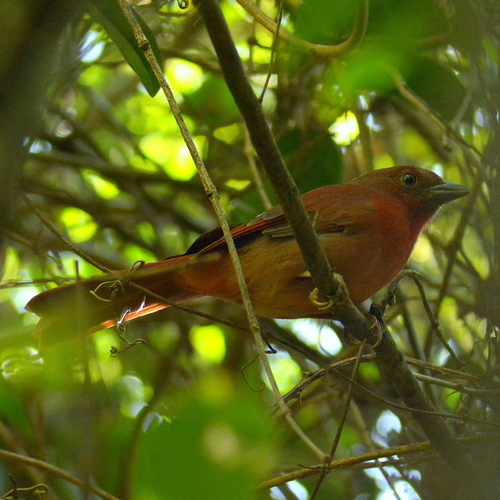 Red-crowned Ant-Tanager
In breve
Il segno di campo più affidabile per separare il Sooty-faced Finch dal Red-crowned Ant-Tanager è il modello di testa distintivo del Sooty-faced Finch: una corona rugginosa, un 'baffo' bianco audace e una testa altrimenti grigio scuro, che è assente nell'ant-tanager. I giovani Sooty-faced Finches sono di un ricco marrone oliva con un ventre giallo opaco macchiato di nero, mentre i giovani ant-tanager mancano di queste marcature specifiche. Entrambe le specie sono simili in dimensioni complessive, ma il finch è leggermente più pesante. Sul campo, concentrati sul colore della testa e delle parti inferiori, così come sulle sottili differenze nel colore e nella struttura del becco. È possibile una sovrapposizione degli habitat, ma il contesto può aiutare, specialmente in America Centrale.
Consigli di identificazione
- Juvenile plumage: I giovani Sooty-faced Finch sono di un ricco marrone oliva sopra con un ventre giallo opaco macchiato di nero. Se vedi un giovane uccello con questa combinazione, non è un Red-crowned Ant-Tanager.
- Adult head pattern: Cerca la corona rugginosa del Sooty-faced Finch, il 'baffo' bianco audace e la testa e il nape grigio scuro. Il Red-crowned Ant-Tanager manca del baffo bianco e ha un volto più semplice; solo i maschi mostrano una macchia rossa sulla corona, e anche allora, il resto della testa non è così contrastante.
- Underparts: Il Sooty-faced Finch ha un ventre giallo nettamente distinto dai fianchi e dal petto superiori di un verde oliva scuro. Il Red-crowned Ant-Tanager è più uniformemente colorato sotto, mancando del forte contrasto.
- Bill color: Il Sooty-faced Finch ha un becco bicolore (superiore grigio scuro, inferiore giallo chiaro/biancastro), mentre il becco del Red-crowned Ant-Tanager è più uniforme. Questo può essere sottile ma è visibile da vicino.
- Wing and tail color: Le ali e la coda del Sooty-faced Finch sono di un verde oliva più marrone, mentre quelle del Red-crowned Ant-Tanager sono più uniformi e mancano di questa tonalità marrone.
- Sex differences: Entrambi i sessi del Sooty-faced Finch si somigliano. Nel Red-crowned Ant-Tanager, solo i maschi hanno una macchia rossa sulla corona; le femmine sono più semplici e possono essere confuse con altri uccelli marroni, ma non mostrano mai il modello di testa del finch.
- Behavior: Il Sooty-faced Finch spesso sbatte le ali e la coda mentre cerca cibo a terra. Il Red-crowned Ant-Tanager può essere più arboricolo e meno probabile a mostrare questo comportamento.
- Habitat: Nella densa, muschiosa e umida vegetazione, è più probabile trovare il Sooty-faced Finch. Il Red-crowned Ant-Tanager può essere trovato in una gamma più ampia di tipi di foresta, comprese le zone di confine.
- Iris color: Il Sooty-faced Finch ha un'iride marrone scuro o marrone cioccolato, che può essere leggermente diversa da quella dell'ant-tanager, anche se questo è raramente visibile sul campo.
- Leg color: Il Sooty-faced Finch ha zampe e piedi scuri; questo non è un forte separatore ma può aiutare in viste ravvicinate.
- Army ant swarms: Entrambe le specie possono partecipare a sciami di formiche, quindi questo comportamento da solo non le separa, ma nota l'altezza di foraggiamento (terra per il finch, livello medio per l'ant-tanager).
- Size and shape: Entrambi sono simili in lunghezza, ma il Sooty-faced Finch è leggermente più pesante e può apparire più robusto, specialmente a terra.
- Perched vs. in flight: Non è stato descritto alcun modello distintivo delle ali superiori o segno di volo per nessuna delle due specie, quindi fai affidamento sul colore della testa e delle parti inferiori anche in volo.
- Seasonal variation: Non sono stati descritti forti cambiamenti stagionali nel piumaggio per nessuna delle due specie; usa i segni sopra tutto l'anno.
- Pitfalls: Fai attenzione ai Red-crowned Ant-Tanagers femmina o immaturi, che sono semplici e potrebbero essere confusi con altri uccelli marroni, ma non mostrano mai il modello di testa del Sooty-faced Finch o il ventre giallo.
Taglia
Entrambe le specie sono passeriformi di dimensioni medie, con il Sooty-faced Finch leggermente più pesante (37–40,5 g) rispetto al Red-crowned Ant-Tanager (32,5 g) [wikipedia][wikidata]. La lunghezza è simile (Sooty-faced Finch: 15–17 cm), quindi la dimensione da sola non è un forte separatore. In mano o da vicino, il finch può apparire un po' più robusto, ma questo è sottile e non sempre affidabile sul campo.
Piumaggio
I giovani Sooty-faced Finches sono per lo più di un ricco marrone oliva sopra, con un ventre giallo opaco macchiato di nero—questa combinazione è distintiva e non è eguagliata dai giovani Red-crowned Ant-Tanager, che mancano del ventre macchiato di nero e hanno un aspetto più uniforme e meno marcato. Gli adulti Sooty-faced Finches mostrano un modello di testa unico: corona rugginosa, striscia di 'baffo' bianco audace e testa e nape altrimenti grigio scuro. Le loro parti superiori e i fianchi sono di un verde oliva scuro, con un ventre giallo che contrasta nettamente con i lati più scuri. Al contrario, gli adulti Red-crowned Ant-Tanager (non descritti in dettaglio nelle note fornite, ma noti da [wikipedia]) hanno una macchia rossa sulla corona (nei maschi), parti superiori altrimenti marroni o olive semplici e mancano del forte contrasto facciale o del baffo bianco. Le ali e la coda del finch sono di un verde oliva più marrone, mentre quelle dell'ant-tanager sono più uniformi. I sessi sono simili nel Sooty-faced Finch; nell'ant-tanager, solo i maschi hanno la corona rossa. Anche il colore del becco differisce: il Sooty-faced Finch ha un mandibola superiore grigio scuro e un mandibola inferiore giallo chiaro o biancastro, mentre il becco dell'ant-tanager è più uniformemente colorato.
Comportamento
Il Sooty-faced Finch cerca cibo a terra o vicino ad essa, sbattendo le ali e la coda mentre salta, e può unirsi a sciami di formiche. Il Red-crowned Ant-Tanager è anche noto per seguire gli sciami di formiche, ma può essere più arboricolo o a livelli medi rispetto alle abitudini di foraggiamento a terra del finch. Entrambi possono essere visti in stormi misti, ma il movimento delle ali e della coda del finch è un utile indizio comportamentale.
Habitat
Entrambe le specie si trovano in America Centrale e nel nord del Sud America, con il Sooty-faced Finch trovato in Colombia, Costa Rica e Panama. È possibile una sovrapposizione degli habitat in aree forestali umide, ma il Sooty-faced Finch è più strettamente legato a una vegetazione densa e umida e al suolo della foresta, mentre il Red-crowned Ant-Tanager può essere trovato in una gamma più ampia di tipi di foresta e zone di confine. Se visto in una vegetazione molto densa e muschiosa, è più probabile che si tratti di un Sooty-faced Finch.
Sooty-faced Finch · Red-crowned Ant-Tanager · I miei uccelli difficili