

Motmot

Dickschnabel-Buschammer vs Karmesinkardinal

Arremon crassirostris gegen Habia rubica

Ein Quiz mit Dickschnabel-Buschammer und Karmesinkardinal spielen

Dickschnabel-Buschammer (Arremon crassirostris) Dickschnabel-Buschammer
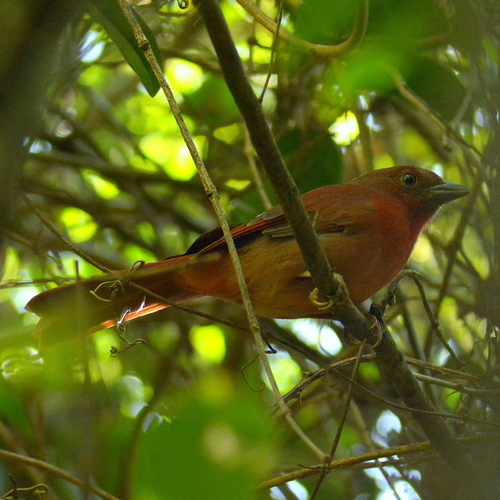
Karmesinkardinal (Habia rubica) Karmesinkardinal

Medien

Laden…

Kurz gesagt

The most reliable field mark for separating Sooty-faced Finch from Red-crowned Ant-Tanager is the Sooty-faced Finch’s striking head pattern: a rusty crown, bold white 'moustache', and otherwise blackish gray head, which is absent in the ant-tanager. Juvenile Sooty-faced Finches are rich olive-brown with a black-smudged dull yellow belly, while ant-tanager juveniles lack these specific markings. Both species are similar in overall size, but the finch is slightly heavier. In the field, focus on head and underpart color, as well as subtle differences in bill color and structure. Habitat overlap is possible, but context may help, especially in Central America.

Bestimmungstipps

  1. Juvenile plumage: Sooty-faced Finch juveniles are rich olive-brown above with a black-smudged dull yellow belly. If you see a young bird with this combination, it is not a Red-crowned Ant-Tanager.
  2. Adult head pattern: Look for the Sooty-faced Finch’s rusty crown, bold white 'moustache', and blackish gray head and nape. Red-crowned Ant-Tanager lacks the white moustache and has a plainer face; only males show a red crown patch, and even then, the rest of the head is not as contrasting.
  3. Underparts: Sooty-faced Finch has a yellow belly sharply set off from dark olive-green flanks and upper breast. Red-crowned Ant-Tanager is more uniformly colored below, lacking the sharp contrast.
  4. Bill color: Sooty-faced Finch has a two-toned bill (dark gray upper, pale yellow/whitish lower), while Red-crowned Ant-Tanager’s bill is more uniform. This can be subtle but is visible at close range.
  5. Wing and tail color: Sooty-faced Finch’s wings and tail are a browner olive-green, while Red-crowned Ant-Tanager’s are more uniform and lack this brownish cast.
  6. Sex differences: Both sexes of Sooty-faced Finch look alike. In Red-crowned Ant-Tanager, only males have a red crown patch; females are plainer and can be confused with other brownish birds, but never show the finch’s head pattern.
  7. Behavior: Sooty-faced Finch often flicks wings and tail while foraging on the ground. Red-crowned Ant-Tanager may be more arboreal and less likely to show this behavior.
  8. Habitat: In dense, mossy, humid undergrowth, Sooty-faced Finch is more likely. Red-crowned Ant-Tanager can be found in a broader range of forest types, including edges.
  9. Iris color: Sooty-faced Finch has a dark brown or chocolate-brown iris, which may be subtly different from the ant-tanager, though this is rarely visible in the field.
  10. Leg color: Sooty-faced Finch has dark legs and feet; this is not a strong separator but may help in close views.
  11. Army ant swarms: Both species can attend ant swarms, so this behavior alone does not separate them, but note the foraging height (ground for finch, mid-level for ant-tanager).
  12. Size and shape: Both are similar in length, but Sooty-faced Finch is slightly heavier and may appear chunkier, especially on the ground.
  13. Perched vs. in flight: No distinctive upperwing pattern or flight mark is described for either species, so rely on head and underpart color even in flight.
  14. Seasonal variation: No strong seasonal plumage changes are described for either species; use the above marks year-round.
  15. Pitfalls: Beware of female or immature Red-crowned Ant-Tanagers, which are plain and could be confused with other brownish birds, but never show the Sooty-faced Finch’s head pattern or yellow belly.

Größe

Both species are medium-sized passerines, with Sooty-faced Finch slightly heavier (37–40.5 g) than Red-crowned Ant-Tanager (32.5 g) [wikipedia][wikidata]. Length is similar (Sooty-faced Finch: 15–17 cm), so size alone is not a strong separator. In hand or at close range, the finch may look a bit chunkier, but this is subtle and not always reliable in the field.

Gefieder

Juvenile Sooty-faced Finches are mostly rich olive-brown above, with a black-smudged dull yellow belly—this combination is distinctive and not matched by Red-crowned Ant-Tanager juveniles, which lack the black-smudged belly and have a more uniform, less marked appearance. Adult Sooty-faced Finches show a unique head pattern: rusty crown, bold white 'moustache' stripe, and otherwise blackish gray head and nape. Their upperparts and flanks are dark olive-green, with a yellow belly sharply contrasting the darker sides. In contrast, Red-crowned Ant-Tanager adults (not described in detail in the provided notes, but known from [wikipedia]) have a red crown patch (in males), otherwise plain brownish or olive upperparts, and lack the strong facial contrast or white moustache. The finch’s wings and tail are a browner olive-green, while the ant-tanager’s are more uniform. Sexes are similar in Sooty-faced Finch; in ant-tanager, only males have the red crown. Bill color also differs: Sooty-faced Finch has a dark gray upper mandible and pale yellow or whitish lower mandible, while ant-tanager’s bill is more uniformly colored.

Verhalten

Sooty-faced Finch forages on or near the ground, flicking its wings and tail as it hops, and may join army ant swarms. Red-crowned Ant-Tanager is also known for following ant swarms, but may be more arboreal or at mid-levels compared to the finch’s ground-hugging habits. Both can be seen in mixed flocks, but the finch’s wing and tail flicking is a useful behavioral clue.

Lebensraum

Both species occur in Central and northern South America, with Sooty-faced Finch found in Colombia, Costa Rica, and Panama. Habitat overlap is possible in humid forested areas, but Sooty-faced Finch is more strictly tied to dense, humid undergrowth and forest floor, while Red-crowned Ant-Tanager can be found in a wider range of forest types and edges. If seen in very dense, mossy undergrowth, Sooty-faced Finch is more likely.

Eine bessere Beschreibung senden

Nutze dieselben Abschnitte wie der Vergleich. Dein Text ist sofort veröffentlicht.

The most reliable field mark for separating Sooty-faced Finch from Red-crowned Ant-Tanager is the Sooty-faced Finch’s striking head pattern: a rusty crown, bold white 'moustache', and otherwise blackish gray head, which is absent in the ant-tanager. Juvenile Sooty-faced Finches are rich olive-brown with a black-smudged dull yellow belly, while ant-tanager juveniles lack these specific markings. Both species are similar in overall size, but the finch is slightly heavier. In the field, focus on head and underpart color, as well as subtle differences in bill color and structure. Habitat overlap is possible, but context may help, especially in Central America.

  1. Juvenile plumage: Sooty-faced Finch juveniles are rich olive-brown above with a black-smudged dull yellow belly. If you see a young bird with this combination, it is not a Red-crowned Ant-Tanager.
  2. Adult head pattern: Look for the Sooty-faced Finch’s rusty crown, bold white 'moustache', and blackish gray head and nape. Red-crowned Ant-Tanager lacks the white moustache and has a plainer face; only males show a red crown patch, and even then, the rest of the head is not as contrasting.
  3. Underparts: Sooty-faced Finch has a yellow belly sharply set off from dark olive-green flanks and upper breast. Red-crowned Ant-Tanager is more uniformly colored below, lacking the sharp contrast.
  4. Bill color: Sooty-faced Finch has a two-toned bill (dark gray upper, pale yellow/whitish lower), while Red-crowned Ant-Tanager’s bill is more uniform. This can be subtle but is visible at close range.
  5. Wing and tail color: Sooty-faced Finch’s wings and tail are a browner olive-green, while Red-crowned Ant-Tanager’s are more uniform and lack this brownish cast.
  6. Sex differences: Both sexes of Sooty-faced Finch look alike. In Red-crowned Ant-Tanager, only males have a red crown patch; females are plainer and can be confused with other brownish birds, but never show the finch’s head pattern.
  7. Behavior: Sooty-faced Finch often flicks wings and tail while foraging on the ground. Red-crowned Ant-Tanager may be more arboreal and less likely to show this behavior.
  8. Habitat: In dense, mossy, humid undergrowth, Sooty-faced Finch is more likely. Red-crowned Ant-Tanager can be found in a broader range of forest types, including edges.
  9. Iris color: Sooty-faced Finch has a dark brown or chocolate-brown iris, which may be subtly different from the ant-tanager, though this is rarely visible in the field.
  10. Leg color: Sooty-faced Finch has dark legs and feet; this is not a strong separator but may help in close views.
  11. Army ant swarms: Both species can attend ant swarms, so this behavior alone does not separate them, but note the foraging height (ground for finch, mid-level for ant-tanager).
  12. Size and shape: Both are similar in length, but Sooty-faced Finch is slightly heavier and may appear chunkier, especially on the ground.
  13. Perched vs. in flight: No distinctive upperwing pattern or flight mark is described for either species, so rely on head and underpart color even in flight.
  14. Seasonal variation: No strong seasonal plumage changes are described for either species; use the above marks year-round.
  15. Pitfalls: Beware of female or immature Red-crowned Ant-Tanagers, which are plain and could be confused with other brownish birds, but never show the Sooty-faced Finch’s head pattern or yellow belly.

Both species are medium-sized passerines, with Sooty-faced Finch slightly heavier (37–40.5 g) than Red-crowned Ant-Tanager (32.5 g) [wikipedia][wikidata]. Length is similar (Sooty-faced Finch: 15–17 cm), so size alone is not a strong separator. In hand or at close range, the finch may look a bit chunkier, but this is subtle and not always reliable in the field.

Juvenile Sooty-faced Finches are mostly rich olive-brown above, with a black-smudged dull yellow belly—this combination is distinctive and not matched by Red-crowned Ant-Tanager juveniles, which lack the black-smudged belly and have a more uniform, less marked appearance. Adult Sooty-faced Finches show a unique head pattern: rusty crown, bold white 'moustache' stripe, and otherwise blackish gray head and nape. Their upperparts and flanks are dark olive-green, with a yellow belly sharply contrasting the darker sides. In contrast, Red-crowned Ant-Tanager adults (not described in detail in the provided notes, but known from [wikipedia]) have a red crown patch (in males), otherwise plain brownish or olive upperparts, and lack the strong facial contrast or white moustache. The finch’s wings and tail are a browner olive-green, while the ant-tanager’s are more uniform. Sexes are similar in Sooty-faced Finch; in ant-tanager, only males have the red crown. Bill color also differs: Sooty-faced Finch has a dark gray upper mandible and pale yellow or whitish lower mandible, while ant-tanager’s bill is more uniformly colored.

Sooty-faced Finch forages on or near the ground, flicking its wings and tail as it hops, and may join army ant swarms. Red-crowned Ant-Tanager is also known for following ant swarms, but may be more arboreal or at mid-levels compared to the finch’s ground-hugging habits. Both can be seen in mixed flocks, but the finch’s wing and tail flicking is a useful behavioral clue.

Both species occur in Central and northern South America, with Sooty-faced Finch found in Colombia, Costa Rica, and Panama. Habitat overlap is possible in humid forested areas, but Sooty-faced Finch is more strictly tied to dense, humid undergrowth and forest floor, while Red-crowned Ant-Tanager can be found in a wider range of forest types and edges. If seen in very dense, mossy undergrowth, Sooty-faced Finch is more likely.

Änderungen verwerfen?

Du hast ungespeicherte Änderungen. Wenn du jetzt gehst, gehen sie verloren.

Dickschnabel-Buschammer · Karmesinkardinal · Meine schwierigen Vögel