

Motmot

ハクガン 対 カナダヅル

Anser caerulescens 対 Antigone canadensis

ハクガンとカナダヅルのクイズ
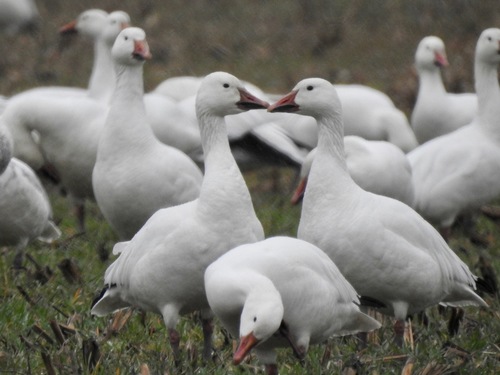
ハクガン (Anser caerulescens) ハクガン
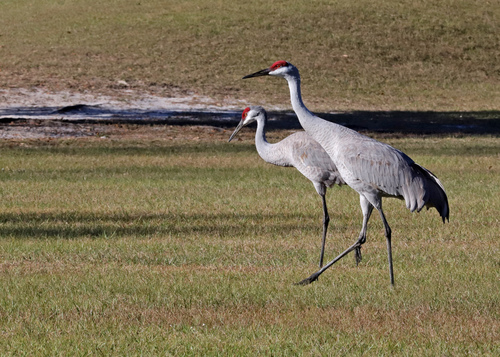
カナダヅル (Antigone canadensis) カナダヅル

メディア

読み込み中…

要点

ハクガンとカナダヅルを分ける最も信頼できる方法は、全体的な構造と飛行スタイルによるものです:ハクガンは、厚いピンク色のくちばしと対照的な黒い初列風切羽を持つ、コンパクトで短い首のガチョウです。一方、カナダヅルは、細長い尖ったくちばし、引きずる脚、灰色またはオーカーの羽毛を持つ、はるかに背の高い長い首の鳥です。未熟なハクガン(特に青色型)は灰色がかって見えることがあり、初心者を混乱させるかもしれませんが、それでも、ガチョウの短い首と飛行中の引きずる脚の欠如は特徴的です。カナダヅルは常にまっすぐで伸びた首と、尾を超えて長く引きずる脚を示します。くちばしの形、脚の投影、全体的なサイズは重要であり、特に距離がある場合や混合した群れの中では特に重要です。

識別のコツ

  1. 飛行中の首の長さ: カナダヅルは常に長くまっすぐな首で飛びます;ハクガンの首ははるかに短く、飛行中はより太く見えます。これはどんな距離でも最も良い特徴です。
  2. 脚の投影: 飛行中、カナダヅルの長く暗い脚は尾を超えて引きずります;ハクガンの脚は短く、尾を超えることはありません。
  3. くちばしの形と色: ハクガンは短く厚いピンク色のくちばしを持ち、黒い「笑いの斑点」があります;カナダヅルのくちばしは長く、まっすぐで暗く、よりヘロンのようです。
  4. 体の形: ハクガンはコンパクトでがっしりしています;カナダヅルは背が高く、細長く、長い脚を持ち、立っているときはより直立した姿勢です。
  5. 羽毛(成鳥): 成鳥のハクガンは、黒い翼先を持つ純白(白色型)または青灰色で白い頭(青色型)です;カナダヅルは常に灰色またはオーカーで、決して白くなく、赤い額と白い頬を持っています。
  6. 羽毛(未熟): 未熟なハクガン(青色型)はスレートグレーで、白はほとんどありませんが、依然としてガチョウのくちばしと形を持っています;未熟なカナダヅルは上が赤褐色で、下が灰色で、赤い額がありません。
  7. 飛行中の翼のパターン: ハクガンは白または青灰色の翼と対照的な鋭い黒い初列風切羽を示します;カナダヅルの翼は均一な灰色で、黒い先端はありません。
  8. 足と脚の色: ハクガンはバラ色の足と脚を持っています(未熟なものは鈍い色です);カナダヅルの脚は常に暗いです。
  9. 採餌行動: ハクガンはフィールドで密集した騒がしい群れで草を食べます;カナダヅルはよりゆっくりと餌を食べ、しばしばペアまたは小さなグループで湿地や草原で見られます。
  10. 鳴き声: ハクガンは大きく鼻にかかったホンク音を出します;カナダヅルは深いトランペットのような、転がる呼び声を出し、しばしば同期したデュエットで行います。
  11. 飛行スタイル: ハクガンは安定して羽ばたき、密集した編隊で飛びます;カナダヅルは熱上昇気流に乗って、遅く深い羽ばたきで舞い上がり、しばしば高く旋回しているのが見られます。
  12. 頭のパターン: カナダヅルの成鳥は赤い額と白い頬の斑点を持っています;ハクガンは無地の白または灰色の頭を持っています(時には餌を食べたために赤茶色に染まることがあります)。
  13. 生息地: 鳥が湿地の端や浅い湿原にいる場合、特に高く立っているかペアでいる場合はカナダヅルを疑ってください;乾燥したフィールドの密集した群れにいる場合はハクガンを疑ってください。
  14. サイズの比較: 両種が存在する場合、カナダヅルはハクガンよりもはるかに背が高く、翼が長いです。
  15. 落とし穴: 未熟な青色型のハクガンは灰色がかって見えることがあり、初心者を混乱させるかもしれませんが、常に飛行中の首の長さ、くちばしの形、脚の投影を確認してください。

大きさ

カナダヅルはハクガンよりもかなり大きく、背が高いです。ハクガンは体重が約2.6 kgで、64〜79 cmの高さに対し、カナダヅルのオスは平均4.6 kg、メスは4.0 kgで、典型的な高さは80〜136 cmです。カナダヅルの翼幅もはるかに大きく(通常200 cm、最大230 cm)、ハクガンの135〜165 cmと比較されます。フィールドでは、カナダヅルは細長く背が高く見え、ハクガンはコンパクトでがっしりとしています。

羽色

行動

ハクガンは通常、オープンフィールドや湿地で密集した騒がしい群れで餌を食べ、密集した組織的なグループで飛びます。カナダヅルは通常、ペアまたは緩い群れで見られ、湿地やオープンな草原で、彼らの飛行はより浮遊感があり、熱上昇気流に乗って最小限の羽ばたきで舞い上がります。カナダヅルはゆっくりとした意図的な歩き方をすることが多いのに対し、ハクガンはより忙しなく、かがんだ姿勢で草を食べます。

生息環境

ハクガンは通常、オープンな農業用フィールド、湿地、泥干潟で見られ、特に移動中や冬に多く見られます。カナダヅルは湿地、湿原、ボグ、オープンな草原の端を好み、浅い水の近くで見られることが多いです。両者はオープンな地域で見られることがありますが、カナダヅルは湿地の端により密接に結びついており、乾燥したフィールドで密集した群れで餌を食べることは少ないです。

声

ハクガンは非常に声が大きく、遠くまで響く大きな鼻にかかったホンク音を出し、大きな群れからしばしば聞こえます。カナダヅルは特徴的で大きなトランペットのような呼び声を持ち、転がる「r」の音質があり、しばしばペアで一緒に出されます。カナダヅルの呼び声は、ハクガンのものよりも深く、共鳴し、鼻にかかっていないため、特に移動中に長距離で聞こえることがあります。

より良い説明を送る

比較と同じ項目を使ってください。文章はすぐに公開されます。

The most reliable way to separate Snow Goose from Sandhill Crane is by overall structure and flight style: Snow Goose is a compact, short-necked goose with a thick, pink bill and contrasting black primaries, while Sandhill Crane is a much taller, long-necked bird with a slender, pointed bill, trailing legs, and gray or ochre plumage. Immature Snow Geese (especially blue morph) can appear grayish and might confuse beginners, but even then, the goose's short neck and lack of trailing legs in flight are distinctive. Sandhill Cranes always show a straight, extended neck and long legs trailing well beyond the tail in flight. Bill shape, leg projection, and overall size are key, especially at a distance or in mixed flocks.

  1. Neck length in flight: Sandhill Crane always flies with a long, straight neck; Snow Goose's neck is much shorter and appears stubbier in flight. This is the single best mark at any distance.
  2. Leg projection: In flight, Sandhill Crane's long, dark legs trail well beyond the tail; Snow Goose's legs are short and never extend past the tail.
  3. Bill shape and color: Snow Goose has a short, thick, pink bill with a black 'grin patch'; Sandhill Crane's bill is long, straight, and dark, more like a heron's.
  4. Body shape: Snow Goose is compact and stocky; Sandhill Crane is tall, slender, and lanky, with a more upright posture when standing.
  5. Plumage (adult): Adult Snow Goose is either pure white with black wingtips (white morph) or blue-gray with a white head (blue morph); Sandhill Crane is always gray or ochre, never white, with a red forehead and white cheeks.
  6. Plumage (immature): Immature Snow Goose (blue morph) is slate-gray with little white, but still has a goose's bill and shape; immature Sandhill Crane is reddish-brown above, gray below, and lacks the red forehead.
  7. Wing pattern in flight: Snow Goose shows sharp black primaries contrasting with white or blue-gray wings; Sandhill Crane's wings are uniform grayish, with no black tips.
  8. Feet and legs color: Snow Goose has rose-red feet and legs (duller in immatures); Sandhill Crane's legs are always dark.
  9. Feeding behavior: Snow Geese graze in dense, noisy flocks on fields; Sandhill Cranes feed more slowly, often in pairs or small groups, in wetlands or grasslands.
  10. Vocalizations: Snow Goose gives loud, nasal honks; Sandhill Crane gives deep, trumpeting, rolling calls, often in synchronized duets.
  11. Flight style: Snow Geese flap steadily and fly in tight formations; Sandhill Cranes soar on thermals with slow, deep wingbeats, often seen circling high overhead.
  12. Head pattern: Sandhill Crane adults have a red forehead and white cheek patch; Snow Goose has a plain white or gray head (sometimes stained rusty from feeding).
  13. Habitat: If the bird is in a wetland edge or shallow marsh, especially standing tall and alone or in a pair, suspect Sandhill Crane; if in a dense flock on a dry field, suspect Snow Goose.
  14. Size comparison: If both species are present, Sandhill Crane will tower over Snow Goose, being much taller and longer-winged.
  15. Pitfalls: Immature blue-morph Snow Geese can look grayish and may confuse beginners, but always check for neck length, bill shape, and leg projection in flight.

Sandhill Crane is substantially larger and taller than Snow Goose. While Snow Goose averages about 2.6 kg in body mass and stands 64–79 cm tall, Sandhill Crane males average 4.6 kg and females 4.0 kg, with typical heights of 80–136 cm. The crane's wingspan is also much greater (typically 200 cm, up to 230 cm), compared to the Snow Goose's 135–165 cm. In the field, cranes look lanky and towering, while geese are compact and stocky.

  • Immature/juvenile birds: Immature Snow Geese (especially blue morph) are slate-gray overall with little or no white on the head, neck, or belly, and duller pinkish bills and legs. Immature Sandhill Cranes are reddish-brown above and gray below, lacking the red forehead of adults. Both can appear grayish at a distance, but the crane's plumage is always more uniform and lacks the sharp black-and-white contrast of Snow Goose wings.
  • Adults: Adult Snow Geese are either pure white with black wingtips (white morph) or have a mix of white and bluish-gray (blue morph), always with a white head and tail tip. Sandhill Cranes are gray overall, often stained ochre in breeding season, with a red forehead and white cheeks. In flight, Snow Goose shows black primaries sharply contrasting with the rest of the wing, while Sandhill Crane's wings are uniformly grayish with no black tips.
  • In flight: Snow Goose never shows trailing legs beyond the tail; Sandhill Crane's long, dark legs trail well past the tail. Snow Goose has a short neck held straight; Sandhill Crane's neck is much longer and also held straight in flight.

Snow Geese typically feed and move in tight, noisy flocks, often on open fields or marshes, and fly in dense, organized groups. Sandhill Cranes are usually seen in pairs or loose flocks, often in wetlands or open grasslands, and their flight is more buoyant and soaring, often riding thermals with minimal wingbeats. Cranes are more likely to be seen walking slowly with deliberate steps, while geese graze in a more bustling, hunched manner.

Snow Geese are most often found in open agricultural fields, marshes, and mudflats, especially in migration and winter. Sandhill Cranes prefer the edges of wetlands, marshes, bogs, and open prairies, often near shallow water. While both may be seen in open country, cranes are more closely tied to wetland edges and are less likely to be found feeding in dense flocks on dry fields.

Snow Geese are extremely vocal, producing loud, nasal honking calls that carry for miles and are often heard from large flocks. Sandhill Cranes have a distinctive, loud trumpeting call with a rolling 'r' quality, often given in unison by pairs. The crane's call is deeper, more resonant, and less nasal than the goose's, and can be heard over long distances, especially during migration.

変更を破棄しますか?

保存していない編集があります。今離れると失われます。

ハクガン · カナダヅル · 苦手な鳥