

Motmot

ギンガオサイチョウ 対 ハシダカサイチョウ

Bycanistes brevis 対 Bycanistes subcylindricus

ギンガオサイチョウとハシダカサイチョウのクイズ
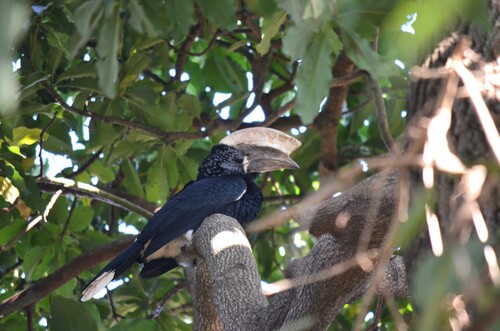
ギンガオサイチョウ (Bycanistes brevis) ギンガオサイチョウ
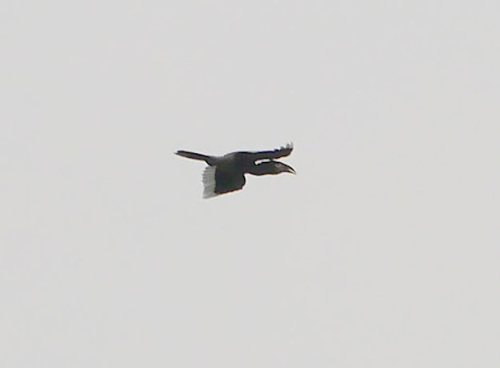
ハシダカサイチョウ (Bycanistes subcylindricus) ハシダカサイチョウ

メディア

読み込み中…

要点

The most reliable field mark between Silvery-cheeked Hornbill and Black-and-white-casqued Hornbill is the head and bill: Silvery-cheeked has a striking silver-grey head and a very large, cream-colored casque, while Black-and-white-casqued shows a darker, greyish cheek and a more flattened, yellow-brownish or blackish casque (especially in males). In flight or perched, Silvery-cheeked is bulkier and longer, with a more iridescent black body and a distinctive white rump and tail tip, while Black-and-white-casqued is shorter, with more extensive white on the lower body and tail, and black feathers mixed into the tail. Both species have large casques, but their color and shape differ. Females of both have smaller casques, but Silvery-cheeked females also show reddish skin around the eyes. Habitat overlap is limited: Silvery-cheeked is an East African forest hornbill, while Black-and-white-casqued is found in central and western Africa.

識別のコツ

  1. Head color: Silvery-cheeked Hornbill always shows a silver-grey head, contrasting with the black body; Black-and-white-casqued has a darker, greyish cheek and lacks the silvery appearance. This is a top field mark for perched or close birds of any age.
  2. Casque size and color: Silvery-cheeked has a very large, cream-colored casque (both sexes, but smaller in females); Black-and-white-casqued has a more flattened, yellow-brownish or blackish casque, especially in males. In females, the casque is smaller and the bill is black.
  3. Bill color: Silvery-cheeked's bill is pale/cream, matching the casque; Black-and-white-casqued's bill is yellow-brownish or blackish (especially in females). This is visible even at a distance in good light.
  4. Body and wing plumage: Silvery-cheeked is iridescent black with limited white (rump, lower back, thighs, vent, tail tip); Black-and-white-casqued is black above but has extensive white on the lower body and wings, and the tail shows black feathers among the white, especially at the base and top.
  5. Tail pattern: Silvery-cheeked's tail is mostly white-tipped; Black-and-white-casqued's tail is white but with black feathers at the base and top, creating a more mixed pattern. This is best seen in flight or when the tail is spread.
  6. Female facial skin: Only female Silvery-cheeked Hornbill has reddish skin around the eyes, a subtle but diagnostic mark if visible.
  7. Size and structure: Silvery-cheeked is larger and bulkier (75–80 cm), with a longer tail and heavier build; Black-and-white-casqued is shorter (60–70 cm) and more compact. In mixed flocks or at a distance, size can be a helpful clue.
  8. Eye movement: Black-and-white-casqued Hornbill has unusually mobile eyes, sometimes giving a more expressive or 'alert' look compared to the more static gaze of Silvery-cheeked. This is subtle and not always visible in the field.
  9. Habitat and range: If in East Africa's tall evergreen forests, especially Ethiopia to South Africa, Silvery-cheeked is more likely; in central/western Africa, especially Ivory Coast, Uganda, or Cameroon, Black-and-white-casqued is expected. In Kenya and Uganda, both may occur—use plumage and structure.
  10. Sex differences: Both species have larger casques in males, but only Silvery-cheeked females show reddish eye skin. Bill color is also a clue in females (cream in Silvery-cheeked, black in Black-and-white-casqued).
  11. Flight jizz: Silvery-cheeked appears heavier and longer-tailed in flight, with a more ponderous wingbeat; Black-and-white-casqued is more compact and may show more white on the underparts and tail.
  12. Plumage pitfalls: Both are black-and-white hornbills with large casques, so confusion is easy at a distance or in poor light. Focus on head color, bill/casque shape and color, and tail pattern for best separation.
  13. No distinctive juvenile/immature upperwing marks: No sources describe age-specific flight patterns, so rely on adult-type marks for all ages.
  14. Vocalization: Not described in the sources; do not rely on voice for separation.
  15. Context: Both species are usually seen in pairs or small groups in the canopy, but habitat and range context can help if plumage is ambiguous.

大きさ

Silvery-cheeked Hornbill is the larger of the two, measuring 75–80 cm in length and weighing about 1235 g. Black-and-white-casqued Hornbill is moderately large but smaller overall, at 60–70 cm length, with males up to 1.5 kg and females up to 1.25 kg (so some overlap in mass, but Silvery-cheeked averages longer and heavier). In the field, Silvery-cheeked appears bulkier and longer-tailed, while Black-and-white-casqued is more compact.

羽色

No age-specific upperwing or flight pattern marks are described for either species, so focus is on adult and general plumage. Silvery-cheeked Hornbill has a unique silver-grey head, iridescent black body, and a white rump, lower back, thighs, vent, and tail tip. Its casque is very large and cream-colored. Black-and-white-casqued Hornbill has a black upper body and wings, white lower body and wings, and a tail with black feathers among the white, especially at the base and top. Its casque is yellow-brownish or blackish and more flattened, and the head is greyish rather than silvery. Females of both species have smaller casques, but only Silvery-cheeked females have reddish skin around the eyes. In both, males have the largest casques.

行動

Both species are arboreal and spend most of their time in tall forests, foraging for fruit and small animals. Black-and-white-casqued Hornbill is noted for its highly mobile eyes (unusual in birds), which may give it a more alert or expressive demeanor. Both species are usually seen in pairs or small groups, moving deliberately through the canopy. No major behavioral differences are described that are useful for field separation.

生息環境

Silvery-cheeked Hornbill is restricted to tall evergreen forests in East Africa, from Ethiopia to South Africa, and is locally common in the northern and central parts of its range. Black-and-white-casqued Hornbill occurs in wooded habitats of central and western Africa, from western Kenya to Côte d'Ivoire, with an isolated population in north Angola. There is some range overlap in Uganda and Kenya, but generally, Silvery-cheeked is an eastern species and Black-and-white-casqued is central/western. Both require extensive forest, but Black-and-white-casqued is more strictly tropical and rarely seen on flat lands.

より良い説明を送る

比較と同じ項目を使ってください。文章はすぐに公開されます。

The most reliable field mark between Silvery-cheeked Hornbill and Black-and-white-casqued Hornbill is the head and bill: Silvery-cheeked has a striking silver-grey head and a very large, cream-colored casque, while Black-and-white-casqued shows a darker, greyish cheek and a more flattened, yellow-brownish or blackish casque (especially in males). In flight or perched, Silvery-cheeked is bulkier and longer, with a more iridescent black body and a distinctive white rump and tail tip, while Black-and-white-casqued is shorter, with more extensive white on the lower body and tail, and black feathers mixed into the tail. Both species have large casques, but their color and shape differ. Females of both have smaller casques, but Silvery-cheeked females also show reddish skin around the eyes. Habitat overlap is limited: Silvery-cheeked is an East African forest hornbill, while Black-and-white-casqued is found in central and western Africa.

  1. Head color: Silvery-cheeked Hornbill always shows a silver-grey head, contrasting with the black body; Black-and-white-casqued has a darker, greyish cheek and lacks the silvery appearance. This is a top field mark for perched or close birds of any age.
  2. Casque size and color: Silvery-cheeked has a very large, cream-colored casque (both sexes, but smaller in females); Black-and-white-casqued has a more flattened, yellow-brownish or blackish casque, especially in males. In females, the casque is smaller and the bill is black.
  3. Bill color: Silvery-cheeked's bill is pale/cream, matching the casque; Black-and-white-casqued's bill is yellow-brownish or blackish (especially in females). This is visible even at a distance in good light.
  4. Body and wing plumage: Silvery-cheeked is iridescent black with limited white (rump, lower back, thighs, vent, tail tip); Black-and-white-casqued is black above but has extensive white on the lower body and wings, and the tail shows black feathers among the white, especially at the base and top.
  5. Tail pattern: Silvery-cheeked's tail is mostly white-tipped; Black-and-white-casqued's tail is white but with black feathers at the base and top, creating a more mixed pattern. This is best seen in flight or when the tail is spread.
  6. Female facial skin: Only female Silvery-cheeked Hornbill has reddish skin around the eyes, a subtle but diagnostic mark if visible.
  7. Size and structure: Silvery-cheeked is larger and bulkier (75–80 cm), with a longer tail and heavier build; Black-and-white-casqued is shorter (60–70 cm) and more compact. In mixed flocks or at a distance, size can be a helpful clue.
  8. Eye movement: Black-and-white-casqued Hornbill has unusually mobile eyes, sometimes giving a more expressive or 'alert' look compared to the more static gaze of Silvery-cheeked. This is subtle and not always visible in the field.
  9. Habitat and range: If in East Africa's tall evergreen forests, especially Ethiopia to South Africa, Silvery-cheeked is more likely; in central/western Africa, especially Ivory Coast, Uganda, or Cameroon, Black-and-white-casqued is expected. In Kenya and Uganda, both may occur—use plumage and structure.
  10. Sex differences: Both species have larger casques in males, but only Silvery-cheeked females show reddish eye skin. Bill color is also a clue in females (cream in Silvery-cheeked, black in Black-and-white-casqued).
  11. Flight jizz: Silvery-cheeked appears heavier and longer-tailed in flight, with a more ponderous wingbeat; Black-and-white-casqued is more compact and may show more white on the underparts and tail.
  12. Plumage pitfalls: Both are black-and-white hornbills with large casques, so confusion is easy at a distance or in poor light. Focus on head color, bill/casque shape and color, and tail pattern for best separation.
  13. No distinctive juvenile/immature upperwing marks: No sources describe age-specific flight patterns, so rely on adult-type marks for all ages.
  14. Vocalization: Not described in the sources; do not rely on voice for separation.
  15. Context: Both species are usually seen in pairs or small groups in the canopy, but habitat and range context can help if plumage is ambiguous.

Silvery-cheeked Hornbill is the larger of the two, measuring 75–80 cm in length and weighing about 1235 g. Black-and-white-casqued Hornbill is moderately large but smaller overall, at 60–70 cm length, with males up to 1.5 kg and females up to 1.25 kg (so some overlap in mass, but Silvery-cheeked averages longer and heavier). In the field, Silvery-cheeked appears bulkier and longer-tailed, while Black-and-white-casqued is more compact.

No age-specific upperwing or flight pattern marks are described for either species, so focus is on adult and general plumage. Silvery-cheeked Hornbill has a unique silver-grey head, iridescent black body, and a white rump, lower back, thighs, vent, and tail tip. Its casque is very large and cream-colored. Black-and-white-casqued Hornbill has a black upper body and wings, white lower body and wings, and a tail with black feathers among the white, especially at the base and top. Its casque is yellow-brownish or blackish and more flattened, and the head is greyish rather than silvery. Females of both species have smaller casques, but only Silvery-cheeked females have reddish skin around the eyes. In both, males have the largest casques.

Both species are arboreal and spend most of their time in tall forests, foraging for fruit and small animals. Black-and-white-casqued Hornbill is noted for its highly mobile eyes (unusual in birds), which may give it a more alert or expressive demeanor. Both species are usually seen in pairs or small groups, moving deliberately through the canopy. No major behavioral differences are described that are useful for field separation.

Silvery-cheeked Hornbill is restricted to tall evergreen forests in East Africa, from Ethiopia to South Africa, and is locally common in the northern and central parts of its range. Black-and-white-casqued Hornbill occurs in wooded habitats of central and western Africa, from western Kenya to Côte d'Ivoire, with an isolated population in north Angola. There is some range overlap in Uganda and Kenya, but generally, Silvery-cheeked is an eastern species and Black-and-white-casqued is central/western. Both require extensive forest, but Black-and-white-casqued is more strictly tropical and rarely seen on flat lands.

変更を破棄しますか?

保存していない編集があります。今離れると失われます。

ギンガオサイチョウ · ハシダカサイチョウ · 苦手な鳥