

Silvery-cheeked Hornbill vs Black-and-white-casqued Hornbill
Bycanistes brevis contro Bycanistes subcylindricus
Fai un quiz con Silvery-cheeked Hornbill e Black-and-white-casqued Hornbill
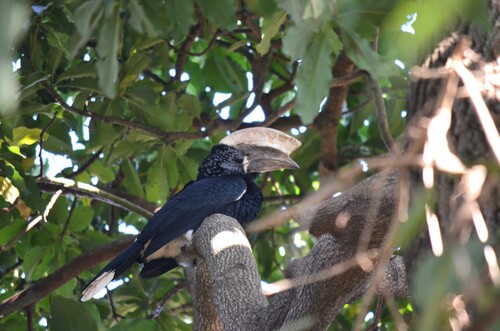 Silvery-cheeked Hornbill
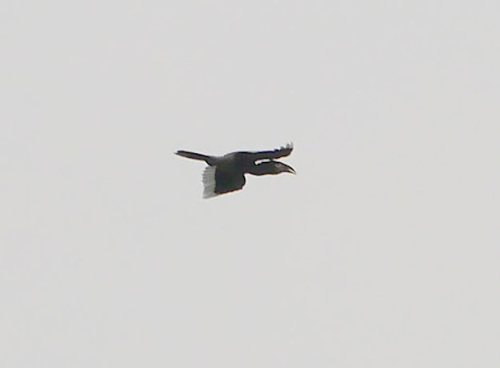 Black-and-white-casqued Hornbill
In breve
Il segno distintivo più affidabile tra il Silvery-cheeked Hornbill e il Black-and-white-casqued Hornbill è la testa e il becco: il Silvery-cheeked ha una testa grigio argento sorprendente e un casco molto grande di colore crema, mentre il Black-and-white-casqued mostra una guancia più scura e grigia e un casco più appiattito, di colore giallo-bruno o nerastro (specialmente nei maschi). In volo o posato, il Silvery-cheeked è più robusto e lungo, con un corpo nero più iridescente e un caratteristico sottocoda e punta della coda bianchi, mentre il Black-and-white-casqued è più corto, con più bianco sulla parte inferiore del corpo e sulla coda, e piume nere mescolate nella coda. Entrambe le specie hanno grandi caschi, ma il loro colore e forma differiscono. Le femmine di entrambe hanno caschi più piccoli, ma le femmine di Silvery-cheeked mostrano anche pelle rossastra attorno agli occhi. La sovrapposizione degli habitat è limitata: il Silvery-cheeked è un hornbill delle foreste dell'Africa orientale, mentre il Black-and-white-casqued si trova nell'Africa centrale e occidentale.
Consigli di identificazione
- Colore della testa: Il Silvery-cheeked Hornbill mostra sempre una testa grigio argento, in contrasto con il corpo nero; il Black-and-white-casqued ha una guancia più scura e grigia e manca dell'aspetto argentato. Questo è un segno distintivo importante per gli uccelli posati o vicini di qualsiasi età.
- Dimensione e colore del casco: Il Silvery-cheeked ha un casco molto grande di colore crema (entrambi i sessi, ma più piccolo nelle femmine); il Black-and-white-casqued ha un casco più appiattito, di colore giallo-bruno o nerastro, specialmente nei maschi. Nelle femmine, il casco è più piccolo e il becco è nero.
- Colore del becco: Il becco del Silvery-cheeked è chiaro/crema, abbinato al casco; il becco del Black-and-white-casqued è giallo-bruno o nerastro (specialmente nelle femmine). Questo è visibile anche da lontano in buona luce.
- Piumaggio del corpo e delle ali: Il Silvery-cheeked è nero iridescente con bianco limitato (sottocoda, parte bassa della schiena, cosce, vent, punta della coda); il Black-and-white-casqued è nero sopra ma ha ampio bianco sulla parte inferiore del corpo e delle ali, e la coda mostra piume nere tra il bianco, specialmente alla base e in cima.
- Schema della coda: La coda del Silvery-cheeked è per lo più con punta bianca; la coda del Black-and-white-casqued è bianca ma con piume nere alla base e in cima, creando un modello più misto. Questo è meglio visibile in volo o quando la coda è aperta.
- Pelle facciale femminile: Solo la femmina del Silvery-cheeked Hornbill ha pelle rossastra attorno agli occhi, un segno sottile ma diagnostico se visibile.
- Dimensione e struttura: Il Silvery-cheeked è più grande e robusto (75–80 cm), con una coda più lunga e una struttura più pesante; il Black-and-white-casqued è più corto (60–70 cm) e più compatto. In stormi misti o da lontano, la dimensione può essere un indizio utile.
- Movimento degli occhi: Il Black-and-white-casqued Hornbill ha occhi insolitamente mobili, a volte dando un aspetto più espressivo o 'allerta' rispetto allo sguardo più statico del Silvery-cheeked. Questo è sottile e non sempre visibile sul campo.
- Habitat e distribuzione: Se ci si trova nelle alte foreste sempreverdi dell'Africa orientale, specialmente dall'Etiopia al Sudafrica, è più probabile vedere il Silvery-cheeked; nell'Africa centrale/occidentale, specialmente in Costa d'Avorio, Uganda o Camerun, ci si aspetta di vedere il Black-and-white-casqued. In Kenya e Uganda, entrambe le specie possono verificarsi—utilizzare piumaggio e struttura.
- Differenze sessuali: Entrambe le specie hanno caschi più grandi nei maschi, ma solo le femmine di Silvery-cheeked mostrano pelle rossastra attorno agli occhi. Il colore del becco è anche un indizio nelle femmine (crema nel Silvery-cheeked, nero nel Black-and-white-casqued).
- Volo: Il Silvery-cheeked appare più pesante e con coda più lunga in volo, con un battito d'ali più ponderoso; il Black-and-white-casqued è più compatto e può mostrare più bianco sulle parti inferiori e sulla coda.
- Trappole del piumaggio: Entrambi sono hornbills bianco e nero con grandi caschi, quindi la confusione è facile da lontano o in scarsa luce. Concentrarsi sul colore della testa, sulla forma e sul colore del becco/casco, e sul modello della coda per la migliore separazione.
- Nessun segno distintivo per i giovani/immaturi sulle ali superiori: Nessuna fonte descrive schemi di volo specifici per età, quindi fare riferimento ai segni di tipo adulto per tutte le età.
- Vocalizzazione: Non descritta nelle fonti; non fare affidamento sulla voce per la separazione.
- Contesto: Entrambe le specie sono solitamente viste in coppie o piccoli gruppi nella chioma degli alberi, ma il contesto dell'habitat e della distribuzione può aiutare se il piumaggio è ambiguo.
Taglia
Il Silvery-cheeked Hornbill è il più grande dei due, misurando 75–80 cm di lunghezza e pesando circa 1235 g. Il Black-and-white-casqued Hornbill è moderatamente grande ma più piccolo complessivamente, con una lunghezza di 60–70 cm, con maschi fino a 1,5 kg e femmine fino a 1,25 kg (quindi qualche sovrapposizione nella massa, ma il Silvery-cheeked è in media più lungo e pesante). Sul campo, il Silvery-cheeked appare più robusto e con coda più lunga, mentre il Black-and-white-casqued è più compatto.
Piumaggio
Nessun segno specifico per l'età sulle ali superiori o sui modelli di volo è descritto per entrambe le specie, quindi ci si concentra sul piumaggio adulto e generale. Il Silvery-cheeked Hornbill ha una testa grigio argento unica, un corpo nero iridescente e un sottocoda, parte bassa della schiena, cosce, vent e punta della coda bianchi. Il suo casco è molto grande e di colore crema. Il Black-and-white-casqued Hornbill ha un corpo e ali superiori neri, un corpo e ali inferiori bianchi, e una coda con piume nere tra il bianco, specialmente alla base e in cima. Il suo casco è giallo-bruno o nerastro e più appiattito, e la testa è grigia piuttosto che argentata. Le femmine di entrambe le specie hanno caschi più piccoli, ma solo le femmine di Silvery-cheeked hanno pelle rossastra attorno agli occhi. In entrambe, i maschi hanno i caschi più grandi.
Comportamento
Entrambe le specie sono arboricole e trascorrono la maggior parte del loro tempo nelle alte foreste, cercando frutta e piccoli animali. Il Black-and-white-casqued Hornbill è noto per i suoi occhi altamente mobili (insoliti negli uccelli), che possono dargli un aspetto più allerta o espressivo. Entrambe le specie sono solitamente viste in coppie o piccoli gruppi, muovendosi deliberatamente attraverso la chioma degli alberi. Non sono descritte differenze comportamentali significative utili per la separazione sul campo.
Habitat
Il Silvery-cheeked Hornbill è limitato alle alte foreste sempreverdi dell'Africa orientale, dall'Etiopia al Sudafrica, ed è localmente comune nelle parti settentrionali e centrali della sua distribuzione. Il Black-and-white-casqued Hornbill si trova in habitat boschivi dell'Africa centrale e occidentale, dalla Kenya occidentale alla Costa d'Avorio, con una popolazione isolata nel nord dell'Angola. C'è qualche sovrapposizione di distribuzione in Uganda e Kenya, ma in generale, il Silvery-cheeked è una specie orientale e il Black-and-white-casqued è centrale/occidentale. Entrambi richiedono foreste estese, ma il Black-and-white-casqued è più strettamente tropicale e raramente visto in pianure.
Silvery-cheeked Hornbill · Black-and-white-casqued Hornbill · I miei uccelli difficili