

Motmot

ギンムネアリドリ 対 シロボシズグロアリドリ

Sclateria naevia 対 Myrmelastes leucostigma

ギンムネアリドリとシロボシズグロアリドリのクイズ
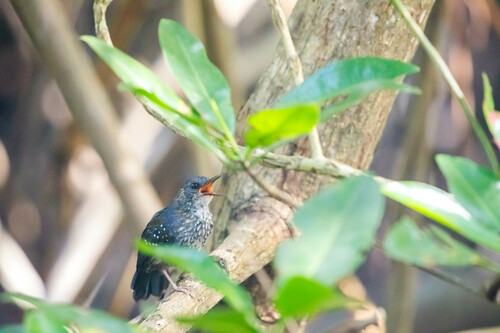
ギンムネアリドリ (Sclateria naevia) ギンムネアリドリ
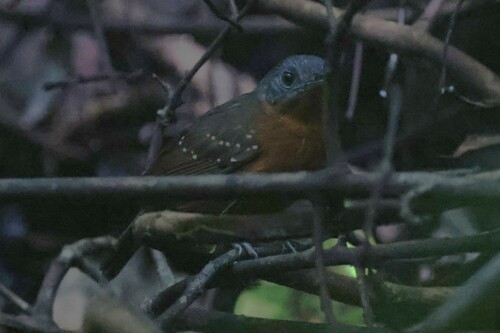
シロボシズグロアリドリ (Myrmelastes leucostigma) シロボシズグロアリドリ

メディア

読み込み中…

要点

ギンムネアリドリとシロボシズグロアリドリの最も信頼できるフィールドマークは、翼の覆羽のパターンと色です。両種は翼の覆羽に白または淡いマークを示しますが、形、サイズ、文脈は性別と年齢によって異なります。両種のオスは暗灰色の上面と黒っぽい翼を持ち、白い先端の覆羽がありますが、シロボシズグロアリドリの白い斑点はより広く、目立ちます。一方、ギンムネアリドリの斑点は小さく、時には点状です。メスはより明確です:ギンムネアリドリのメスは上面が灰褐色で、シナモン色の先端の覆羽を持ち、シロボシズグロアリドリのメスは上面がシナモン褐色で、淡いシナモンルフスまたはルフス褐色の先端を持っています。下側も異なります:ギンムネアリドリのメスは下側がより淡く、変化するバフ色を持ち、シロボシズグロアリドリのメスはより均一に黄褐色またはルフス褐色です。両種はサイズと構造が似ているため、翼の覆羽のパターン、下側の色、微妙な顔のトーンに注意を払うことが重要です。

識別のコツ

  1. 翼の覆羽のパターンを確認する: オスでは、シロボシズグロアリドリはギンムネアリドリよりも翼の覆羽の白い先端が広く、目立ちます。ギンムネアリドリの白いマークは小さく、点状です(特に S. n. diaphora で)。メスでは、ギンムネアリドリは灰褐色の覆羽にシナモン色の先端を持ち、シロボシズグロアリドリはシナモン褐色の覆羽に淡いシナモンルフスまたはルフス褐色の先端を持っています。
  2. メスの下側の色を評価する: ギンムネアリドリのメスは下側がより淡く、しばしば白でバフ色または深いバフ色の側面を持ち、シロボシズグロアリドリのメスはより均一に黄褐色またはルフス褐色で、オリーブ褐色の側面と尾羽の下側を持っています。
  3. 顔のパターンを探す: ギンムネアリドリはしばしば淡い灰色のスーペリキウムと主に暗灰色の顔を示します。特にオスでは。シロボシズグロアリドリは強いスーペリキウムを欠いています。メスは亜種によっては茶色がかったオリーブ色の顔を示すことがあります。
  4. 上面のトーンを比較する: ギンムネアリドリのオスは上面が暗灰色です。メスは灰褐色です。シロボシズグロアリドリのオスも暗灰色ですが、メスは上面がより豊かなシナモン褐色です。
  5. 尾と翼の色に注意する: 両種は黒っぽい翼と尾を持っていますが、覆羽の先端の文脈が重要です。飛行中、白または淡い斑点は異なるようにフラッシュすることがあります:シロボシズグロアリドリのものはより大きく、特にオスでは明らかです。
  6. 生息地を考慮する: 鳥が水の上にいるか、河川や洪水森林にいる場合、ギンムネアリドリの可能性が高いです。水から離れたテラフィルムの森林では、シロボシズグロアリドリが好まれます。
  7. 歌を聞く: ギンムネアリドリの歌は強調された高音から始まり、強度が増してから急に落ちます。シロボシズグロアリドリの歌はより均一で、鳴り響くようなもので、最後にわずかに減少します。
  8. 脚の色(見える場合): シロボシズグロアリドリは亜種によってはピンクがかったまたは青灰色の脚を示すことがあります。ギンムネアリドリの脚の色は特徴的とは記述されていません。
  9. 亜種の変異: 両種には変化する下側と覆羽のパターンを持つ亜種があることに注意してください。常に複数の特徴を確認してください。
  10. 幼鳥/亜成鳥の混同: 亜成鳥のギンムネアリドリのオスは成鳥のメスに似ているため、シナモン色の覆羽の先端を持つ茶色の鳥はどちらの種または年齢/性別クラスである可能性があります。下側の色と顔のパターンを使用してさらなる手がかりを得てください。
  11. サイズは役に立たない: 両種はサイズと構造がほぼ同一であるため、これを分離のために頼るべきではありません。
  12. アーミーアントの群れ: シロボシズグロアリドリは水から離れたアーミーアントの群れで見られる可能性が高いですが、これは排他的ではありません。
  13. スーペリキウムの存在: 淡いスーペリキウムはギンムネアリドリを示唆します。特にオスでは。その欠如または弱い存在はシロボシズグロアリドリに傾きます。
  14. 下翼の覆羽: ギンムネアリドリのオスは灰色の下翼の覆羽を持っていますが、これはフィールドではほとんど見えません。
  15. 文脈と範囲: 両種は広く重なりますが、地域の豊富さは異なる場合があります。疑わしい場合は、eBirdで地域の報告を確認してください。

大きさ

両種は非常にサイズが似ており、各々の長さは14〜16 cmです。ギンムネアリドリは21〜27 g、シロボシズグロアリドリは20〜28.5 gです。フィールドでの分離に使用できるサイズや構造の意味のある違いはありません。両者は中型のアリドリで、比例が似ています。

羽色

行動

両種は低い下層で採餌し、しばしば地面の近くで見られます。シロボシズグロアリドリはアーミーアントの群れに参加することで知られていますが、より頻繁に独立してまたは小さなグループで採餌し、地面や低い枝を跳ね回ります。ギンムネアリドリの採餌行動は詳細には記述されていませんが、アリドリに典型的で、おそらく似ています。フィールドでの分離のための強い行動の違いはありません。

生息環境

両種は南アメリカの北部と中央部で範囲が重なりますが、好む生息地は微妙に異なります。ギンムネアリドリは水の近く、特に小川や湿地の上にある低い枝で見られることが多いです。シロボシズグロアリドリはテラフィルムの常緑樹林を好み、特に排水の悪い地域や小さな水流に沿って見られますが、必ずしも水の端にいるわけではありません。両者は密な下層で見られることがありますが、ギンムネアリドリは河川や洪水森林の端により密接に関連しています。

声

両種は迅速でトリルのある歌を持っていますが、詳細は異なります。ギンムネアリドリの歌は、強調された高音から始まり、長く迅速なトリルが続き、最後に急に落ちます。シロボシズグロアリドリの歌は、迅速で均一なペースの鳴り響く音の連続で、最後に音程とペースがわずかに減少します。両者はダウンスラードのホイッスルと突然の音を出しますが、ギンムネアリドリの歌は音程と強度がより変動し、シロボシズグロアリドリの歌はより均一です。呼び声は似ており、経験なしでは信頼できる診断はできません。

より良い説明を送る

比較と同じ項目を使ってください。文章はすぐに公開されます。

The most reliable field mark between Silvered Antbird and Spot-winged Antbird is the pattern and color of the wing coverts: both species show white or pale marks on the wing coverts, but the shape, size, and context differ by sex and age. Males of both species have dark gray upperparts and blackish wings with white-tipped coverts, but the Spot-winged Antbird's white spots are broader and more conspicuous, while the Silvered Antbird's are smaller and sometimes dot-like. Females are more distinct: Silvered Antbird females are grayish-brown above with cinnamon-tipped coverts, while Spot-winged Antbird females are cinnamon-brown above with pale cinnamon-rufous or rufous-brown tips. Underparts also differ: Silvered Antbird females are paler below with variable buff, while Spot-winged Antbird females are more uniformly tawny or rufous-brown. Both species are similar in size and structure, so careful attention to wing covert pattern, underpart color, and subtle facial tones is essential.

  1. Check the wing covert pattern: In males, Spot-winged Antbird shows broader and more conspicuous white tips on the wing coverts than Silvered Antbird, whose white marks are smaller or dot-like (especially in S. n. diaphora). In females, Silvered Antbird has cinnamon tips on grayish-brown coverts, while Spot-winged Antbird has pale cinnamon-rufous or rufous-brown tips on cinnamon-brown coverts.
  2. Assess underpart color in females: Silvered Antbird females are paler below, often white with buffy or deep buff sides, while Spot-winged Antbird females are more uniformly tawny or rufous-brown, with olive-brown flanks and undertail.
  3. Look for facial pattern: Silvered Antbird often shows a pale gray supercilium and a mostly dark gray face, especially in males. Spot-winged Antbird lacks a strong supercilium; females may show a brownish olive face depending on subspecies.
  4. Compare upperpart tones: Silvered Antbird males are dark gray above; females are grayish brown. Spot-winged Antbird males are also dark gray, but females are richer cinnamon-brown above.
  5. Note the tail and wing color: Both species have blackish wings and tail, but the context of covert tips is key. In flight, the white or pale spots may flash differently: Spot-winged Antbird's are larger and more obvious, especially in males.
  6. Consider habitat: If the bird is seen overhanging water or in riparian/flooded forest, Silvered Antbird is more likely. In terra firme forest away from water, Spot-winged Antbird is favored.
  7. Listen for song: Silvered Antbird's song starts with emphatic, higher notes and builds in intensity before dropping off; Spot-winged Antbird's song is more even-paced and ringing, with a slight decrease at the end.
  8. Leg color (when visible): Spot-winged Antbird can show pinkish or bluish-gray legs depending on subspecies; Silvered Antbird's leg color is not described as distinctive.
  9. Subspecies variation: Be aware that both species have subspecies with variable underpart and covert patterns. Always check multiple features.
  10. Juvenile/subadult confusion: Subadult Silvered Antbird males resemble adult females, so brownish birds with cinnamon covert tips could be either species or age/sex class. Use underpart color and facial pattern for further clues.
  11. Size is not helpful: Both species are nearly identical in size and structure; do not rely on this for separation.
  12. Army ant swarms: Spot-winged Antbird is more likely to be seen at ant swarms away from water, but this is not exclusive.
  13. Supercilium presence: A pale supercilium suggests Silvered Antbird, especially in males; its absence or weak presence leans toward Spot-winged Antbird.
  14. Underwing coverts: Silvered Antbird males have gray underwing coverts, but this is rarely visible in the field.
  15. Context and range: Both species overlap widely, but local abundance may differ; check eBird for local reports if in doubt.

Both species are very similar in size, each measuring 14–16 cm in length. Silvered Antbird weighs 21–27 g, while Spot-winged Antbird ranges from 20–28.5 g. There is no meaningful difference in size or structure that can be used for field separation; both are medium-sized antbirds with similar proportions.

  • Juvenile/immature (subadult) males: Silvered Antbird subadult males resemble adult females, lacking the crisp gray and white contrast of adult males. Spot-winged Antbird immatures are not described in detail, but likely resemble adult females as well; thus, confusion is most likely among brownish birds with pale wing covert tips.

  • Adult males: Both have dark gray upperparts and blackish wings with white-tipped coverts. The Spot-winged Antbird's white tips are described as 'wide' and more conspicuous, while Silvered Antbird's are smaller or dot-like (especially in S. n. diaphora). Underparts differ: Silvered Antbird males are white below with gray scalloping, while Spot-winged Antbird males are pale gray to gray below, with darker sides and belly. Subspecies variation can affect the prominence of these marks.

  • Adult females: Silvered Antbird females are grayish brown above with cinnamon tips on the wing coverts, and underparts range from white with buffy brown sides to deep buff. Spot-winged Antbird females are cinnamon-brown above with pale cinnamon-rufous or rufous-brown tips on the wing coverts, and underparts are pale tawny or rufous-brown, with olive-brown flanks and undertail coverts. The overall effect is that Spot-winged Antbird females are warmer and more rufous below and behind, while Silvered Antbird females are paler and less saturated.

  • Facial pattern: Silvered Antbird shows a pale gray supercilium and a mostly dark gray face; Spot-winged Antbird females have a gray face, sometimes brownish olive (subspecies dependent), but lack a strong supercilium.

Both species forage low in the understory, often near the ground. Spot-winged Antbird is known to attend army ant swarms but more often forages independently or in small groups, hopping along the ground and low branches. Silvered Antbird's foraging behavior is less detailed but is typical of antbirds, likely similar. There are no strong behavioral differences for field separation.

Both species overlap in range across northern and central South America, but their preferred habitats differ subtly. Silvered Antbird is often found near water, especially in low branches overhanging streams or swampy areas. Spot-winged Antbird prefers terra firme evergreen forest, especially poorly drained areas and along small watercourses, but not necessarily right at the water's edge. Both can be found in dense understory, but Silvered Antbird is more closely associated with riparian or flooded forest edges.

Both species have rapid, trilled songs, but the details differ. Silvered Antbird's song is a long, rapid trill introduced by emphatic, higher notes, then building and dropping off sharply at the end. Spot-winged Antbird's song is a rapid, even-paced series of ringing notes, with pitch and pace decreasing slightly at the end. Both give downslurred whistles and abrupt notes, but Silvered Antbird's song is more variable in pitch and intensity, while Spot-winged Antbird's is more even. Calls are similar and not reliably diagnostic without experience.

変更を破棄しますか?

保存していない編集があります。今離れると失われます。

ギンムネアリドリ · シロボシズグロアリドリ · 苦手な鳥