

Silvered Antbird vs Spot-winged Antbird
Sclateria naevia contro Myrmelastes leucostigma
Fai un quiz con Silvered Antbird e Spot-winged Antbird
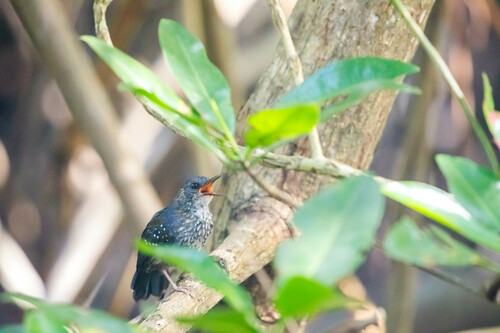 Silvered Antbird
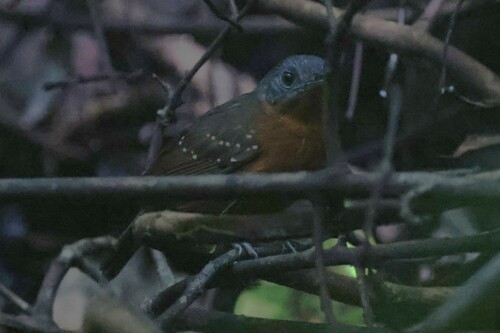 Spot-winged Antbird
In breve
Il segno distintivo più affidabile tra Silvered Antbird e Spot-winged Antbird è il motivo e il colore delle copritrici delle ali: entrambe le specie mostrano segni bianchi o chiari sulle copritrici delle ali, ma la forma, la dimensione e il contesto differiscono per sesso ed età. I maschi di entrambe le specie hanno parti superiori grigio scuro e ali nerastre con copritrici bianche, ma i punti bianchi dello Spot-winged Antbird sono più ampi e più evidenti, mentre quelli del Silvered Antbird sono più piccoli e talvolta simili a punti. Le femmine sono più distinte: le femmine di Silvered Antbird sono marrone-grigiastro sopra con copritrici dalle punte cannella, mentre le femmine di Spot-winged Antbird sono marrone-cannella sopra con punte chiaro-cannella-rossicce o rossicce. Anche le parti inferiori differiscono: le femmine di Silvered Antbird sono più chiare sotto con un buff variabile, mentre le femmine di Spot-winged Antbird sono più uniformemente fulve o rossicce. Entrambe le specie sono simili in dimensioni e struttura, quindi è essenziale prestare attenzione al motivo delle copritrici delle ali, al colore delle parti inferiori e ai toni facciali sottili.
Consigli di identificazione
- Controlla il motivo delle copritrici delle ali: Nei maschi, lo Spot-winged Antbird mostra punte bianche più ampie e più evidenti sulle copritrici delle ali rispetto al Silvered Antbird, le cui macchie bianche sono più piccole o simili a punti (soprattutto in S. n. diaphora). Nelle femmine, il Silvered Antbird ha punte cannella su copritrici marrone-grigiastro, mentre lo Spot-winged Antbird ha punte chiaro-cannella-rossicce o rossicce su copritrici marrone-cannella.
- Valuta il colore delle parti inferiori nelle femmine: Le femmine di Silvered Antbird sono più chiare sotto, spesso bianche con lati buffi o buff profondi, mentre le femmine di Spot-winged Antbird sono più uniformemente fulve o rossicce, con fianchi marrone-oliva e sottocoda.
- Cerca il motivo facciale: Il Silvered Antbird mostra spesso un supercilio grigio chiaro e un volto per lo più grigio scuro, specialmente nei maschi. Lo Spot-winged Antbird manca di un forte supercilio; le femmine possono mostrare un volto marrone-oliva a seconda della sottospecie.
- Confronta i toni delle parti superiori: I maschi di Silvered Antbird sono grigio scuro sopra; le femmine sono marrone-grigiastro. I maschi di Spot-winged Antbird sono anch'essi grigio scuro, ma le femmine sono di un marrone-cannella più ricco sopra.
- Nota il colore della coda e delle ali: Entrambe le specie hanno ali e coda nerastre, ma il contesto delle punte delle copritrici è fondamentale. In volo, i punti bianchi o chiari possono lampeggiare in modo diverso: quelli dello Spot-winged Antbird sono più grandi e più evidenti, specialmente nei maschi.
- Considera l'habitat: Se l'uccello viene visto sopra l'acqua o in foreste ripariali/allagate, è più probabile che sia un Silvered Antbird. Nella foresta terra firme lontano dall'acqua, è favorito lo Spot-winged Antbird.
- Ascolta il canto: Il canto del Silvered Antbird inizia con note emphatiche e più alte e aumenta di intensità prima di diminuire; il canto dello Spot-winged Antbird è più uniforme e sonoro, con una leggera diminuzione alla fine.
- Colore delle zampe (quando visibile): Lo Spot-winged Antbird può mostrare zampe rosate o grigio-bluastre a seconda della sottospecie; il colore delle zampe del Silvered Antbird non è descritto come distintivo.
- Variazione delle sottospecie: Tieni presente che entrambe le specie hanno sottospecie con modelli variabili delle parti inferiori e delle copritrici. Controlla sempre più caratteristiche.
- Confusione giovanile/subadulta: I maschi subadulti di Silvered Antbird assomigliano alle femmine adulte, quindi gli uccelli marroni con punte delle copritrici cannella potrebbero appartenere a entrambe le specie o classi di età/sesso. Usa il colore delle parti inferiori e il motivo facciale per ulteriori indizi.
- La dimensione non è utile: Entrambe le specie sono quasi identiche in dimensioni e struttura; non fare affidamento su questo per la separazione.
- Fagotti di formiche soldato: È più probabile vedere lo Spot-winged Antbird presso i fagotti di formiche lontano dall'acqua, ma questo non è esclusivo.
- Presenza del supercilio: Un supercilio chiaro suggerisce il Silvered Antbird, specialmente nei maschi; la sua assenza o presenza debole tende verso lo Spot-winged Antbird.
- Copritrici sottoala: I maschi di Silvered Antbird hanno copritrici sottoala grigie, ma questo è raramente visibile sul campo.
- Contesto e distribuzione: Entrambe le specie si sovrappongono ampiamente, ma l'abbondanza locale può differire; controlla eBird per rapporti locali se hai dubbi.
Taglia
Entrambe le specie sono molto simili in dimensioni, misurando ciascuna 14–16 cm di lunghezza. Il Silvered Antbird pesa 21–27 g, mentre lo Spot-winged Antbird varia da 20–28,5 g. Non c'è una differenza significativa in dimensioni o struttura che possa essere utilizzata per la separazione sul campo; entrambi sono formichieri di dimensioni medie con proporzioni simili.
Piumaggio
-
Maschi giovanili/immaturi (subadulti): I maschi subadulti di Silvered Antbird assomigliano alle femmine adulte, mancando del contrasto netto tra grigio e bianco dei maschi adulti. Gli immaturi di Spot-winged Antbird non sono descritti in dettaglio, ma probabilmente assomigliano anch'essi alle femmine adulte; quindi, la confusione è più probabile tra gli uccelli marroni con punte chiare delle copritrici delle ali.
-
Maschi adulti: Entrambi hanno parti superiori grigio scuro e ali nerastre con copritrici bianche. Le punte bianche dello Spot-winged Antbird sono descritte come 'ampie' e più evidenti, mentre quelle del Silvered Antbird sono più piccole o simili a punti (soprattutto in S. n. diaphora). Le parti inferiori differiscono: i maschi di Silvered Antbird sono bianchi sotto con scalloping grigio, mentre i maschi di Spot-winged Antbird sono grigio chiaro a grigio sotto, con lati e pancia più scuri. La variazione delle sottospecie può influenzare la prominenza di questi segni.
-
Femmine adulte: Le femmine di Silvered Antbird sono marrone-grigiastro sopra con punte cannella sulle copritrici delle ali, e le parti inferiori variano da bianche con lati marrone-buff a buff profondo. Le femmine di Spot-winged Antbird sono marrone-cannella sopra con punte chiaro-cannella-rossicce o rossicce sulle copritrici delle ali, e le parti inferiori sono fulve chiare o rossicce, con fianchi marrone-oliva e copritrici della sottocoda. L'effetto complessivo è che le femmine di Spot-winged Antbird sono più calde e più rossicce sotto e dietro, mentre le femmine di Silvered Antbird sono più chiare e meno saturo.
-
Motivo facciale: Il Silvered Antbird mostra un supercilio grigio chiaro e un volto per lo più grigio scuro; le femmine di Spot-winged Antbird hanno un volto grigio, talvolta marrone-oliva (a seconda della sottospecie), ma mancano di un forte supercilio.
Comportamento
Entrambe le specie foraggiano basse nel sottobosco, spesso vicino al suolo. Lo Spot-winged Antbird è noto per partecipare ai fagotti di formiche soldato, ma più spesso foraggia in modo indipendente o in piccoli gruppi, saltellando lungo il suolo e sui rami bassi. Il comportamento di foraggiamento del Silvered Antbird è meno dettagliato ma è tipico degli formichieri, probabilmente simile. Non ci sono forti differenze comportamentali per la separazione sul campo.
Habitat
Entrambe le specie si sovrappongono in distribuzione attraverso il nord e il centro del Sud America, ma i loro habitat preferiti differiscono sottilmente. Il Silvered Antbird si trova spesso vicino all'acqua, specialmente in rami bassi che sovrastano corsi d'acqua o aree paludose. Lo Spot-winged Antbird preferisce la foresta sempreverde terra firme, specialmente in aree poco drenate e lungo piccoli corsi d'acqua, ma non necessariamente proprio al bordo dell'acqua. Entrambi possono essere trovati in un sottobosco denso, ma il Silvered Antbird è più strettamente associato ai margini delle foreste ripariali o allagate.
Voce
Entrambe le specie hanno canti rapidi e trillati, ma i dettagli differiscono. Il canto del Silvered Antbird è un lungo trill rapido introdotto da note emphatiche e più alte, poi costruisce e diminuisce bruscamente alla fine. Il canto dello Spot-winged Antbird è una serie rapida e uniforme di note sonanti, con tono e ritmo che diminuiscono leggermente alla fine. Entrambi emettono fischi discendenti e note brusche, ma il canto del Silvered Antbird è più variabile in tono e intensità, mentre quello dello Spot-winged Antbird è più uniforme. I richiami sono simili e non sono affidabilmente diagnostici senza esperienza.
Silvered Antbird · Spot-winged Antbird · I miei uccelli difficili