

Motmot

タンビハリオアマツバメ 対 ズグロヒメコンゴウインコ

Chaetura brachyura 対 Orthopsittaca manilatus

タンビハリオアマツバメとズグロヒメコンゴウインコのクイズ
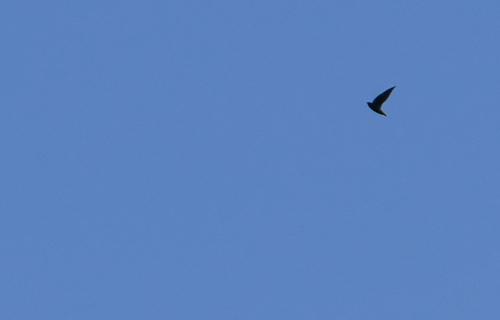
タンビハリオアマツバメ (Chaetura brachyura) タンビハリオアマツバメ
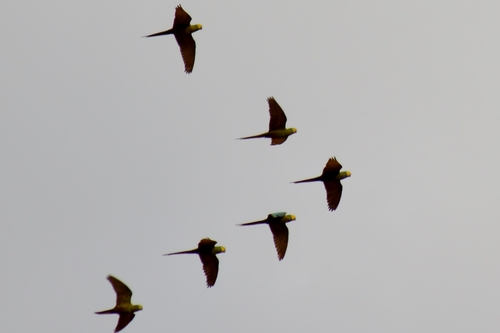
ズグロヒメコンゴウインコ (Orthopsittaca manilatus) ズグロヒメコンゴウインコ

メディア

読み込み中…

要点

これら二つを区別する最も信頼できるフィールドマークは全体の構造です:タンビハリオアマツバメは非常に短い尾と長く狭い翼を持つ小さく、暗い、速く飛ぶ空中昆虫食者であり、一方ズグロヒメコンゴウインコは長く尖った尾と特徴的なマルーン色の腹部斑点を持つ、はるかに大きな主に緑色のオウムです。距離があっても、アマツバメの速く不規則な飛行とコンパクトな形状は、コンゴウインコの遅く、より直接的な飛行と重いオウムのような姿勢と鋭く対照的です。若いコンゴウインコはくちばしの上部に独特の白いストライプを示し、これはアマツバメには決して見られません。もし鳥が止まっているのを見たら、コンゴウインコの大きくフック状のくちばしと顔の皮膚は明確であり、アマツバメはほとんど決して開けた場所に止まることはありません。

識別のコツ

  1. サイズと形状: タンビハリオアマツバメは小さく、コンパクトで速く、長く狭い翼と非常に短い尾を持っています。ズグロヒメコンゴウインコははるかに大きく、長く尖った尾と広い翼を持っています。サイズだけでも、距離で彼らを区別するのに十分です。
  2. くちばし: アマツバメは小さく、ほとんど見えないくちばしを持っています;コンゴウインコは巨大でフック状のオウムのくちばしを持っています。もしくちばしが見えれば、その違いは明確です。
  3. 尾の形: タンビハリオアマツバメは非常に短く、四角いかわずかに切り込みのある尾を持っています。ズグロヒメコンゴウインコは先端に向かって細くなる長く尖った尾を持っています。飛行中、コンゴウインコの尾は体よりもはるかに長く、アマツバメの尾は尾羽の覆いよりもわずかに長いだけです。
  4. 羽色: アマツバメは主に黒っぽく、淡い尾と尾羽を持っていますが、これらは色調が似ています。コンゴウインコは明るい緑色で、マルーン色の腹部斑点、青みがかった額、黄色がかった顔の皮膚を持っています。アマツバメは羽毛に赤、青、または黄色を示すことはありません。
  5. 若いコンゴウインコのくちばしのストライプ: 若いズグロヒメコンゴウインコはくちばしの上部に白いストライプを持っており(くちばしの上部)、これはコンゴウインコの中で独特であり、アマツバメには存在しません。このマークが見えたら、それは若いコンゴウインコの診断的な特徴です。
  6. 顔の皮膚: コンゴウインコはくちばしと目の周りにむき出しのマスタードイエローの顔の皮膚を持っています;アマツバメは完全に羽毛で覆われた顔を持っています。
  7. 飛行スタイル: アマツバメは速く飛び、素早く不規則な動きをし、しばしば高い空で飛びます。コンゴウインコは遅く、より直接的な飛行をし、しばしばペアや小さな群れで飛び、飛行中に大きな声で鳴くことがあります。
  8. 止まり方: コンゴウインコは木の上で、しばしば露出した枝やヤシの葉の上にオープンに止まります。アマツバメはほとんど決してオープンに止まらず、巣の場所を除いて止まっているのはめったに見られません。
  9. 足: コンゴウインコは登ったり掴んだりするために使う強い二趾足(前に二本、後ろに二本)を持っています;アマツバメは垂直にしがみつくためだけに使う小さく弱い足を持っています。
  10. 翼の下の色: コンゴウインコは鈍いオリーブイエローの翼の下と尾羽を示します;アマツバメは下側が均一に暗いです。
  11. 文脈: もし鳥がヤシの果実を食べているか、ヤシの木と相互作用しているなら、それはコンゴウインコです。アマツバメは飛んでいる昆虫だけを食べ、果物を食べたりヤシに止まったりすることは決してありません。
  12. 性差: 両種は羽毛において性別による形態的差がありません;サイズの違い(オスが大きい)は微妙で、フィールドでは役に立ちません。
  13. 生息地: コンゴウインコはヤシが豊富な生息地に結びついています;アマツバメはより一般的ですが、常に空中に見られます。
  14. 落とし穴: 遠くから見ると、速く飛んでいるコンゴウインコは大きなアマツバメのように見えることがありますが、長い尾と緑がかった色は双眼鏡で見ると確認できます。アマツバメは決してコンゴウインコのマルーン色の腹部やむき出しの顔の皮膚を示しません。
  15. 声: 提供されたメモには含まれていませんが、実際にはコンゴウインコは大きく声を出し、アマツバメは通常静かで高音のツイッターのような鳴き声を出します。

大きさ

タンビハリオアマツバメは非常に小さな鳥で、長さ約10.5 cm、重さ20 gです [wikipedia]。対照的に、ズグロヒメコンゴウインコははるかに大きく、長さ約46 cm(長い尾を含む)で、重さは約300 gです [wikipedia]。サイズの差は劇的で、コンゴウインコはアマツバメの約4倍の長さで、15倍の重さです。距離があっても、コンゴウインコの体積と長い尾は、アマツバメのコンパクトで弾丸のようなシルエットと比較して明らかです。

羽色

行動

タンビハリオアマツバメはほぼ常に速く、敏捷な飛行で昆虫を捕まえているのが見られます。彼らはオープンに止まることはほとんどなく、通常は巣の場所や休息地でしか止まっているのが見られず、しばしば垂直にしがみついています。ズグロヒメコンゴウインコはしばしばペアや小さな群れで飛んでいるのが見られ、遅く、より直接的な飛行をし、しばしばヤシの木や露出した枝の上にオープンに止まります。コンゴウインコは足を使って食べ物を操作したり登ったりしますが、アマツバメはこのように止まったり足を使ったりしません。

生息環境

タンビハリオアマツバメは森林、サバンナ、水辺などの広範囲のオープンな生息地の上空で見られる空中採食者ですが、常に空中に見られます [wikipedia]。ズグロヒメコンゴウインコはモリチェヤシの湿地やヤシが支配するサバンナに密接に結びついており、そこで食べたり、巣を作ったり、休息したりします [wikipedia]。もしヤシの木の中にいる鳥やヤシの果実を食べている鳥を見たら、それはほぼ確実にコンゴウインコであり、アマツバメではありません。

より良い説明を送る

比較と同じ項目を使ってください。文章はすぐに公開されます。

The most reliable field mark to separate these two is overall structure: Short-tailed Swift is a small, dark, fast-flying aerial insectivore with a very short tail and long, narrow wings, while Red-bellied Macaw is a much larger, mostly green parrot with a long, pointed tail and a distinctive maroon belly patch. Even at a distance, the swift’s rapid, erratic flight and compact shape contrast sharply with the macaw’s slower, more direct flight and heavy, parrot-like jizz. Juvenile macaws show a unique white stripe along the top of the beak, which is never present in swifts. If you see a bird perched, the macaw’s large, hooked bill and facial skin are unmistakable, while swifts virtually never perch in the open.

  1. Size and shape: Short-tailed Swift is tiny, compact, and fast, with long, narrow wings and a very short tail. Red-bellied Macaw is much larger, with a long, pointed tail and broad wings. Size alone is often enough to separate them at a distance.
  2. Bill: Swifts have a tiny, barely visible bill; macaws have a massive, hooked parrot bill. If you can see the bill, the difference is unmistakable.
  3. Tail shape: Short-tailed Swift has a very short, squared or slightly notched tail. Red-bellied Macaw has a long, pointed tail that tapers to a tip. In flight, the macaw’s tail is much longer than the body, while the swift’s is barely longer than the undertail coverts.
  4. Plumage color: Swifts are mostly blackish with a pale rump and tail, but these are similar in tone. Macaws are bright green with a maroon belly patch, bluish forehead, and yellowish facial skin. No swift shows any red, blue, or yellow in the plumage.
  5. Juvenile macaw beak stripe: Juvenile Red-bellied Macaws have a white stripe along the top of the beak (culmen), unique among macaws and absent in swifts. If you see this mark, it is diagnostic for a young macaw.
  6. Facial skin: Macaws have bare, mustard-yellow facial skin around the bill and eyes; swifts have fully feathered faces.
  7. Flight style: Swifts fly rapidly, with quick, erratic movements, often high in the air. Macaws have slower, more direct flight, often in pairs or small groups, and may call loudly in flight.
  8. Perching behavior: Macaws perch openly in trees, often on exposed branches or palm fronds. Swifts almost never perch in the open and are rarely seen perched except at nest sites.
  9. Feet: Macaws have strong, zygodactyl feet (two toes forward, two back) used for climbing and grasping; swifts have tiny, weak feet used only for clinging vertically.
  10. Underwing color: Macaws show dull olive yellow underwings and undertail; swifts are uniformly dark below.
  11. Context: If the bird is feeding on palm fruit or interacting with palm trees, it is a macaw. Swifts feed only on flying insects and are never seen eating fruit or perching in palms.
  12. Sex differences: Both species are sexually monomorphic in plumage; size difference (males larger) is subtle and not useful in the field.
  13. Habitat: Macaws are tied to palm-rich habitats; swifts are more generalist but always seen in the air.
  14. Pitfalls: At great distance, a macaw in fast flight could look superficially like a large swift, but the long tail and greenish color should be visible with binoculars. Swifts never show the maroon belly or bare facial skin of a macaw.
  15. Voice: Not covered in the provided notes, but in practice, macaws are loud and vocal, while swifts are usually silent or give high-pitched twittering calls.

Short-tailed Swift is a very small bird, about 10.5 cm long and weighing 20 g [wikipedia]. In contrast, Red-bellied Macaw is much larger, about 46 cm in length (including its long tail) and weighing around 300 g [wikipedia]. The size gap is dramatic: the macaw is nearly four times as long and fifteen times heavier than the swift. Even at a distance, the macaw’s bulk and long tail are obvious compared to the swift’s compact, bullet-like silhouette.

  • Juvenile/immature birds: Juvenile Red-bellied Macaws are duller green than adults and have a grey beak with a conspicuous white stripe along the top (culmen), a feature not found in any swift at any age. Short-tailed Swifts do not show age-specific plumage differences that are useful in the field; both adults and immatures are mainly blackish with a pale rump and tail, but the rump and tail are similar in tone, lacking strong contrast [wikipedia].

  • Adults: Adult Short-tailed Swifts are mostly blackish with a pale rump and tail, but the rump and tail are similar in shade, lacking the strong contrast seen in some related swifts. Adult Red-bellied Macaws are mostly green with a large maroon patch on the lower belly, bluish forehead, mustard-yellow bare facial skin, and a long, tapered tail. The underwings and undertail are dull olive yellow. The macaw’s bill is large and dark grey, while the swift’s bill is tiny and barely visible in the field.

  • In flight: Swifts show long, narrow, sickle-shaped wings and a very short tail, with no color patches. Macaws in flight show broad wings, long pointed tail, and may flash the maroon belly patch and yellowish underwings. Swifts never show any red or yellow plumage.

Short-tailed Swifts are almost always seen in rapid, agile flight, catching insects high in the air. They rarely perch in the open and are usually only seen perched at nest sites or roosts, often clinging vertically. Red-bellied Macaws are often seen flying in pairs or small flocks, with slower, more direct flight, and frequently perch openly in palm trees or on exposed branches. Macaws use their feet to manipulate food and climb, while swifts do not perch or use their feet in this way.

Short-tailed Swifts are aerial foragers found over a wide range of open habitats, including forests, savannas, and near water, but are always seen in the air [wikipedia]. Red-bellied Macaws are closely tied to moriche palm swamps and palm-dominated savannas, where they feed, nest, and roost [wikipedia]. If you see a bird in a palm tree or feeding on palm fruit, it is almost certainly a macaw, not a swift.

変更を破棄しますか?

保存していない編集があります。今離れると失われます。

タンビハリオアマツバメ · ズグロヒメコンゴウインコ · 苦手な鳥