

Vencejo Rabón vs Guacamayo Ventrirrojo
Chaetura brachyura frente a Orthopsittaca manilatus
Juega un quiz con Vencejo Rabón y Guacamayo Ventrirrojo
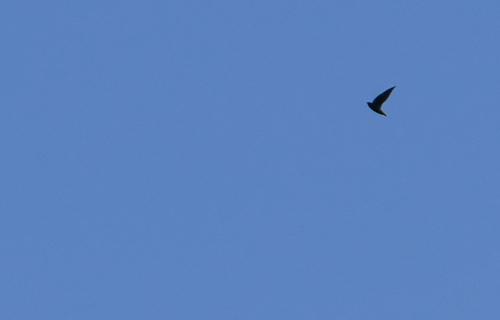 Vencejo Rabón
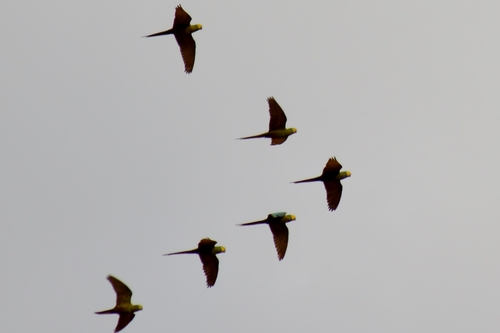 Guacamayo Ventrirrojo
En breve
La marca de campo más confiable para separar estos dos es la estructura general: el Vencejo Rabón es un insectívoro aéreo pequeño, oscuro y de vuelo rápido, con una cola muy corta y alas largas y estrechas, mientras que el Guacamayo Ventrirrojo es un loro mucho más grande, mayormente verde, con una cola larga y puntiaguda y una distintiva mancha de vientre marrón. Incluso a distancia, el vuelo rápido y errático del vencejo y su forma compacta contrastan marcadamente con el vuelo más lento y directo del guacamayo y su apariencia pesada, similar a la de un loro. Los guacamayos juveniles muestran una franja blanca única a lo largo de la parte superior del pico, que nunca está presente en los vencejos. Si ves un pájaro posado, el gran pico ganchudo y la piel facial del guacamayo son inconfundibles, mientras que los vencejos prácticamente nunca se posan a la vista.
Consejos de identificación
- Tamaño y forma: El Vencejo Rabón es pequeño, compacto y rápido, con alas largas y estrechas y una cola muy corta. El Guacamayo Ventrirrojo es mucho más grande, con una cola larga y puntiaguda y alas anchas. El tamaño por sí solo a menudo es suficiente para separarlos a distancia.
- Pico: Los vencejos tienen un pico pequeño, apenas visible; los guacamayos tienen un pico masivo y ganchudo. Si puedes ver el pico, la diferencia es inconfundible.
- Forma de la cola: El Vencejo Rabón tiene una cola muy corta, cuadrada o ligeramente muescada. El Guacamayo Ventrirrojo tiene una cola larga y puntiaguda que se afila hacia una punta. En vuelo, la cola del guacamayo es mucho más larga que el cuerpo, mientras que la del vencejo es apenas más larga que las cobertoras de la cola.
- Color del plumaje: Los vencejos son mayormente negruzcos con un rabadilla y cola pálidos, pero estos son similares en tono. Los guacamayos son de un verde brillante con una mancha de vientre marrón, frente azulada y piel facial amarillenta. Ningún vencejo muestra rojo, azul o amarillo en el plumaje.
- Franja en el pico del guacamayo juvenil: Los guacamayos juveniles Ventrirrojos tienen una franja blanca a lo largo de la parte superior del pico (culmen), única entre los guacamayos y ausente en los vencejos. Si ves esta marca, es diagnóstica para un guacamayo joven.
- Piel facial: Los guacamayos tienen piel facial desnuda de color mostaza alrededor del pico y los ojos; los vencejos tienen caras completamente plumadas.
- Estilo de vuelo: Los vencejos vuelan rápidamente, con movimientos rápidos y erráticos, a menudo en lo alto del aire. Los guacamayos tienen un vuelo más lento y directo, a menudo en parejas o pequeños grupos, y pueden llamar en voz alta mientras vuelan.
- Comportamiento de posado: Los guacamayos se posan abiertamente en los árboles, a menudo en ramas expuestas o frondas de palmera. Los vencejos casi nunca se posan a la vista y rara vez se ven posados, excepto en sitios de anidación.
- Pies: Los guacamayos tienen pies fuertes y zigodáctilos (dos dedos hacia adelante, dos hacia atrás) utilizados para escalar y agarrar; los vencejos tienen pies pequeños y débiles que se utilizan solo para aferrarse verticalmente.
- Color de las alas inferiores: Los guacamayos muestran alas inferiores y cola de un amarillo oliva apagado; los vencejos son uniformemente oscuros por debajo.
- Contexto: Si el pájaro se alimenta de fruta de palma o interactúa con palmeras, es un guacamayo. Los vencejos se alimentan solo de insectos voladores y nunca se ven comiendo fruta o posándose en palmas.
- Diferencias sexuales: Ambas especies son sexualmente monomórficas en plumaje; la diferencia de tamaño (machos más grandes) es sutil y no útil en el campo.
- Hábitat: Los guacamayos están ligados a hábitats ricos en palmas; los vencejos son más generalistas pero siempre se ven en el aire.
- Trampas: A gran distancia, un guacamayo en vuelo rápido podría parecer superficialmente un gran vencejo, pero la cola larga y el color verdoso deberían ser visibles con binoculares. Los vencejos nunca muestran el vientre marrón o la piel facial desnuda de un guacamayo.
- Voz: No se cubre en las notas proporcionadas, pero en la práctica, los guacamayos son ruidosos y vocales, mientras que los vencejos suelen ser silenciosos o emiten llamados agudos.
Tamaño
El Vencejo Rabón es un pájaro muy pequeño, de aproximadamente 10.5 cm de largo y pesa 20 g [wikipedia]. En contraste, el Guacamayo Ventrirrojo es mucho más grande, de aproximadamente 46 cm de longitud (incluyendo su larga cola) y pesa alrededor de 300 g [wikipedia]. La diferencia de tamaño es dramática: el guacamayo es casi cuatro veces más largo y quince veces más pesado que el vencejo. Incluso a distancia, el volumen del guacamayo y su larga cola son obvios en comparación con la silueta compacta y similar a una bala del vencejo.
Plumaje
-
Pájaros juveniles/inmaduros: Los guacamayos juveniles Ventrirrojos son de un verde más apagado que los adultos y tienen un pico gris con una franja blanca conspicua a lo largo de la parte superior (culmen), una característica que no se encuentra en ningún vencejo a ninguna edad. Los Vencejos Rabones no muestran diferencias de plumaje específicas de edad que sean útiles en el campo; tanto los adultos como los inmaduros son principalmente negruzcos con un rabadilla y cola pálidos, pero el rabadilla y la cola son similares en tono, careciendo de un fuerte contraste [wikipedia].
-
Adultos: Los Vencejos Rabones adultos son mayormente negruzcos con un rabadilla y cola pálidos, pero el rabadilla y la cola son similares en tono, careciendo del fuerte contraste que se observa en algunos vencejos relacionados. Los Guacamayos Ventrirrojos adultos son mayormente verdes con una gran mancha marrón en el vientre inferior, frente azulada, piel facial desnuda de color mostaza y una cola larga y afilada. Las alas inferiores y la cola son de un amarillo oliva apagado. El pico del guacamayo es grande y gris oscuro, mientras que el pico del vencejo es pequeño y apenas visible en el campo.
-
En vuelo: Los vencejos muestran alas largas, estrechas y en forma de hoz y una cola muy corta, sin manchas de color. Los guacamayos en vuelo muestran alas anchas, cola larga y puntiaguda, y pueden mostrar la mancha de vientre marrón y las alas inferiores amarillentas. Los vencejos nunca muestran plumaje rojo o amarillo.
Comportamiento
Los Vencejos Rabones se ven casi siempre en vuelo rápido y ágil, atrapando insectos en lo alto del aire. Rara vez se posan a la vista y generalmente solo se ven posados en sitios de anidación o dormideros, a menudo aferrándose verticalmente. Los Guacamayos Ventrirrojos se ven a menudo volando en parejas o pequeños grupos, con un vuelo más lento y directo, y frecuentemente se posan abiertamente en palmeras o en ramas expuestas. Los guacamayos usan sus pies para manipular alimentos y escalar, mientras que los vencejos no se posan ni usan sus pies de esta manera.
Hábitat
Los Vencejos Rabones son forrajeadores aéreos que se encuentran sobre una amplia gama de hábitats abiertos, incluyendo bosques, sabanas y cerca del agua, pero siempre se ven en el aire [wikipedia]. Los Guacamayos Ventrirrojos están estrechamente ligados a los pantanos de palma moriche y sabanas dominadas por palmas, donde se alimentan, anidan y duermen [wikipedia]. Si ves un pájaro en una palmera o alimentándose de fruta de palma, es casi seguro que es un guacamayo, no un vencejo.