

アシボソハイタカ 対 アメリカオオタカ
Accipiter striatus 対 Astur atricapillus
アシボソハイタカとアメリカオオタカのクイズ
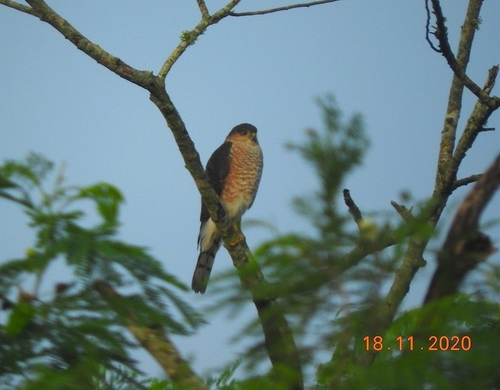 アシボソハイタカ
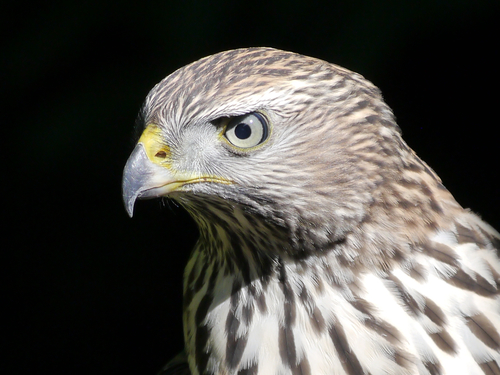 アメリカオオタカ
要点
Juvenile Sharp-shinned Hawks and American Goshawks can be confused, especially in flight, but the most reliable field mark is size and structure: American Goshawk is much larger and bulkier, with a broad chest and powerful build, while Sharp-shinned is notably small and slim, with long, thin legs. Juvenile plumage differs in the pattern of streaking: Goshawk juveniles show heavy, even, vertical streaks on the underparts, while Sharp-shinned juveniles have finer, more reddish or brown streaks and a scaly look above. In flight, Goshawk’s wingbeats are slower and deeper, and its tail appears shorter relative to its body. Both species have similar overall coloration as adults, but Goshawk never shows the rufous barring typical of adult Sharp-shinned. Use a combination of size, structure, and streaking pattern for the most reliable separation, especially with immature birds.
識別のコツ
- Size is the first check: If the bird is crow-sized or larger, it's a Goshawk; if it's jay- or dove-sized, it's a Sharp-shinned. There is no size overlap in wing or tail length between the two.
- Structure in flight: Goshawk is broad-chested, with a thick neck and robust legs; Sharp-shinned is slim, with a small head and very long, thin legs. Goshawk’s tail looks shorter and broader relative to its body.
- Wingbeats: Goshawk has slow, deep, deliberate wingbeats; Sharp-shinned’s are quick and snappy. This is especially noticeable in open flight.
- Juvenile underpart streaking: Juvenile Goshawk has heavy, even, vertical streaks on the chest and belly; Sharp-shinned juvenile shows finer, often reddish or brown streaks, with a scaly look above and reddish barring on the sides.
- Adult underpart barring: Adult Sharp-shinned has rufous or tawny barring below; Goshawk never shows rusty barring, instead having fine gray barring on pale underparts.
- Upperparts color: Both adults are blue-grey above, but Sharp-shinned has a darker cap and sometimes white scapular spots; Goshawk’s upperparts are more uniformly gray.
- Tail shape: Sharp-shinned’s tail is medium-length, banded, and varies from notched to square or slightly rounded, often with a narrow white tip; Goshawk’s tail is broader, more squared, and proportionally shorter.
- Leg thickness: Sharp-shinned has very thin, long legs; Goshawk’s legs are thicker and more robust.
- Head and bill: Goshawk has a larger, broader head and a heavier bill; Sharp-shinned’s head is small and rounded.
- Jizz when perched: Goshawk looks massive, upright, and broad-chested; Sharp-shinned is slim, hunched, and long-legged.
- Habitat context: Sharp-shinned is more likely in suburban or edge habitats, especially during migration; Goshawk prefers deep, mature forests.
- Iris color (adults): Adult Sharp-shinned has dark orange to red irides; juveniles are yellowish to pale orange. Goshawk iris color is not specified here but is typically red in adults.
- Thigh color: Sharp-shinned adults have rufous thighs, often barred white; Goshawk’s thigh color is not distinctive for separation.
- Scapular spots: Sharp-shinned may show random white spots on the scapulars; Goshawk does not.
- Pitfalls: Juvenile plumage is the main confusion point—focus on streaking pattern, size, and structure. Do not rely on tail banding alone, as both species show banded tails.
大きさ
American Goshawk is dramatically larger than Sharp-shinned Hawk. Adult male Sharp-shinned Hawks are 23–30 cm long with a 42–58 cm wingspan and weigh 82–115 g; females are 29–37 cm, wingspan 58–68 cm, and 150–219 g [wikipedia]. American Goshawk is not given precise measurements here, but is always much larger and bulkier than even the largest Sharp-shinned, with no overlap in wing or tail length [wikipedia]. In the field, Goshawk appears crow- to raven-sized, while Sharp-shinned is closer to a jay or small dove. Even a small male Goshawk is much larger than a female Sharp-shinned. This size difference is often the easiest and most reliable field mark.
羽色
Juvenile plumage is the main confusion point. Juvenile Sharp-shinned Hawks have brownish upperparts with rufous edges (scaly look), a brown streaked head, and whitish underparts heavily streaked brown or reddish, often with reddish barring on the sides [wikipedia]. Juvenile American Goshawks have heavy, even, vertical streaking on the chest and abdomen, lacking the teardrop shape seen in Cooper's Hawk, and never show rusty barring below [wikipedia]. Goshawk juveniles are more heavily and evenly streaked than Sharp-shinned, which may show finer, more reddish streaks. Adult Sharp-shinned Hawks have blue-grey upperparts, a dark cap, rufous or tawny barring below, and rufous thighs; Goshawk adults are similar above but never have rufous barring below, instead showing pale underparts with fine gray barring. In flight, both show banded tails, but Goshawk’s tail is proportionally shorter and broader. Sharp-shinned’s tail tip varies from notched to square or slightly rounded, often with a narrow white tip; Goshawk’s tail is broader and more squared. The legs of Sharp-shinned are long and very slender, while Goshawk’s are thicker and more robust.
行動
In flight, American Goshawk is powerful, with deep, deliberate wingbeats and a strong, direct flight style. Sharp-shinned Hawk is quick and agile, with rapid, snappy wingbeats and a more fluttery, buoyant flight. Perched, Goshawk sits more upright and appears massive, with a broad chest and large head; Sharp-shinned is slim, often appearing hunched, with a small head and long legs. Goshawk may soar more often and is less likely to be seen darting through dense cover than Sharp-shinned, which is a specialist of quick, low-level dashes through woods.
生息環境
Both species occur in forests, but Sharp-shinned Hawk is more often found in dense woodlands, forest edges, and sometimes suburban areas, especially during migration. American Goshawk prefers mature, extensive forests and is less likely to be seen in open or suburban habitats. During migration, Sharp-shinned is much more likely to be seen in a variety of habitats, including urban parks and backyards, while Goshawk remains tied to larger tracts of forest.