

Motmot

コンゴウインコ 対 ベニコンゴウインコ

Ara macao 対 Ara chloropterus

コンゴウインコとベニコンゴウインコのクイズ

コンゴウインコ (Ara macao) コンゴウインコ
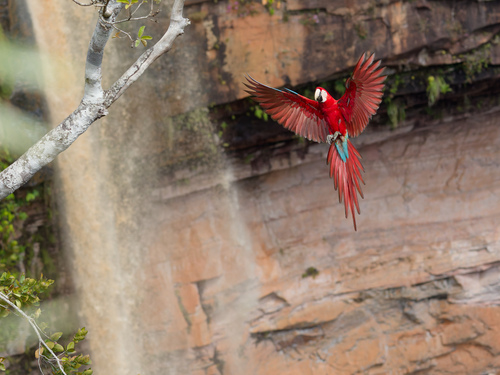
ベニコンゴウインコ (Ara chloropterus) ベニコンゴウインコ

メディア

読み込み中…

要点

コンゴウインコとベニコンゴウインコの最も信頼できるフィールドマークは、上翼のカバーの色です:コンゴウインコは上翼の中央に広い黄色の帯を示し、ベニコンゴウインコは黄色のない緑の上翼カバーを持っています。さらに、ベニコンゴウインコは、コンゴウインコにはない、白い顔の皮膚に特徴的な赤い羽毛の線があります。両者は大きく、主に赤いコンゴウインコですが、ベニコンゴウインコは明らかにずっしりとしていて長いです。これらの違いは、止まっている鳥と飛んでいる鳥の両方で見ることができますが、翼の色は特に飛行中や翼が広げられたときに明らかです。幼鳥と成鳥の羽毛はフィールド目的では似ていますが、目の色は近距離でコンゴウインコの年齢を判断するのに役立ちます。

識別のコツ

  1. Upperwing coverts color (all ages): コンゴウインコは上翼カバーに広い黄色の帯を示し、しばしば緑で縁取られています(特に南米の鳥において);ベニコンゴウインコは黄色のない固体の緑の上翼カバーを持っています。これは、特に飛行中や翼が広げられたときに最も信頼できるフィールドマークです。
  2. Facial skin pattern: ベニコンゴウインコは、白い顔の皮膚に赤い羽毛の線を持ち、目の周りに線状のパターンを形成しています;コンゴウインコの顔の皮膚は平坦な白で、散らばった小さな白い羽毛しかありません。これは近距離または良い写真で見ることができます。
  3. Body size and bulk: ベニコンゴウインコはコンゴウインコよりも明らかに大きくずっしりとしていますが、サイズの重なりや姿勢により、鳥が一緒でない限り微妙に見えることがあります。
  4. Tail shape and color: コンゴウインコの尾はより尖っていて、比例的に長く、尾羽と尾カバーに淡い青があります;ベニコンゴウインコの尾も長いですが、赤に囲まれた虹色のティールを示します。尾の色は良い光の下や、尾を広げて止まっているときに最もよく見えます。
  5. Bill color: コンゴウインコは主に淡い角質の上顎と黒い下顎を持っています;ベニコンゴウインコのくちばしの色は特に異なるとは記述されていないため、信頼できる区別にはなりません。
  6. Eye color (age-specific, Scarlet only): 幼鳥のコンゴウインコは暗い目を持ち、成鳥は淡い黄色の目を持っています。これは近距離でコンゴウインコの年齢を判断するのに役立ちますが、種を区別するものではありません。
  7. Breast color: 両種とも明るい赤い胸を持っているため、これは区別にはなりません。
  8. Flight jizz: 両種とも強く、直線的に飛ぶ長い尾を持っていますが、コンゴウインコの黄色は飛行中に明らかです;ベニコンゴウインコはこの黄色のフラッシュを持っていません。
  9. Voice: 両者は非常に大きく、厳しい、響く呼び声を持っています;声は信頼できる区別にはなりません。
  10. Habitat and range: 両者は重なり合う地域の湿った森林に生息しています;生息地は両者が存在する場所では区別にはなりません。
  11. Plumage variation (subspecies): 中央アメリカのコンゴウインコは大きく、翼に青が多いですが、上翼カバーには黄色を示します。南アメリカのコンゴウインコは黄色の縁に緑が多いかもしれませんが、決してベニコンゴウインコのような固体の緑にはなりません。
  12. Perched vs. flight views: コンゴウインコの黄色の上翼バンドは、止まっているとき(翼を折りたたんで、黄色のパッチとして)と飛行中(黄色のフラッシュとして)に見ることができます;ベニコンゴウインコは翼に黄色を示しません。
  13. Pitfalls: 遠くから見ると、両者は長い尾を持つ大きな赤いコンゴウインコのように見えます。光が悪い場合や遠くからの視界では、コンゴウインコの翼の黄色が隠れることがあり、区別が難しくなります。可能な限り、顔の羽毛の線と翼の色を探してください。
  14. Captivity context: 両者は飼育に人気がありますが、ベニコンゴウインコはコンゴウインコよりも一般的ではなく、より高価です。これはフィールドマークではありませんが、コレクションの地元の豊富さを説明するかもしれません。
  15. Sex and season: どちらの種にも性的二形や季節的な羽毛の違いは記載されていません;すべてのフィールドマークは年間を通じて両性に適用されます。

大きさ

ベニコンゴウインコは二者の中で大きく、平均して90〜95 cmの長さと1,214 gの体重(範囲1,050〜1,700 g)で、最も重いオウムの一つです。コンゴウインコはやや小さく、通常84 cm(中央アメリカの鳥は最大89 cm)で、約1,000 gです。フィールドでは、ベニコンゴウインコはずっしりとしていて長い尾を持っているように見えますが、サイズの重なりや姿勢により、鳥が並んでいない限り微妙に見えることがあります。

羽色

すべての年齢において、重要な違いは上翼のパターンです:コンゴウインコは上翼カバーに広い黄色の帯を持ち、しばしばその端に緑があります(特に南米の鳥において)、一方、ベニコンゴウインコの上翼カバーは固体の緑で、黄色がありません。飛行中、これはコンゴウインコに強い黄色のフラッシュを生み出し、ベニコンゴウインコにはありません。両種とも主に赤い頭と体を持っていますが、ベニコンゴウインコは白い顔の皮膚に特徴的な赤い羽毛の線を持ち、コンゴウインコの顔の皮膚は平坦な白で、散らばった小さな白い羽毛しかありません。コンゴウインコの尾はより尖っていて、比例的に長く、尾羽と尾カバーに淡い青がありますが、ベニコンゴウインコの尾も長いですが、赤に囲まれた虹色のティールを示します。幼鳥のコンゴウインコは暗い目を持ち、成鳥は淡い黄色の目を持っています;ベニコンゴウインコの目の色は年齢の区別に特に記載されていません。

行動

両種は通常、ペアまたは小グループで見られ、高い樹冠の上を飛び回り、大声で鳴いています。彼らは一夫一妻制で、木の空洞に巣を作ります。攻撃的な行動は繁殖中に最も起こりやすいです。フィールドでの区別のための主要な行動の違いは記載されていません。

生息環境

両種は中央アメリカと南アメリカの湿った常緑樹林に生息し、重なり合う範囲を持っています。コンゴウインコの範囲はメキシコ南東部からブラジルまで、トリニダードとコイバを含み、ベニコンゴウインコは北部と中央南アメリカに広く分布しています。両者は生息地の喪失や捕獲により地域的な減少を経験していますが、生息地は範囲が重なる場所では信頼できる区別にはなりません。

声

コンゴウインコは非常に大きく、高音で時には低音の、喉から出るような鳴き声、きしみ、叫び声を発し、長距離にわたって響くように設計されています。ベニコンゴウインコの声はここでは詳細に記述されていませんが、両種とも大きなコンゴウインコに典型的な大きく、厳しい呼び声を持っています。声はフィールドでの信頼できる区別にはなりません。

より良い説明を送る

比較と同じ項目を使ってください。文章はすぐに公開されます。

The most reliable field mark between Scarlet Macaw and Red-and-green (Green-winged) Macaw is the color of the upperwing coverts: Scarlet Macaw shows a broad yellow band across the middle of the upperwing, while Red-and-green Macaw has green upperwing coverts with no yellow. In addition, Red-and-green Macaw has distinctive red feather lines on the otherwise bare white facial skin, absent in Scarlet. Both are large, mostly red macaws, but Red-and-green is noticeably bulkier and longer. These differences are visible in both perched and flying birds, but the wing color is especially obvious in flight or when wings are spread. Juvenile and adult plumages are similar for field purposes, but eye color can help age Scarlet Macaw at close range.

  1. Upperwing coverts color (all ages): Scarlet Macaw shows a broad yellow band across the upperwing coverts, often edged with green (especially in South American birds); Red-and-green Macaw has solid green upperwing coverts with no yellow. This is the single most reliable field mark, especially in flight or when wings are spread.
  2. Facial skin pattern: Red-and-green Macaw has red feather lines on the otherwise bare white facial skin, forming a lined pattern around the eye; Scarlet Macaw's facial skin is plain white with only tiny scattered white feathers. This is visible at close range or in good photos.
  3. Body size and bulk: Red-and-green Macaw is noticeably larger and bulkier than Scarlet Macaw, but size overlap and posture can make this subtle unless birds are together.
  4. Tail shape and color: Scarlet Macaw's tail is more pointed and proportionally longer, with light blue on the rump and tail coverts; Red-and-green Macaw's tail is also long but shows iridescent teal surrounded by red. Tail color is best seen in good light or when the bird is perched with tail fanned.
  5. Bill color: Scarlet Macaw has a mostly pale horn upper mandible with a black lower mandible; Red-and-green Macaw's bill color is not specifically described as different, so not a reliable separator.
  6. Eye color (age-specific, Scarlet only): Juvenile Scarlet Macaws have dark eyes, while adults have pale yellow eyes. This can help age a Scarlet Macaw at close range but does not separate species.
  7. Breast color: Both species have bright red breasts, so this is not a separator.
  8. Flight jizz: Both species are strong, direct fliers with long tails, but Scarlet Macaw's yellow in the upperwing is obvious in flight; Red-and-green Macaw lacks this yellow flash.
  9. Voice: Both are extremely loud, with harsh, carrying calls; voice is not a reliable separator.
  10. Habitat and range: Both inhabit humid forests in overlapping regions; habitat is not a separator where both occur.
  11. Plumage variation (subspecies): Central American Scarlet Macaws are larger and have more blue in the wings, but still show yellow upperwing coverts. South American Scarlet Macaws may have more green edging the yellow, but never solid green like Red-and-green Macaw.
  12. Perched vs. flight views: The yellow upperwing band of Scarlet Macaw is visible both perched (with wings folded, as a yellow patch) and in flight (as a yellow flash); Red-and-green Macaw never shows yellow in the wing.
  13. Pitfalls: At a distance, both appear as large red macaws with long tails. Poor light or distant views can obscure the yellow in Scarlet's wing, making separation difficult. Always look for the facial feather lines and wing color when possible.
  14. Captivity context: Both are popular in aviculture, but Red-and-green Macaw is less common and more expensive than Scarlet Macaw. This is not a field mark, but may explain local abundance in collections.
  15. Sex and season: No sexual dimorphism or seasonal plumage differences are noted for either species; all field marks apply year-round and to both sexes.

Red-and-green Macaw is the larger of the two, averaging 90–95 cm in length and 1,214 g in weight (range 1,050–1,700 g), making it one of the heaviest parrots. Scarlet Macaw is slightly smaller, typically 84 cm (Central American birds up to 89 cm) and about 1,000 g. In the field, Red-and-green Macaw appears bulkier and longer-tailed, but size overlap and posture can make this subtle unless the birds are side by side.

For all ages, the key difference is the upperwing pattern: Scarlet Macaw has a broad yellow band across the upperwing coverts, often with some green at the edges (especially in South American birds), while Red-and-green Macaw's upperwing coverts are solid green, lacking yellow. In flight, this creates a strong yellow flash in Scarlet, absent in Red-and-green. Both species have mostly red heads and bodies, but Red-and-green Macaw has distinctive red feather lines on the white facial skin, while Scarlet's facial skin is plain white with tiny scattered white feathers. The tail of Scarlet Macaw is more pointed and proportionally longer, with light blue on the rump and tail coverts, while Red-and-green Macaw's tail is also long but shows iridescent teal surrounded by red. Juvenile Scarlet Macaws have dark eyes, while adults have pale yellow eyes; Red-and-green Macaw's eye color is not noted as distinctive for age separation.

Both species are typically seen in pairs or small groups, often flying high above the canopy and calling loudly. They are monogamous and nest in tree cavities. Aggressive behavior is most likely during breeding. No major behavioral differences are noted for field separation.

Both species inhabit humid evergreen forests in Central and South America, with overlapping ranges. Scarlet Macaw's range extends from southeastern Mexico to Brazil, including Trinidad and Coiba, while Red-and-green Macaw is widespread in northern and central South America. Both have suffered local declines due to habitat loss and trapping, but habitat is not a reliable separator where ranges overlap.

Scarlet Macaw gives very loud, high and sometimes low-pitched, throaty squawks, squeaks, and screams, designed to carry over long distances. Red-and-green Macaw's voice is not described in detail here, but both species have loud, harsh calls typical of large macaws. Voice is not a reliable separator in the field.

変更を破棄しますか?

保存していない編集があります。今離れると失われます。

コンゴウインコ · ベニコンゴウインコ · 苦手な鳥