

Motmot

ショウドウツバメ 対 チャイロツバメ

Riparia riparia 対 Ptyonoprogne rupestris

ショウドウツバメとチャイロツバメのクイズ
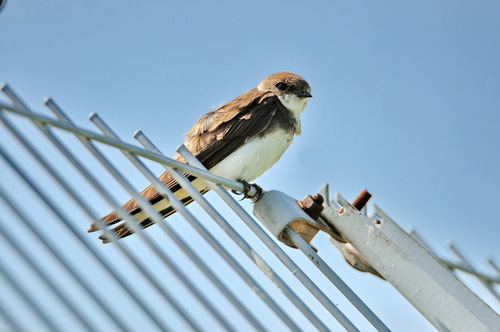
ショウドウツバメ (Riparia riparia) ショウドウツバメ
チャイロツバメ (Ptyonoprogne rupestris) チャイロツバメ

メディア

読み込み中…

要点

ショウドウツバメとチャイロツバメを区別する最も信頼できる方法は、ショウドウツバメの狭い茶色の胸帯(すべての年齢)を探すことです。チャイロツバメにはこの胸帯がまったくありません。飛行中、チャイロツバメは尾羽の先端付近に特徴的な白い斑点を示しますが、ショウドウツバメにはありません。チャイロツバメはまた、目に見えて大きく、がっしりとしており、翼が広く、尾が四角いです。幼鳥のショウドウツバメは翼覆の先端が赤褐色ですが、幼鳥のチャイロツバメは頭部、上面、覆羽の先端が淡褐色です。両種は遠くから見ると表面的に似ていることがありますが、これらの詳細に注意を払うことで、確実に区別できます。

識別のコツ

  1. Breast Band (All Ages): ショウドウツバメは常に白い腹部に沿って狭く、はっきりとした茶色の胸帯を示します。チャイロツバメにはこの帯がなく、腹部は無地でやや汚れたように見えます。
  2. Tail Pattern (All Ages): チャイロツバメはほとんどの尾羽の先端付近に特徴的な白い斑点を持ち、飛行中または尾を広げたときに最もよく見えます。ショウドウツバメの尾は無地の茶色で白い斑点はありません。
  3. Size and Structure: チャイロツバメは目に見えて大きく、重く、がっしりとしており、翼が広く、尾が四角く短いです。ショウドウツバメは小さく、スリムで、構造がより繊細です。
  4. Upperparts Color: ショウドウツバメは上面が均一な茶色です。チャイロツバメは灰色がかった茶色で、時にはやや灰色がかって見えることがありますが、これは暗い光の中では微妙です。
  5. Underwing and Undertail Coverts: チャイロツバメは黒っぽい下翼と下尾覆羽を持ち、淡い腹部と対照的です。ショウドウツバメの下翼はより無地で、対照的ではありません。
  6. Juvenile Plumage: 幼鳥のショウドウツバメは翼覆と二次羽に赤褐色の先端を持ち、幼鳥のチャイロツバメは頭部、上面、覆羽に淡褐色の先端を持っています。新鮮な秋の個体でこれらの微妙なエッジを探してください。
  7. Flight Style: ショウドウツバメの飛行は速く、ぎこちなく、敏捷で、水面近くを低く飛ぶことがよくあります。チャイロツバメの飛行は遅く、定期的な滑空とより広い、柔軟な翼を持ち、崖や建物の近くでよく見られます。
  8. Perched Posture: チャイロツバメはがっしりとして見え、岩の ledge や垂直な表面に止まる傾向があります。ショウドウツバメはスリムで、ワイヤーや葦に止まる可能性が高いです。
  9. Habitat Context: ショウドウツバメは繁殖中に砂の堤防や水の近くで見られることが多いです。チャイロツバメは岩の多いまたは都市の石の生息地に結びついています。崖や石の建物の近くでツバメを見た場合、チャイロツバメの可能性が高いです。
  10. Vocalizations: ショウドウツバメの連続的なさえずりと、チャイロツバメの短く高い、切り詰められた呼び声を聞いてください。
  11. Bill and Legs: 両方とも小さく、暗いくちばしと茶色がかった脚を持ち、フィールドでは確実に区別できません。
  12. Sexes: 両種は性別が同形であり、オスとメスは似ています。
  13. Seasonal Pitfalls: 渡りや冬の間、両種が一緒に見られることがありますが、上記の構造的および羽毛の違いは依然として適用されます。
  14. Confusion Risk: 遠距離または暗い光の中では、胸帯と尾の斑点が最も信頼できるマークです。幼鳥はより難しいかもしれませんが、胸帯と尾の斑点の有無は診断的です。
  15. When in Doubt: 胸帯や尾の斑点が見えない場合は、サイズ、構造、飛行スタイルを生息地の文脈と組み合わせて最良の判断をしてください。

大きさ

チャイロツバメはショウドウツバメよりも明らかに大きく、重いです。チャイロツバメの長さは13〜15 cm、翼幅は32〜34.5 cm、平均質量は約20〜23 gです。ショウドウツバメは長さ12〜13 cm、翼幅26.5〜29 cm、質量は11〜16 g(渡り前は最大19.5 g)と小さいです。チャイロツバメはまた、より広い体型で頑丈に見え、よりスリムで繊細なショウドウツバメと比較して、翼と尾が広いです。

羽色

行動

ショウドウツバメは小型ツバメ特有の速く、ぎこちない飛行スタイルを持ち、水面や開けた地面の上を低く飛び回ることがよく見られます。チャイロツバメは遅く、より意図的な翼の動きで滑空を交えながら飛び、崖や岩の面の近くでよく見られます。チャイロツバメはしばしば翼を平らに保ちながら滑空し、より広い翼と大きなサイズを示します。止まっているとき、チャイロツバメはがっしりとして見え、岩の ledge や建物に座ることが多いですが、ショウドウツバメはワイヤーや葦に止まる可能性が高いです。

生息環境

ショウドウツバメは砂の堤防、川の崖、砂利の採石場でコロニーを作り、しばしば水の近くで繁殖します。チャイロツバメは崖、渓谷、山岳地帯などの岩の多い生息地を好み、適した地形の人間の構造物の周りでよく見られます。両種は開けた地域で飛んでいるのが見られますが、ショウドウツバメは巣作りのために水や柔らかい土により密接に結びついているのに対し、チャイロツバメは岩の面や都市の石材に関連しています。渡りや冬の間に重複が見られることがありますが、繁殖生息地は通常異なります。

声

ショウドウツバメは飛行中に連続的でざらざらしたさえずりを出し、止まっているときにはより柔らかく会話的になります。警戒音は厳しく、捕食者に対して使用されます。チャイロツバメの呼び声は短く、高い「プリ」、「ピイ」、「チル」という音で、リンネットやハウスツバメの呼び声に似ています。彼らの声はショウドウツバメのさえずりと比べて、より連続的ではなく、より切り詰められています。

より良い説明を送る

比較と同じ項目を使ってください。文章はすぐに公開されます。

The most reliable way to separate Sand Martin from Eurasian Crag Martin is by looking for the Sand Martin's narrow brown breast band (all ages), which the crag martin completely lacks. In flight, crag martins show distinctive white patches near the tips of the tail feathers, absent in Sand Martin. Crag martins are also noticeably larger and bulkier, with broader wings and a squarer tail. Juvenile Sand Martins have rufous-tipped wing coverts, while juvenile crag martins show buff-brown tips to the head, upperparts, and coverts. Both species can appear superficially similar at a distance, but careful attention to these details will reliably separate them.

  1. Breast Band (All Ages): Sand Martin always shows a narrow, well-defined brown breast band across the white underparts; crag martin never has this band—its underparts are plain and slightly dirty-looking.
  2. Tail Pattern (All Ages): Crag martin has distinctive white patches near the tips of most tail feathers, best seen in flight or when tail is spread; Sand Martin's tail is plain brown with no white spots.
  3. Size and Structure: Crag martin is noticeably larger, heavier, and bulkier, with broader wings and a squarer, shorter tail; Sand Martin is smaller, slimmer, and more delicate in build.
  4. Upperparts Color: Sand Martin is a uniform brown above; crag martin is ash-brown, sometimes appearing slightly greyer or duskier, but this can be subtle in poor light.
  5. Underwing and Undertail Coverts: Crag martin has blackish underwing and undertail coverts, contrasting with its paler belly; Sand Martin's underwings are plainer and less contrasting.
  6. Juvenile Plumage: Juvenile Sand Martins have rufous tips to wing coverts and secondaries; juvenile crag martins have buff-brown tips to head, upperparts, and coverts—look for these subtle edges in fresh autumn birds.
  7. Flight Style: Sand Martin's flight is quick, jerky, and agile, often low over water; crag martin's flight is slower, with regular glides and broader, more flexible wings—often seen near cliffs or buildings.
  8. Perched Posture: Crag martin looks bulkier and tends to perch on rocky ledges or vertical surfaces; Sand Martin is slimmer and more likely to perch on wires or reeds.
  9. Habitat Context: Sand Martin is usually found near sandy banks or water during breeding; crag martin is tied to rocky or urban stone habitats. If you see a swallow near a cliff or stone building, crag martin is more likely.
  10. Vocalizations: Listen for the Sand Martin's continuous twittering versus the crag martin's short, high, clipped calls.
  11. Bill and Legs: Both have small, dark bills and brownish legs, not reliably separable in the field.
  12. Sexes: Both species are sexually monomorphic—males and females look alike.
  13. Seasonal Pitfalls: During migration or in winter, both species may occur together, but the structural and plumage differences above still apply.
  14. Confusion Risk: At long range or in poor light, the breast band and tail spots are the most reliable marks. Juveniles may be trickier, but the presence or absence of the breast band and tail spots remains diagnostic.
  15. When in Doubt: If you cannot see the breast band or tail spots, use size, structure, and flight style in combination with habitat context to make the best call.

Eurasian Crag Martin is significantly larger and heavier than Sand Martin. Crag martin length is 13–15 cm with a wingspan of 32–34.5 cm and an average mass of about 20–23 g. Sand Martin is smaller at 12–13 cm length, 26.5–29 cm wingspan, and 11–16 g (up to 19.5 g pre-migration). Crag martin also appears broader-bodied and more robust, with broader wings and tail compared to the more slender, delicate Sand Martin.

  • Juveniles: Sand Martin juveniles have rufous tips to the wing coverts and secondaries, while juvenile crag martins have buff-brown tips to the head, upperparts, and coverts. These subtle differences are best seen at close range or in good light.
  • Adults: Adult Sand Martins are brown above, white below, with a crisp, narrow brown breast band and a white throat. Crag martins are ash-brown above, paler below, but lack any breast band. Instead, they have a uniform, slightly dirty-looking underside. Crag martins show distinctive white patches near the tips of all but the central and outermost tail feathers, visible especially in flight or when the tail is spread. Sand Martins have a plain brown tail without white spots. Crag martins also have blackish underwing and undertail coverts, which can contrast with the paler underparts, while Sand Martins have plainer underwings.

Sand Martins have a quick, jerky flight style typical of small swallows, often seen twisting and darting low over water or open ground. Eurasian Crag Martins fly with slower, more deliberate wingbeats interspersed with glides, and are often seen maneuvering near cliffs or rocky faces. Crag martins frequently soar or glide with wings held flat, showing their broader wings and larger size. When perched, crag martins look bulkier and more robust, often sitting on rocky ledges or buildings, while Sand Martins are more likely to perch on wires or reeds.

Sand Martins breed in colonies in sandy banks, river cliffs, and gravel pits, often near water. Eurasian Crag Martins prefer rocky habitats, such as cliffs, gorges, and mountainous areas, and are often seen around human structures in suitable terrain. While both can be seen in flight over open areas, Sand Martins are more closely tied to water and soft earth for nesting, whereas crag martins are associated with rock faces and urban stonework. Overlap may occur during migration or in winter, but breeding habitats are usually distinct.

Sand Martin gives a continuous, gravelly twittering in flight, which becomes softer and more conversational when perched. Its alarm call is harsh and used in response to predators. Crag Martin calls are described as short, high 'pli', 'piieh', and 'tshir' notes, somewhat resembling linnet or house martin calls. Their vocalizations are less continuous and more clipped compared to the Sand Martin's twittering.

変更を破棄しますか?

保存していない編集があります。今離れると失われます。

ショウドウツバメ · チャイロツバメ · 苦手な鳥