

Topino vs Rondine montana
Riparia riparia contro Ptyonoprogne rupestris
Fai un quiz con Topino e Rondine montana
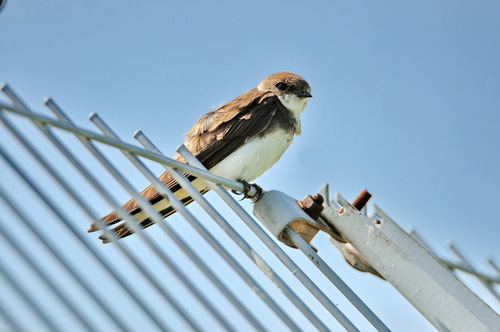 Topino
 Rondine montana
In breve
Il modo più affidabile per separare il Topino dalla Rondine montana è cercare la stretta banda petto marrone del Topino (tutte le età), che la rondine montana non ha affatto. In volo, le rondini montane mostrano macchie bianche distintive vicino alle punte delle penne della coda, assenti nel Topino. Le rondini montane sono anche visibilmente più grandi e robuste, con ali più larghe e una coda più quadrata. I giovani Topini hanno copritrici delle ali con punte rugginose, mentre i giovani rondini montane mostrano punte color crema-marrone sulla testa, sul dorso e sulle copritrici. Entrambe le specie possono apparire superficialmente simili a distanza, ma prestando attenzione a questi dettagli si possono separare in modo affidabile.
Consigli di identificazione
- Breast Band (All Ages): Il Topino mostra sempre una stretta e ben definita banda petto marrone attraverso il ventre bianco; la rondine montana non ha mai questa banda: il suo ventre è semplice e leggermente sporco.
- Tail Pattern (All Ages): La rondine montana ha macchie bianche distintive vicino alle punte della maggior parte delle penne della coda, meglio visibili in volo o quando la coda è aperta; la coda del Topino è marrone semplice senza macchie bianche.
- Size and Structure: La rondine montana è visibilmente più grande, pesante e robusta, con ali più larghe e una coda più quadrata e corta; il Topino è più piccolo, snello e più delicato nella struttura.
- Upperparts Color: Il Topino è di un marrone uniforme sopra; la rondine montana è color cenere-marrone, a volte appare leggermente più grigia o scura, ma questo può essere sottile in scarsa illuminazione.
- Underwing and Undertail Coverts: La rondine montana ha copritrici delle ali e della coda di colore nerastro, in contrasto con il suo ventre più chiaro; le ali inferiori del Topino sono più semplici e meno contrastanti.
- Juvenile Plumage: I giovani Topini hanno punte rugginose sulle copritrici delle ali e sulle secondarie; i giovani rondini montane hanno punte color crema-marrone sulla testa, sul dorso e sulle copritrici: cerca questi bordi sottili negli uccelli freschi d'autunno.
- Flight Style: Il volo del Topino è veloce, irregolare e agile, spesso basso sull'acqua; il volo della rondine montana è più lento, con planate regolari e ali più larghe e flessibili: spesso si vedono vicino a scogliere o edifici.
- Perched Posture: La rondine montana appare più robusta e tende a posarsi su sporgenze rocciose o superfici verticali; il Topino è più snello e più propenso a posarsi su fili o canne.
- Habitat Context: Il Topino si trova solitamente vicino a rive sabbiose o acqua durante la riproduzione; la rondine montana è legata a habitat rocciosi o urbani. Se vedi una rondine vicino a una scogliera o a un edificio in pietra, è più probabile che sia una rondine montana.
- Vocalizations: Ascolta il continuo cinguettio del Topino rispetto ai brevi, alti e taglienti richiami della rondine montana.
- Bill and Legs: Entrambi hanno becchi piccoli e scuri e zampe marroni, non separabili in modo affidabile sul campo.
- Sexes: Entrambe le specie sono sessualmente monomorfiche: maschi e femmine si somigliano.
- Seasonal Pitfalls: Durante la migrazione o in inverno, entrambe le specie possono verificarsi insieme, ma le differenze strutturali e di piumaggio sopra menzionate si applicano ancora.
- Confusion Risk: A lunga distanza o in scarsa illuminazione, la banda petto e le macchie sulla coda sono i segni più affidabili. I giovani possono essere più difficili, ma la presenza o l'assenza della banda petto e delle macchie sulla coda rimane diagnostica.
- When in Doubt: Se non riesci a vedere la banda petto o le macchie sulla coda, usa dimensioni, struttura e stile di volo in combinazione con il contesto dell'habitat per fare la scelta migliore.
Taglia
La Rondine montana è significativamente più grande e pesante del Topino. La lunghezza della rondine montana è di 13–15 cm con un'apertura alare di 32–34,5 cm e una massa media di circa 20–23 g. Il Topino è più piccolo, con una lunghezza di 12–13 cm, un'apertura alare di 26,5–29 cm e 11–16 g (fino a 19,5 g prima della migrazione). La rondine montana appare anche più robusta e con un corpo più largo, con ali e coda più larghe rispetto al più snello e delicato Topino.
Piumaggio
- Juveniles: I giovani Topini hanno punte rugginose sulle copritrici delle ali e sulle secondarie, mentre i giovani rondini montane hanno punte color crema-marrone sulla testa, sul dorso e sulle copritrici. Queste sottili differenze sono meglio visibili a distanza ravvicinata o in buona luce.
- Adults: Gli adulti Topini sono marroni sopra, bianchi sotto, con una banda petto marrone stretta e ben definita e una gola bianca. Le rondini montane sono color cenere-marrone sopra, più chiare sotto, ma non hanno alcuna banda petto. Invece, hanno un ventre uniforme, leggermente sporco. Le rondini montane mostrano macchie bianche distintive vicino alle punte di tutte le penne della coda tranne quelle centrali e più esterne, visibili soprattutto in volo o quando la coda è aperta. I Topini hanno una coda marrone semplice senza macchie bianche. Le rondini montane hanno anche copritrici delle ali e della coda di colore nerastro, che possono contrastare con il ventre più chiaro, mentre i Topini hanno ali inferiori più semplici.
Comportamento
I Topini hanno uno stile di volo veloce e irregolare tipico delle piccole rondini, spesso visti girare e sfrecciare bassi sull'acqua o su terreni aperti. Le Rondini montane volano con battiti d'ali più lenti e deliberati intervallati da planate, e spesso si vedono manovrare vicino a scogliere o pareti rocciose. Le rondini montane spesso planano o si librano con le ali tenute piatte, mostrando le loro ali più larghe e la loro dimensione maggiore. Quando sono posate, le rondini montane appaiono più robuste e robuste, spesso sedute su sporgenze rocciose o edifici, mentre i Topini sono più propensi a posarsi su fili o canne.
Habitat
I Topini nidificano in colonie in rive sabbiose, scogliere fluviali e cave di ghiaia, spesso vicino all'acqua. Le Rondini montane preferiscono habitat rocciosi, come scogliere, gole e aree montuose, e spesso si vedono intorno a strutture umane in terreni adatti. Anche se entrambe possono essere viste in volo su aree aperte, i Topini sono più legati all'acqua e alla terra morbida per il nido, mentre le rondini montane sono associate a pareti rocciose e opere in pietra urbane. Può verificarsi sovrapposizione durante la migrazione o in inverno, ma gli habitat di nidificazione sono solitamente distinti.
Voce
Il Topino emette un cinguettio continuo e ghiaroso in volo, che diventa più morbido e conversazionale quando è posato. Il suo richiamo di allerta è aspro e usato in risposta ai predatori. I richiami della rondine montana sono descritti come note brevi e alte 'pli', 'piieh' e 'tshir', che somigliano in parte ai richiami del verzellino o della rondine domestica. Le loro vocalizzazioni sono meno continue e più spezzate rispetto al cinguettio del Topino.