

Motmot

キバラヒタキモドキ 対 ムラサキミツドリ

Myiozetetes cayanensis 対 Cyanerpes caeruleus

キバラヒタキモドキとムラサキミツドリのクイズ
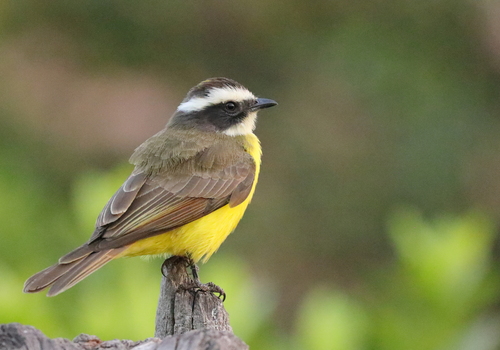
キバラヒタキモドキ (Myiozetetes cayanensis) キバラヒタキモドキ
ムラサキミツドリ (Cyanerpes caeruleus) ムラサキミツドリ

メディア

読み込み中…

要点

キバラヒタキモドキとムラサキミツドリを区別するための最も信頼できるフィールドマークは、サイズ、構造、くちばしの形状の組み合わせです:フライキャッチャーははるかに大きく、太くて真っ直ぐなくちばしを持ち、一方でハニークリーパーは小さく、細くて強く下向きのくちばしを持っています。幼鳥のキバラヒタキモドキは、翼と尾に錆びたシナモン色の縁取りを示し、これはどの年齢のハニークリーパーにも現れません。成鳥のオスのムラサキミツドリは、黒い翼とマスクを持つ明確な紫青色であり、メスと幼鳥のハニークリーパーは、緑がかった色合いで、バフと青の顔の模様を持ち、決して茶色と黄色のフライキャッチャーに似ることはありません。飛んでいるときや止まっているときに、フライキャッチャーの頑丈で直立した姿勢と、ハニークリーパーの小さくて活発で細い外観も強い手がかりです。

識別のコツ

  1. Size and bulk: キバラヒタキモドキはムラサキミツドリよりもはるかに大きく、重いです。もしその鳥がスズメサイズかそれ以下に見えるなら、それはフライキャッチャーではありません。
  2. Bill shape: フライキャッチャーは太くて真っ直ぐな短い黒いくちばしを持ち、ハニークリーパーは細くて強く下向きの黒いくちばしを持っています。くちばしの形状は距離があっても見えるため、診断的です。
  3. Juvenile wing and tail edges: 幼鳥のキバラヒタキモドキは、翼と尾に目立つ錆びたシナモン色の縁取りを示し、これはどの年齢のハニークリーパーにも存在しません。もし茶色がかった鳥の翼や尾に錆びた色やルフスが見えたら、フライキャッチャーを考えてください。
  4. Adult male plumage: 成鳥のオスのムラサキミツドリは、黒いマスクと翼を持つ鮮やかな紫青色です—フライキャッチャーは決して青または黒と青の色合いではありません。
  5. Adult female/juvenile honeycreeper: メスと幼鳥のハニークリーパーは、上面が緑で、バフと青の顔の模様、オフホワイトの縞模様の腹部、緑がかった尾を持っています。フライキャッチャーは、上面が緑で青またはバフの顔を持つことはありません。
  6. Supercilium: キバラヒタキモドキは、目を超えて広がる長い白いスーパシリウムを持っています;ハニークリーパーのメスはシナモンバフのスーパシリウムを持っていますが、それははるかに短く、緑の顔に設定されています。
  7. Crown patch: 成鳥のフライキャッチャーは、隠れた黄色から金色の冠斑点を持っています(めったに見えません);ハニークリーパーは決して冠斑点を示しません。
  8. Underparts: フライキャッチャーの腹部は明るい黄色で、喉は白いです;ハニークリーパーの腹部は決して単色の黄色ではありません—メスと幼鳥は緑がかった側面を持つオフホワイトの縞模様で、オスは青です。
  9. Tail: フライキャッチャーの尾は暗い茶色がかった色でオリーブの縁取りがあります;ハニークリーパーの尾は黒(オス)または緑(メス/幼鳥)で、決して茶色がかっていません。
  10. Leg color: オスのハニークリーパーは明るい黄色の脚と足を持ち、メスは淡い緑からオリーブイエローです;フライキャッチャーの脚は常に黒です。
  11. Perching behavior: フライキャッチャーは直立して静止し、しばしば露出した枝に止まります;ハニークリーパーは落ち着きがなく、葉の間を素早く移動し、長い間露出していることはほとんどありません。
  12. Habitat context: フライキャッチャーはしばしば開けた場所、森林の端、または目立つ止まり木にいます;ハニークリーパーはサブキャノピー/キャノピーに留まり、特に花や果実の木の近くにいます。
  13. Group association: ハニークリーパーはしばしば混成種の群れに加わり、タンジャーと一緒に餌を食べます;フライキャッチャーは通常孤独またはペアでいます。
  14. Sexual dimorphism: ハニークリーパーは強い性的二形性を示します(オスは青、メスは緑がかった色);フライキャッチャーの性別は羽毛において同一です。
  15. Pitfall: 未熟なフライキャッチャーは鈍く見えることがあり、メスのハニークリーパーと混同される可能性がありますが、錆びた翼/尾の縁取りと緑や青の色合いがないことを探してください。

大きさ

キバラヒタキモドキはムラサキミツドリよりもかなり大きい(16.5–18 cm、22–29.5 g)です。フライキャッチャーはハニークリーパーのほぼ2倍の長さで、質量は2倍以上です。この違いは距離があっても明らかで、フライキャッチャーはずんぐりして頑丈に見え、ハニークリーパーは小さくて繊細です。

羽色

行動

キバラヒタキモドキは通常、直立して止まり、昆虫を捕まえるために飛び出し、しばしば同じ露出した止まり木に戻ります。彼らは頑丈で目的意識を持っているように見え、しばしば長時間静止しています。ムラサキミツドリは非常に活発で、キャノピーやサブキャノピーを素早く採餌し、しばしばペアや小さな群れで行動し、混成種の群れに頻繁に加わります。彼らは敏捷に動き、長い間露出して止まることはほとんどありません。

生息環境

両種はパナマと南アメリカの大部分に生息していますが、彼らのマイクロハビタットの好みは異なります。キバラヒタキモドキは、開けた森林、森林の端、半開放的な地域の目立つ止まり木でよく見られます。ムラサキミツドリは、特に花や果実の木がある場所で森林のサブキャノピーやキャノピーを好み、低い場所や開けた国で見られる可能性は低くなります。文脈が助けになります:タンジャーと一緒にキャノピーで採餌している鳥は、ハニークリーパーである可能性が高いです;開けた場所の低い枝から飛び出している鳥は、フライキャッチャーである可能性が高いです。

より良い説明を送る

比較と同じ項目を使ってください。文章はすぐに公開されます。

The most reliable field mark for separating Rusty-margined Flycatcher from Purple Honeycreeper is the combination of size, structure, and bill shape: the flycatcher is much larger, with a thick, straight bill, while the honeycreeper is tiny and has a slender, strongly decurved bill. Juvenile Rusty-margined Flycatchers show rusty-cinnamon edges on the wings and tail, which never appear on honeycreepers of any age. Adult male Purple Honeycreepers are unmistakably violet-blue with black wings and mask, while female and juvenile honeycreepers are greenish with buff and blue face markings, never resembling the brown-and-yellow flycatcher. In flight or perched, the flycatcher’s robust, upright jizz and the honeycreeper’s small, active, and slender appearance are also strong clues.

  1. Size and bulk: Rusty-margined Flycatcher is much larger and heavier than Purple Honeycreeper. If the bird looks sparrow-sized or smaller, it is not a flycatcher.
  2. Bill shape: The flycatcher has a thick, straight, stubby black bill; the honeycreeper has a slender, strongly decurved black bill. Bill shape is visible even at a distance and is diagnostic.
  3. Juvenile wing and tail edges: Juvenile Rusty-margined Flycatchers show prominent rusty-cinnamon edges on wings and tail, never present on honeycreeper of any age. If you see rusty or rufous on the wings/tail of a brownish bird, think flycatcher.
  4. Adult male plumage: Adult male Purple Honeycreeper is vivid violet-blue with black mask and wings—no flycatcher is ever blue or black-and-blue.
  5. Adult female/juvenile honeycreeper: Female and juvenile honeycreepers are green above with buffy and blue face markings, off-white streaked underparts, and greenish tails. No flycatcher is green above with blue or buff face.
  6. Supercilium: Rusty-margined Flycatcher has a broad, long white supercilium extending well past the eye; honeycreeper females have a cinnamon-buff supercilium, but it is much shorter and set in a green face.
  7. Crown patch: Adult flycatchers have a concealed yellow to golden-orange crown patch (rarely visible); honeycreepers never show a crown patch.
  8. Underparts: Flycatcher underparts are bright yellow with a white throat; honeycreeper underparts are never solid yellow—females/juveniles are streaked off-white with greenish flanks, males are blue.
  9. Tail: Flycatcher tail is dusky brownish with olive edges; honeycreeper tail is black (male) or green (female/juvenile), never brownish.
  10. Leg color: Male honeycreepers have bright yellow legs and feet, females' are light green to olive-yellow; flycatcher legs are always black.
  11. Perching behavior: Flycatchers perch upright and still, often on exposed branches; honeycreepers are restless, moving quickly through foliage, rarely remaining exposed for long.
  12. Habitat context: Flycatchers are often in open areas, forest edges, or conspicuous perches; honeycreepers stay in the subcanopy/canopy, especially at flowering or fruiting trees.
  13. Group association: Honeycreepers often join mixed-species flocks and feed with tanagers; flycatchers are usually solitary or in pairs.
  14. Sexual dimorphism: Honeycreeper shows strong sexual dimorphism (males blue, females greenish); flycatcher sexes are identical in plumage.
  15. Pitfall: Immature flycatchers may seem dull and could be confused with female honeycreepers, but look for the rusty wing/tail edges and lack of green or blue tones.

Rusty-margined Flycatcher is significantly larger (16.5–18 cm, 22–29.5 g) than Purple Honeycreeper (9.3–11.4 cm, 7.8–14 g) [wikipedia]. The flycatcher is nearly twice the length and more than double the mass of the honeycreeper. This difference is obvious even at a distance: the flycatcher appears chunky and robust, while the honeycreeper is tiny and delicate.

  • Juvenile Rusty-margined Flycatchers have no yellow crown patch and show extensive rusty-cinnamon edges on the wing and tail feathers. This rusty edging is never present on Purple Honeycreeper of any age.
  • Adult Rusty-margined Flycatchers have a dark sooty crown (with a concealed yellow patch), a broad white supercilium, plain brown to olive-brown upperparts, and deep grayish-brown wings with thin rufous margins on the primaries. Underparts are bright yellow, throat white.
  • Adult male Purple Honeycreepers are striking violet-blue with black mask, lores, throat, wings, and tail. Females and juveniles are green above with buffy and blue facial markings, buffy throat, off-white streaked underparts, and greenish tails. Their wings are dusky with green/yellow-green edges, never rufous or cinnamon.
  • No age or sex of Purple Honeycreeper shows the combination of brown upperparts, white supercilium, and yellow underparts of the flycatcher.

Rusty-margined Flycatchers typically perch upright and sally out to catch insects, often returning to the same exposed perch. They appear sturdy and purposeful, often sitting still for long periods. Purple Honeycreepers are highly active, foraging quickly through the canopy and subcanopy, often in pairs or small groups, and frequently joining mixed-species flocks. They move with agility and rarely perch in the open for long.

Both species occur in Panama and much of South America, but their microhabitat preferences differ. Rusty-margined Flycatcher is often seen in open woodland, forest edges, and conspicuous perches in semi-open areas. Purple Honeycreeper favors the forest subcanopy and canopy, especially where flowering or fruiting trees are present, and is less likely to be seen low or in open country. Context can help: a bird foraging in the canopy with tanagers is more likely a honeycreeper; a bird sallying from a low branch in a clearing is more likely a flycatcher.

変更を破棄しますか?

保存していない編集があります。今離れると失われます。

キバラヒタキモドキ · ムラサキミツドリ · 苦手な鳥