

Bienteveo Alicastaño vs Mielerito Cerúleo
Myiozetetes cayanensis frente a Cyanerpes caeruleus
Juega un quiz con Bienteveo Alicastaño y Mielerito Cerúleo
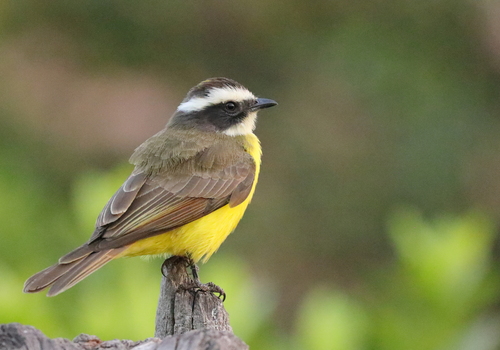 Bienteveo Alicastaño
 Mielerito Cerúleo
En breve
La marca de campo más confiable para separar el Bienteveo Alicastaño del Mielerito Cerúleo es la combinación de tamaño, estructura y forma del pico: el bienteveo es mucho más grande, con un pico grueso y recto, mientras que el mielerito es pequeño y tiene un pico delgado y fuertemente curvado. Los Bienteveos Alicastaños juveniles muestran bordes canela oxidados en las alas y la cola, que nunca aparecen en los mieleritos de ninguna edad. Los Mieleritos Cerúleos machos adultos son inconfundiblemente violeta-azulados con alas y máscara negras, mientras que las hembras y los mieleritos juveniles son verdosos con marcas faciales color canela y azules, nunca pareciéndose al bienteveo marrón y amarillo. En vuelo o posados, la apariencia robusta y erguida del bienteveo y la pequeña, activa y delgada del mielerito también son pistas fuertes.
Consejos de identificación
- Tamaño y volumen: El Bienteveo Alicastaño es mucho más grande y pesado que el Mielerito Cerúleo. Si el pájaro parece del tamaño de un gorrión o más pequeño, no es un bienteveo.
- Forma del pico: El bienteveo tiene un pico negro grueso, recto y corto; el mielerito tiene un pico negro delgado y fuertemente curvado. La forma del pico es visible incluso a distancia y es diagnóstica.
- Bordes de alas y cola juveniles: Los Bienteveos Alicastaños juveniles muestran bordes canela oxidados prominentes en las alas y la cola, nunca presentes en mieleritos de ninguna edad. Si ves canela o rufo en las alas/cola de un pájaro marrón, piensa en bienteveo.
- Plumaje del macho adulto: El Mielerito Cerúleo macho adulto es vívido violeta-azul con máscara y alas negras; ningún bienteveo es azul o negro-azul.
- Hembra adulta/juvenil de mielerito: Las hembras y los mieleritos juveniles son verdes por encima con marcas faciales color canela y azules, partes inferiores estriadas de color blanco sucio y colas verdosas. Ningún bienteveo es verde por encima con cara azul o canela.
- Supercilio: El Bienteveo Alicastaño tiene un supercilio blanco amplio y largo que se extiende bien más allá del ojo; las hembras de mielerito tienen un supercilio canela-canela, pero es mucho más corto y está en una cara verde.
- Parche en la corona: Los bienteveos adultos tienen un parche en la corona amarillo a naranja dorado oculto (raramente visible); los mieleritos nunca muestran un parche en la corona.
- Partes inferiores: Las partes inferiores del bienteveo son de un amarillo brillante con una garganta blanca; las partes inferiores del mielerito nunca son de un amarillo sólido: las hembras/juveniles son estriadas de color blanco sucio con flancos verdosos, los machos son azules.
- Cola: La cola del bienteveo es marrón oscura con bordes oliva; la cola del mielerito es negra (macho) o verde (hembra/juvenil), nunca marrón.
- Color de las patas: Los mieleritos machos tienen patas y pies amarillos brillantes, las hembras son de un verde claro a amarillo oliva; las patas del bienteveo son siempre negras.
- Comportamiento de posado: Los bienteveos se posan erguidos y quietos, a menudo en ramas expuestas; los mieleritos son inquietos, moviéndose rápidamente a través del follaje, rara vez permaneciendo expuestos por mucho tiempo.
- Contexto de hábitat: Los bienteveos suelen estar en áreas abiertas, bordes de bosques o posaderos conspicuos; los mieleritos permanecen en el subdosel/dosel, especialmente en árboles en flor o con frutos.
- Asociación grupal: Los mieleritos a menudo se unen a bandadas de especies mixtas y se alimentan con tangaras; los bienteveos suelen ser solitarios o en parejas.
- Dimorfismo sexual: El mielerito muestra un fuerte dimorfismo sexual (machos azules, hembras verdosas); los sexos del bienteveo son idénticos en plumaje.
- Trampa: Los bienteveos inmaduros pueden parecer apagados y podrían confundirse con hembras de mielerito, pero busca los bordes de alas/cola oxidados y la falta de tonos verdes o azules.
Tamaño
El Bienteveo Alicastaño es significativamente más grande (16.5–18 cm, 22–29.5 g) que el Mielerito Cerúleo (9.3–11.4 cm, 7.8–14 g) [wikipedia]. El bienteveo es casi el doble de largo y más del doble de la masa del mielerito. Esta diferencia es obvia incluso a distancia: el bienteveo parece robusto y sólido, mientras que el mielerito es pequeño y delicado.
Plumaje
- Los Bienteveos Alicastaños juveniles no tienen parche en la corona amarillo y muestran bordes canela oxidados extensos en las plumas de las alas y la cola. Este borde oxidado nunca está presente en el Mielerito Cerúleo de ninguna edad.
- Los Bienteveos Alicastaños adultos tienen una corona oscura y sucia (con un parche amarillo oculto), un supercilio blanco amplio, partes superiores marrones a marrón oliva, y alas grisáceas profundas con márgenes rufo delgados en las primarias. Las partes inferiores son de un amarillo brillante, garganta blanca.
- Los Mieleritos Cerúleos machos adultos son striking violet-blue con máscara negra, lore, garganta, alas y cola. Las hembras y los juveniles son verdes por encima con marcas faciales canela y azules, garganta canela, partes inferiores estriadas de color blanco sucio, y colas verdosas. Sus alas son oscuras con bordes verdes/amarillo-verdes, nunca rufo o canela.
- Ninguna edad o sexo del Mielerito Cerúleo muestra la combinación de partes superiores marrones, supercilio blanco y partes inferiores amarillas del bienteveo.
Comportamiento
Los Bienteveos Alicastaños típicamente se posan erguidos y salen a atrapar insectos, a menudo regresando al mismo posadero expuesto. Parecen robustos y decididos, a menudo sentados quietos durante largos períodos. Los Mieleritos Cerúleos son altamente activos, forrajeando rápidamente a través del dosel y subdosel, a menudo en parejas o pequeños grupos, y frecuentemente uniéndose a bandadas de especies mixtas. Se mueven con agilidad y rara vez se posan en la apertura por mucho tiempo.
Hábitat
Ambas especies ocurren en Panamá y gran parte de Sudamérica, pero sus preferencias de microhábitat difieren. El Bienteveo Alicastaño se ve a menudo en bosques abiertos, bordes de bosques y posaderos conspicuos en áreas semiabiertas. El Mielerito Cerúleo prefiere el subdosel y dosel del bosque, especialmente donde hay árboles en flor o con frutos, y es menos probable que se vea bajo o en campo abierto. El contexto puede ayudar: un pájaro forrajeando en el dosel con tangaras es más probable que sea un mielerito; un pájaro saliendo de una rama baja en un claro es más probable que sea un bienteveo.
Bienteveo Alicastaño · Mielerito Cerúleo · Mis aves difíciles