

Rusty-margined Flycatcher vs Purple Honeycreeper
Myiozetetes cayanensis contro Cyanerpes caeruleus
Fai un quiz con Rusty-margined Flycatcher e Purple Honeycreeper
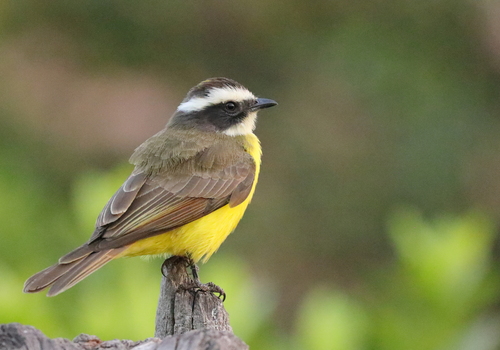 Rusty-margined Flycatcher
 Purple Honeycreeper
In breve
Il segno di campo più affidabile per separare il Rusty-margined Flycatcher dal Purple Honeycreeper è la combinazione di dimensioni, struttura e forma del becco: il flycatcher è molto più grande, con un becco spesso e dritto, mentre il honeycreeper è piccolo e ha un becco sottile e fortemente ricurvo. I Rusty-margined Flycatcher juvenili mostrano bordi rugginosi-cannella sulle ali e sulla coda, che non appaiono mai sui honeycreepers di alcuna età. I Purple Honeycreepers maschi adulti sono inconfondibilmente viola-blu con ali e maschera nere, mentre i honeycreepers femmine e juvenili sono verdastri con segni facciali color crema e blu, mai somiglianti al flycatcher marrone e giallo. In volo o posati, l'aspetto robusto e verticale del flycatcher e l'aspetto piccolo, attivo e snodato del honeycreeper sono anche forti indizi.
Consigli di identificazione
- Dimensioni e massa: Il Rusty-margined Flycatcher è molto più grande e pesante del Purple Honeycreeper. Se l'uccello sembra delle dimensioni di un passero o più piccolo, non è un flycatcher.
- Forma del becco: Il flycatcher ha un becco nero spesso, dritto e tozzo; il honeycreeper ha un becco nero sottile e fortemente ricurvo. La forma del becco è visibile anche da lontano ed è diagnostica.
- Bordi delle ali e della coda nei juvenili: I Rusty-margined Flycatcher juvenili mostrano bordi rugginosi-cannella prominenti sulle ali e sulla coda, mai presenti sui honeycreepers di alcuna età. Se vedi rugginoso o rufous sulle ali/coda di un uccello marrone, pensa al flycatcher.
- Piumaggio del maschio adulto: Il Purple Honeycreeper maschio adulto è di un vivido viola-blu con maschera e ali nere—nessun flycatcher è mai blu o nero e blu.
- Honeycreeper femmina/juvenile: I honeycreepers femmine e juvenili sono verdi sopra con segni facciali color crema e blu, parti inferiori striate di bianco sporco e code verdastre. Nessun flycatcher è verde sopra con faccia blu o color crema.
- Supercilium: Il Rusty-margined Flycatcher ha un ampio e lungo supercilium bianco che si estende ben oltre l'occhio; le femmine di honeycreeper hanno un supercilium color crema, ma è molto più corto e situato in una faccia verde.
- Macchia coronale: I flycatchers adulti hanno una macchia coronale gialla a arancio dorato nascosta (raramente visibile); i honeycreepers non mostrano mai una macchia coronale.
- Parti inferiori: Le parti inferiori del flycatcher sono di un giallo brillante con una gola bianca; le parti inferiori del honeycreeper non sono mai di un giallo solido—femmine/juvenili sono striate di bianco sporco con fianchi verdastri, i maschi sono blu.
- Coda: La coda del flycatcher è marrone scuro con bordi oliva; la coda del honeycreeper è nera (maschio) o verde (femmina/juvenile), mai marrone.
- Colore delle zampe: I honeycreepers maschi hanno zampe e piedi gialli brillanti, quelli delle femmine sono di un verde chiaro a giallo oliva; le zampe del flycatcher sono sempre nere.
- Comportamento di posarsi: I flycatchers si posano in modo verticale e immobile, spesso su rami esposti; i honeycreepers sono irrequieti, muovendosi rapidamente attraverso il fogliame, raramente rimanendo esposti a lungo.
- Contesto dell'habitat: I flycatchers si trovano spesso in aree aperte, bordi forestali o posatoi evidenti; i honeycreepers rimangono nel sottobosco/canopy, specialmente in presenza di alberi in fiore o fruttiferi.
- Associazione di gruppo: I honeycreepers spesso si uniscono a stormi misti e si nutrono con i tanagers; i flycatchers sono solitamente solitari o in coppie.
- Dimorfismo sessuale: Il honeycreeper mostra un forte dimorfismo sessuale (maschi blu, femmine verdastre); i sessi del flycatcher sono identici nel piumaggio.
- Trappola: I flycatchers immaturi possono sembrare opachi e potrebbero essere confusi con le femmine di honeycreeper, ma cerca i bordi rugginosi delle ali/della coda e l'assenza di toni verdi o blu.
Taglia
Il Rusty-margined Flycatcher è significativamente più grande (16.5–18 cm, 22–29.5 g) del Purple Honeycreeper (9.3–11.4 cm, 7.8–14 g) [wikipedia]. Il flycatcher è quasi il doppio della lunghezza e più del doppio della massa del honeycreeper. Questa differenza è ovvia anche da lontano: il flycatcher appare tozzo e robusto, mentre il honeycreeper è piccolo e delicato.
Piumaggio
- I Rusty-margined Flycatcher juvenili non hanno macchia coronale gialla e mostrano ampi bordi rugginosi-cannella sulle piume delle ali e della coda. Questo bordo rugginoso non è mai presente sul Purple Honeycreeper di alcuna età.
- I Rusty-margined Flycatcher adulti hanno una corona scura e fuligginosa (con una macchia gialla nascosta), un ampio supercilium bianco, parti superiori marroni a marrone oliva, e ali grigio scuro con margini rufous sottili sulle primarie. Le parti inferiori sono di un giallo brillante, gola bianca.
- I Purple Honeycreepers maschi adulti sono di un sorprendente viola-blu con maschera nera, lore, gola, ali e coda. Le femmine e i juvenili sono verdi sopra con segni facciali color crema e blu, gola color crema, parti inferiori striate di bianco sporco e code verdastre. Le loro ali sono scure con bordi verdi/verde-giallo, mai rufous o cannella.
- Nessuna età o sesso del Purple Honeycreeper mostra la combinazione di parti superiori marroni, supercilium bianco e parti inferiori gialle del flycatcher.
Comportamento
I Rusty-margined Flycatchers si posano tipicamente in modo verticale e si lanciano per catturare insetti, tornando spesso allo stesso posatoio esposto. Appaiono robusti e determinati, spesso rimanendo immobili per lunghi periodi. I Purple Honeycreepers sono altamente attivi, cercando cibo rapidamente attraverso la chioma e il sottobosco, spesso in coppie o piccoli gruppi, e unendosi frequentemente a stormi misti. Si muovono con agilità e raramente si posano in modo esposto per lungo tempo.
Habitat
Entrambe le specie si trovano a Panama e in gran parte del Sud America, ma le loro preferenze microhabitat differiscono. Il Rusty-margined Flycatcher è spesso visto in boschi aperti, bordi forestali e posatoi evidenti in aree semiaperte. Il Purple Honeycreeper predilige il sottobosco e la chioma forestale, specialmente dove sono presenti alberi in fiore o fruttiferi, ed è meno probabile che venga visto in basso o in aree aperte. Il contesto può aiutare: un uccello che cerca cibo nella chioma con i tanagers è più probabilmente un honeycreeper; un uccello che si lancia da un ramo basso in un'apertura è più probabilmente un flycatcher.
Rusty-margined Flycatcher · Purple Honeycreeper · I miei uccelli difficili