

ノドグロムシクイ 対 クロガシラムシクイ
Curruca ruppeli 対 Curruca melanocephala
ノドグロムシクイとクロガシラムシクイのクイズ
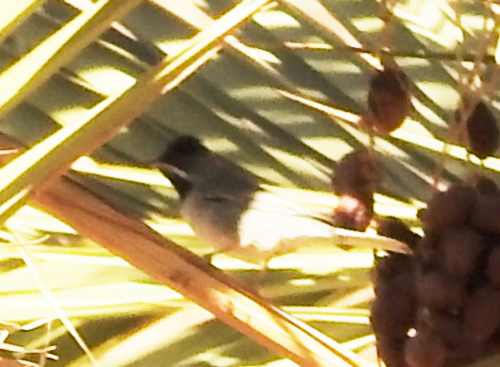 ノドグロムシクイ
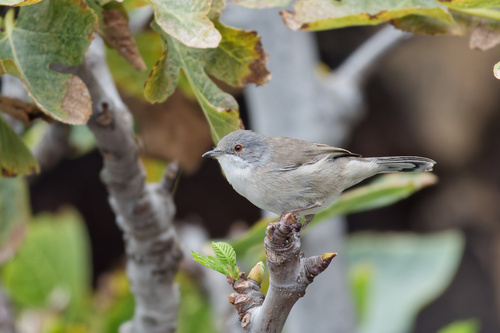 クロガシラムシクイ
要点
The most reliable field mark to separate Rüppell's Warbler from Sardinian Warbler is the bold white malar streak ('moustache') on adult male Rüppell's, which sharply divides the black throat from the black head—Sardinian males have a clean white throat with no such division. Female and immature birds are trickier: focus on throat color and head tone, as Rüppell's females have a pale throat and greyer head, while Sardinian females show a white throat and browner or olive-tinged upperparts. Both species share red eyes and similar size, but Rüppell's is slimmer and often appears more attenuated. Vocalizations differ subtly, with Rüppell's giving a slower, deeper rattle than the brisker Sardinian. In the field, context and careful attention to head and throat pattern are key, especially outside the breeding season.
識別のコツ
- Adult male head/throat pattern: Rüppell's has a black head and black throat separated by a bold white malar streak ('moustache'); Sardinian has a black head but a clean white throat with no black extending below the bill. This is the single most reliable mark in spring and early summer.
- Female head and throat: Female Rüppell's shows a pale grey head and throat, often with a brownish tinge to the back; Sardinian females have a white throat and a browner or olive-tinged crown and back. In Sardinian, the white throat is usually sharply defined.
- Immature/juvenile plumage: Sardinian juveniles are sandy above and pale below, lacking strong head/throat contrast; Rüppell's young birds are generally plainer and greyer, but this is subtle and not always reliable.
- Bill and structure: Rüppell's has a finer, more pointed bill and appears slimmer and more attenuated overall, especially when perched. Sardinian is bulkier, with a slightly longer tail and larger wings (not always obvious except in direct comparison).
- Eye color: Both species have red eyes as adults, so this is not helpful for separation.
- Back and underparts: Rüppell's adults have a plain grey back with a brownish tinge and paler grey underparts; Sardinian males have a grey back and whitish underparts, while females may show olive or rusty tones depending on subspecies.
- Malar/face pattern: Only Rüppell's (adult male) shows a sharply defined white malar dividing the black head and throat. Sardinian males have a white throat but no malar division.
- Song: Rüppell's gives a slower, deeper rattle; Sardinian's song is brisker and higher-pitched. Useful if heard well, but not always diagnostic in brief encounters.
- Habitat and range: In western Mediterranean, Sardinian is far more likely; in southeast Europe and Aegean islands, both may occur but Rüppell's is more localized. Use range and habitat as supporting context, not primary ID.
- Subspecies variation: Sardinian Warbler shows considerable variation in female and immature plumage, with some subspecies (e.g., momus) showing rusty or olive tones; always check throat color and head pattern first.
- Tail shape: Sardinian's tail is often slightly longer and more square-tipped in some subspecies, but this is not a strong field mark.
- Seasonal change: Outside the breeding season, males may appear duller and less sharply marked, making separation harder—focus on throat and malar pattern if visible.
- Flight views: No distinctive upperwing or flight marks separate these species; rely on structure and head/throat pattern if glimpsed in flight.
- Contextual clues: If seen in a garden or urban scrub in western Europe, Sardinian is overwhelmingly likely; in rocky, open scrub of Greece or Turkey, consider Rüppell's if head/throat pattern fits.
- Pitfalls: Beware of poorly marked or worn birds—always try to see the head and throat clearly, and use multiple features in combination.
大きさ
Both species are similar in overall length and mass, but Rüppell's Warbler is described as slimmer and more attenuated than Sardinian Warbler, which tends to look bulkier with a slightly longer tail and larger wings (especially in the nominate subspecies). These differences are subtle in the field and rarely diagnostic on their own, but Rüppell's may appear a bit more delicate and fine-billed when seen side by side.
羽色
No distinctive juvenile or immature upperwing patterns are described for either species, so separation relies on head and throat pattern across ages and sexes.
- Adult males: Rüppell's shows a striking black head and black throat, sharply divided by a white malar streak; Sardinian males have a black head, but the throat is clean white, with no black extending onto the throat and no malar division.
- Adult females: Rüppell's females have a paler grey head and throat, with the throat often matching the underparts and lacking strong contrast; Sardinian females have a white throat and a browner or olive-tinged back and crown, sometimes with a deeper olive or rusty hue depending on subspecies.
- Immatures/juveniles: Sardinian Warbler juveniles are sandy above and pale below, lacking strong head/throat contrast; Rüppell's young birds are less well described, but generally show a plainer, paler look with a greyer cast and no strong malar or throat pattern.
Both species have red eyes, but this is not diagnostic.
行動
Both species are active, skulking warblers often found in dense low vegetation. Rüppell's may appear slightly more slender and agile, but behavioral differences are subtle and not reliable for separation. Both can be elusive and are best identified by plumage and voice.
生息環境
Rüppell's Warbler breeds in southeast Europe (Greece, Turkey, nearby islands) and winters in northeast Africa, favoring scrubby, rocky hillsides and maquis. Sardinian Warbler is much more widespread around the Mediterranean basin, including Iberia, North Africa, and the Near East, and is generally common in Mediterranean scrub, gardens, and coastal thickets. Overlap is possible in the eastern Mediterranean, but Sardinian is more likely in western areas and is overall much more abundant.
声
Rüppell's Warbler's song is a slower, deeper rattle compared to the Sardinian Warbler's brisker, higher-pitched rattling song. Both species give harsh, scolding calls, but the difference in song tempo and depth can be helpful if heard well. However, these differences are subtle and require experience to use confidently.