

Motmot

アカオマユカマドドリ 対 キマユカマドドリ

Anabacerthia ruficaudata 対 Syndactyla rufosuperciliata

アカオマユカマドドリとキマユカマドドリのクイズ
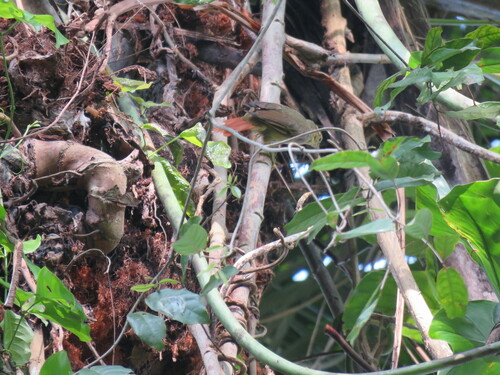
アカオマユカマドドリ (Anabacerthia ruficaudata) アカオマユカマドドリ
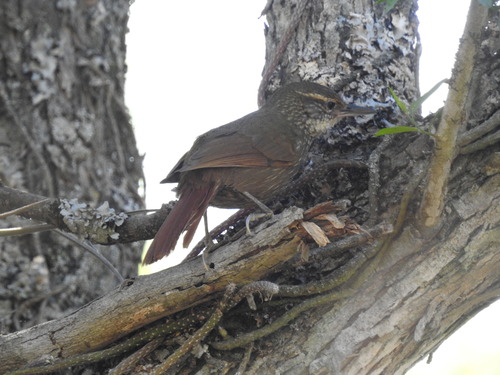
キマユカマドドリ (Syndactyla rufosuperciliata) キマユカマドドリ

メディア

読み込み中…

要点

アカオマユカマドドリとキマユカマドドリを区別する最も信頼できるフィールドマークは、尾の色と眉斑の組み合わせです:アカオマユカマドドリは、より明るく、よりはっきりとした赤褐色の尾と、狭いオクラ色の眉斑を示し、キマユカマドドリは鈍い赤褐色の尾と、首まで伸びる広く淡いバフ色の眉斑を持っています。幼鳥の違いは微妙ですが存在し、アカオマユカマドドリはより目立つオクラ色の眉斑と茶色がかった上面を示し、キマユカマドドリの幼鳥は斑点のある(ストライプのない)腹部を持っています。両種は中型のカマドドリで、構造は似ていますが、キマユカマドドリはやや太く、上向きに湾曲したくちばしを持つ傾向があります。顔の模様、尾の色合い、腹部のストライピングに注意を払うことが重要で、特に混成群れや薄暗い光の中では特に重要です。

識別のコツ

  1. Tail Color: アカオマユカマドドリはより明るく、より飽和した赤褐色の尾を持ち、キマユカマドドリの尾は鈍い赤褐色または栗色で、時にはいくつかの亜種で栗色の洗いが見られます。これは、陰のある森でもしばしば見えます。
  2. Supercilium (Eyebrow): アカオマユカマドドリは狭いオクラ色の眉斑を示し、キマユカマドドリは目の後ろから首までよく伸びる広く淡いバフ色の眉斑を持っています—これは特に側面から見ると明らかです。
  3. Eyering: アカオマユカマドドリは顔と対照的な広いオクラ色のバフ色のアイリングを持っています;キマユカマドドリのアイリングは黄褐色ですが、広い眉斑のために目立たなくなっています。
  4. Face Pattern: アカオマユカマドドリは目の後ろに暗いオリーブ色の線とオリーブ色がかった茶色のロア/耳覆いに黄色いバフ色の斑点を持っています;キマユカマドドリは小さなバフ色の模様のある茶色がかった顔を持ち、アカオマユカマドドリの強いコントラストが欠けています。
  5. Crown and Back: アカオマユカマドドリは後ろに淡い斑点/ストライプのある暗いオリーブ色の冠を持ち、上背には淡いストライプがあります;キマユカマドドリの冠は鈍いオリーブ色がかった茶色で、後ろにはぼんやりした白っぽいストライプしかありません。
  6. Underparts: アカオマユカマドドリの喉はバフ色の黄色(時にはいくつかの亜種でより明確な黄色)、胸と腹は淡いオリーブ色のストライプのある鈍いバフ色の黄色で、側面/尾羽の覆いはよりオリーブ色がかっています。キマユカマドドリの喉は白っぽく、茶色がかった羽の先端を持ち、胸はオリーブ色がかった羽の縁(スカラップ状)のあるバフ色の白っぽい色で、腹部には後ろに向かって薄れる広くぼやけたバフ色の白っぽいストライプがあります。
  7. Juvenile Underparts: 幼鳥のアカオマユカマドドリはより暗く、黄色味の少ない腹部とより目立つオクラ色の眉斑を持ち、幼鳥のキマユカマドドリは斑点のある(ストライプのない)腹部を持っています—これはよく見れば微妙ですが診断的なマークです。
  8. Bill Shape: キマユカマドドリは太く、やや上向きに湾曲したくちばしを持ち、アカオマユカマドドリのくちばしはくさび形で、より頑丈ではありません。これは、並べて見ない限り判断が難しいことがあります。
  9. Uppertail Coverts: アカオマユカマドドリの上尾羽の覆いは暗いオリーブ色で赤褐色の先端を持ち、キマユカマドドリのものは平坦なオリーブ色がかった茶色で、いくつかの亜種では栗色の洗いがあるかもしれません。
  10. Throat Color (Subspecies): 一部のアカオマユカマドドリの亜種(例:subflavescens、flavipectus)はより明確な黄色またはより暗い黄色の喉を示し、キマユカマドドリの亜種はバフ色がかったものからよりオクラ色がかったものまで変化しますが、常に赤褐色の尾よりも淡いです。
  11. Underpart Streaking: アカオマユカマドドリのストライピングは淡く、主に上胸にあります;キマユカマドドリのストライプはより広く、ぼやけており、腹部で最も目立ち、肛門に向かって薄れます。
  12. Leg Color: 両種の脚はオリーブ色から茶色がかった範囲にあります;信頼できるフィールドマークではありません。
  13. Habitat Context: 厳密にアマゾンのテラフィルメまたはバルゼアではアカオマユカマドドリがより可能性が高く、南大西洋またはアンデスの山麓の森ではキマユカマドドリがより可能性が高いです。重複ゾーンでは、羽毛と構造を使用してください。
  14. Vocalization: 聞こえた場合、アカオマユカマドドリの歌は大きく、スタッカートの連続した「テ」または「ケ」の音で、最後に下降して加速します。キマユカマドドリの歌はここでは説明されていません。
  15. Pitfalls: 両種は亜種や年齢によって変動する眉斑と喉の色を示すことがあります。常に複数の特徴を確認し、特に尾の色、眉斑の幅/長さ、腹部の模様を確認してください。幼鳥は腹部の模様(キマユカマドドリでは斑点、アカオマユカマドドリではより暗く、黄色味が少ない)で最もよく区別されます。

大きさ

両種はサイズが非常に近く、キマユカマドドリは平均17〜18 cmの長さと22〜33 gの質量(平均25.6 g)であり、アカオマユカマドドリは16〜17 cmと21〜32 gです。フィールドでは、このサイズの違いは無視できるもので、信頼できる区別ポイントではありません。構造も似ていますが、キマユカマドドリはより太く、上向きに湾曲したくちばしのためにややがっしりと見えることがあります。

羽色

行動

両種は似たような方法で餌を探し、葉の中を体系的に移動し、しばしば混成種の群れの一部として行動します。フィールドでの区別に役立つような大きな行動の違いは特に見られません。

生息環境

アカオマユカマドドリは主に低地アマゾンのテラフィルメと季節的に洪水のある森林の鳥で、主に850 m以下ですが、ベネズエラでは1300 mまで見られます。キマユカマドドリはより広い範囲を持ち、アマゾンから南ブラジル、アルゼンチン、パラグアイ、ウルグアイ、アンデスの山麓まで見られ、さまざまな森林タイプを占めています。ブラジル、ペルー、ボリビアの一部で重複が見られますが、キマユカマドドリは南部および南東部の森林でより可能性が高く、アカオマユカマドドリはより厳密にアマゾンに生息しています。

声

アカオマユカマドドリは最大25の「テ」または「ケ」の音の大きなスタッカートの連続を出し、最後に下降して加速します、または時には単一の音程で加速し、その後わずかに減速します。キマユカマドドリの歌は提供されたメモには記載されていないため、この情報に基づいて音声の違いを信頼できる区別には使用できません。

より良い説明を送る

比較と同じ項目を使ってください。文章はすぐに公開されます。

The most reliable field mark to separate Rufous-tailed Foliage-gleaner from Buff-browed Foliage-gleaner is the combination of tail color and supercilium: Rufous-tailed shows a brighter, more distinctly rufous tail and a narrower, ochraceous-buff supercilium, while Buff-browed has a duller rufous tail and a broader, paler buff supercilium extending to the nape. Juvenile differences are subtle but present, with Rufous-tailed showing a more prominent ochraceous supercilium and browner upperparts, while Buff-browed juveniles have spotted (not streaked) underparts. Both species are medium-sized foliage-gleaners with similar structure, but Buff-browed tends to have a slightly thicker, more upcurved bill. Careful attention to face pattern, tail tone, and underpart streaking is key, especially in mixed flocks or poor light.

  1. Tail Color: Rufous-tailed Foliage-gleaner has a brighter, more saturated rufous tail, while Buff-browed's tail is duller rufous or chestnut, sometimes with a chestnut wash in some subspecies. This is often visible even in shaded forest.
  2. Supercilium (Eyebrow): Rufous-tailed shows a narrow, ochraceous-buff supercilium, while Buff-browed has a broader, paler buff supercilium that extends well behind the eye to the nape—this is especially obvious in side views.
  3. Eyering: Rufous-tailed has a wide ochraceous buff eyering, contrasting with the face; Buff-browed's eyering is tawny-buff but less conspicuous due to the broader supercilium.
  4. Face Pattern: Rufous-tailed features a dark olive line behind the eye and olive-brownish lores/ear coverts with yellowish buff flecks; Buff-browed has a brownish face with small buff markings, lacking the strong contrast of Rufous-tailed.
  5. Crown and Back: Rufous-tailed has a dark olive crown with faint pale spots/streaks at the rear, and an upper back with pale streaks; Buff-browed's crown is dull olive-brown with only vague whitish streaks at the rear, and the back/rump are plain olive-brown.
  6. Underparts: Rufous-tailed's throat is buff-yellow (sometimes clearer yellow in some subspecies), breast and belly are dull buff yellow with faint olive streaks, and flanks/undertail coverts are more olivaceous. Buff-browed's throat is whitish with brownish feather tips, breast is buffy whitish with olive-brown feather edges (scalloped), and the belly shows wide, blurry buffy-whitish streaks that fade toward the rear.
  7. Juvenile Underparts: Juvenile Rufous-tailed has darker, less yellowish underparts and a more prominent ochraceous supercilium; juvenile Buff-browed has spotted (not streaked) underparts—a subtle but diagnostic mark if seen well.
  8. Bill Shape: Buff-browed has a thicker, slightly upcurved bill, while Rufous-tailed's bill is wedge-shaped and less robust. This can be tricky to judge unless seen side-by-side.
  9. Uppertail Coverts: Rufous-tailed's uppertail coverts are dark olive with rufous tips; Buff-browed's are plain olive-brown or may have a chestnut wash in some subspecies.
  10. Throat Color (Subspecies): Some Rufous-tailed subspecies (e.g., subflavescens, flavipectus) show a clearer yellow or darker yellowish throat, while Buff-browed subspecies vary from buff-tinged to more ochraceous, but always paler than the rufous tail.
  11. Underpart Streaking: Rufous-tailed's streaking is faint and mostly on the upper breast; Buff-browed's streaks are broader, blurrier, and most prominent on the belly, fading toward the vent.
  12. Leg Color: Both species have legs in the olive to brownish range; not a reliable field mark.
  13. Habitat Context: In strictly Amazonian terra firme or várzea, Rufous-tailed is more likely; in southern Atlantic or Andean foothill forests, Buff-browed is more likely. In overlap zones, use plumage and structure.
  14. Vocalization: If heard, Rufous-tailed's song is a loud, staccato series of 'te' or 'ke' notes, descending and accelerating at the end. Buff-browed's song is not described here.
  15. Pitfalls: Both species can show variable supercilium and throat color by subspecies and age. Always check multiple features, especially tail color, supercilium width/length, and underpart pattern. Juveniles are best separated by underpart pattern (spotted in Buff-browed, darker and less yellow in Rufous-tailed).

Both species are very close in size, with Buff-browed Foliage-gleaner averaging 17–18 cm in length and 22–33 g in mass (mean 25.6 g), while Rufous-tailed Foliage-gleaner is 16–17 cm and 21–32 g. In the field, this size difference is negligible and not a reliable separation point. Structure is also similar, but Buff-browed may appear slightly bulkier due to its thicker, more upcurved bill.

  • Juveniles: Rufous-tailed Foliage-gleaner juveniles show a more prominent ochraceous supercilium, browner upperparts, and darker, less yellowish underparts. Buff-browed juveniles are similar to adults but have spotted (rather than streaked) underparts—this is the best age-specific mark if seen well.
  • Adults: Rufous-tailed Foliage-gleaner has a wide ochraceous buff eyering, narrow buff-yellow supercilium, dark olive crown/back with pale streaks (especially on upper back), and a bright rufous tail. Underparts are buff-yellow with faint olive streaks. Buff-browed Foliage-gleaner shows a broader, paler buff supercilium extending to the nape, dull olive-brown crown/back with vague whitish streaks only at the rear, and a dull rufous tail. Underparts are buffy whitish with olive-brown feather edges (scalloped look), with blurry buffy-whitish streaks on the belly that fade toward the rear. Subspecies differences exist but are subtle and mostly affect supercilium and throat color.

Both species forage in similar ways, moving methodically through foliage, often as part of mixed-species flocks. No major behavioral differences are noted that would help in field separation.

Rufous-tailed Foliage-gleaner is primarily a bird of lowland Amazonian terra firme and seasonally flooded forests, mostly below 850 m but up to 1300 m in Venezuela. Buff-browed Foliage-gleaner has a broader range, found from Amazonia into southern Brazil, Argentina, Paraguay, Uruguay, and Andean foothills, occupying a wider variety of forest types. Overlap occurs in parts of Brazil, Peru, and Bolivia, but Buff-browed is more likely in southern and southeastern forests, while Rufous-tailed is more strictly Amazonian.

Rufous-tailed Foliage-gleaner gives a loud, staccato series of up to 25 'te' or 'ke' notes, descending and accelerating at the end, or sometimes on a single pitch with acceleration then slight deceleration. Buff-browed's song is not described in the provided notes, so vocal differences cannot be reliably used for separation based on this information.

変更を破棄しますか?

保存していない編集があります。今離れると失われます。

アカオマユカマドドリ · キマユカマドドリ · 苦手な鳥