

Motmot

ズアカオナガカマドドリ 対 ハイムネオナガカマドドリ

Synallaxis ruficapilla 対 Synallaxis hypospodia

ズアカオナガカマドドリとハイムネオナガカマドドリのクイズ
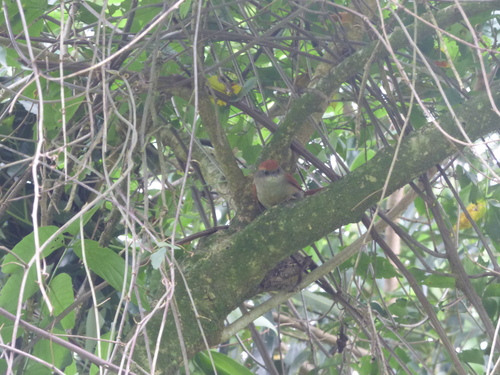
ズアカオナガカマドドリ (Synallaxis ruficapilla) ズアカオナガカマドドリ
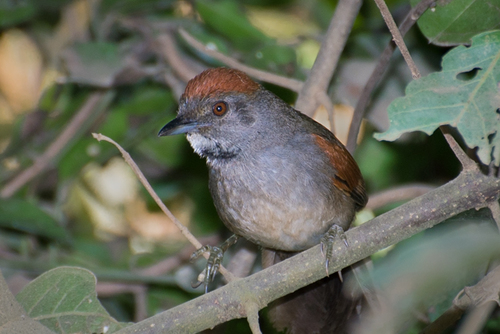
ハイムネオナガカマドドリ (Synallaxis hypospodia) ハイムネオナガカマドドリ

メディア

読み込み中…

要点

ズアカオナガカマドドリとハイムネオナガカマドドリを区別する最も信頼できるフィールドマークは、ズアカオナガカマドドリの太くて広いバフ色の眉斑と明るいオレンジ色の冠であり、これがハイムネオナガカマドドリのかすかな灰色の眉斑と暗く、対照的でない冠と対比しています。幼鳥の羽色は微妙に異なります:ズアカオナガカマドドリの幼鳥は鈍い赤褐色の冠とオクラ色の洗いがかかった腹部を示し、ハイムネオナガカマドドリの幼鳥は灰褐色の冠と粘土色の腹部を持っています。両種ともに翼と尾に栗色がありますが、ズアカオナガカマドドリの尾は明るい栗色で尖っているのに対し、ハイムネオナガカマドドリの尾は暗く、丸い先端を持っています。生息地と行動も役立ちます:ズアカオナガカマドドリは森林と竹の専門家であり、ハイムネオナガカマドドリは水の近くの開けた湿った草地や低木を好みます。鳴き声は質とリズムが異なりますが、両者ともに変化があり微妙です。

識別のコツ

  1. Supercilium (eyebrow): ズアカオナガカマドドリはすべての年齢で目立つ広いバフ色の眉斑を示します;ハイムネオナガカマドドリはかすかな灰色の眉斑しか持たず、フィールドではほとんど見えません。
  2. Crown and nape color: 成鳥のズアカオナガカマドドリは明るいオレンジ色の冠と後頭部を持ち、顔と対照的です;ハイムネオナガカマドドリの冠と後頭部は栗色ですが、明るさは劣り、暗い灰褐色の前冠があります。
  3. Juvenile crown: 幼鳥のズアカオナガカマドドリは鈍い赤褐色の冠を持ちます;ハイムネオナガカマドドリの幼鳥は灰褐色の冠を持ち、若い鳥の微妙だが有用な区別となります。
  4. Throat pattern: ズアカオナガカマドドリは小さな黄褐色の顎斑点(成鳥)、淡い灰色の筋が入った白い喉を持ちます;ハイムネオナガカマドドリは主に白い喉を持ちますが、黒っぽい下喉の羽毛が白く縁取られ、より明確な斑点を形成します。
  5. Breast and belly: ズアカオナガカマドドリの上胸は灰色がかり、他の腹部は淡いバフ色がかった茶色です;ハイムネオナガカマドドリは灰色(灰色)胸、白い腹部、茶色がかった側腹部/下尾覆羽を持っています。
  6. Tail color and shape: ズアカオナガカマドドリの尾は栗色で、段階的で尖った先端を持ちます;ハイムネオナガカマドドリの尾は暗い茶色で、段階的ですが丸い先端を持っています。
  7. Wing color: 両者ともに翼に栗色がありますが、ズアカオナガカマドドリの方が広範囲で明るいです;ハイムネオナガカマドドリの翼の覆羽は栗色ですが、飛翔羽は暗い茶色で赤褐色の縁があります。
  8. Juvenile underparts: ズアカオナガカマドドリの幼鳥は下にオクラ色または茶色がかった洗いを示します;ハイムネオナガカマドドリの幼鳥は下がより粘土色で、喉の斑点があまり明確ではありません。
  9. Bill and legs: 両者ともに黒っぽい上顎と灰色の下顎を持ちますが、脚の色は変動があり、信頼できる診断にはなりません(ズアカオナガカマドドリ:緑がかった灰色;ハイムネオナガカマドドリ:オリーブ/灰色がかったオリーブから茶色がかった黄色)。
  10. Tail tip shape: ズアカオナガカマドドリの尾羽は尖っています;ハイムネオナガカマドドリの尾羽は先端が丸いです—止まっている鳥で扇状の尾を持つときに最もよく見えます。
  11. Habitat context: 密な森林や竹の下草はズアカオナガカマドドリを示します;水の近くの開けた季節的に湿った草地や低木はハイムネオナガカマドドリを強く支持します。
  12. Foraging behavior: ズアカオナガカマドドリはしばしば混合群れに参加し、森林の下層または中層で採餌します;ハイムネオナガカマドドリは通常ペアで、開けた場所で地上1〜2メートルで採餌します。
  13. Song and call: ズアカオナガカマドドリは速く、鼻にかかった機械的なトリルやラトルを出します;ハイムネオナガカマドドリの歌は大きく、急いだおしゃべりで、しばしば加速し、または鋭い「チュッ・ドゥルルルル」を出します。
  14. Size: ハイムネオナガカマドドリはわずかに大きく、重いですが、これは両者が一緒に見られない限り明らかではありません。
  15. Pitfalls: 両種は薄暗い光や短い視界で似て見えることがあります;最良の区別のためには眉斑の幅、冠の明るさ、喉のパターン、そして生息地に焦点を当ててください。

大きさ

両種はサイズが似ていますが、ハイムネオナガカマドドリはズアカオナガカマドドリよりもわずかに大きく、重いです(15〜16 cm、15〜18 g)対してズアカオナガカマドドリ(13〜17 cm、12〜16 g、[wikidata])。この違いは微妙で、フィールドでは診断的ではありませんが、ハイムネオナガカマドドリは並べて見た場合、少し大きく見えるかもしれません。

羽色

幼鳥は冠と腹部の色で最もよく区別されます:ズアカオナガカマドドリの幼鳥は鈍い赤褐色の冠とオクラ色または茶色がかった腹部を持ち、成鳥の小さな顎斑点は欠けていますが、ハイムネオナガカマドドリの幼鳥は灰褐色の冠とより粘土色の腹部を持ち、喉の斑点はあまり明確ではありません。成鳥では、ズアカオナガカマドドリは広いバフ色の眉斑、明るいオレンジ色の冠と後頭部、赤褐色の背中、そして栗色で尖った尾を示します。ハイムネオナガカマドドリはかすかな灰色の眉斑、暗い灰褐色の前冠、栗色の冠と後頭部、暗い茶色の背中、そして暗い茶色で丸い先端の尾を持っています。両者ともに翼に栗色がありますが、ズアカオナガカマドドリの栗色はより広範囲で明るいです。腹部は異なります:ズアカオナガカマドドリは白っぽく、わずかに筋が入った喉と淡いバフ色がかった茶色の腹部を持ち、ハイムネオナガカマドドリは主に白い喉を持ち、黒っぽい縁の下喉の羽毛と灰色(灰色)の胸を持っています。

行動

両種はペアで採餌し、葉や枝から節足動物を採取しますが、ズアカオナガカマドドリは混合種の群れに参加し、森林の下層で採餌する可能性が高く、時には中層や地面でも見られます。ハイムネオナガカマドドリは通常、開けた生息地で地上1〜2メートルの高さに留まり、混合群れに参加する可能性は低いです。両者ともに一般的に目立たず、密なカバーの中で隠れますが、好ましい採餌の高さと群れとの関連が文脈で役立つかもしれません。

生息環境

生息地は強い手がかりです:ズアカオナガカマドドリは森林の下草の専門家であり、特に密なチュスケア竹のある山地および低地の常緑樹林に生息し、ブラジル南東部、パラグアイ東部、アルゼンチン北部で海面から1,400メートルまで分布しています。ハイムネオナガカマドドリは開けた季節的に湿った草地、低木、カンピナ、サバンナを好み、通常水の近くで低地(約700メートルまで)に生息し、ブラジル、ボリビア、ペルー、パラグアイにわたってより分断された分布を持っています。鳥が密な森林や竹の中にいる場合、ズアカオナガカマドドリの可能性が高いですが、開けた湿った草地や低木ではハイムネオナガカマドドリを期待してください。

声

ズアカオナガカマドドリは速く、鼻にかかった、やや機械的な歌(例:'di-di-di-réét'、'tdrrrWit'、または'drrrrrt wee')と低音のトリルや乾いたラトル('tshrrr'、'trrrrruh')を出します。ハイムネオナガカマドドリの主な鳴き声は、単一の音程で急いだ大きなおしゃべりで、最後に加速します(例:'chéw, chew-chee-chee-chee-ee-ee-ee-ee-ee-eu')、または鋭い、シャープな'tut-Drrrrrrruh'で、スタッカートで下降する終わりを持っています。ズアカオナガカマドドリの歌はより鼻にかかり、おしゃべりが少なく、ハイムネオナガカマドドリの歌はより鋭く、おしゃべりが多く、加速します。

より良い説明を送る

比較と同じ項目を使ってください。文章はすぐに公開されます。

The most reliable field mark to separate Rufous-capped Spinetail from Cinereous-breasted Spinetail is the bold, wide buff supercilium and bright orange-rufous crown of the Rufous-capped, contrasting with the Cinereous-breasted's faint gray supercilium and darker, less contrasting crown. Juvenile plumages differ subtly: Rufous-capped juveniles show a duller rufous crown and ochraceous-washed underparts, while Cinereous-breasted juveniles have a gray-brown crown and clay-brown underparts. Both species have chestnut in the wings and tail, but the Rufous-capped's tail is brighter chestnut and more pointed, while the Cinereous-breasted's is darker and rounder-tipped. Habitat and behavior can help: Rufous-capped is a forest and bamboo specialist, while Cinereous-breasted prefers open, wet grasslands and scrub near water. Vocalizations differ in quality and rhythm, but both can be variable and subtle.

  1. Supercilium (eyebrow): Rufous-capped shows a wide, buff supercilium that stands out in all ages; Cinereous-breasted has only a faint gray supercilium, often barely visible in the field.
  2. Crown and nape color: Adult Rufous-capped has a bright orange-rufous crown and nape, contrasting with the face; Cinereous-breasted's crown and nape are chestnut-rufous but less bright, with a dark gray-brown forecrown.
  3. Juvenile crown: Juvenile Rufous-capped has a duller rufous crown; Cinereous-breasted juvenile has a gray-brown crown, which can be a subtle but useful distinction in young birds.
  4. Throat pattern: Rufous-capped has a tiny tawny chin spot (adults), whitish throat with faint gray streaks; Cinereous-breasted has a mostly whitish throat but with blackish lower throat feathers edged whitish, forming a more defined patch.
  5. Breast and belly: Rufous-capped's upper breast is grayish, rest of underparts paler buffy-brownish; Cinereous-breasted has a cinereous (ash-gray) breast, whitish belly, and brownish flanks/undertail coverts.
  6. Tail color and shape: Rufous-capped's tail is chestnut, graduated, and pointed-tipped; Cinereous-breasted's tail is darker brown, also graduated but with rounded tips.
  7. Wing color: Both have chestnut in the wings, but Rufous-capped's is more extensive and brighter; Cinereous-breasted's wing coverts are chestnut-rufous, but flight feathers are dark brown with rufescent edges.
  8. Juvenile underparts: Rufous-capped juveniles show ochraceous or brownish wash below; Cinereous-breasted juveniles are more clay-brown below, with a less distinct throat patch.
  9. Bill and legs: Both have blackish maxilla and grayish mandible, but leg color is variable and not reliably diagnostic (Rufous-capped: greenish gray; Cinereous-breasted: olive/grayish olive to brownish yellow).
  10. Tail tip shape: Rufous-capped's tail feathers are pointed; Cinereous-breasted's are rounded at the tips—best seen in perched birds with fanned tails.
  11. Habitat context: Dense forest or bamboo undergrowth points to Rufous-capped; open, seasonally wet grassland or scrub near water strongly favors Cinereous-breasted.
  12. Foraging behavior: Rufous-capped often joins mixed flocks and forages in the forest understorey or mid-storey; Cinereous-breasted is usually in pairs, foraging 1–2 m above ground in open areas.
  13. Song and call: Rufous-capped gives a fast, nasal, mechanical trill or rattle; Cinereous-breasted's song is a loud, hurried chatter, often accelerating, or a sharp 'tut-Drrrrrrruh'.
  14. Size: Cinereous-breasted is slightly larger and heavier, but this is rarely obvious unless both are seen together.
  15. Pitfalls: Both species can appear similar in poor light or when views are brief; focus on supercilium width, crown brightness, throat pattern, and habitat for best separation.

Both species are similar in size, but Cinereous-breasted Spinetail is slightly larger and heavier (15–16 cm, 15–18 g) than Rufous-capped Spinetail (13–17 cm, 12–16 g, [wikidata]). This difference is subtle and rarely diagnostic in the field, but Cinereous-breasted may appear a bit bulkier if seen side-by-side.

Juveniles are best separated by crown and underpart color: Rufous-capped juveniles have a duller rufous crown and ochraceous or brownish underparts, lacking the adult's tiny chin spot, while Cinereous-breasted juveniles have a gray-brown crown and more clay-brown underparts with a less distinct throat patch. In adults, Rufous-capped shows a wide buff supercilium, bright orange-rufous crown and nape, rufescent brown back, and a chestnut, pointed tail. The Cinereous-breasted has a faint gray supercilium, dark gray-brown forecrown, chestnut-rufous crown and nape, dark brown back, and a darker brown, round-tipped tail. Both have chestnut in the wings, but Rufous-capped's chestnut is more extensive and brighter. Underparts differ: Rufous-capped has a whitish, faintly streaked throat and paler buffy-brownish underparts, while Cinereous-breasted has a mostly whitish throat with blackish-edged lower throat feathers and a cinereous (ash-gray) breast.

Both species forage in pairs and glean arthropods from foliage and branches, but Rufous-capped is more likely to join mixed-species flocks and forages in the forest understorey, sometimes up to the mid-storey or even on the ground. Cinereous-breasted typically stays 1–2 m above ground in open habitats and is less likely to join mixed flocks. Both are generally unobtrusive and skulk in dense cover, but their preferred foraging height and association with flocks may help in context.

Habitat is a strong clue: Rufous-capped Spinetail is a forest undergrowth specialist, especially in montane and lowland evergreen forests with dense Chusquea bamboo, ranging from sea level to 1,400 m in southeastern Brazil, eastern Paraguay, and northern Argentina. Cinereous-breasted Spinetail favors open, seasonally wet grasslands, scrub, campina, and savannah, usually near water, at lower elevations (to about 700 m), with a more disjunct range across Brazil, Bolivia, Peru, and Paraguay. If the bird is in dense forest or bamboo, Rufous-capped is much more likely; in open wet grassland or scrub, expect Cinereous-breasted.

Rufous-capped Spinetail gives a fast, nasal, and somewhat mechanical song (e.g., 'di-di-di-réét', 'tdrrrWit', or 'drrrrrt wee') and a low-pitched trill or dry rattle ('tshrrr', 'trrrrruh'). Cinereous-breasted Spinetail's main vocalization is a hurried, loud chatter on a single pitch, accelerating at the end (e.g., 'chéw, chew-chee-chee-chee-ee-ee-ee-ee-ee-eu'), or a high, sharp 'tut-Drrrrrrruh' with a staccato, descending ending. Rufous-capped's song is more nasal and less chattery; Cinereous-breasted's is sharper, more chattering, and accelerates.

変更を破棄しますか?

保存していない編集があります。今離れると失われます。

ズアカオナガカマドドリ · ハイムネオナガカマドドリ · 苦手な鳥