

Rufous-capped Spinetail vs Cinereous-breasted Spinetail
Synallaxis ruficapilla contro Synallaxis hypospodia
Fai un quiz con Rufous-capped Spinetail e Cinereous-breasted Spinetail
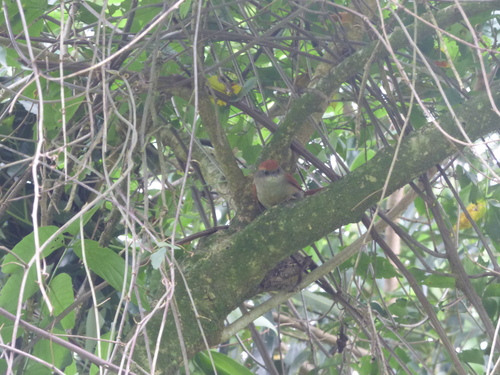 Rufous-capped Spinetail
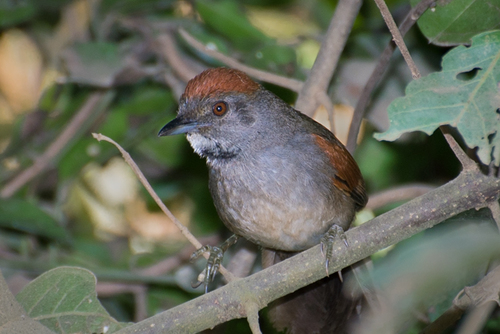 Cinereous-breasted Spinetail
In breve
Il segno distintivo più affidabile per separare il Rufous-capped Spinetail dal Cinereous-breasted Spinetail è il supercilium buff ampio e audace e la corona arancio-rossiccia brillante del Rufous-capped, in contrasto con il supercilium grigio tenue del Cinereous-breasted e la corona più scura e meno contrastante. Le piume giovanili differiscono sottilmente: i giovani Rufous-capped mostrano una corona rossiccia più opaca e parti inferiori lavate di ocra, mentre i giovani Cinereous-breasted hanno una corona grigio-marrone e parti inferiori marrone argilla. Entrambe le specie hanno castagno nelle ali e nella coda, ma la coda del Rufous-capped è castagna più brillante e più appuntita, mentre quella del Cinereous-breasted è più scura e con punte arrotondate. L'habitat e il comportamento possono aiutare: il Rufous-capped è uno specialista della foresta e del bambù, mentre il Cinereous-breasted preferisce praterie aperte e umide e cespugli vicino all'acqua. Le vocalizzazioni differiscono in qualità e ritmo, ma entrambe possono essere variabili e sottili.
Consigli di identificazione
- Supercilium (sopracciglio): Il Rufous-capped mostra un ampio supercilium buff che si distingue in tutte le età; il Cinereous-breasted ha solo un supercilium grigio tenue, spesso appena visibile sul campo.
- Colore della corona e della nuca: L'adulto Rufous-capped ha una corona e una nuca arancio-rossiccia brillante, in contrasto con il viso; la corona e la nuca del Cinereous-breasted sono castagno-rossicce ma meno brillanti, con una fronte grigio-marrone scura.
- Corona giovanile: Il giovane Rufous-capped ha una corona rossiccia più opaca; il giovane Cinereous-breasted ha una corona grigio-marrone, che può essere una distinzione sottile ma utile nei giovani uccelli.
- Schema della gola: Il Rufous-capped ha una piccola macchia di mento fulvo (adulti), gola biancastra con striature grigie tenui; il Cinereous-breasted ha una gola per lo più biancastra ma con piume della gola inferiore nere bordate di bianco, formando una macchia più definita.
- Petto e pancia: Il petto superiore del Rufous-capped è grigiastro, il resto delle parti inferiori è di un marrone chiaro più pallido; il Cinereous-breasted ha un petto cinereo (grigio cenere), pancia biancastra e fianchi/piume della coda marroni.
- Colore e forma della coda: La coda del Rufous-capped è castagna, graduata e appuntita; la coda del Cinereous-breasted è marrone più scura, anch'essa graduata ma con punte arrotondate.
- Colore delle ali: Entrambi hanno castagno nelle ali, ma quello del Rufous-capped è più esteso e brillante; le copritrici alari del Cinereous-breasted sono castagno-rossicce, ma le piume di volo sono marrone scuro con bordi rossicci.
- Parti inferiori giovanili: I giovani Rufous-capped mostrano un lavaggio ocra o marrone sotto; i giovani Cinereous-breasted sono più marrone argilla sotto, con una macchia della gola meno distinta.
- Becco e zampe: Entrambi hanno una maxilla nerastra e una mandibola grigia, ma il colore delle zampe è variabile e non è affidabilmente diagnostico (Rufous-capped: grigio verdastro; Cinereous-breasted: oliva/grigio oliva a giallo marrone).
- Forma della punta della coda: Le piume della coda del Rufous-capped sono appuntite; quelle del Cinereous-breasted sono arrotondate alle punte—meglio viste in uccelli in perche con code aperte.
- Contesto dell'habitat: Una densa foresta o sottobosco di bambù indica il Rufous-capped; praterie aperte, umide stagionalmente o cespugli vicino all'acqua favoriscono fortemente il Cinereous-breasted.
- Comportamento di foraggiamento: Il Rufous-capped spesso si unisce a stormi misti e foraggia nel sottobosco della foresta o nel piano medio; il Cinereous-breasted è solitamente in coppie, foraggiando 1–2 m sopra il suolo in aree aperte.
- Canto e richiamo: Il Rufous-capped emette un trillo o un rattling veloce, nasale e meccanico; il canto del Cinereous-breasted è un chiacchiericcio forte e affrettato, spesso accelerando, o un 'tut-Drrrrrrruh' acuto.
- Dimensione: Il Cinereous-breasted è leggermente più grande e pesante, ma questo è raramente ovvio a meno che entrambi non siano visti insieme.
- Trappole: Entrambe le specie possono apparire simili in scarsa luce o quando le viste sono brevi; concentrati sulla larghezza del supercilium, sulla luminosità della corona, sullo schema della gola e sull'habitat per la migliore separazione.
Taglia
Entrambe le specie sono simili in dimensioni, ma il Cinereous-breasted Spinetail è leggermente più grande e pesante (15–16 cm, 15–18 g) rispetto al Rufous-capped Spinetail (13–17 cm, 12–16 g, [wikidata]). Questa differenza è sottile e raramente diagnostica sul campo, ma il Cinereous-breasted può apparire un po' più robusto se visto fianco a fianco.
Piumaggio
I giovani sono meglio separati dal colore della corona e delle parti inferiori: i giovani Rufous-capped hanno una corona rossiccia più opaca e parti inferiori ocra o marroni, privi della piccola macchia di mento dell'adulto, mentre i giovani Cinereous-breasted hanno una corona grigio-marrone e parti inferiori più marrone argilla con una macchia della gola meno distinta. Negli adulti, il Rufous-capped mostra un ampio supercilium buff, una corona e una nuca arancio-rossiccia brillante, un dorso marrone rossiccio e una coda castagna appuntita. Il Cinereous-breasted ha un supercilium grigio tenue, una fronte grigio-marrone scura, una corona e una nuca castagno-rossicce, un dorso marrone scuro e una coda marrone più scura con punte arrotondate. Entrambi hanno castagno nelle ali, ma il castagno del Rufous-capped è più esteso e brillante. Le parti inferiori differiscono: il Rufous-capped ha una gola biancastra, leggermente striata e parti inferiori marrone chiaro più pallide, mentre il Cinereous-breasted ha una gola per lo più biancastra con piume della gola inferiore bordate di nero e un petto cinereo (grigio cenere).
Comportamento
Entrambe le specie foraggiano in coppie e raccolgono artropodi dalla vegetazione e dai rami, ma il Rufous-capped è più propenso a unirsi a stormi misti e foraggia nel sottobosco della foresta, a volte fino al piano medio o anche a terra. Il Cinereous-breasted di solito rimane 1–2 m sopra il suolo in habitat aperti ed è meno propenso a unirsi a stormi misti. Entrambi sono generalmente discreti e si nascondono in coperture dense, ma la loro altezza di foraggiamento preferita e l'associazione con stormi possono aiutare nel contesto.
Habitat
L'habitat è un forte indizio: il Rufous-capped Spinetail è uno specialista del sottobosco forestale, specialmente in foreste sempreverdi montane e di pianura con denso bambù Chusquea, che si estende dal livello del mare fino a 1.400 m nel sud-est del Brasile, nell'est del Paraguay e nel nord dell'Argentina. Il Cinereous-breasted Spinetail favorisce praterie aperte, umide stagionalmente, cespugli, campina e savana, di solito vicino all'acqua, a basse altitudini (fino a circa 700 m), con un'area di distribuzione più disgiunta attraverso Brasile, Bolivia, Perù e Paraguay. Se l'uccello si trova in una foresta densa o in bambù, è molto più probabile che sia un Rufous-capped; in praterie aperte umide o cespugli, aspettati un Cinereous-breasted.
Voce
Il Rufous-capped Spinetail emette un canto veloce, nasale e in qualche modo meccanico (ad es., 'di-di-di-réét', 'tdrrrWit', o 'drrrrrt wee') e un trillo a bassa frequenza o un rattling secco ('tshrrr', 'trrrrruh'). La vocalizzazione principale del Cinereous-breasted Spinetail è un chiacchiericcio affrettato e forte su un'unica tonalità, accelerando alla fine (ad es., 'chéw, chew-chee-chee-chee-ee-ee-ee-ee-ee-eu'), o un 'tut-Drrrrrrruh' acuto con una conclusione staccata e discendente. Il canto del Rufous-capped è più nasale e meno chiacchieroso; quello del Cinereous-breasted è più acuto, più chiacchieroso e accelera.
Rufous-capped Spinetail · Cinereous-breasted Spinetail · I miei uccelli difficili