

Motmot

エリマキライチョウ 対 ハリモミライチョウ

Bonasa umbellus 対 Canachites canadensis

エリマキライチョウとハリモミライチョウのクイズ
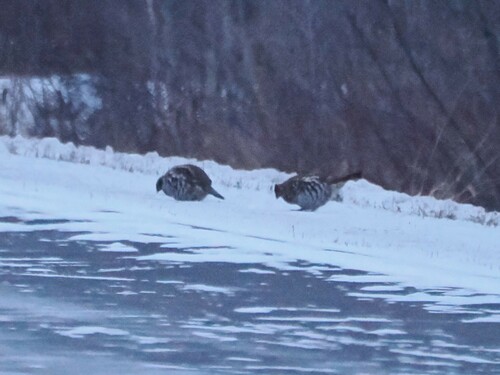
エリマキライチョウ (Bonasa umbellus) エリマキライチョウ
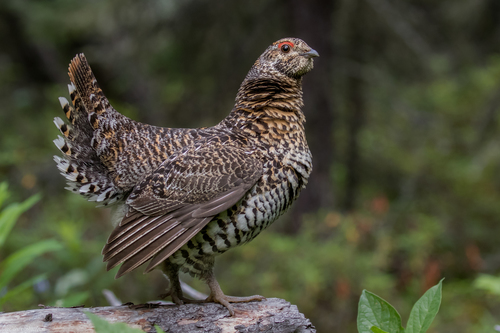
ハリモミライチョウ (Canachites canadensis) ハリモミライチョウ

メディア

読み込み中…

要点

エリマキライチョウとハリモミライチョウを区別する最も信頼できるフィールドマークは尾のパターンです:エリマキライチョウは尾の先端近くに広い黒いサブターミナルバンド(淡い先端付き)を示し、ハリモミライチョウは非常に端に狭い淡いバンドを持つ暗い尾を持っています。飛んでいるときや止まっているとき、エリマキライチョウはしばしばよりずんぐりしていて多様な色合いに見え、頭に冠と首にラフがあり、ハリモミライチョウはより均一なパターンで冠がありません。雌と幼鳥は特に混乱を招きますが、尾のパターンは依然として重要な違いです。ハリモミライチョウの雄は特徴的な赤い眉のコームを持ち、エリマキライチョウにはありません。両種は分布が重なり、似たような北部の森林に生息することがありますが、彼らの生息地の好みや微妙な構造的違いが識別を助けることがあります。

識別のコツ

  1. Tail Pattern (all ages/sexes): エリマキライチョウは尾の先端近くに広い黒いバンドを示し、淡い先端がある;ハリモミライチョウはほとんど暗い尾を持ち、非常に端に狭い淡いバンドがあります。これは最も信頼できるフィールドマークで、特に飛んでいるときや尾が扇状に広がっているときに有効です。
  2. Crest and Ruffs (adults): エリマキライチョウは頭に冠があり、首にラフがあり、これを立てることができます;ハリモミライチョウはこれらの特徴がなく、驚いたときに冠羽を立てません。
  3. Red Eyebrow Comb (adult males): ハリモミライチョウの雄は目の上に目立つ赤い眉のコームを持ち、エリマキライチョウにはありません。雌と幼鳥はこの特徴がありません。
  4. Plumage Tone (all ages): エリマキライチョウはより多様な色合いで、バリングとモッティングがあり、灰色と茶色の形態があります。ハリモミライチョウはより均一で、雄は主に上面が灰色で黒が下面、雌はモッティングのある茶色または灰色です。
  5. Underparts (adults): エリマキライチョウ(特に灰色の形態)はより明るく、バンドのある下部があり、白が多い;ハリモミライチョウの雄は黒い下面に白い斑点があり、雌はバンドがあるが全体的に白が少ないです。
  6. Sexing by Tail Band (adults): 雄のエリマキライチョウは通常、途切れのない尾のバンドを持ち、雌はしばしば途切れたものを持ちますが、これは完全に信頼できるわけではありません。ハリモミライチョウの性別は赤い眉のコームに依存します。
  7. Behavior (all ages): エリマキライチョウはより地上性で、カバーから大きな音を立てて飛び出し、雪に潜ることがあります。ハリモミライチョウはより樹上性で、しばしば針葉樹に止まり、一般的によりおとなしく静かです。
  8. Display (males): エリマキライチョウはドラムを打ちます(深く加速する音);ハリモミライチョウ(Franklinii)の雄は翼を叩くディスプレイを行います(2回の鋭い音)。春にこれを聞いてください。
  9. Habitat (all ages): エリマキライチョウは混合/落葉樹林で密な下草を好みます;ハリモミライチョウは針葉樹の北方森林に結びついています。生息地を強力な手がかりとして使用してください。
  10. Head Shape (all ages): エリマキライチョウは冠のためにより尖った頭のプロファイルを持ち、ハリモミライチョウはより丸い頭を持っています。
  11. Flight Jizz (all ages): エリマキライチョウはよりずんぐりしていて、大きな音を立ててカバーから飛び出します;ハリモミライチョウは静かに飛び立つか、止まったままでいる可能性が高いです。
  12. Rump Feather Dots (adults, in hand): エリマキライチョウの雌は尾羽に1つの白い点を持ち、雄はそれ以上の点を持っています。フィールドでは使用できませんが、手に持つと診断的です。
  13. Morphs (all ages): 両種は灰色と茶色の形態を持っていますが、エリマキライチョウの形態はより極端で変動があり、灰色の形態にはより多くの白があり、茶色の形態には目立つ灰色の尾があります。
  14. Juvenile/Immature Confusion: 若い鳥の場合、尾のパターンと全体的な印象に焦点を当ててください、羽毛はそれ以外は非常に似ています。
  15. Local Abundance: 重なり合う地域では、eBirdや地元の報告を確認してください—ハリモミライチョウは密な北方の針葉樹に非常に多く見られ、エリマキライチョウは混合林に見られます。

大きさ

エリマキライチョウは平均してやや大きく、長さ40〜50 cm、翼幅50〜64 cm、体重450〜750 gです。ハリモミライチョウはやや小さく、よりコンパクトで、長さ38〜43 cm、翼幅55〜57 cm、雄は550〜650 g、雌は450〜550 gです。フィールドでは、サイズだけでは強力な区別にはなりませんが、エリマキライチョウは特に膨らんでいるときにより大きく見えることがあります。

羽色

行動

エリマキライチョウはほとんどの時間を地面で過ごし、驚かされると大きな音を立てて飛び出し、冬には雪に潜ることがあります。彼の特徴的なディスプレイは非音声の「ドラム」(急速な翼のビート)です。ハリモミライチョウはより樹上性で、しばしば針葉樹に止まり、一般的に静かで大きな音を立てて飛び立つ可能性が低いです。フランクリン亜種の雄は短い飛行の終わりに翼を叩くディスプレイを行い、2回の鋭い音を出します。ハリモミライチョウはそのおとなしさから「フールヘン」と呼ばれることがあり、しばしば近づくことを許します。

生息環境

エリマキライチョウは落葉樹と混合林に広く分布し、特に密な下草のある場所を好み、アパラチア山脈からカナダを経てアラスカまで生息しています。ハリモミライチョウは針葉樹の北方森林(タイガ)に密接に結びついており、より樹上性で、しばしばスプルース、パイン、またはモミが優勢な生息地に見られます。分布が重なる場所では、生息地の好みが強力な手がかりになることがあります:密な針葉樹の林はハリモミライチョウを好み、混合または落葉樹の森はエリマキライチョウを好みます。

声

エリマキライチョウはその非音声のドラムディスプレイで有名で、翼のビートによって作られる深く加速する音です。ハリモミライチョウは一般的に静かですが、捕食者を警告したり、ひなを維持するために呼びかけることができます。ハリモミライチョウのフランクリン亜種は特徴的な翼を叩くディスプレイを持ち、遠くで聞こえる2回の鋭い音を出します。エリマキライチョウは翼を叩く音を出しません。

より良い説明を送る

比較と同じ項目を使ってください。文章はすぐに公開されます。

The most reliable field mark to separate Ruffed Grouse from Spruce Grouse is the tail pattern: Ruffed Grouse shows a broad black subterminal band near the tail tip (with a pale tip), while Spruce Grouse has a dark tail with a narrow pale band at the very end. In flight or perched, Ruffed Grouse often appears chunkier and more variegated, with a crest and ruffs at the neck, while Spruce Grouse is more uniformly patterned and lacks the crest. Females and immatures are especially confusing, but the tail pattern remains a key difference. Males of Spruce Grouse have a distinctive red eyebrow comb, absent in Ruffed Grouse. Both species overlap in range and can occur in similar northern forests, but their habitat preferences and subtle structural differences can help clinch the ID.

  1. Tail Pattern (all ages/sexes): Ruffed Grouse shows a broad black band near the tip of the tail with a pale tip; Spruce Grouse has a mostly dark tail with a narrow pale band at the very end. This is the most reliable field mark, especially in flight or when the tail is fanned.
  2. Crest and Ruffs (adults): Ruffed Grouse has a crest on the head and ruffs on the neck that can be raised; Spruce Grouse lacks these features and does not raise its crown feathers when alarmed.
  3. Red Eyebrow Comb (adult males): Spruce Grouse males have a prominent red eyebrow comb above the eye, absent in Ruffed Grouse. Females and immatures lack this feature.
  4. Plumage Tone (all ages): Ruffed Grouse is more variegated, with barring and mottling, and comes in grey and brown morphs. Spruce Grouse is more uniform, with males mostly grey above and black below, females mottled brown or grey.
  5. Underparts (adults): Ruffed Grouse (especially grey morph) has lighter, barred underparts with more white; Spruce Grouse males are black below with white spots, females are barred but less white overall.
  6. Sexing by Tail Band (adults): Male Ruffed Grouse usually have an unbroken tail band, females often a broken one, but this is not fully reliable. Spruce Grouse sexing relies on the red eyebrow comb.
  7. Behavior (all ages): Ruffed Grouse is more terrestrial, explodes noisily from cover, and may burrow in snow. Spruce Grouse is more arboreal, often perching in conifers, and is generally tamer and quieter.
  8. Display (males): Ruffed Grouse drums (deep, accelerating thumps); Spruce Grouse (Franklinii) males perform a wing-clap display (two sharp claps). Listen for these in spring.
  9. Habitat (all ages): Ruffed Grouse prefers mixed/deciduous forests with dense undergrowth; Spruce Grouse is tied to coniferous boreal forests. Use habitat as a strong supporting clue.
  10. Head Shape (all ages): Ruffed Grouse has a more peaked head profile due to the crest; Spruce Grouse has a rounder head.
  11. Flight Jizz (all ages): Ruffed Grouse appears chunkier and bursts from cover with loud wingbeats; Spruce Grouse is more likely to flush quietly or remain perched.
  12. Rump Feather Dots (adults, in hand): Ruffed Grouse females have rump feathers with a single white dot; males have more than one. Not field-usable but diagnostic in hand.
  13. Morphs (all ages): Both species have grey and brown morphs, but Ruffed Grouse's morphs are more extreme and variable, with more white in the grey morph and a conspicuously grey tail in the brown morph.
  14. Juvenile/Immature Confusion: For young birds, focus on the tail pattern and overall jizz, as plumage is otherwise very similar.
  15. Local Abundance: In overlapping areas, check eBird or local reports—Spruce Grouse is much more likely in dense boreal conifers, Ruffed Grouse in mixed woods.

Ruffed Grouse is slightly larger on average, measuring 40–50 cm in length with a wingspan of 50–64 cm and weighing 450–750 g. Spruce Grouse is a bit smaller and more compact, at 38–43 cm long, wingspan 55–57 cm, and males 550–650 g, females 450–550 g. In the field, size alone is not a strong separator, but Ruffed Grouse may look bulkier and more robust, especially when fluffed up.

  • Juvenile/Immature/Adult Females: The tail pattern is the most diagnostic mark: Ruffed Grouse shows a broad black band near the tip of the tail with a pale tip, while Spruce Grouse has a mostly dark tail with a narrow pale band at the very end. This contrast works for all ages and both sexes.
  • Adults: Ruffed Grouse is more variegated, with barring and mottling, and comes in grey and brown morphs. The throat is often paler, and the underparts are barred with more white in the grey morph. Spruce Grouse males are mostly grey above and black below, with white spots on the sides and a prominent red eyebrow comb. Females and immatures of Spruce Grouse are mottled brown or grey with barred underparts, resembling female Ruffed Grouse but with the tail pattern difference.
  • Crest and Ruffs: Ruffed Grouse has a crest on the head and ruffs on the neck (both sexes), which can be raised; Spruce Grouse lacks these features and does not raise its crown feathers when alarmed.
  • Sexing: Both Ruffed Grouse sexes are similar, but males tend to have unbroken tail bands, while females often have a broken band (not always reliable). In Spruce Grouse, only males have the red eyebrow comb.

Ruffed Grouse spends most of its time on the ground, often exploding into noisy flight when startled, and can burrow into snow in winter. Its signature display is the non-vocal 'drumming' (rapid wing beats). Spruce Grouse is more arboreal, often perching and moving about in conifer trees, and is generally quieter and less likely to flush noisily. Males of the Franklin’s subspecies perform a wing-clap display at the end of a short flight, producing two sharp claps. Spruce Grouse is sometimes called 'fool hen' for its tameness, often allowing close approach.

Ruffed Grouse is widespread in deciduous and mixed forests, especially with dense undergrowth, and ranges from the Appalachians across Canada to Alaska. Spruce Grouse is closely tied to coniferous boreal forests (taiga) and is more arboreal, often found in spruce, pine, or fir-dominated habitats. Where ranges overlap, habitat preference can be a strong clue: dense conifer stands favor Spruce Grouse, while mixed or deciduous woods favor Ruffed Grouse.

Ruffed Grouse is famous for its nonvocal drumming display, a deep, accelerating thumping sound made by wing beats. Spruce Grouse is generally silent but can produce calls to warn of predators or maintain brood cohesion. The Franklin’s subspecies of Spruce Grouse has a distinctive wing-clap display, two sharp claps audible at a distance. Ruffed Grouse does not produce wing claps.

変更を破棄しますか?

保存していない編集があります。今離れると失われます。

エリマキライチョウ · ハリモミライチョウ · 苦手な鳥