

Motmot

アカショウビン 対 ヤマショウビン

Halcyon coromanda 対 Halcyon pileata

アカショウビンとヤマショウビンのクイズ
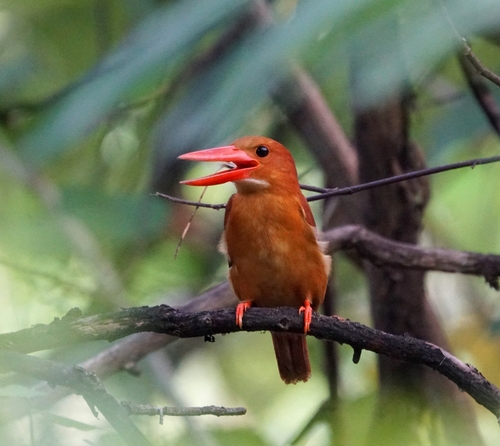
アカショウビン (Halcyon coromanda) アカショウビン
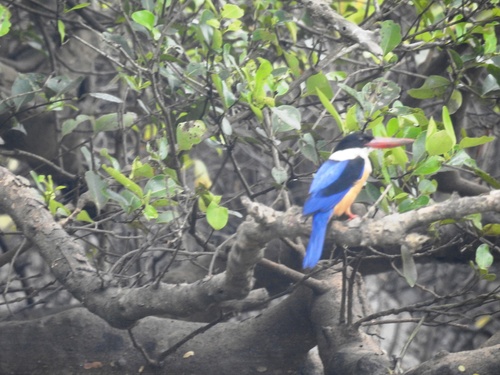
ヤマショウビン (Halcyon pileata) ヤマショウビン

メディア

読み込み中…

要点

アカショウビンとヤマショウビンを区別する最も信頼できるフィールドマークは、頭部と翼の色です:ヤマショウビンは常に目を引く黒い帽子と紫青色の翼を持ち、飛行中には大きな白い斑点が見られますが、アカショウビンは全体が錆赤色から紫がかった色で、黒や青はどこにもありません。両者ともに大きな赤いくちばしと脚を持っていますが、ヤマショウビンだけが暗い頭部と対照的な白い喉と襟を持っています。幼鳥のヤマショウビンは鈍い色合いで喉に縞模様が見られますが、黒い帽子と青い翼は保持しています。生息地も手助けになります:アカショウビンは密林を好み、ヤマショウビンは通常マングローブや開けた沿岸地域にいます。黒い帽子や青い翼を持つカワセミを見たら、それはアカショウビンではありません。

識別のコツ

  1. 頭の色が決定的です: ヤマショウビンは常にジェットブラックの帽子と後頭部を持ち、白い喉と襟と鋭く対照的です。アカショウビンは全体が錆赤色から紫がかった色で、どの年齢でも頭や喉に黒や白はありません。
  2. 翼の色と飛行パターン: ヤマショウビンは紫青色の翼と背中を持ち、飛行中に初列風切羽の基部に大きな白い斑点(「ミラー」)が見られます。アカショウビンの翼と背中は体の他の部分と同じ錆赤色で、青や白の斑点はありません。
  3. くちばしと脚: 両種ともに大きく明るい赤いくちばしと脚を持っています。これは区別のための有用なフィールドマークではありません。
  4. 腹部: 両者ともに赤褐色の腹部を持っていますが、ヤマショウビンだけが白い喉から赤褐色の腹部への鋭い移行を持っています。アカショウビンは下側が均一に錆赤色で、白はありません。
  5. 幼鳥のマーク: 幼鳥のヤマショウビンは鈍い色合いで喉に縞模様が見られますが、黒い帽子と白い斑点のある青い翼を保持しています。アカショウビンの幼鳥は詳細には記述されていませんが、黒、青、または白を示すことは知られていません。
  6. 尾と背中: ヤマショウビンは紫青色の背中と尾を持ち、赤褐色の腹部と対照的です。アカショウビンは全体が錆赤色から紫がかった色で、尾は時々深い紫色ですが、青色はありません。
  7. 止まり方: ヤマショウビンはしばしばマングローブや電線にオープンに止まりますが、密なカバーから遠く離れることもあります。アカショウビンははるかに秘密主義で、通常は森林に隠れています。
  8. 生息地の手がかり: アカショウビンはほぼ常に密林に生息し、開けた地域や沿岸地域にはめったにいません。ヤマショウビンはマングローブ、河口、開けた沿岸の森林に典型的ですが、内陸に迷い込むこともあります。
  9. 声: アカショウビンは高く下降する口笛を鳴らし、ヤマショウビンは大きく、カッカッという「キキキキキキ」という声を出します。カッカッという呼び声を聞いたら、ヤマショウビンを考えてください。
  10. 性別と季節的変化: 両種ともに性的二形性はほとんどありません。アカショウビンのオスはわずかに明るいかもしれませんが、これは信頼できません。どちらの種にも強い季節的な羽毛の変化はありません。
  11. サイズ: ヤマショウビンはわずかに大きく(28 cm対25 cm)、これはめったに役に立ちません。
  12. 行動の文脈: 鳥が内気で、深いカバーに留まり、ちらっと見えたり聞こえたりするだけの場合は、アカショウビンを疑ってください。オープンに止まっている場合、特にマングローブであれば、ヤマショウビンを疑ってください。
  13. 飛行スタイル: ヤマショウビンは急速で直接的な飛行をし、羽音を立てる丸い翼と白い翼の斑点が見られます。アカショウビンの飛行はあまり記述されていませんが、白い翼の閃光はありません。
  14. 一般的な落とし穴: くちばしや脚の色に頼らないでください、両方とも赤です。照明によってヤマショウビンの青が暗く見えることがありますが、黒い帽子と白い喉は明らかです。未熟なヤマショウビンは鈍く見えるかもしれませんが、黒い帽子や青い翼を失うことはありません。
  15. 地理的重複: 両種はアジアで重複する範囲に出現することがあるため、場所だけでなく、常に頭部と翼の色を確認してください。

大きさ

ヤマショウビンはわずかに大きく、平均して約28 cmの長さで、アカショウビンは25 cmです。両者ともに頑丈で大きなくちばしを持つカワセミで、サイズだけではフィールドでの診断はめったに役に立ちません。両者ともに大きく明るい赤いくちばしと脚を持っています。

羽色

行動

アカショウビンは内気で、見られるよりも聞かれることが多く、密林に隠れていることを好み、通常は単独またはペアでいます。ヤマショウビンはより目立ち、しばしばマングローブや電線にオープンに止まり、簡単に驚かせることができます。両者ともに魚や大きな昆虫を主に狩るために潜水しますが、ヤマショウビンは開けた沿岸の生息地で見られる可能性が高く、アカショウビンは森林の専門家です。

生息環境

アカショウビンは密林の鳥で、厚いジャングルや熱帯雨林を含み、温帯から熱帯のゾーンに生息しています。重いカバーの外で見られることはめったにありません。ヤマショウビンは最も頻繁に沿岸近く、特にマングローブ、河口、川沿いに見られますが、冬や降雨後には内陸にも現れることがあります。深い森林でカワセミを見つけた場合、アカショウビンの可能性が高く、マングローブや開けた沿岸地域で見つけた場合はヤマショウビンの可能性が高いです。

声

アカショウビンは高く下降する呼び声を出し、密林でよく聞かれます。ヤマショウビンは大きく、カッカッという「キキキキキキ」という声を出し、より大きく、よりガラガラとした音です。呼び声はかなり異なりますが、両種はしばしば見られる前に声で検出されます。

より良い説明を送る

比較と同じ項目を使ってください。文章はすぐに公開されます。

The most reliable field mark to separate Ruddy Kingfisher from Black-capped Kingfisher is head and wing color: Black-capped Kingfisher always shows a striking black cap and purple-blue wings with large white patches in flight, while Ruddy Kingfisher is entirely rust-red to purplish with no black or blue anywhere. Both have large red bills and legs, but only Black-capped has a white throat and collar contrasting with its dark head. Juvenile Black-capped Kingfishers are duller and show throat streaks, but still retain the black cap and blue wings. Habitat can help: Ruddy prefers dense forests, Black-capped is usually in mangroves or open coastal areas. If you see a kingfisher with a black cap or blue wings, it is not a Ruddy.

  1. Head color is decisive: Black-capped Kingfisher always has a jet-black cap and nape, sharply contrasting with a white throat and collar. Ruddy Kingfisher is entirely rusty-red to purplish, with no black or white on the head or throat at any age.
  2. Wing color and flight pattern: Black-capped Kingfisher shows purple-blue wings and back, with large white patches ('mirrors') at the base of the primaries visible in flight. Ruddy Kingfisher's wings and back are the same rusty-red as the rest of the body, with no blue or white patches.
  3. Bill and legs: Both species have large, bright red bills and legs. This is not a useful field mark for separation.
  4. Underparts: Both have rufous underparts, but only Black-capped has a sharp transition from white throat to rufous belly. Ruddy is uniformly rusty-red below, with no white.
  5. Juvenile marks: Juvenile Black-capped Kingfishers are duller and show throat streaks, but retain the black cap and blue wings with white patches. Ruddy Kingfisher juveniles are not well described but are not known to show any black, blue, or white.
  6. Tail and back: Black-capped has a purple-blue back and tail, contrasting with the rufous belly. Ruddy is rusty-red to purplish all over, with the tail sometimes deeper purple but never blue.
  7. Perched posture: Black-capped often perches openly in mangroves or on wires, sometimes far from dense cover. Ruddy is much more secretive and usually stays hidden in forest.
  8. Habitat clues: Ruddy is almost always in dense forest, rarely in open or coastal areas. Black-capped is typical of mangroves, estuaries, and open coastal woodlands, but can wander inland.
  9. Voice: Ruddy gives a high, descending whistle; Black-capped gives a loud, cackling 'ki-ki-ki-ki-ki'. If you hear a cackling call, think Black-capped.
  10. Sex and seasonal variation: Both species show little sexual dimorphism. Ruddy males may be slightly brighter, but this is not reliable. No strong seasonal plumage change in either species.
  11. Size: Black-capped is slightly larger (28 cm vs. 25 cm), but this is rarely useful unless birds are side by side.
  12. Behavioral context: If the bird is shy, staying in deep cover, and only glimpsed or heard, suspect Ruddy. If it is bold, perching in the open, especially in mangroves, suspect Black-capped.
  13. Flight style: Black-capped has rapid, direct flight with whirring, rounded wings and flashes of white wing patches. Ruddy's flight is less described but lacks the white wing flashes.
  14. Common pitfalls: Do not rely on bill or leg color, as both are red. Lighting can make Black-capped's blue look dark, but the black cap and white throat remain obvious. Immature Black-capped may look dull, but never lose the black cap or blue wings.
  15. Geographic overlap: Both species can occur in overlapping ranges in Asia, so always check head and wing color, not just location.

Black-capped Kingfisher is slightly larger, averaging about 28 cm in length, compared to Ruddy Kingfisher's 25 cm. Both are robust, big-billed kingfishers, and size alone is rarely diagnostic in the field unless the birds are side by side. Both have large, bright red bills and legs.

  • Juvenile/immature birds: Black-capped Kingfisher juveniles are duller than adults and show streaks on the throat, but still have a black cap and blue wings with white patches in flight. Ruddy Kingfisher juveniles are not described in detail, but no evidence suggests they ever show a black cap, blue wings, or white wing patches; they are overall rusty-red to purplish.
  • Adults: Ruddy Kingfisher is entirely rust-red, deepening to purple at the tail, with no white or blue anywhere. Black-capped Kingfisher adults have a black cap and nape, white throat and neck collar, purple-blue wings and back, rufous underparts, and prominent white wing patches visible in flight. The bill and legs are bright red in both species. Sexes are similar in both, though Ruddy males may be slightly brighter.

Ruddy Kingfisher is shy, often heard rather than seen, and prefers to stay hidden in dense forest, usually alone or in pairs. Black-capped Kingfisher is more conspicuous, often perching openly in mangroves or on wires, and is easily flushed. Both hunt by diving, mainly for fish and large insects, but Black-capped is more likely to be seen in open or coastal habitats, while Ruddy is a forest specialist.

Ruddy Kingfisher is a bird of dense forests, including thick jungle and rainforest, from temperate to tropical zones. It is rarely seen outside heavy cover. Black-capped Kingfisher is most often found near coasts, especially in mangroves, estuaries, and along rivers, but can also appear inland, especially in winter or after rainfall. If you find a kingfisher in deep forest, it is more likely Ruddy; if in mangroves or open coastal areas, Black-capped is much more likely.

Ruddy Kingfisher gives a high, descending call, often heard in dense forest. Black-capped Kingfisher has a cackling 'ki-ki-ki-ki-ki' call, which is louder and more rattling. Calls are quite different, but both species are often detected by voice before being seen.

変更を破棄しますか?

保存していない編集があります。今離れると失われます。

アカショウビン · ヤマショウビン · 苦手な鳥