

Motmot

アカエリエボシゲラ 対 シマクマゲラ

Campephilus robustus 対 Dryocopus lineatus

アカエリエボシゲラとシマクマゲラのクイズ
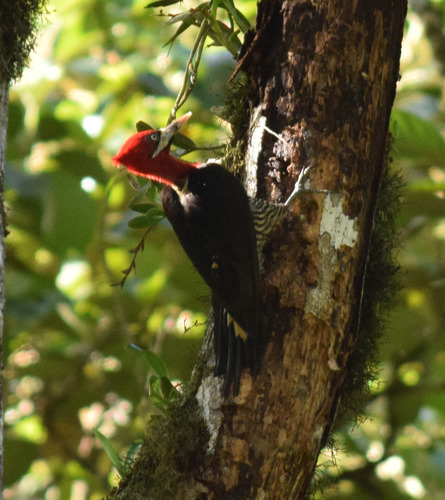
アカエリエボシゲラ (Campephilus robustus) アカエリエボシゲラ
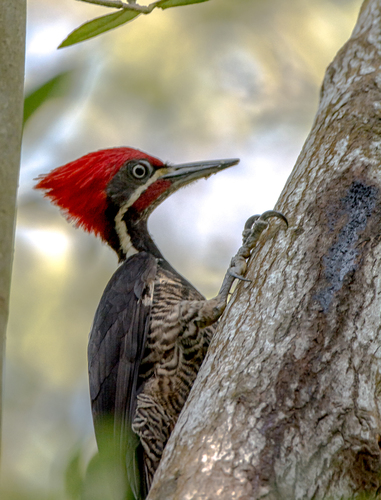
シマクマゲラ (Dryocopus lineatus) シマクマゲラ

メディア

読み込み中…

要点

アカエリエボシゲラとシマクマゲラの間で最も信頼できるフィールドマークは、すべての年齢における上面と翼の色とパターンです:アカエリエボシゲラはシナモンの色合いを持つ淡い白っぽい上面と、小さな錆びたバフの斑点がある黒い翼を示しますが、シマクマゲラは主に上面が黒で、顔や(多くの個体群で)首や肩に目立つ白い線があります。飛行中、シマクマゲラは翼に明確な白を示し、アカエリエボシゲラにはそれがありません。アカエリエボシゲラはより大きく、重く、淡い長いくちばしを持ち、両種とも赤い冠がありますが、顔のストライプと下のバーニングが異なります。未熟な鳥は鈍いですが、同じ基本的なパターンに従います。上面の色、飛行中の翼のパターン、顔のストライプに注意を払うことで、難しい個体でも区別できます。

識別のコツ

  1. Upperparts color (all ages): アカエリエボシゲラはシナモンまたはバフの色合いを持つ淡い白っぽい上面を持ち、シマクマゲラは主に上面が黒です。これは距離があっても飛行中でもしばしば見えます。
  2. Wing pattern in flight (all ages): シマクマゲラは飛行中に翼に明確な白い斑点を示します;アカエリエボシゲラは小さな錆びたバフの斑点がある黒っぽい翼を持ち、目立つ白はありません。
  3. Facial stripes (adults): シマクマゲラはくちばしから首や肩にかけて目立つ白い線を持っています(ただし、これらは南部の鳥では減少または欠如している場合があります);アカエリエボシゲラはこれを欠きますが、雌はくちばしから耳の覆いまで黒い縁のある広い白いストライプを持っています。
  4. Head pattern (sexes): 成熟した雄のアカエリエボシゲラは全体が赤い頭と首を持ち、小さな黒と白の耳覆いの斑点があります;成熟した雌のアカエリエボシゲラは広い白い顔のストライプを持っています。シマクマゲラの雄は赤いマラーストライプと額を持ち、雌はこれらの部分が黒です。
  5. Underparts barring: アカエリエボシゲラは腹部に特に狭い黒いバーがあるバフから白っぽい下部を持っています;シマクマゲラは下部が白っぽいですが、黒で重くバーニングされており、より対照的な外観を与えています。
  6. Bill color and shape: アカエリエボシゲラは長い角色(淡い)チゼルくちばしを持っています;シマクマゲラのくちばしは通常黒ですが、一部の個体群は淡いまたは青みがかったくちばしを持っています。くちばしの色は常に診断的ではありませんが、アカエリエボシゲラのものは一貫して淡く長いです。
  7. Size and bulk: アカエリエボシゲラはより重く、より大きい(262 g対183.5 g)で、首が太く、体が深いです。これは止まっているときや並んで見たときに最も明らかです。
  8. Tail and wing shape: 両者は強く、硬い尾を持っていますが、アカエリエボシゲラの尾はその大きさのために相対的に長く、よりくさび形に見えます。
  9. Juvenile plumage: 幼鳥のアカエリエボシゲラは成鳥より鈍く、茶色ですが、シマクマゲラの幼鳥よりも上面と下面が淡いままで、上面は黒で、顔の線が白い場合があります。
  10. Habitat context: アカエリエボシゲラは成熟した、手つかずの森林を好みます;シマクマゲラは開けた森林、エッジ、そして乱された地域に一般的です。重複ゾーンでは、ハビタットが助けになりますが、決定的ではありません。
  11. Behavior: アカエリエボシゲラはより遅く、より計画的で、しばしば樹冠の高いところにいます;シマクマゲラはより活発で、声を出し、木の間を移動する可能性が高いです。
  12. Vocalization: シマクマゲラは大きく、響く「ウィクウィクウィク」を出します;アカエリエボシゲラは静かで、呼ぶ可能性が低いです。
  13. Scapular/shoulder lines: シマクマゲラは通常白い肩の線を示します(南部の個体群では減少または欠如していることがあります);アカエリエボシゲラはこれを欠きます。
  14. Sex differences: 雌のアカエリエボシゲラは広い白い顔のストライプを持っています;雌のシマクマゲラは顔に赤がなく、これらの部分が黒です。
  15. Confusion risk: シマクマゲラの南部の個体群(肩の線が減少している場合)では、上面の色、下部のバーニング、くちばしの色/サイズにより区別することが重要です。

大きさ

アカエリエボシゲラは特に重く、体格が大きく、平均約262 gで、シマクマゲラの183.5 gと比較されます。両者は長さ(約32〜37 cm)で似ていますが、アカエリエボシゲラはより大きく、首が太く、淡い長いくちばしを持っています。シマクマゲラはスリムで、より典型的なキツツキの体型をしています。フィールドでは、アカエリエボシゲラはしばしば巨大に見え、特に並んで見たり、同じ木にいるときに顕著です。違いは止まっているときに最も明らかですが、アカエリエボシゲラの深く、遅い翼の打撃によって飛行中にも判断できます。

羽色

すべての年齢において、アカエリエボシゲラはシナモンまたはバフの色合いを持つ淡い白っぽい上面を持ち、黒い肩羽、覆い羽、上翼と対照的で、飛行羽の内側のウェブに小さな錆びたバフの斑点があります。下部は腹部に特に狭い黒いバーがあるバフから白っぽいです。対照的に、シマクマゲラは主に上面が黒で、赤い冠とくちばしから首や肩にかけて目立つ白い線があります(ただし、これらの線は南部の個体群では減少または欠如している場合があります)。下部は白っぽいですが、黒で重くバーニングされており、アカエリエボシゲラよりも対照的な外観を持っています。飛行中、シマクマゲラは翼に明確な白い斑点を示し、アカエリエボシゲラにはそれがありません。両種の幼鳥は鈍いですが、アカエリエボシゲラの幼鳥は上面と下面が淡いままで、対照が少なく、シマクマゲラの幼鳥は上面が黒で、顔の線が白い場合があります。両者の成鳥の雄は赤い頭を持っていますが、顔のパターンは異なります:アカエリエボシゲラの雄は全体が赤い頭を持ち、小さな黒と白の耳覆いの斑点がありますが、シマクマゲラの雄は赤いマラーストライプと額を持ち、顔の残りの部分は白い線でマークされています。アカエリエボシゲラの雌はくちばしから耳の覆いまで黒い縁のある広い白いストライプを持ち、シマクマゲラの雌はこれらの部分が黒で、赤いマラーストライプと額がありません。

行動

両種は大きな幹を叩き、餌を探しますが、アカエリエボシゲラは成熟した森林の高いところで計画的に作業しているのが見られることが多く、しばしばペアでいます。その動きは遅く、より意図的で、重い体型に合っています。シマクマゲラはより適応力があり、森林のエッジや開けた森林で見られることが多く、一般的により活発で目立ち、強く直接的な飛行で木の間を移動する傾向があります。両者は大きな巣穴を掘りますが、シマクマゲラは乱されたり二次的な生息地で見られることが多いです。

生息環境

アカエリエボシゲラはアルゼンチン、ブラジル、パラグアイの成熟した森林に制限されており、大規模な手つかずの森林を好みます。シマクマゲラは南メキシコから北アルゼンチン、トリニダードまでの広範囲にわたり、森林の境界、開けた森林、さらには半開放的な地域で一般的です。重複する地域(例:ブラジル南東部、パラグアイ、北アルゼンチン)では、アカエリエボシゲラは古い、密な森林にいるのに対し、シマクマゲラはエッジや断片化された森林にいる可能性が高いです。ハビタットの文脈は助けになりますが、両者が存在する場所では決定的ではありません。

声

シマクマゲラは大きく、響く「ウィクウィクウィク」という声を出し、しばしば繰り返され、両性ともに叩きます。アカエリエボシゲラは声が少なく、より秘密主義であり、その声は詳細には記載されていませんが、一般的に静かで、声で存在を示す可能性が低いです。特に開けた森林で大きく繰り返される声を聞いた場合、シマクマゲラの可能性が高いです。

より良い説明を送る

比較と同じ項目を使ってください。文章はすぐに公開されます。

The most reliable field mark between Robust Woodpecker and Lineated Woodpecker is the color and pattern of the upperparts and wing in all ages: Robust Woodpecker shows pale, whitish upperparts with a cinnamon tinge and black wings with small rusty-buff spots, while Lineated Woodpecker is mainly black above with prominent white lines on the face and (in many populations) down the neck and shoulders. In flight, Lineated Woodpecker shows distinct white in the wings, absent in Robust. Robust is bulkier and heavier, with a paler, longer bill, and both species have red crests but differ in facial striping and barring below. Immature birds are duller but follow the same basic pattern. Careful attention to the upperparts' color, wing pattern in flight, and facial stripes will separate even tricky individuals.

  1. Upperparts color (all ages): Robust Woodpecker has pale, whitish upperparts with a cinnamon or buff tinge; Lineated is mainly black above. This is often visible even at a distance or in flight.
  2. Wing pattern in flight (all ages): Lineated Woodpecker shows clear white patches in the wings when flying; Robust has blackish wings with small rusty-buff spots, lacking any bold white.
  3. Facial stripes (adults): Lineated has bold whitish lines from the bill down the neck and shoulders (though these may be reduced or absent in southern birds); Robust lacks these, but the female has a broad whitish stripe with black edges from bill to ear coverts.
  4. Head pattern (sexes): Adult male Robust has an all-red head and neck with a small black-and-white ear covert spot; adult female Robust has a wide whitish face stripe. Lineated male has a red malar stripe and forehead, female has these areas black.
  5. Underparts barring: Robust has buff to whitish underparts with narrow black bars, especially on the belly; Lineated is whitish below but heavily barred with black, giving a more contrasting appearance.
  6. Bill color and shape: Robust has a long, horn-colored (pale) chisel bill; Lineated's bill is usually black, but some populations have pale or bluish bills. Bill color is not always diagnostic, but Robust's is consistently paler and longer.
  7. Size and bulk: Robust is heavier and bulkier (262 g vs. 183.5 g), with a thicker neck and deeper body. This is most obvious when perched or seen side-by-side.
  8. Tail and wing shape: Both have strong, stiff tails, but Robust's tail appears proportionally longer and more wedge-shaped due to its larger size.
  9. Juvenile plumage: Juvenile Robust is duller and browner than adult, but still paler above and below than juvenile Lineated, which remains black above with white facial lines if present in its population.
  10. Habitat context: Robust prefers mature, undisturbed forest; Lineated is common in open woodland, edges, and disturbed areas. In overlap zones, habitat can help but is not definitive.
  11. Behavior: Robust is slower, more methodical, and often higher in the canopy; Lineated is more active, vocal, and likely to move between trees.
  12. Vocalization: Lineated gives a loud, ringing "wic-wic-wic"; Robust is quieter and less likely to call.
  13. Scapular/shoulder lines: Lineated typically shows white scapular lines (reduced or absent in southern populations); Robust lacks these.
  14. Sex differences: Female Robust has a broad whitish face stripe; female Lineated lacks red on the face and has black in these areas.
  15. Confusion risk: In southern populations of Lineated (where scapular lines are reduced), rely more on upperparts color, underparts barring, and bill color/size for separation.

Robust Woodpecker is notably heavier and bulkier, averaging about 262 g compared to the Lineated Woodpecker's 183.5 g. Both are similar in length (about 32–37 cm), but Robust appears more massive and thick-necked, with a longer, paler bill. Lineated is slimmer, with a more typical woodpecker build. In the field, Robust often looks like a giant, especially when seen side-by-side or on the same tree. The difference is most obvious when perched, but can also be judged in flight by the deeper, slower wingbeats of Robust.

For all ages, Robust Woodpecker has pale, whitish upperparts with a cinnamon or buff tinge, contrasting with black scapulars, coverts, and upperwing, which are marked with small rusty-buff spots on the inner webs of the flight feathers. Its underparts are buff to whitish with narrow black bars, especially on the belly. In contrast, Lineated Woodpecker is mainly black above, with a red crest and bold whitish lines running from the bill down the neck and shoulders (though these lines are reduced or absent in some southern populations). The underparts are whitish but heavily barred with black, creating a more contrasting look than Robust. In flight, Lineated shows clear white patches in the wings, which Robust lacks. Juveniles of both species are duller, but Robust juveniles remain paler above and below, with less contrast, while Lineated juveniles retain the black upperparts and white facial lines if present in their population. Adult males of both have red heads, but the facial pattern differs: Robust males have an all-red head with a small black-and-white ear covert spot, while Lineated males have a red malar stripe and forehead, with the rest of the face marked by white lines. Females of Robust have a broad whitish stripe edged in black from bill to ear coverts, while female Lineated have those areas black, lacking the red malar and forehead.

Both species drum and forage on large trunks, but Robust Woodpecker is more likely to be seen methodically working high up in mature forest, often in pairs. Its movements are slower and more deliberate, matching its heavier build. Lineated Woodpecker is more adaptable, often found at forest edges and open woodland, and is generally more active and conspicuous, with a tendency to call loudly and move between trees with strong, direct flights. Both excavate large nest holes, but Lineated is more likely to be seen in disturbed or secondary habitats.

Robust Woodpecker is restricted to mature forests in Argentina, Brazil, and Paraguay, favoring large tracts of undisturbed woodland. Lineated Woodpecker has a much broader range, from southern Mexico to northern Argentina and Trinidad, and is common in forest borders, open woodland, and even semi-open areas. In areas of overlap (e.g., southeastern Brazil, Paraguay, northern Argentina), Robust will be in older, denser forest, while Lineated is more likely at edges or in fragmented woodland. Habitat context can help, but is not definitive where both occur.

Lineated Woodpecker gives a loud, ringing "wic-wic-wic" call, often repeated, and both sexes drum. Robust Woodpecker is less vocal and more secretive; its calls are not described in detail in the notes, but it is generally quieter and less likely to betray its presence by voice. If you hear a loud, repeated call, especially in open woodland, Lineated is more likely.

変更を破棄しますか?

保存していない編集があります。今離れると失われます。

アカエリエボシゲラ · シマクマゲラ · 苦手な鳥