

Robust Woodpecker vs Lineated Woodpecker
Campephilus robustus contro Dryocopus lineatus
Fai un quiz con Robust Woodpecker e Lineated Woodpecker
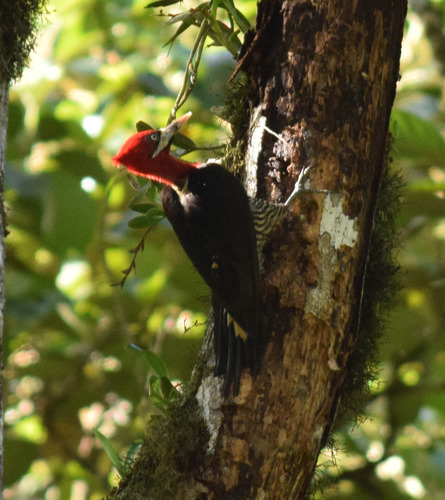 Robust Woodpecker
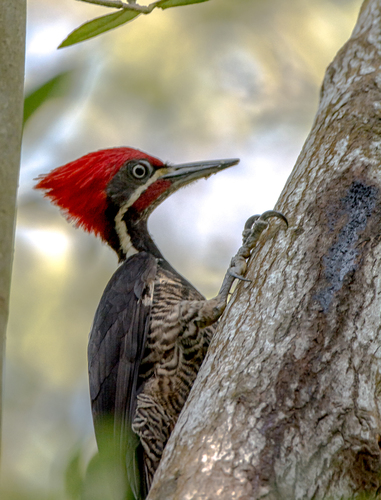 Lineated Woodpecker
In breve
Il segno distintivo più affidabile tra il Robust Woodpecker e il Lineated Woodpecker è il colore e il motivo delle parti superiori e delle ali in tutte le età: il Robust Woodpecker mostra parti superiori chiare e biancastre con una sfumatura cannella e ali nere con piccole macchie ruggine-buff, mentre il Lineated Woodpecker è principalmente nero sopra con linee bianche prominenti sul viso e (in molte popolazioni) lungo il collo e le spalle. In volo, il Lineated Woodpecker mostra bianco distintivo nelle ali, assente nel Robust. Il Robust è più massiccio e pesante, con un becco più chiaro e lungo, e entrambe le specie hanno creste rosse ma differiscono nella striatura facciale e nella barratura sotto. Gli uccelli immaturi sono più opachi ma seguono lo stesso schema di base. Un'attenta attenzione al colore delle parti superiori, al motivo delle ali in volo e alle strisce facciali separerà anche gli individui più difficili.
Consigli di identificazione
- Colore delle parti superiori (tutte le età): Il Robust Woodpecker ha parti superiori chiare e biancastre con una sfumatura cannella o buff; il Lineated è principalmente nero sopra. Questo è spesso visibile anche a distanza o in volo.
- Motivo delle ali in volo (tutte le età): Il Lineated Woodpecker mostra chiare macchie bianche nelle ali quando vola; il Robust ha ali nerastre con piccole macchie ruggine-buff, prive di bianco audace.
- Strisce facciali (adulti): Il Lineated ha linee bianche audaci dal becco lungo il collo e le spalle (anche se queste possono essere ridotte o assenti negli uccelli meridionali); il Robust ne è privo, ma la femmina ha una larga striscia bianca con bordi neri dal becco ai copritrici auricolari.
- Motivo della testa (sessi): Il maschio adulto del Robust ha una testa e un collo completamente rossi con una piccola macchia nera e bianca sul copritrice auricolare; la femmina adulta del Robust ha una larga striscia facciale bianca. Il maschio del Lineated ha una striscia malare rossa e una fronte, la femmina ha queste aree nere.
- Barratura delle parti inferiori: Il Robust ha parti inferiori da buff a biancastre con strette barre nere, specialmente sul ventre; il Lineated è biancastro sotto ma fortemente barrato di nero, dando un aspetto più contrastante.
- Colore e forma del becco: Il Robust ha un lungo becco a scalpello color corno (chiaro); il becco del Lineated è solitamente nero, ma alcune popolazioni hanno becchi chiari o bluasti. Il colore del becco non è sempre diagnostico, ma quello del Robust è costantemente più chiaro e lungo.
- Dimensioni e massa: Il Robust è più pesante e massiccio (262 g vs. 183,5 g), con un collo più spesso e un corpo più profondo. Questo è più evidente quando è posato o visto fianco a fianco.
- Forma della coda e delle ali: Entrambi hanno code forti e rigide, ma la coda del Robust appare proporzionalmente più lunga e a forma di cuneo a causa delle sue dimensioni maggiori.
- Piumaggio giovanile: Il giovane Robust è più opaco e marrone rispetto all'adulto, ma rimane comunque più chiaro sopra e sotto rispetto al giovane Lineated, che rimane nero sopra con linee facciali bianche se presenti nella sua popolazione.
- Contesto dell'habitat: Il Robust preferisce foreste mature e indisturbate; il Lineated è comune in boschi aperti, bordi e aree disturbate. Nelle zone di sovrapposizione, l'habitat può aiutare ma non è definitivo.
- Comportamento: Il Robust è più lento, più metodico, e spesso più in alto nella chioma; il Lineated è più attivo, vocale e probabile che si muova tra gli alberi.
- Vocalizzazione: Il Lineated emette un forte e squillante "wic-wic-wic"; il Robust è più silenzioso e meno probabile che chiami.
- Linee scapolari/spalle: Il Lineated mostra tipicamente linee scapolari bianche (ridotte o assenti nelle popolazioni meridionali); il Robust ne è privo.
- Differenze sessuali: La femmina del Robust ha una larga striscia facciale bianca; la femmina del Lineated non ha rosso sul viso e ha nero in queste aree.
- Rischio di confusione: Nelle popolazioni meridionali del Lineated (dove le linee scapolari sono ridotte), fare affidamento maggiormente sul colore delle parti superiori, sulla barratura delle parti inferiori e sul colore/dimensione del becco per la separazione.
Taglia
Il Robust Woodpecker è notevolmente più pesante e massiccio, con una media di circa 262 g rispetto ai 183,5 g del Lineated Woodpecker. Entrambi sono simili in lunghezza (circa 32–37 cm), ma il Robust appare più massiccio e con un collo più spesso, con un becco più lungo e chiaro. Il Lineated è più snello, con una costruzione più tipica da picchio. Sul campo, il Robust spesso sembra un gigante, specialmente quando visto fianco a fianco o sullo stesso albero. La differenza è più evidente quando è posato, ma può anche essere giudicata in volo dai battiti d'ala più profondi e lenti del Robust.
Piumaggio
Per tutte le età, il Robust Woodpecker ha parti superiori chiare e biancastre con una sfumatura cannella o buff, in contrasto con scapolari neri, copritrici e parte superiore dell'ala, che sono contrassegnate da piccole macchie ruggine-buff sulle membrane interne delle penne alari. Le sue parti inferiori sono da buff a biancastre con strette barre nere, specialmente sul ventre. Al contrario, il Lineated Woodpecker è principalmente nero sopra, con una cresta rossa e linee bianche audaci che corrono dal becco lungo il collo e le spalle (anche se queste linee sono ridotte o assenti in alcune popolazioni meridionali). Le parti inferiori sono bianche ma fortemente barrate di nero, creando un aspetto più contrastante rispetto al Robust. In volo, il Lineated mostra chiare macchie bianche nelle ali, che il Robust non ha. I giovani di entrambe le specie sono più opachi, ma i giovani Robust rimangono più chiari sopra e sotto, con meno contrasto, mentre i giovani Lineated mantengono le parti superiori nere e le linee facciali bianche se presenti nella loro popolazione. I maschi adulti di entrambe le specie hanno teste rosse, ma il motivo facciale differisce: i maschi Robust hanno una testa completamente rossa con una piccola macchia nera e bianca sul copritrice auricolare, mentre i maschi Lineated hanno una striscia malare rossa e una fronte, con il resto del viso contrassegnato da linee bianche. Le femmine del Robust hanno una larga striscia bianca bordata di nero dal becco ai copritrici auricolari, mentre le femmine del Lineated hanno quelle aree nere, prive della striscia malare e della fronte rossa.
Comportamento
Entrambe le specie tamburellano e cercano cibo su tronchi grandi, ma il Robust Woodpecker è più probabile che venga visto lavorare metodicamente in alto nelle foreste mature, spesso in coppie. I suoi movimenti sono più lenti e più deliberati, in linea con la sua costruzione più pesante. Il Lineated Woodpecker è più adattabile, spesso trovato ai bordi delle foreste e in boschi aperti, ed è generalmente più attivo e appariscente, con una tendenza a chiamare ad alta voce e muoversi tra gli alberi con voli forti e diretti. Entrambi scavano grandi nidi, ma il Lineated è più probabile che venga visto in habitat disturbati o secondari.
Habitat
Il Robust Woodpecker è ristretto a foreste mature in Argentina, Brasile e Paraguay, preferendo ampie aree di bosco indisturbato. Il Lineated Woodpecker ha un raggio molto più ampio, dal sud del Messico al nord dell'Argentina e Trinidad, ed è comune ai bordi delle foreste, in boschi aperti e persino in aree semiaperte. Nelle aree di sovrapposizione (ad es., sud-est del Brasile, Paraguay, nord dell'Argentina), il Robust sarà in foreste più vecchie e dense, mentre il Lineated è più probabile che si trovi ai bordi o in boschi frammentati. Il contesto dell'habitat può aiutare, ma non è definitivo dove entrambe le specie si trovano.
Voce
Il Lineated Woodpecker emette un forte e squillante richiamo "wic-wic-wic", spesso ripetuto, e entrambi i sessi tamburellano. Il Robust Woodpecker è meno vocale e più riservato; i suoi richiami non sono descritti in dettaglio nelle note, ma è generalmente più silenzioso e meno propenso a tradire la sua presenza con la voce. Se senti un richiamo forte e ripetuto, specialmente in boschi aperti, è più probabile che sia il Lineated.
Robust Woodpecker · Lineated Woodpecker · I miei uccelli difficili