

Motmot

アビ 対 オオハム

Gavia stellata 対 Gavia arctica

アビとオオハムのクイズ
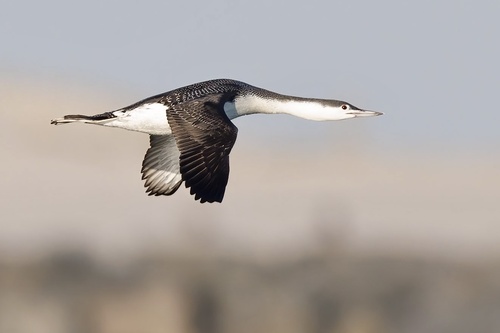
アビ (Gavia stellata) アビ
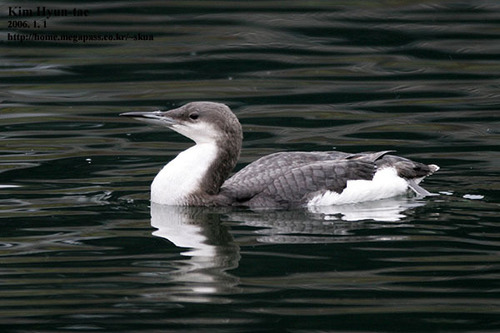
オオハム (Gavia arctica) オオハム

メディア

読み込み中…

要点

The most reliable field mark between Red-throated Diver and Black-throated Diver is the overall structure and posture, especially in flight: Red-throated Diver shows a distinctly hunchbacked profile with a thin, upturned bill and quick, deep wingbeats, while Black-throated Diver appears heavier, with a straighter neck and bulkier body. Juvenile and non-breeding birds can be tricky, but Red-throated Diver is noticeably smaller and lighter, with a paler, less patterned upperwing and a more delicate build. Adult breeding Black-throated Diver has a striking black throat with white vertical lines and bold white squares on the upperwing coverts, which are never shown by Red-throated Diver. Use structure, flight profile, and upperwing pattern as your primary separation tools, especially when viewing birds in flight or at distance.

識別のコツ

  1. Flight profile is key: Red-throated Diver shows a hunchbacked shape in flight, with the head and neck drooping below the body axis and small feet barely projecting past the tail. Black-throated Diver flies with a straighter neck and a heavier, more level profile. This is reliable for all ages.
  2. Upperwing pattern in immatures: Juvenile and non-breeding Black-throated Divers show small white spots on the upperwing coverts and bold white squares on the mantle and scapulars, visible in flight and at rest. Red-throated Diver immatures lack these, showing a plain, dark upperwing.
  3. Bill shape and posture: Red-throated Diver has a thin, often slightly upturned bill that appears pale in immatures and non-breeding adults. Black-throated Diver has a heavier, straight bill, always darker in color.
  4. Size and build: Red-throated Diver is noticeably smaller and more delicate, with a smaller head and finer neck. Black-throated Diver is bulkier, longer, and heavier-set.
  5. Breeding plumage throat patch: Adult Red-throated Diver in breeding plumage has a red throat patch, but this can be hard to see at distance. Black-throated Diver has a black (or green, in some subspecies) throat with a purple gloss and a necklace of vertical white lines—these are bold and diagnostic when visible.
  6. Neck pattern: In breeding Black-throated Diver, look for the vertical white lines on the sides of the neck and the black throat patch. Red-throated Diver lacks these lines and has a plainer neck.
  7. Upperwing in adults: Black-throated Diver adults show rows of white squares on the mantle and scapulars and small white spots on the upperwing coverts. Red-throated Diver adults have a plain, dark upperwing with no such markings.
  8. Non-breeding confusion: Both species become plainer in non-breeding plumage, but Black-throated Diver retains more upperwing spotting and a darker, heavier bill. Red-throated Diver is paler overall, with a more delicate look and paler bill.
  9. On water: Red-throated Diver sits higher and looks sleeker, often with a slightly upturned bill. Black-throated Diver sits lower, appears bulkier, and has a more horizontal bill.
  10. Habitat context: In breeding season, Red-throated Diver is more likely on small, remote tundra lakes; Black-throated Diver prefers larger, deeper lakes. In winter, both may occur along coasts, but Black-throated Diver favors more sheltered, ice-free areas.
  11. Juvenile bill color: Juvenile Red-throated Diver has a paler bill than adults or Black-throated Diver juveniles, which helps at close range.
  12. Wingbeat: Red-throated Diver has a quicker, deeper wingbeat compared to the steadier, slower wingbeat of Black-throated Diver.
  13. Pitfalls: Distant or backlit birds can obscure size and bill shape; focus on flight profile and upperwing pattern when possible. Immature Black-throated Divers can appear quite plain, but usually retain some upperwing spotting.

大きさ

Red-throated Diver is the smallest and lightest of the loons, with a typical body mass around 1600 g and length ranging from 53–69 cm. Black-throated Diver is larger and heavier, with adults reaching 58–73 cm in length and weighing up to 3.4 kg. In the field, this size difference is often visible when birds are side by side, but can be subtle at distance. Red-throated Diver appears more slender and less bulky, with a finer bill and smaller head relative to body, while Black-throated Diver is more robust overall.

羽色

Juvenile and non-breeding Red-throated Divers are mostly dark brown to grey above, with paler sides to the head and neck, and a browner, less speckled back compared to adults. Their upperwing is plain, lacking the bold white squares or spots seen in Black-throated Diver. Juvenile Black-throated Divers resemble non-breeding adults but are browner overall, and even in immature plumage, they show some white spotting on the upperwing coverts. In adult breeding plumage, Red-throated Diver has a distinctive red throat patch (not always visible), a pale grey head, and a relatively plain upperwing. Black-throated Diver in breeding plumage has a black throat with a purple or green gloss, prominent white vertical lines on the neck, and bold white squares on the mantle and scapulars, with small white spots on the upperwing coverts. Non-breeding Black-throated Diver loses the black throat patch but still shows more upperwing spotting than Red-throated Diver.

行動

Both species are aquatic and dive for fish, but Red-throated Diver is more likely to be seen on smaller or more sheltered waters during migration and winter. In flight, Red-throated Diver has a quicker, deeper wingbeat and a drooping head and neck, giving it a hunchbacked look. Black-throated Diver flies with a straighter neck and steadier wingbeats, appearing heavier and more powerful. On water, Red-throated Diver sits higher and looks more delicate, while Black-throated Diver appears bulkier and more imposing.

生息環境

Red-throated Diver breeds in Arctic regions, often on smaller tundra lakes, and winters in northern coastal waters. Black-throated Diver breeds on freshwater lakes in northern Europe and Asia and winters along sheltered, ice-free coasts of the north-east Atlantic and Pacific. In winter, both may be found along coasts, but Black-throated Diver is more closely tied to larger inland lakes during breeding and prefers more sheltered marine environments in winter. Red-throated Diver is generally more widespread and adaptable to smaller water bodies.

より良い説明を送る

比較と同じ項目を使ってください。文章はすぐに公開されます。

The most reliable field mark between Red-throated Diver and Black-throated Diver is the overall structure and posture, especially in flight: Red-throated Diver shows a distinctly hunchbacked profile with a thin, upturned bill and quick, deep wingbeats, while Black-throated Diver appears heavier, with a straighter neck and bulkier body. Juvenile and non-breeding birds can be tricky, but Red-throated Diver is noticeably smaller and lighter, with a paler, less patterned upperwing and a more delicate build. Adult breeding Black-throated Diver has a striking black throat with white vertical lines and bold white squares on the upperwing coverts, which are never shown by Red-throated Diver. Use structure, flight profile, and upperwing pattern as your primary separation tools, especially when viewing birds in flight or at distance.

  1. Flight profile is key: Red-throated Diver shows a hunchbacked shape in flight, with the head and neck drooping below the body axis and small feet barely projecting past the tail. Black-throated Diver flies with a straighter neck and a heavier, more level profile. This is reliable for all ages.
  2. Upperwing pattern in immatures: Juvenile and non-breeding Black-throated Divers show small white spots on the upperwing coverts and bold white squares on the mantle and scapulars, visible in flight and at rest. Red-throated Diver immatures lack these, showing a plain, dark upperwing.
  3. Bill shape and posture: Red-throated Diver has a thin, often slightly upturned bill that appears pale in immatures and non-breeding adults. Black-throated Diver has a heavier, straight bill, always darker in color.
  4. Size and build: Red-throated Diver is noticeably smaller and more delicate, with a smaller head and finer neck. Black-throated Diver is bulkier, longer, and heavier-set.
  5. Breeding plumage throat patch: Adult Red-throated Diver in breeding plumage has a red throat patch, but this can be hard to see at distance. Black-throated Diver has a black (or green, in some subspecies) throat with a purple gloss and a necklace of vertical white lines—these are bold and diagnostic when visible.
  6. Neck pattern: In breeding Black-throated Diver, look for the vertical white lines on the sides of the neck and the black throat patch. Red-throated Diver lacks these lines and has a plainer neck.
  7. Upperwing in adults: Black-throated Diver adults show rows of white squares on the mantle and scapulars and small white spots on the upperwing coverts. Red-throated Diver adults have a plain, dark upperwing with no such markings.
  8. Non-breeding confusion: Both species become plainer in non-breeding plumage, but Black-throated Diver retains more upperwing spotting and a darker, heavier bill. Red-throated Diver is paler overall, with a more delicate look and paler bill.
  9. On water: Red-throated Diver sits higher and looks sleeker, often with a slightly upturned bill. Black-throated Diver sits lower, appears bulkier, and has a more horizontal bill.
  10. Habitat context: In breeding season, Red-throated Diver is more likely on small, remote tundra lakes; Black-throated Diver prefers larger, deeper lakes. In winter, both may occur along coasts, but Black-throated Diver favors more sheltered, ice-free areas.
  11. Juvenile bill color: Juvenile Red-throated Diver has a paler bill than adults or Black-throated Diver juveniles, which helps at close range.
  12. Wingbeat: Red-throated Diver has a quicker, deeper wingbeat compared to the steadier, slower wingbeat of Black-throated Diver.
  13. Pitfalls: Distant or backlit birds can obscure size and bill shape; focus on flight profile and upperwing pattern when possible. Immature Black-throated Divers can appear quite plain, but usually retain some upperwing spotting.

Red-throated Diver is the smallest and lightest of the loons, with a typical body mass around 1600 g and length ranging from 53–69 cm. Black-throated Diver is larger and heavier, with adults reaching 58–73 cm in length and weighing up to 3.4 kg. In the field, this size difference is often visible when birds are side by side, but can be subtle at distance. Red-throated Diver appears more slender and less bulky, with a finer bill and smaller head relative to body, while Black-throated Diver is more robust overall.

Juvenile and non-breeding Red-throated Divers are mostly dark brown to grey above, with paler sides to the head and neck, and a browner, less speckled back compared to adults. Their upperwing is plain, lacking the bold white squares or spots seen in Black-throated Diver. Juvenile Black-throated Divers resemble non-breeding adults but are browner overall, and even in immature plumage, they show some white spotting on the upperwing coverts. In adult breeding plumage, Red-throated Diver has a distinctive red throat patch (not always visible), a pale grey head, and a relatively plain upperwing. Black-throated Diver in breeding plumage has a black throat with a purple or green gloss, prominent white vertical lines on the neck, and bold white squares on the mantle and scapulars, with small white spots on the upperwing coverts. Non-breeding Black-throated Diver loses the black throat patch but still shows more upperwing spotting than Red-throated Diver.

Both species are aquatic and dive for fish, but Red-throated Diver is more likely to be seen on smaller or more sheltered waters during migration and winter. In flight, Red-throated Diver has a quicker, deeper wingbeat and a drooping head and neck, giving it a hunchbacked look. Black-throated Diver flies with a straighter neck and steadier wingbeats, appearing heavier and more powerful. On water, Red-throated Diver sits higher and looks more delicate, while Black-throated Diver appears bulkier and more imposing.

Red-throated Diver breeds in Arctic regions, often on smaller tundra lakes, and winters in northern coastal waters. Black-throated Diver breeds on freshwater lakes in northern Europe and Asia and winters along sheltered, ice-free coasts of the north-east Atlantic and Pacific. In winter, both may be found along coasts, but Black-throated Diver is more closely tied to larger inland lakes during breeding and prefers more sheltered marine environments in winter. Red-throated Diver is generally more widespread and adaptable to smaller water bodies.

変更を破棄しますか?

保存していない編集があります。今離れると失われます。

アビ · オオハム · 苦手な鳥