

Motmot

アカハシビロガモ 対 ミカヅキハシビロガモ

Spatula platalea 対 Spatula rhynchotis

アカハシビロガモとミカヅキハシビロガモのクイズ
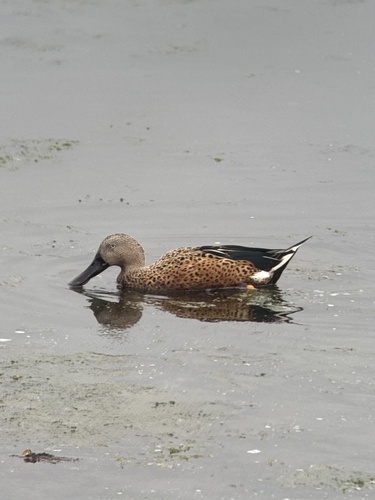
アカハシビロガモ (Spatula platalea) アカハシビロガモ
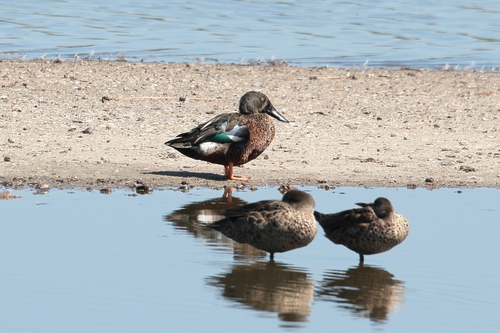
ミカヅキハシビロガモ (Spatula rhynchotis) ミカヅキハシビロガモ

メディア

読み込み中…

要点

アカハシビロガモとミカヅキハシビロガモの最も信頼できるフィールドマークは、全体的な体と翼の色合いであり、特に成鳥のオスにおいて顕著です:アカハシビロガモのオスは、緑色のスペキュラムと淡い青色の上翼覆羽を持つ明確な赤色またはピンク色の体を示しますが、ミカヅキハシビロガモのオスは決して赤みを帯びることはありません。両種は大きなスプーン状のくちばしを持っていますが、アカハシビロガモのメスは特に大きく、暗いくちばしを持っています。飛行中または休息中、アカハシビロガモの緑色のスペキュラムと淡い青色の上翼覆羽の組み合わせは特徴的です。サイズと構造は大まかに似ていますので、区別するためには羽毛とくちばしの色に注目してください。

識別のコツ

  1. オスの体色:成鳥のオスのアカハシビロガモは全体的に明確に赤色またはピンク色であり、これはスプーン類の中で独特の特徴です。ミカヅキハシビロガモのオスはこの色合いを示すことはなく、より muted で体に赤やピンクがありません。
  2. 上翼パターン:両種は緑色のスペキュラムと淡い青色の上翼覆羽を持ち、飛行中または翼を広げて止まっている時に見ることができます。アカハシビロガモでは、青色がより明確で、オスの赤色の体と対比を成します。
  3. くちばしの形と色:両種は大きなスプーン状のくちばしを持っていますが、アカハシビロガモのメスは特に大きく、暗いくちばしを持っており、ミカヅキハシビロガモのメスと見分けるのに役立ちます。
  4. メスと未成熟の羽毛:アカハシビロガモのメスは色が少なくなりますが、緑色のスペキュラムと青色の覆羽を示します。ミカヅキハシビロガモのメスは似ていますが、体のどこにも赤みがありません。
  5. 幼鳥/未成熟の鳥:上翼パターン(緑色のスペキュラム、青色の覆羽)は両種に存在する可能性が高いので、くちばしのサイズと体色に頼って区別します。もしその鳥が赤みを帯びておらず、くちばしが特に大きく暗くない場合、ミカヅキハシビロガモの可能性が高いです。
  6. サイズ:両種は長さと質量が非常に似ているので、サイズを主要なフィールドマークとして使用しないでください。
  7. 飛行中の視点:飛行中は緑色のスペキュラムと青色の覆羽の組み合わせを探しますが、これは共通しています。自信を持って識別するためには体色(赤 vs. 褐色)とくちばしのサイズに注目してください。
  8. 止まっている視点:止まっている時、アカハシビロガモのオスは明らかに赤色またはピンク色ですが、ミカヅキハシビロガモのオスはそうではありません。メスはより難しいですが、くちばしの色とサイズが役立つかもしれません。
  9. 地理的範囲:南アメリカの南部にいる場合、アカハシビロガモが期待されます;オーストラリア、タスマニア、またはニュージーランドではミカヅキハシビロガモが期待されます。迷鳥は稀なので、範囲は強い文脈の手がかりです。
  10. 生息地:両種は似たような湿地生息地を利用するため、生息地だけでは診断的ではありません。
  11. 声:利用可能なメモには音声の違いは記載されていないので、呼び声に頼って区別しないでください。
  12. 季節的変動:オスは繁殖期以外では色が薄くなるか、赤みが少なく見えることがありますが、成鳥のオスのアカハシビロガモは常に何らかの赤色またはピンク色のトーンを示すべきです。
  13. 求愛行動と行動:両種は越冬地でペアを形成し、似たような水面での採餌行動を持っているため、行動を区別に使用しないでください。
  14. 落とし穴:未成熟またはエクリプスのオスは強い赤色を欠くことがあるため、体色に加えてくちばしのサイズと上翼パターンを常に確認してください。
  15. 要約のヒント:赤色またはピンク色の体と青色の上翼覆羽を持つスプーン類を見た場合、それはアカハシビロガモです。もしその鳥が赤を欠き、オーストラレーシアにいる場合、それはミカヅキハシビロガモです。

大きさ

両種はサイズが非常に近く、アカハシビロガモは45–56 cmの長さで、ミカヅキハシビロガモは46–53 cmです。翼幅と体重も似ているため、サイズだけでは信頼できるフィールドマークではありません。両方とも明らかに長く広いくちばしを持つ中型の水面採餌ダックのように見えることを期待してください。

羽色

成鳥のオスのアカハシビロガモは、赤色またはピンク色の体羽毛でスプーン類の中で独特であり、これはミカヅキハシビロガモでは決して示されません。両種は緑色のスペキュラムと淡い青色の上翼覆羽を持っていますが、アカハシビロガモの青色はしばしばより目立ち、赤色の体と対比を成します。アカハシビロガモのメスは色が少なくなりますが、大きく暗いくちばしを持ち、緑色のスペキュラムと青色の上翼を示します。ミカヅキハシビロガモのオスは、より muted な体色を持ち、赤色のトーンを欠き、上翼パターンは似ていますが、通常は対比が少ないです。幼鳥と未成熟の羽毛は詳細に記載されていませんが、上翼パターン(緑色のスペキュラム、青色の覆羽)は両種に存在する可能性が高いので、若い鳥のためには体色とくちばしのサイズに注目してください。

行動

両種は水面採餌ダックで、似たような採餌行動を持ち、広いスプーン状のくちばしを使って水から食物を濾し取ります。フィールドで信頼できるように区別する行動の違いは記載されていません。

生息環境

アカハシビロガモは南アメリカの南部に生息し、ミカヅキハシビロガモはオーストラリア、タスマニア、ニュージーランドに見られます。両種は湿地や濃い植生の湿地を好むため、生息地は彼らの生息範囲外でない限り強い区別要因ではありません。

より良い説明を送る

比較と同じ項目を使ってください。文章はすぐに公開されます。

The most reliable field mark between Red Shoveler and Australasian Shoveler is the overall body and wing coloration, especially in adult males: Red Shoveler males show a distinct reddish or pinkish body with a green speculum and pale blue upperwing coverts, while Australasian Shoveler males never appear red-toned. Both species have a large spatula-shaped bill, but Red Shoveler females have especially large, dark bills. In flight or at rest, the Red Shoveler’s combination of green speculum and pale blue upperwing coverts is distinctive. Size and structure are broadly similar, so focus on plumage and bill color for separation.

  1. Male body color: Adult male Red Shovelers are distinctly reddish or pinkish overall, a unique feature among shovelers. Australasian Shoveler males never show this coloration; they are more muted and lack any red or pink on the body.
  2. Upperwing pattern: Both species have a green speculum and pale blue upperwing coverts, visible in flight or when perched with wings spread. In Red Shoveler, the blue is often more obvious and contrasts with the reddish body in males.
  3. Bill shape and color: Both have a large, spatulate bill, but female Red Shovelers have especially large, dark bills, which can help separate them from Australasian Shoveler females if seen well.
  4. Female and immature plumage: Female Red Shovelers are less colorful but still show the green speculum and blue coverts. Australasian Shoveler females are similar but lack the reddish tinge anywhere on the body.
  5. Juvenile/immature birds: Upperwing pattern (green speculum, blue coverts) is likely present in both, so rely on bill size and body color for separation. If the bird is not red-toned and the bill is not especially large and dark, Australasian is more likely.
  6. Size: Both species are very similar in length and mass, so do not use size as a primary field mark.
  7. Flight views: In flight, look for the combination of green speculum and blue coverts, but remember this is shared. Focus on body color (red vs. brownish) and bill size for a confident ID.
  8. Perched views: When perched, Red Shoveler males are noticeably red or pink, while Australasian males are not. Females are trickier, but bill color and size may help.
  9. Geographic range: If you are in southern South America, Red Shoveler is expected; in Australia, Tasmania, or New Zealand, Australasian Shoveler is expected. Vagrancy is rare, so range is a strong context clue.
  10. Habitat: Both species use similar wetland habitats, so habitat alone is not diagnostic.
  11. Voice: No vocal differences are described in the available notes; do not rely on calls for separation.
  12. Seasonal variation: Males may appear paler or less red outside breeding season, but Red Shoveler should always show some reddish or pinkish tones if adult male.
  13. Courtship and behavior: Both species form pairs on the wintering grounds and have similar dabbling and filtering feeding behaviors, so do not use behavior for separation.
  14. Pitfalls: Immature or eclipse males may lack strong red color, so always check bill size and upperwing pattern in addition to body color.
  15. Summary tip: If you see a shoveler with a red or pinkish body and blue upperwing coverts, it is a Red Shoveler. If the bird lacks any red and is in Australasia, it is an Australasian Shoveler.

Both species are very close in size, with Red Shoveler at 45–56 cm in length and Australasian Shoveler at 46–53 cm. Their wingspans and body mass are also similar, so size alone is not a reliable field mark. Expect both to look like medium-sized dabbling ducks with a noticeably long, broad bill.

Adult male Red Shovelers are unique among shovelers for their reddish or pinkish body plumage, which is never shown by Australasian Shoveler. Both species have a green speculum and pale blue upperwing coverts, but the Red Shoveler’s blue is often more prominent and contrasts with the red body. Female Red Shovelers are less colorful but have a large, dark bill and still show the green speculum and blue upperwing. Australasian Shoveler males have a more muted body color, lacking any red tones, and their upperwing pattern is similar but typically less contrasting. Juvenile and immature plumages are not described in detail, but the upperwing pattern (green speculum, blue coverts) is likely present in both, so focus on body color and bill size for young birds.

Both species are dabbling ducks with similar feeding behavior, using their wide, spatulate bills to filter food from the water. No behavioral differences are noted that would reliably separate them in the field.

Red Shoveler is native to southern South America, while Australasian Shoveler is found in Australia, Tasmania, and New Zealand. Both prefer wetlands and heavily vegetated swamps, so habitat is not a strong separator unless you are outside their native ranges.

変更を破棄しますか?

保存していない編集があります。今離れると失われます。

アカハシビロガモ · ミカヅキハシビロガモ · 苦手な鳥