

Red Shoveler vs Australasian Shoveler
Spatula platalea contro Spatula rhynchotis
Fai un quiz con Red Shoveler e Australasian Shoveler
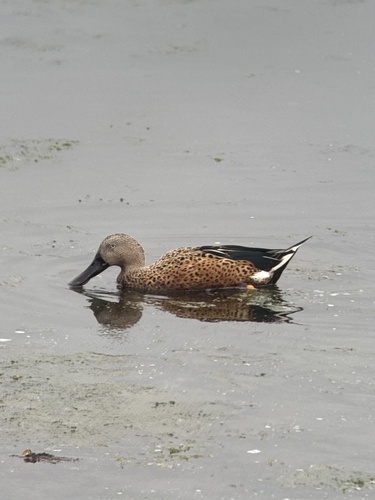 Red Shoveler
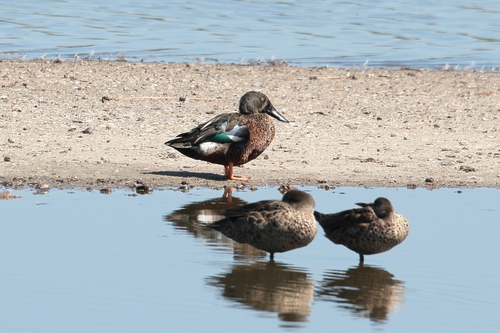 Australasian Shoveler
In breve
Il segno distintivo più affidabile tra il Red Shoveler e l'Australasian Shoveler è la colorazione complessiva del corpo e delle ali, specialmente nei maschi adulti: i maschi di Red Shoveler mostrano un corpo distintamente rossastro o rosato con uno speculum verde e copritrici delle ali superiori blu pallido, mentre i maschi di Australasian Shoveler non appaiono mai di tonalità rossa. Entrambe le specie hanno un grande becco a forma di spatola, ma le femmine di Red Shoveler hanno beccucci particolarmente grandi e scuri. In volo o a riposo, la combinazione di speculum verde e copritrici delle ali superiori blu pallido del Red Shoveler è distintiva. Dimensioni e struttura sono ampiamente simili, quindi concentrati sulla colorazione del piumaggio e del becco per la separazione.
Consigli di identificazione
- Colore del corpo maschile: I maschi adulti di Red Shoveler sono distintamente rossastri o rosati nel complesso, una caratteristica unica tra i mestoloni. I maschi di Australasian Shoveler non mostrano mai questa colorazione; sono più attenuati e non presentano alcun rosso o rosa sul corpo.
- Schema delle ali superiori: Entrambe le specie hanno uno speculum verde e copritrici delle ali superiori blu pallido, visibili in volo o quando sono posati con le ali spiegate. Nel Red Shoveler, il blu è spesso più evidente e contrasta con il corpo rossastro nei maschi.
- Forma e colore del becco: Entrambi hanno un grande becco spatolato, ma le femmine di Red Shoveler hanno beccucci particolarmente grandi e scuri, che possono aiutare a separarle dalle femmine di Australasian Shoveler se viste bene.
- Piumaggio femminile e immaturo: Le femmine di Red Shoveler sono meno colorate ma mostrano ancora lo speculum verde e le copritrici blu. Le femmine di Australasian Shoveler sono simili ma non presentano alcuna sfumatura rossastra sul corpo.
- Uccelli giovanili/immaturi: Lo schema delle ali superiori (speculum verde, copritrici blu) è probabilmente presente in entrambe, quindi fai affidamento sulla dimensione del becco e sul colore del corpo per la separazione. Se l'uccello non è di tonalità rossa e il becco non è particolarmente grande e scuro, è più probabile che sia un Australasian.
- Dimensioni: Entrambe le specie sono molto simili in lunghezza e massa, quindi non usare la dimensione come segno distintivo principale.
- Viste in volo: In volo, cerca la combinazione di speculum verde e copritrici blu, ma ricorda che questo è condiviso. Concentrati sul colore del corpo (rosso contro marrone) e sulla dimensione del becco per un'identificazione sicura.
- Viste posate: Quando sono posati, i maschi di Red Shoveler sono notevolmente rossi o rosa, mentre i maschi di Australasian non lo sono. Le femmine sono più difficili da identificare, ma il colore e la dimensione del becco possono aiutare.
- Gamma geografica: Se ti trovi nel sud del Sud America, è previsto il Red Shoveler; in Australia, Tasmania o Nuova Zelanda, è previsto l'Australasian Shoveler. La vaganza è rara, quindi la gamma è un forte indizio contestuale.
- Habitat: Entrambe le specie utilizzano habitat umidi simili, quindi l'habitat da solo non è diagnostico.
- Voce: Non sono state descritte differenze vocali nelle note disponibili; non fare affidamento sui richiami per la separazione.
- Variazione stagionale: I maschi possono apparire più chiari o meno rossi al di fuori della stagione di nidificazione, ma il Red Shoveler dovrebbe sempre mostrare alcune tonalità rossastre o rosate se è un maschio adulto.
- Corte e comportamento: Entrambe le specie formano coppie nei luoghi di svernamento e hanno comportamenti di alimentazione simili, quindi non usare il comportamento per la separazione.
- Insidie: I maschi immaturi o in eclipse possono mancare di un forte colore rosso, quindi controlla sempre la dimensione del becco e lo schema delle ali superiori oltre al colore del corpo.
- Suggerimento riassuntivo: Se vedi un mestolone con un corpo rosso o rosato e copritrici delle ali superiori blu, è un Red Shoveler. Se l'uccello non presenta alcun rosso ed è in Australasia, è un Australasian Shoveler.
Taglia
Entrambe le specie sono molto simili in dimensioni, con il Red Shoveler lungo 45–56 cm e l'Australasian Shoveler lungo 46–53 cm. Anche le loro aperture alari e la massa corporea sono simili, quindi la dimensione da sola non è un segno distintivo affidabile. Aspettati che entrambe appaiano come anatre di dimensioni medie con un becco lungo e largo.
Piumaggio
I maschi adulti di Red Shoveler sono unici tra i mestoloni per il loro piumaggio corporeo rossastro o rosato, che non è mai mostrato dall'Australasian Shoveler. Entrambe le specie hanno uno speculum verde e copritrici delle ali superiori blu pallido, ma il blu del Red Shoveler è spesso più prominente e contrasta con il corpo rosso. Le femmine di Red Shoveler sono meno colorate ma hanno un grande becco scuro e mostrano ancora lo speculum verde e le ali superiori blu. I maschi di Australasian Shoveler hanno un colore del corpo più attenuato, privo di tonalità rosse, e il loro schema delle ali superiori è simile ma tipicamente meno contrastante. I piumaggi giovanili e immaturi non sono descritti in dettaglio, ma lo schema delle ali superiori (speculum verde, copritrici blu) è probabilmente presente in entrambe, quindi concentrati sul colore del corpo e sulla dimensione del becco per i giovani uccelli.
Comportamento
Entrambe le specie sono anatre di superficie con comportamenti alimentari simili, utilizzando i loro ampi beccucci spatolati per filtrare il cibo dall'acqua. Non sono state notate differenze comportamentali che possano separarle in modo affidabile sul campo.
Habitat
Il Red Shoveler è nativo del sud del Sud America, mentre l'Australasian Shoveler si trova in Australia, Tasmania e Nuova Zelanda. Entrambi preferiscono habitat umidi e paludi fortemente vegetate, quindi l'habitat non è un forte separatore a meno che tu non sia al di fuori delle loro aree native.
Red Shoveler · Australasian Shoveler · I miei uccelli difficili