

Motmot

アカフサカザリドリ 対 ハゲノドスズドリ

Pyroderus scutatus 対 Procnias nudicollis

アカフサカザリドリとハゲノドスズドリのクイズ

アカフサカザリドリ (Pyroderus scutatus) アカフサカザリドリ
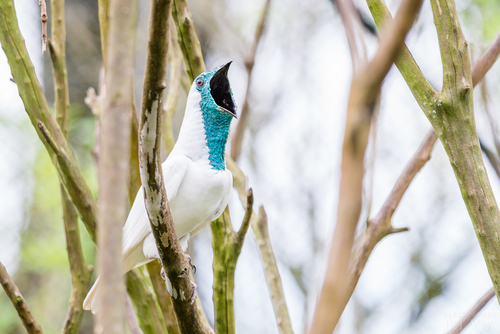
ハゲノドスズドリ (Procnias nudicollis) ハゲノドスズドリ

メディア

読み込み中…

要点

レッドラフフルーツカラスとハゲノドスズドリを区別する最も信頼できるフィールドマークは全体の羽色です:成鳥のオスのフルーツカラスは大きく、主に黒い鳥で、鮮やかな深紅または栗色の喉の斑点がありますが、成鳥のオスのスズドリは完全に白く、喉、顔、くちばしの周りに目立つ青黒い裸の皮膚の斑点があります。メスも異なります:フルーツカラスのメスは鈍いオスに似ており、スズドリのメスは上面がオリーブブラウンで、下部が黄色がかった縞模様です。どちらの種にも年齢特有の翼や飛行パターンのマークは記載されていないため、体の色、喉、裸の皮膚に注目してください。構造とサイズも役立ちます:フルーツカラスははるかに大きく、体重が重く、より重い淡いくちばしを持っており、コンパクトで短いくちばしのスズドリと比較されます。

識別のコツ

  1. 成鳥オスの羽色: 大きく、主に黒い鳥で鮮やかな深紅または栗色の喉の斑点がある場合、それはレッドラフフルーツカラスです。もしその鳥が完全に白く、喉と顔に裸の青黒い皮膚の斑点がある場合、それはオスのハゲノドスズドリです。
  2. 成鳥メスの羽色: メスのフルーツカラスは、オスの鈍い、やや小さいバージョンのように見えます—それでも黒っぽく、色のついた喉があります。メスのスズドリは上面がオリーブブラウンで、下部が黄色がかり、縞模様があり、黒っぽい冠を持っています—決して黒や赤い喉ではありません。
  3. 裸の皮膚: オスのスズドリだけが喉、顔、くちばしの周りに広範囲に裸の青黒い皮膚を持っています。フルーツカラスは常に羽毛のある喉を持っており、赤や栗色でも裸ではありません。
  4. くちばしの色と形: フルーツカラスは重く、淡い青いくちばしを持っています;スズドリは短く、広い口を持ち、あまり頑丈ではなく、通常は暗いです。
  5. サイズと体格: フルーツカラスはスズドリよりもはるかに大きく、体格ががっしりしています。もしその鳥がカラスサイズまたはそれ以上に見える場合、ほぼ確実にフルーツカラスです。
  6. 亜種の変異: 一部のフルーツカラスの亜種は、より栗色または茶色の下部を持っていますが、常に黒っぽい上半身と色のついた喉を保持しています。スズドリのオスは常に白く、メスは常にオリーブ/黄色です。
  7. 飛行と印象: フルーツカラスは重く、直接的な羽ばたきで飛び、大きくて遅く見えます。スズドリはよりコンパクトで、飛行中はあまり重たく見えないかもしれません。
  8. 声: 大きく金属的な、金槌のような鳴き声が聞こえたら、スズドリを探してください。フルーツカラスの鳴き声はそれほど大きくなく、特徴的ではありません。
  9. 生息地の文脈: ブラジル南東部、パラグアイ、アルゼンチンの特により開けたまたは乱された森林では、スズドリの方が可能性が高いです。アンデスまたは密集した急な森林地域では、フルーツカラスの方が可能性が高いです。
  10. レック行動: 赤い喉を持つ大きな黒い鳥が一緒に鳴いているのを見たら、それはフルーツカラスのレックです。スズドリは群れでディスプレイしません。
  11. 幼鳥/未成熟の混乱: どちらの種にも特有の幼鳥の翼や飛行マークは記載されていないため、すべての年齢で全体の色と喉/顔のパターンに依存してください。
  12. 止まっているときと飛んでいるとき: 両種は止まっているときに最も簡単に識別できます;飛行中は、サイズと体の色(黒っぽい vs. 白)が依然として診断的です。
  13. 落とし穴: スズドリの裸の黒い喉を色のついた斑点と混同しないでください;フルーツカラスの喉は常に羽毛があり、赤/栗色で、決して裸ではありません。
  14. 性差: スズドリだけが強い性差を示します(白いオス、オリーブ/黄色のメス)。フルーツカラスの性別は似ており、メスはやや鈍いです。
  15. 都市の文脈: スズドリは渡りの際に都市公園に現れることがあります;フルーツカラスは密集した森林の外ではめったに見られません。

大きさ

レッドラフフルーツカラスは南アメリカで最も大きなスズメ目の一つであり、一部の亜種は最大14インチ(36 cm)に達します(例:P. s. granadensis: 14 in/36 cm)。ハゲノドスズドリはかなり小さく、長さは約27 cm(11 in)です。フルーツカラスは特にがっしりしており、体重が重く、より頑丈で淡い青いくちばしを持っていますが、スズドリはよりコンパクトで短いくちばしと広い口を持っています。最も小さいフルーツカラスの亜種(granadensis)でさえ、スズドリよりも大きいです。

羽色

行動

レッドラフフルーツカラスは、オスがメスを引き寄せるために呼びかける緩いレックに集まることがあります。しばしば樹冠に止まっているか、重く直接的な飛行で飛んでいるのが見られます。彼らは雑食性で、果物、昆虫、トカゲを食べます。ハゲノドスズドリはより厳密に果物食性であり、しばしば高い止まり木から非常に大きな金属的な鳴き声で検出されます。両種は森林の高いところで見られることがありますが、スズドリはその声のために見られる前に聞かれる可能性が高いです。

生息環境

両種は亜熱帯および熱帯の湿った森林に生息していますが、その範囲は部分的にしか重なりません。レッドラフフルーツカラスはアンデスおよび隣接する森林に見られ、ハゲノドスズドリは南アメリカ南東部(ブラジル、パラグアイ、アルゼンチン)に制限され、主に一次森林および一部の二次森林を好みます。スズドリは特に渡りの際に、より乱されたまたは都市の森林のパッチに現れることがありますが、フルーツカラスは密集した、あまり乱されていない森林や急な排水路により関連しています。

声

ハゲノドスズドリのオスは、最も大きな鳥の鳴き声の一つを発し、金属的で金槌のような音を出し、長距離にわたって響きます。これは重要なフィールドの手がかりです—もし鋭い金属的な鳴き声が聞こえたら、スズドリを疑ってください。レッドラフフルーツカラスのオスも鳴きますが、特にレックで、彼らの鳴き声は特に大きいまたは金属的とは記載されておらず、スズドリのように特徴的ではありません。

より良い説明を送る

比較と同じ項目を使ってください。文章はすぐに公開されます。

The most reliable field mark to separate Red-ruffed Fruitcrow from Bare-throated Bellbird is overall plumage: adult male fruitcrows are large, mostly black birds with a striking crimson or chestnut throat patch, while adult male bellbirds are entirely white with a conspicuous bluish-black bare patch of skin on the throat, face, and around the bill. Females are also distinct: fruitcrow females resemble duller males, while female bellbirds are olive-brown above with yellowish, streaked underparts. No age-specific wing or flight pattern marks are described for either species, so focus on body color, throat, and bare skin. Structure and size also help: fruitcrows are much larger and heavier-bodied, with a heavier pale bill, compared to the more compact, short-billed bellbird.

  1. Adult male plumage: If you see a large, mostly black bird with a vivid crimson or chestnut throat patch, it's a Red-ruffed Fruitcrow. If the bird is entirely white with a bare bluish-black patch of skin on the throat and face, it's a male Bare-throated Bellbird.
  2. Adult female plumage: Female fruitcrows look like duller, slightly smaller versions of the male—still blackish with a colored throat. Female bellbirds are olive-brown above, yellowish and streaked below, with a blackish crown—never black or red-throated.
  3. Bare skin: Only the bellbird (male) has extensive bare, bluish-black skin on the throat, face, and around the bill. Fruitcrows always have feathered throats, even when red or chestnut.
  4. Bill color and shape: Fruitcrow has a heavy, pale bluish bill; bellbird has a short, wide-gaped bill, not as robust, and usually dark.
  5. Size and bulk: Fruitcrow is much larger and bulkier than bellbird. If the bird appears crow-sized or larger, it's almost certainly a fruitcrow.
  6. Subspecies variation: Some fruitcrow subspecies have more chestnut or brown underparts, but always retain a blackish upper body and colored throat. Bellbird males are always white; females always olive/yellow.
  7. Flight and jizz: Fruitcrows fly with heavy, direct wingbeats and appear large and slow. Bellbirds are more compact and may seem less ponderous in flight.
  8. Voice: If you hear a loud, metallic, anvil-like call, look for a bellbird. Fruitcrow calls are not as loud or distinctive.
  9. Habitat context: In southeastern Brazil, Paraguay, or Argentina, especially in more open or disturbed forests, bellbird is more likely. In Andean or dense, steep-forested areas, fruitcrow is more likely.
  10. Lekking behavior: If you see several large black birds with red throats calling together, it's a fruitcrow lek. Bellbirds do not display in groups.
  11. Juvenile/immature confusion: No distinctive juvenile wing or flight marks are described for either species, so rely on overall color and throat/face pattern at all ages.
  12. Perched vs. flying: Both species are most easily identified when perched; in flight, size and body color (blackish vs. white) are still diagnostic.
  13. Pitfalls: Do not confuse the bellbird's bare black throat for a colored patch; the fruitcrow's throat is always feathered and red/chestnut, never bare.
  14. Sex differences: Only bellbird shows strong sexual dimorphism (white male, olive/yellow female). Fruitcrow sexes are similar, with females slightly duller.
  15. Urban context: Bellbirds may turn up in urban parks during migration; fruitcrows are rarely found outside dense forest.

Red-ruffed Fruitcrow is one of the largest passerines in South America, with some subspecies reaching up to 14 inches (36 cm) in length (e.g., P. s. granadensis: 14 in/36 cm). Bare-throated Bellbird is significantly smaller, around 27 cm (11 in) in length. The fruitcrow is notably bulkier and heavier-bodied, with a more robust, pale bluish bill, while the bellbird is more compact with a short bill and wide gape. Even the smallest fruitcrow subspecies (granadensis) is larger than the bellbird.

  • Juvenile/immature plumage and wing pattern: No distinctive juvenile or immature upperwing or flight pattern marks are described for either species, so separation relies on body and head plumage at all ages.

  • Adult males: Red-ruffed Fruitcrow males are glossy black with a bright to dull crimson or chestnut throat patch (varying by subspecies), sometimes with brown underparts. Bare-throated Bellbird males are entirely white with a striking bluish-black bare patch of skin around the eye, bill, and throat—no red or chestnut anywhere.

  • Adult females: Female fruitcrows are similar to males but slightly smaller and with a duller ruff; still mostly blackish with a colored throat. Female bellbirds are olive-brown above, with yellowish underparts streaked with olive green, and a blackish crown—completely different from any fruitcrow.

  • Subspecies variation: Fruitcrow subspecies show some variation in the extent and brightness of the throat and underparts, but always retain the blackish body and colored throat. Bellbird males are always white with bare skin; females always olive/yellowish and streaked.

Red-ruffed Fruitcrows may gather in loose leks where males call to attract females, often seen perched in the canopy or flying with heavy, direct flight. They are omnivorous, feeding on fruit, insects, and lizards. Bare-throated Bellbirds are more strictly frugivorous and are often detected by the male's extremely loud, metallic call given from high perches. Both species may be seen high in the forest, but bellbirds are more likely to be heard before seen due to their voice.

Both species inhabit subtropical and tropical moist forests, but their ranges only partially overlap. Red-ruffed Fruitcrow is found in Andean and adjacent forests, while Bare-throated Bellbird is restricted to southeastern South America (Brazil, Paraguay, Argentina), favoring primary and some secondary forests. Bellbirds may appear in more disturbed or urban forest patches, especially during migration, while fruitcrows are more associated with dense, less disturbed forest and steep drainages.

Bare-throated Bellbird males produce one of the loudest bird calls, a metallic, anvil-like sound that carries over long distances. This is a key field clue—if you hear a piercing metallic call, suspect bellbird. Red-ruffed Fruitcrow males also call, especially in leks, but their vocalizations are not described as especially loud or metallic and are not as distinctive as the bellbird's.

変更を破棄しますか?

保存していない編集があります。今離れると失われます。

アカフサカザリドリ · ハゲノドスズドリ · 苦手な鳥