

Red-ruffed Fruitcrow vs Bare-throated Bellbird
Pyroderus scutatus contro Procnias nudicollis
Fai un quiz con Red-ruffed Fruitcrow e Bare-throated Bellbird
 Red-ruffed Fruitcrow
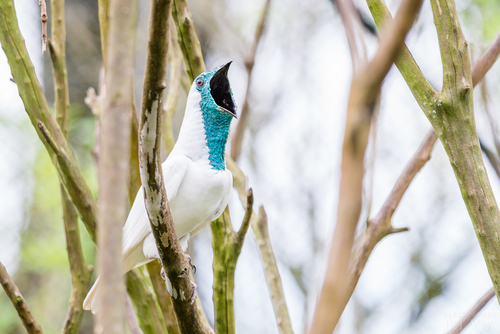 Bare-throated Bellbird
In breve
Il segno distintivo più affidabile per separare il Red-ruffed Fruitcrow dal Bare-throated Bellbird è il piumaggio complessivo: i fruttivori maschi adulti sono uccelli grandi, per lo più neri, con una sorprendente macchia di gola cremisi o castagna, mentre i maschi adulti dei campanari sono completamente bianchi con una evidente macchia di pelle nuda bluastro-nera sulla gola, sul viso e attorno al becco. Anche le femmine sono distinte: le femmine dei fruttivori somigliano a maschi più opachi, mentre le femmine dei campanari sono marrone oliva sopra con parti inferiori giallastre e striate. Non sono descritti segni specifici per l'età sulle ali o sul volo per nessuna delle due specie, quindi concentrati sul colore del corpo, sulla gola e sulla pelle nuda. Anche la struttura e la dimensione aiutano: i fruttivori sono molto più grandi e pesanti, con un becco pallido più robusto, rispetto al campanaro più compatto e con becco corto.
Consigli di identificazione
- Adult male plumage: Se vedi un grande uccello per lo più nero con una vivida macchia di gola cremisi o castagna, è un Red-ruffed Fruitcrow. Se l'uccello è completamente bianco con una macchia di pelle nuda bluastro-nera sulla gola e sul viso, è un maschio Bare-throated Bellbird.
- Adult female plumage: Le femmine dei fruttivori sembrano versioni più opache e leggermente più piccole del maschio—ancora nere con una gola colorata. Le femmine dei campanari sono marrone oliva sopra, giallastre e striate sotto, con una corona nera—mai nere o con gola rossa.
- Bare skin: Solo il campanaro (maschio) ha una pelle nuda bluastro-nera estesa sulla gola, sul viso e attorno al becco. I fruttivori hanno sempre gole piumate, anche quando sono rossi o castagni.
- Bill color and shape: Il fruttivoro ha un becco pesante e pallido bluastro; il campanaro ha un becco corto e largo, non così robusto, e di solito scuro.
- Size and bulk: Il fruttivoro è molto più grande e massiccio del campanaro. Se l'uccello appare delle dimensioni di un corvo o più grande, è quasi certamente un fruttivoro.
- Subspecies variation: Alcune sottospecie di fruttivori hanno parti inferiori più castagne o marroni, ma mantengono sempre un corpo nero e una gola colorata. I maschi dei campanari sono sempre bianchi; le femmine sempre oliva/gialle.
- Flight and jizz: I fruttivori volano con battiti d'ala pesanti e diretti e appaiono grandi e lenti. I campanari sono più compatti e possono sembrare meno pesanti in volo.
- Voice: Se senti un richiamo forte, metallico, simile a un'incudine, cerca un campanaro. I richiami dei fruttivori non sono così forti o distintivi.
- Habitat context: Nel sud-est del Brasile, Paraguay o Argentina, specialmente in foreste più aperte o disturbate, è più probabile trovare un campanaro. In aree andine o foreste ripide e dense, è più probabile trovare un fruttivoro.
- Lekking behavior: Se vedi diversi grandi uccelli neri con gole rosse che chiamano insieme, è un lek di fruttivori. I campanari non si esibiscono in gruppi.
- Juvenile/immature confusion: Non sono descritti segni distintivi per le ali o il volo dei giovani per nessuna delle due specie, quindi fai affidamento sul colore complessivo e sul modello di gola/viso a tutte le età.
- Perched vs. flying: Entrambe le specie sono più facilmente identificate quando sono posate; in volo, la dimensione e il colore del corpo (nerastro vs. bianco) sono ancora diagnostici.
- Pitfalls: Non confondere la gola nuda nera del campanaro con una macchia colorata; la gola del fruttivoro è sempre piumata e rossa/castagna, mai nuda.
- Sex differences: Solo il campanaro mostra un forte dimorfismo sessuale (maschio bianco, femmina oliva/gialla). I sessi dei fruttivori sono simili, con le femmine leggermente più opache.
- Urban context: I campanari possono apparire nei parchi urbani durante la migrazione; i fruttivori si trovano raramente al di fuori delle foreste dense.
Taglia
Il Red-ruffed Fruitcrow è uno dei passeriformi più grandi del Sud America, con alcune sottospecie che raggiungono fino a 14 pollici (36 cm) di lunghezza (ad es., P. s. granadensis: 14 in/36 cm). Il Bare-throated Bellbird è significativamente più piccolo, attorno ai 27 cm (11 in) di lunghezza. Il fruttivoro è notevolmente più massiccio e pesante, con un becco pallido più robusto, mentre il campanaro è più compatto con un becco corto e una bocca larga. Anche la più piccola sottospecie di fruttivoro (granadensis) è più grande del campanaro.
Piumaggio
-
Juvenile/immature plumage and wing pattern: Non sono descritti segni distintivi per le ali o il volo dei giovani per nessuna delle due specie, quindi la separazione si basa sul piumaggio del corpo e della testa a tutte le età.
-
Adult males: I maschi del Red-ruffed Fruitcrow sono neri lucidi con una macchia di gola cremisi o castagna brillante o opaca (variabile a seconda della sottospecie), a volte con parti inferiori marroni. I maschi del Bare-throated Bellbird sono completamente bianchi con una sorprendente macchia di pelle nuda bluastro-nera attorno all'occhio, al becco e alla gola—nessun rosso o castagna ovunque.
-
Adult females: Le femmine dei fruttivori sono simili ai maschi ma leggermente più piccole e con un collare più opaco; ancora per lo più nere con una gola colorata. Le femmine dei campanari sono marrone oliva sopra, con parti inferiori giallastre striate di verde oliva, e una corona nera—completamente diverse da qualsiasi fruttivoro.
-
Subspecies variation: Le sottospecie di fruttivori mostrano alcune variazioni nell'estensione e nella luminosità della gola e delle parti inferiori, ma mantengono sempre il corpo nerastro e la gola colorata. I maschi dei campanari sono sempre bianchi con pelle nuda; le femmine sempre oliva/giallastre e striate.
Comportamento
I Red-ruffed Fruitcrows possono radunarsi in lek sciolti dove i maschi chiamano per attrarre le femmine, spesso visti posati nella chioma degli alberi o volando con un volo pesante e diretto. Sono onnivori, nutrendosi di frutta, insetti e lucertole. I Bare-throated Bellbirds sono più strettamente frugivori e vengono spesso rilevati dal richiamo estremamente forte e metallico del maschio emesso da posatoi elevati. Entrambe le specie possono essere viste in alto nella foresta, ma i campanari sono più propensi a essere ascoltati prima di essere visti a causa della loro voce.
Habitat
Entrambe le specie abitano foreste umide subtropicali e tropicali, ma i loro areali si sovrappongono solo parzialmente. Il Red-ruffed Fruitcrow si trova nelle foreste andine e adiacenti, mentre il Bare-throated Bellbird è ristretto al sud-est del Sud America (Brasile, Paraguay, Argentina), preferendo foreste primarie e alcune secondarie. I campanari possono apparire in aree forestali più disturbate o urbane, specialmente durante la migrazione, mentre i fruttivori sono più associati a foreste dense e meno disturbate e a drenaggi ripidi.
Voce
I maschi del Bare-throated Bellbird producono uno dei richiami di uccelli più forti, un suono metallico, simile a un'incudine, che si propaga su lunghe distanze. Questo è un indizio chiave sul campo—se senti un richiamo metallico penetrante, sospetta un campanaro. Anche i maschi del Red-ruffed Fruitcrow chiamano, specialmente nei lek, ma le loro vocalizzazioni non sono descritte come particolarmente forti o metalliche e non sono così distintive come quelle del campanaro.
Red-ruffed Fruitcrow · Bare-throated Bellbird · I miei uccelli difficili