

Motmot

ニシアカアシチョウゲンボウ 対 アカアシチョウゲンボウ

Falco vespertinus 対 Falco amurensis

ニシアカアシチョウゲンボウとアカアシチョウゲンボウのクイズ
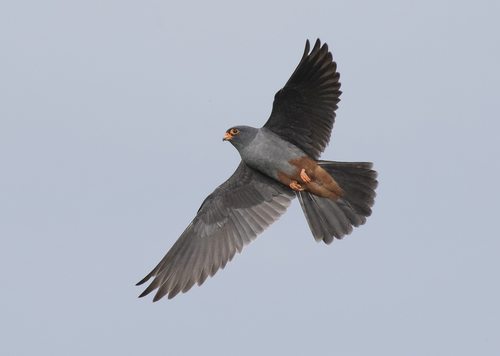
ニシアカアシチョウゲンボウ (Falco vespertinus) ニシアカアシチョウゲンボウ
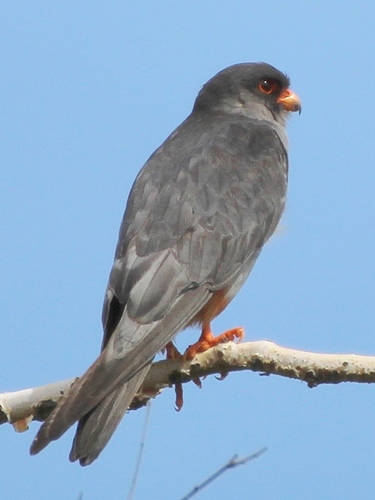
アカアシチョウゲンボウ (Falco amurensis) アカアシチョウゲンボウ

メディア

読み込み中…

要点

フィールドでニシアカアシチョウゲンボウとアカアシチョウゲンボウを分ける最も信頼できる方法は、成鳥のオスの下翼覆羽の色によるものです:ニシアカアシチョウゲンボウのオスは均一に暗い灰色の下翼を示し、アカアシチョウゲンボウのオスは暗い飛行羽と対照的な目立つ白い下翼の裏地を持っています。幼鳥と雌の場合、分離はより微妙ですが、アカアシチョウゲンボウの幼鳥はニシアカアシチョウゲンボウに見られる淡い下翼覆羽を欠いています。両種はスリムで長い翼を持つチョウゲンボウで、似たような印象を持っていますが、下翼のパターン、脚とクチバシの色、顔の模様に注意を払うことが重要です。構造的な違いは最小限なので、特に飛行中の年齢や性別に特有の羽毛に焦点を当ててください。

識別のコツ

  1. 成鳥オスの下翼パターン: 飛行中に下翼覆羽を確認してください。ニシアカアシチョウゲンボウのオスは均一に暗い灰色の下翼を持ち、アカアシチョウゲンボウのオスは暗い飛行羽と対照的な白い下翼の裏地を持っています。これは成鳥オスの最も信頼できるフィールドマークです。
  2. 幼鳥の下翼覆羽: 幼鳥のニシアカアシチョウゲンボウは淡い下翼覆羽を示し、より暖かい下翼のトーンを与えます。幼鳥のアカアシチョウゲンボウはこれを欠いているため、下翼はより淡く、あまり淡い色合いには見えません。このマークを飛行中の未成熟個体に使用してください。
  3. 成鳥雌の顔のパターン: 両種は白い顔に暗い模様を持っていますが、ニシアカアシチョウゲンボウの雌は明確な黒い目のストライプと口ひげを示します。アカアシチョウゲンボウの雌はよりオレンジ色の目のリングと赤いクチバシを持っています。
  4. 脚とクチバシの色(雌): アカアシチョウゲンボウの雌は赤みがかったオレンジ色の足と赤いクチバシを持ち、ニシアカアシチョウゲンボウの雌は赤い脚を持っていますが、あまり明るい色のクチバシではありません。これは微妙で、近距離での使用が最適です。
  5. 太ももと腹部の赤褐色/オレンジ色(オス): 両種は腹部と太ももに赤褐色を示しますが、これはアカアシチョウゲンボウのオスでより広範囲で明るいです。ただし、このマークは下翼パターンよりも信頼性が低いです。
  6. 全体の色合い(オス): ニシアカアシチョウゲンボウのオスはより均一に青灰色で、アカアシチョウゲンボウのオスはすすけた灰色で、わずかに暗いトーンと赤褐色の腹部との対比が強いです。
  7. サイズと構造: 両種はサイズと形状が似ており、長い翼とスリムな体を持っています。フィールドでの分離にはサイズに頼らないでください。
  8. 止まっている印象: 両種は止まっているときに尾に達するか、尾を超える長い翼を示します。これは分離の要因ではありません。
  9. 生息地と範囲: 繁殖期にヨーロッパで観察された場合、ニシアカアシチョウゲンボウの可能性が高いです。インドを横断する移動中やアフリカで越冬する場合、アカアシチョウゲンボウが期待されます。ただし、迷鳥も発生します。
  10. 群れの行動: アカアシチョウゲンボウは特に移動中に大きな移動群で見られる可能性が高いです。ニシアカアシチョウゲンボウは緩いコロニーで繁殖することがありますが、移動以外では大きな群れを形成する可能性は低いです。
  11. 声: 提供された情報源には診断的な声の違いは記載されていません。
  12. 落とし穴: 両種の雌と幼鳥は非常に似ており、飛行中の下翼の良好な視界や裸の部分の色を近くで確認しない限り、分離が不可能な場合があります。
  13. 季節的文脈: 中央アジアの移動中に両種が一緒に発生することがあります。特に混合群れでは、下翼と裸の部分の詳細を使用して分離してください。
  14. 人工巣箱: ニシアカアシチョウゲンボウはヨーロッパの人工巣コロニーの近くで見られることがありますが、アカアシチョウゲンボウにはあまり可能性がありません。
  15. 疑問がある場合: 安全に年齢や性別を判断できない鳥や、下翼や裸の部分の色が見えない場合、同定は不確かのままです。飛行中のオスと幼鳥の下翼パターンを優先してください。

大きさ

ニシアカアシチョウゲンボウは平均してやや重い(158.5g)ですが、アカアシチョウゲンボウは137.5gで、両者は中型小型で長い翼を持つチョウゲンボウで、翼幅は重なっています(ニシアカアシチョウゲンボウ:65–75 cm;アカアシチョウゲンボウ:63–71 cm)し、長さも似ています。フィールドでは、サイズだけでは信頼できる分離要因ではなく、両者はスリムで敏捷に見えます。

羽色

行動

両種は敏捷で空中のハンターであり、開けた国で昆虫を捕まえる姿がよく見られます。ニシアカアシチョウゲンボウはコロニーや孤立したペアで繁殖することがあり、時には人工巣箱を使用しますが、アカアシチョウゲンボウは大きな群れで移動することで知られています。止まっている鳥では、両種は尾に達するか、尾を超える長い翼を示し、両者はワイヤーや露出した枝に止まっているのが見られることがあります。

生息環境

ニシアカアシチョウゲンボウは東ヨーロッパと西アジアで繁殖し、散在する木々のある開けた草原やステップを好み、現在は生息地の喪失により人間の集落の近くで見られることが多くなっています。アカアシチョウゲンボウは南東シベリアと北中国で繁殖し、インドとアラビア海を横断して南部および東部アフリカで越冬します。移動中、アカアシチョウゲンボウはさまざまな開けた生息地で大きな群れで見られることがあります。範囲の重なりは中央アジアの移動期間に限られています。

より良い説明を送る

比較と同じ項目を使ってください。文章はすぐに公開されます。

The most reliable way to separate Red-footed Falcon from Amur Falcon in the field is by the color of the underwing coverts in adult males: Red-footed Falcon males show uniformly dark grey underwings, while Amur Falcon males have strikingly white underwing linings that contrast with the dark flight feathers. For juveniles and females, separation is more subtle, but Amur Falcon juveniles lack the buffy underwing coverts seen in Red-footed Falcon. Both species are slim, long-winged falcons with similar jizz, but careful attention to underwing pattern, leg and cere color, and facial markings is essential. Structural differences are minimal, so focus on age- and sex-specific plumage, especially in flight.

  1. Adult male underwing pattern: In flight, check the underwing coverts. Red-footed Falcon males have uniformly dark grey underwings, while Amur Falcon males have white underwing linings contrasting with dark flight feathers. This is the single most reliable field mark for adult males.
  2. Juvenile underwing coverts: Juvenile Red-footed Falcons show buffy underwing coverts, giving a warmer underwing tone. Juvenile Amur Falcons lack this, so their underwing appears paler and less buffy. Use this mark for immatures in flight.
  3. Adult female facial pattern: Both species have white faces with dark markings, but Red-footed Falcon females show a distinct black eye-stripe and moustache. Amur Falcon females have a more orange eye-ring and a red cere.
  4. Leg and cere color (females): Amur Falcon females have reddish-orange feet and a red cere, while Red-footed Falcon females have red legs but a less brightly colored cere. This is subtle and best used at close range.
  5. Rufous/orange on thighs and vent (males): Both species show rufous on the vent and thighs, but this is more extensive and brighter in Amur Falcon males. However, this mark is less reliable than underwing pattern.
  6. Overall coloration (males): Red-footed Falcon males are more uniformly blue-grey, while Amur Falcon males are sooty grey with a slightly darker tone and more contrast with the rufous vent.
  7. Size and structure: Both species are similar in size and shape, with long wings and slim bodies. Do not rely on size for separation in the field.
  8. Perched jizz: Both species show long wings that reach or slightly extend beyond the tail when perched. This is not a separator.
  9. Habitat and range: If observed in Europe in breeding season, Red-footed Falcon is more likely. In migration across India or wintering in Africa, Amur Falcon is expected. However, vagrancy does occur.
  10. Flock behavior: Amur Falcons are more likely to be seen in large migratory flocks, especially during migration. Red-footed Falcons may breed in loose colonies but are less likely to form large flocks outside migration.
  11. Voice: No diagnostic vocal differences are described in the sources provided.
  12. Pitfalls: Females and juveniles of both species are very similar, and separation may be impossible without a good view of the underwing in flight or close inspection of bare part colors.
  13. Seasonal context: During migration in central Asia, both species may occur together. Use underwing and bare part details for separation, especially in mixed flocks.
  14. Artificial nest boxes: Red-footed Falcons may be found near artificial nest colonies in Europe, a context less likely for Amur Falcon.
  15. When in doubt: For birds that cannot be safely aged or sexed, and where underwing or bare part color is not visible, identification may remain uncertain. Prioritize underwing pattern for males and juveniles in flight.

Red-footed Falcon is slightly heavier on average (158.5g) than Amur Falcon (137.5g), but both are medium-small, long-winged falcons with overlapping wingspans (Red-footed: 65–75 cm; Amur: 63–71 cm) and similar lengths. In the field, size alone is not a reliable separator, as both appear slim and agile.

  • Adult males: Red-footed Falcon males are all blue-grey with a red undertail and legs, and have uniformly dark grey underwings. Amur Falcon males are sooty grey above with rufous thighs and vent, but the key mark is their white underwing linings, which contrast sharply with the dark flight feathers.
  • Adult females: Both species have grey backs and wings, orange or rufous heads and underparts, and a white face with dark markings. Amur Falcon females can be told by their orange eye-ring, red cere, and reddish-orange feet, while Red-footed Falcon females have a black eye-stripe and moustache.
  • Juveniles/immatures: Both are brown above and buff below with streaks and a female-like face pattern. However, juvenile Amur Falcons lack the buffy underwing coverts present in juvenile Red-footed Falcons, making the underwing paler and less warm-toned in Amur. This is the most useful mark for separating young birds in flight.

Both species are agile, aerial hunters, often seen hawking for insects in open country. Red-footed Falcons may breed in colonies or solitary pairs, sometimes using artificial nest boxes, while Amur Falcons are known for migrating in large flocks. In perched birds, both species show long wings extending to or beyond the tail, and both may be seen perched on wires or exposed branches.

Red-footed Falcon breeds in eastern Europe and western Asia, favoring open grasslands and steppe with scattered trees, and is now often found near human settlements due to habitat loss. Amur Falcon breeds in southeastern Siberia and northern China, migrating across India and the Arabian Sea to winter in southern and eastern Africa. During migration, Amur Falcons may be seen in large flocks in a variety of open habitats. Range overlap is limited to migration periods in central Asia.

変更を破棄しますか?

保存していない編集があります。今離れると失われます。

ニシアカアシチョウゲンボウ · アカアシチョウゲンボウ · 苦手な鳥