

Motmot

スミレセンニョハチドリ 対 パナママンゴーハチドリ

Heliothryx barroti 対 Anthracothorax veraguensis

スミレセンニョハチドリとパナママンゴーハチドリのクイズ
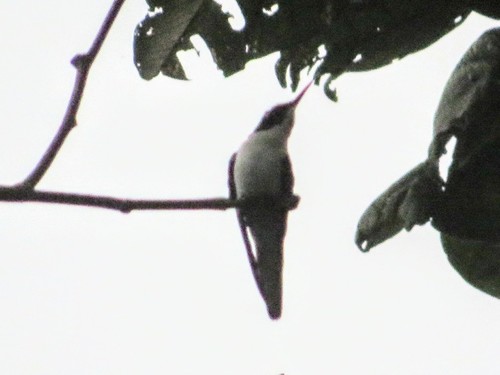
スミレセンニョハチドリ (Heliothryx barroti) スミレセンニョハチドリ
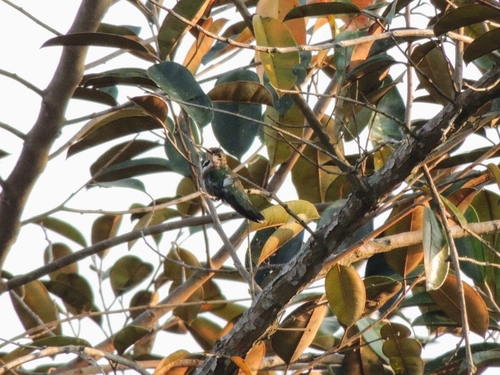
パナママンゴーハチドリ (Anthracothorax veraguensis) パナママンゴーハチドリ

メディア

読み込み中…

要点

スミレセンニョハチドリとパナママンゴーハチドリを分ける最も信頼できる方法は、全体の形と羽毛によるものです。スミレセンニョハチドリは、目を引く白い腹部と白い外羽を持つ長く尖った尾を持つ、細身で小さなハチドリです。一方、パナママンゴーハチドリは、金属的な緑の体、赤い羽根の中心を持つ暗い尾、そして特徴的な腹部のストライプ(雌はティール、雄は青っぽい下腹部)を持つ、より大きな体型です。未熟なスミレセンニョハチドリは、シナモン色の縁取りがある上面とまばらな暗い斑点を持ち、パナママンゴーハチドリには見られません。スミレセンニョハチドリの短く真っ直ぐなくちばしと純白の下腹部は、パナママンゴーハチドリの曲がったくちばしと色付きの腹部と対照的です。両種は中米に生息していますが、パナママンゴーハチドリはパナマとコスタリカにより局所的です。迅速な識別のために、下腹部の色、尾のパターン、くちばしの形に注目してください。

識別のコツ

  1. Underpart color: すべての年齢と性別のスミレセンニョハチドリは純白の下腹部を示します。パナママンゴーハチドリは常に色付きの下腹部を持っています(雄は青っぽく、雌は白クリームに暗いティールの腹部ストライプがあります)。
  2. Tail pattern: スミレセンニョハチドリは白い外羽と青黒い中央羽を持つ長く尖った尾を持っています。パナママンゴーハチドリは赤い羽根の中心を持つ黒い尾を持ち、白はありません。
  3. Bill shape: スミレセンニョハチドリのくちばしは短く真っ直ぐで黒いです。パナママンゴーハチドリのくちばしは長く、わずかに曲がっていて暗い灰色です。これは距離があってもよく見えます。
  4. Crown and face: 雄のスミレセンニョハチドリは金属的な紫色の前冠と紫色の斑点のある黒いアイパッチを持っています。雌は緑の冠と顔に少ない黒があります。パナママンゴーハチドリはこれらの冠と顔の特徴がありません。
  5. Ventral stripe: 雌のパナママンゴーハチドリは常に白クリームの腹部に暗いティールのストライプを示し、スミレセンニョハチドリには存在しません。雄のパナママンゴーハチドリは青っぽい腹部を持ち、白ではありません。
  6. Immature Fairy: 上面のシナモン色の縁取りと喉/胸の暗い斑点は未熟なスミレセンニョハチドリに特有で、パナママンゴーハチドリには見られません。
  7. Overall shape: スミレセンニョハチドリは細身で繊細で、長く尖った尾を持っています。パナママンゴーハチドリはより大きく、頑丈で、広い尾を持っています。
  8. Size: スミレセンニョハチドリはパナママンゴーハチドリよりも小さく(9–13 cm、5.5 g)、パナママンゴーハチドリは(11–12 cm、より重い体型)です。一緒に見られた場合、サイズの違いは明らかです。
  9. Tail in flight: スミレセンニョハチドリの白い外尾羽は、飛行中や止まっているときに見え、全体が黒いパナママンゴーハチドリの尾との迅速な区別になります。
  10. Habitat and range: パナママンゴーハチドリはパナマとコスタリカにのみ生息しています。スミレセンニョハチドリはより広範囲に分布しています。パナマ/コスタリカの外で見られた場合、デフォルトでスミレセンニョハチドリにします。
  11. Feeding behavior: スミレセンニョハチドリはしばしば樹冠の高いところで採餌し、餌台にはあまり来ません。パナママンゴーハチドリは餌台やオープンな庭でより目立つかもしれません。
  12. Face pattern: スミレセンニョハチドリは黒いアイパッチ(雄には紫色の斑点があります)を持っています。パナママンゴーハチドリの顔は、そうした模様のない金属的な緑です。
  13. Plumage gloss: 両者は上面が金属的な緑ですが、スミレセンニョハチドリだけが紫色の冠(雄)と白い下部を示します。
  14. Sexual dimorphism: 両種は性差が見られますが、パナママンゴーハチドリの腹部ストライプ(雌)と青っぽい下腹部(雄)は特有で診断的です。
  15. Pitfall: 全体の緑の上面だけに頼らないでください。信頼できる区別のために、下腹部、尾、くちばしに注目してください。

大きさ

スミレセンニョハチドリは小さくて細身で、長さは9–13 cm、重さは約5.5 gです。パナママンゴーハチドリは明らかに大きくて重く、長さは11–12 cmで、より頑丈な体型です。体重と全体の体積の違いは、特に両種が餌台や同じエリアで見られるときに、フィールドで明らかです。スミレセンニョハチドリの長く尖った尾も、パナママンゴーハチドリの広い四角い尾と比較して、より繊細な外観に寄与しています。

羽色

行動

スミレセンニョハチドリは主に中層と樹冠で採餌し、時には森林の端で低くなることもあります。特に領土的ではありませんが、他のハチドリに対して攻撃的になることがあります。花にくちばしを挿入したり、基部を突いて蜜を盗んだり、小さな節足動物(特にクモ)を葉から拾ったりし、飛行中に昆虫を捕まえることは稀です。パナママンゴーハチドリの行動はここでは詳しく説明されていませんが、典型的なマンゴーとして、より領土的で、餌台やオープンエリアをより頻繁に訪れる可能性があります。スミレセンニョハチドリの高く、より陰のある採餌場所の好みは、パナママンゴーハチドリのよりオープンまたはエッジの生息地の使用と対照的かもしれません。

生息環境

スミレセンニョハチドリはメキシコ南東部からペルー北部まで分布し、さまざまな森林の生息地を占め、しばしば中層と樹冠に生息しています。パナママンゴーハチドリははるかに制限されており、主にパナマと最近ではコスタリカで見られ、よりオープンまたはエッジの生息地、庭、または餌台の近くで遭遇する可能性があります。パナマまたはコスタリカの外にいる場合、パナママンゴーハチドリはあり得ません。これらの国の中では、生息地の文脈と範囲の重なりを確認してください。

より良い説明を送る

比較と同じ項目を使ってください。文章はすぐに公開されます。

The most reliable way to separate Purple-crowned Fairy from Veraguan Mango is by overall shape and plumage: the Fairy is a slender, small hummingbird with a strikingly white belly and long, pointed tail with white outer feathers, while the Mango is bulkier, with a metallic green body, dark tail with red-centered feathers, and a distinctive ventral stripe (teal in females, blueish underparts in males). Immature Purple-crowned Fairies show cinnamon-edged upperparts and sparse dusky spots below, unlike any Veraguan Mango. The Fairy's short, straight bill and pure white underparts contrast with the Mango's decurved bill and colored belly. Both species occur in Central America, but the Mango is more localized to Panama and Costa Rica. Focus on underpart color, tail pattern, and bill shape for quick separation.

  1. Underpart color: Purple-crowned Fairy of all ages and sexes shows pure white underparts; Veraguan Mango always has colored underparts (blueish in males, white-cream with a dark teal ventral stripe in females).
  2. Tail pattern: Fairy has a long, pointed tail with white outer feathers and blue-black central feathers. Mango has a black tail with red-centered feathers and no white.
  3. Bill shape: Fairy's bill is short, straight, and black; Mango's is longer, slightly decurved, and dark grey. This is often visible even at a distance.
  4. Crown and face: Male Fairy has a metallic violet forecrown and a black eye patch with a violet spot behind it; female has a green crown and less black on the face. Mango lacks these crown and face features.
  5. Ventral stripe: Female Mango always shows a dark teal stripe down the white-cream belly, never present in Fairy. Male Mango has a blueish belly, not white.
  6. Immature Fairy: Cinnamon fringes on upperparts and dusky spots on throat/breast are unique to immature Fairy and not seen in Mango.
  7. Overall shape: Fairy is slender and delicate, with a long, pointed tail. Mango is bulkier and more robust, with a broader tail.
  8. Size: Fairy is smaller (9–13 cm, 5.5 g) than Mango (11–12 cm, heavier build). If seen together, size difference is clear.
  9. Tail in flight: The Fairy's white outer tail feathers are visible in flight and when perched, a quick separation from the all-dark Mango tail.
  10. Habitat and range: Mango is only in Panama and Costa Rica; Fairy is more widespread. If seen outside Panama/Costa Rica, default to Fairy.
  11. Feeding behavior: Fairy often forages higher in the canopy and is less likely at feeders; Mango may be more visible at feeders or in open gardens.
  12. Face pattern: Fairy has a black eye patch (with violet spot in males); Mango's face is plain metallic green without such markings.
  13. Plumage gloss: Both are metallic green above, but only the Fairy shows a violet crown (male) and white below.
  14. Sexual dimorphism: Both species show sexual dimorphism, but the Mango's ventral stripe (female) and blueish underparts (male) are unique and diagnostic.
  15. Pitfall: Do not rely on overall green upperparts alone; focus on underparts, tail, and bill for reliable separation.

Purple-crowned Fairy is smaller and more slender, measuring 9–13 cm in length and weighing about 5.5 g. Veraguan Mango is noticeably larger and heavier, at 11–12 cm long, with a more robust build. The difference in body mass and overall bulk is often apparent in the field, especially when both species are seen at feeders or in the same area. The Fairy's long, pointed tail also contributes to its more delicate appearance compared to the Mango's broader, squared tail.

  • Immature/juvenile birds: Purple-crowned Fairy immatures have cinnamon fringes on the upperparts and sparse dusky spots on the throat and breast, which are not seen in Veraguan Mango of any age. This is a strong mark for young birds.
  • Adult males: Purple-crowned Fairy males have a metallic violet forecrown, emerald green upperparts, pure white underparts, and a long tail with blue-black central and white outer feathers. Veraguan Mango males are metallic green overall, with a blueish breast and belly, and a black tail with a red circle in the center of each feather.
  • Adult females: Female Purple-crowned Fairy has a green crown, less black on the face, and pure white underparts. Female Veraguan Mango has a white-cream belly with a dark teal stripe running down the breast, and the tail is black with red-centered feathers. The Mango lacks the Fairy's white outer tail feathers and has a distinct ventral stripe.
  • Tail pattern: Purple-crowned Fairy has white outer tail feathers, while Veraguan Mango's tail is black with red-centered feathers and lacks white.
  • Bill: Fairy's bill is short, straight, and black; Mango's is slightly decurved and dark grey.

Purple-crowned Fairy forages mostly in the mid-story and canopy, sometimes lower at forest edges, and is not particularly territorial but can be aggressive toward other hummingbirds. It feeds by inserting its bill into flowers or robbing nectar by piercing the base, and gleans small arthropods (especially spiders) from foliage, rarely catching insects in flight. Veraguan Mango behavior is not described in detail here, but as a typical mango, it is likely to be more territorial and may visit feeders or open areas more readily. The Fairy's preference for higher, more shaded foraging sites may contrast with the Mango's use of more open or edge habitats.

Purple-crowned Fairy ranges from southeastern Mexico to northern Peru, occupying a variety of forested habitats, often in the mid-story and canopy. Veraguan Mango is much more restricted, found mainly in Panama and recently in Costa Rica, and is likely to be encountered in more open or edge habitats, gardens, or near feeders. If you are outside Panama or Costa Rica, the Mango is unlikely; within those countries, check habitat context and range overlap.

変更を破棄しますか?

保存していない編集があります。今離れると失われます。

スミレセンニョハチドリ · パナママンゴーハチドリ · 苦手な鳥