

Purple-crowned Fairy vs Veraguan Mango
Heliothryx barroti contro Anthracothorax veraguensis
Fai un quiz con Purple-crowned Fairy e Veraguan Mango
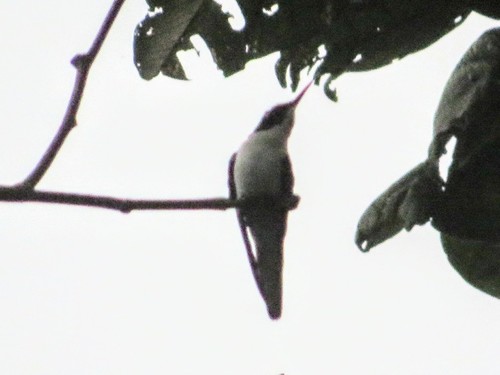 Purple-crowned Fairy
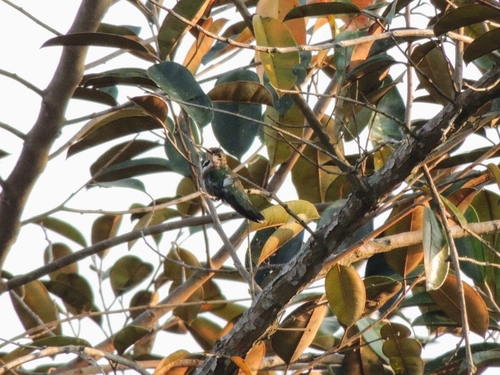 Veraguan Mango
In breve
Il modo più affidabile per separare il Purple-crowned Fairy dal Veraguan Mango è attraverso la forma generale e il piumaggio: il Fairy è un colibrì snodato e piccolo con un ventre bianchissimo e una lunga coda appuntita con piume esterne bianche, mentre il Mango è più robusto, con un corpo verde metallico, coda scura con piume centrali rosse e una striscia ventrale distintiva (teal nelle femmine, parti inferiori bluastre nei maschi). I Purple-crowned Fairies immaturi mostrano parti superiori con bordi cannella e macchie scure sparse sotto, a differenza di qualsiasi Veraguan Mango. Il becco corto e dritto del Fairy e le parti inferiori bianche pure contrastano con il becco ricurvo del Mango e il ventre colorato. Entrambe le specie si trovano in America Centrale, ma il Mango è più localizzato in Panama e Costa Rica. Concentrati sul colore delle parti inferiori, sul modello della coda e sulla forma del becco per una separazione rapida.
Consigli di identificazione
- Underpart color: Il Purple-crowned Fairy di tutte le età e sessi mostra parti inferiori bianche pure; il Veraguan Mango ha sempre parti inferiori colorate (bluastre nei maschi, bianco-crema con una striscia ventrale teal scura nelle femmine).
- Tail pattern: Il Fairy ha una lunga coda appuntita con piume esterne bianche e piume centrali blu-nerastre. Il Mango ha una coda nera con piume centrali rosse e senza bianco.
- Bill shape: Il becco del Fairy è corto, dritto e nero; quello del Mango è più lungo, leggermente ricurvo e grigio scuro. Questo è spesso visibile anche a distanza.
- Crown and face: Il maschio del Fairy ha una corona anteriore metallica viola e una macchia nera attorno all'occhio con una macchia viola dietro; la femmina ha una corona verde e meno nero sul viso. Il Mango manca di queste caratteristiche della corona e del viso.
- Ventral stripe: La femmina del Mango mostra sempre una striscia teal scura lungo il ventre bianco-crema, mai presente nel Fairy. Il maschio del Mango ha un ventre bluastro, non bianco.
- Immature Fairy: Le frange cannella sulle parti superiori e le macchie scure sulla gola/sul petto sono uniche per il Fairy immaturo e non si vedono nel Mango.
- Overall shape: Il Fairy è snodato e delicato, con una lunga coda appuntita. Il Mango è più robusto e massiccio, con una coda più larga.
- Size: Il Fairy è più piccolo (9–13 cm, 5.5 g) rispetto al Mango (11–12 cm, costruzione più pesante). Se visti insieme, la differenza di dimensioni è chiara.
- Tail in flight: Le piume esterne bianche della coda del Fairy sono visibili in volo e quando è posato, una separazione rapida dalla coda completamente scura del Mango.
- Habitat and range: Il Mango si trova solo in Panama e Costa Rica; il Fairy è più diffuso. Se visto al di fuori di Panama/Costa Rica, si deve considerare il Fairy.
- Feeding behavior: Il Fairy spesso cerca cibo più in alto nella chioma e ha meno probabilità di trovarsi ai mangiatoie; il Mango può essere più visibile ai mangiatoie o in giardini aperti.
- Face pattern: Il Fairy ha una macchia nera attorno all'occhio (con macchia viola nei maschi); il viso del Mango è di un verde metallico semplice senza tali marcature.
- Plumage gloss: Entrambi sono verdi metallici sopra, ma solo il Fairy mostra una corona viola (maschio) e bianco sotto.
- Sexual dimorphism: Entrambe le specie mostrano dimorfismo sessuale, ma la striscia ventrale del Mango (femmina) e le parti inferiori bluastre (maschio) sono uniche e diagnostiche.
- Pitfall: Non fare affidamento solo sulle parti superiori verdi; concentrati sulle parti inferiori, sulla coda e sul becco per una separazione affidabile.
Taglia
Il Purple-crowned Fairy è più piccolo e più snodato, misurando 9–13 cm di lunghezza e pesando circa 5.5 g. Il Veraguan Mango è notevolmente più grande e pesante, con una lunghezza di 11–12 cm e una costruzione più robusta. La differenza nella massa corporea e nella robustezza generale è spesso evidente sul campo, specialmente quando entrambe le specie sono viste ai mangiatoie o nella stessa area. La lunga coda appuntita del Fairy contribuisce anche al suo aspetto più delicato rispetto alla coda più larga e squadrata del Mango.
Piumaggio
- Immature/juvenile birds: I giovani Purple-crowned Fairy hanno frange cannella sulle parti superiori e macchie scure sparse sulla gola e sul petto, che non si vedono nel Veraguan Mango di alcuna età. Questo è un segno forte per i giovani uccelli.
- Adult males: I maschi del Purple-crowned Fairy hanno una corona anteriore metallica viola, parti superiori verdi smeraldo, parti inferiori bianche pure e una lunga coda con piume centrali blu-nerastre e piume esterne bianche. I maschi del Veraguan Mango sono di un verde metallico complessivo, con un petto e un ventre bluasti, e una coda nera con un cerchio rosso al centro di ogni piuma.
- Adult females: La femmina del Purple-crowned Fairy ha una corona verde, meno nero sul viso e parti inferiori bianche pure. La femmina del Veraguan Mango ha un ventre bianco-crema con una striscia teal scura che scende lungo il petto, e la coda è nera con piume centrali rosse. Il Mango manca delle piume esterne bianche della coda del Fairy e ha una striscia ventrale distinta.
- Tail pattern: Il Purple-crowned Fairy ha piume esterne bianche nella coda, mentre la coda del Veraguan Mango è nera con piume centrali rosse e manca di bianco.
- Bill: Il becco del Fairy è corto, dritto e nero; quello del Mango è leggermente ricurvo e grigio scuro.
Comportamento
Il Purple-crowned Fairy cerca cibo principalmente nella parte centrale e nella chioma, a volte più in basso ai margini della foresta, e non è particolarmente territoriale ma può essere aggressivo verso altri colibrì. Si nutre inserendo il becco nei fiori o rubando nettare perforando la base, e raccoglie piccoli artropodi (specialmente ragni) dalla vegetazione, raramente catturando insetti in volo. Il comportamento del Veraguan Mango non è descritto in dettaglio qui, ma come un mango tipico, è probabile che sia più territoriale e possa visitare mangiatoie o aree aperte più facilmente. La preferenza del Fairy per siti di foraggiamento più alti e ombreggiati può contrastare con l'uso del Mango di habitat più aperti o ai margini.
Habitat
Il Purple-crowned Fairy si estende dal sud-est del Messico al nord del Perù, occupando una varietà di habitat forestali, spesso nella parte centrale e nella chioma. Il Veraguan Mango è molto più ristretto, trovato principalmente in Panama e recentemente in Costa Rica, ed è probabile che venga incontrato in habitat più aperti o ai margini, giardini o vicino ai mangiatoie. Se ti trovi al di fuori di Panama o Costa Rica, è improbabile che tu veda il Mango; all'interno di quei paesi, controlla il contesto dell'habitat e la sovrapposizione dell'areale.
Purple-crowned Fairy · Veraguan Mango · I miei uccelli difficili