

Motmot

ヒメニシキタイヨウチョウ 対 シロハラタイヨウチョウ

Cinnyris bifasciatus 対 Cinnyris talatala

ヒメニシキタイヨウチョウとシロハラタイヨウチョウのクイズ
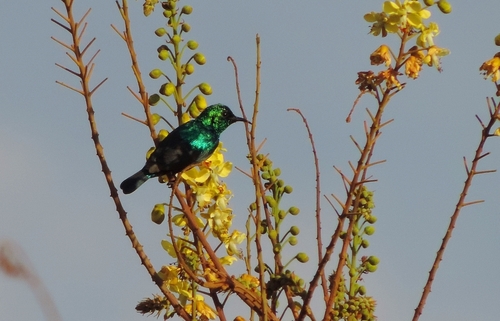
ヒメニシキタイヨウチョウ (Cinnyris bifasciatus) ヒメニシキタイヨウチョウ
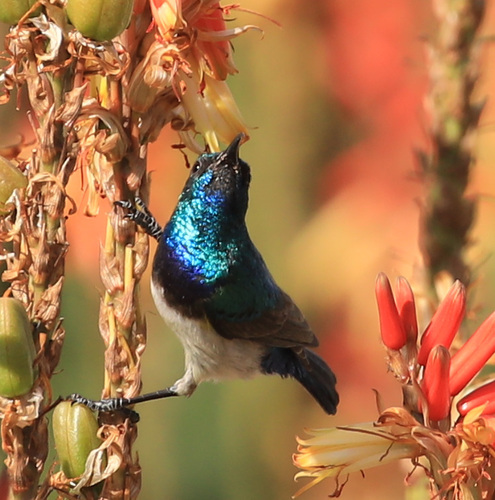
シロハラタイヨウチョウ (Cinnyris talatala) シロハラタイヨウチョウ

メディア

読み込み中…

要点

パープルバンデッドサンバードとホワイトベリードサンバードを区別する最も信頼できる方法は、成鳥のオスの下部の色合いに焦点を当てることです:パープルバンデッドは、他の白い下部に対して明確な紫がかった胸のバンドを示しますが、ホワイトベリードはこのバンドがなく、きれいな白い腹部と胸を持っています。両種は広範囲にわたって生息域と生息地が重なり、サイズと構造も非常に似ているため、羽毛の詳細、特に下部が重要です。未熟な個体と雌は非常に難しく、どちらも小さく、細長いサンバードで、似たような比率と微妙な違いがあります。フィールドでは、常に胸と腹部の明確な視界を得るようにし、非成鳥のオスには注意してください。

識別のコツ

  1. 成鳥のオスの下部のパターンが最良のフィールドマークです: パープルバンデッドサンバードのオスの上胸にある明確で狭い紫がかったバンドを探してください。胸がバンドなしのきれいな白であれば、ホワイトベリードサンバードのオスを見ている可能性があります。
  2. 雌と未熟な個体は非常に似ています: 両者は淡い下部を示し、成鳥のオスの胸のバンドがありません。これらの羽毛では、分離は非常に難しく、フィールドで利用可能な情報では信頼できません。
  3. 独特な幼鳥や未熟な翼のパターンはありません: どちらの種も、非成鳥の羽毛において独自の上翼や飛行マークを持つとは記載されていないため、翼のパターンに頼らないでください。
  4. くちばしと構造は信頼できません: 両種は細長い下向きのくちばしを持ち、比率も似ています。くちばしの長さ、尾の形、翼のフォーミュラは診断的ではありません。
  5. 羽毛の落とし穴: 照明がパープルバンデッドサンバードのオスの紫がかった胸のバンドを隠したり誇張したりすることに注意してください。光が悪い場合、バンドはかすかに見えるか、存在しないように見えることがあります。常に直接的で明るい視界で確認してください。
  6. ホワイトベリードサンバードのオスは上胸にかすかな緑がかったまたは青みがかった洗いが見られることがありますが、決して明確なバンドはありません: バンドの兆候が見られた場合は、パープルバンデッドを優先してくださいが、照明のアーティファクトに注意深く確認してください。
  7. 生息地と範囲は重なりゾーン内では役に立ちません: 両種は南部および中央アフリカの同じ生息地や地域で見られます。
  8. 行動は診断的ではありません: 両種は同様に採餌し、混合群れに参加します。行動を分離に使用しないでください。
  9. 声は分離の指標として記載されていません: 情報源には特に目立った声の違いは記載されていません。
  10. 東アフリカ(例:ケニア、エチオピア、ソマリア)にいる場合、パープルバンデッドがより可能性が高いですが、ホワイトベリードはそこにはいません: 範囲は最後の手段としてのみ使用し、常に羽毛で確認してください。
  11. 混合種のサンバードの群れでは、下部のパターンに焦点を当ててください: 複数のCinnyris種が存在する場合、胸のバンド(またはその欠如)がこれら二つの最も信頼できるマークです。
  12. サイズやジズに頼らないでください: 両者は同じくらい小さく、活発で、どちらも構造的に目立ちません。
  13. 不確かで成鳥のオスが見えない場合は、鳥を特定しないことを検討してください: 雌と未熟なサンバードは非常に難しく、これら二つも例外ではありません。
  14. 後で確認するために写真を撮る: 可能であれば、下部の写真を撮ってください。微妙な違いは後で評価しやすくなるかもしれません。
  15. 最近の分割や分類学的変更について地元のバーダーに相談する: ツァボタイヨウチョウは時々パープルバンデッドと一緒に分類されることがあります。東アフリカにいる場合は、地元のチェックリストを確認してください。

大きさ

両種はCinnyris属の典型的な小さく細長いサンバードです。情報源には信頼できるサイズの違いは記載されておらず、両者は全体の長さと質量が似ています [wikipedia][avonet]。くちばしの長さと形も似ているため、サイズは分離のための有用なフィールドマークではありません。

羽色

成鳥のオスは最も簡単に区別できます:パープルバンデッドサンバードのオスは上胸に明確で狭い紫がかったバンドを持ち、白い腹部と鮮やかに対比されています。ホワイトベリードサンバードのオスはこの胸のバンドがなく、代わりに均一な白い胸と腹部を示し、時々上胸にかすかな緑がかったまたは青みがかった洗いが見られますが、決して明確なバンドはありません。両種の雌と未熟な個体は地味で、淡い下部と鈍い上部を持ち、成鳥のオスの胸のバンドなしではフィールドでの分離が非常に難しいです。情報源には、どちらの種についても独特な幼鳥や未熟な上翼や飛行パターンの違いは記載されていません。

行動

両種は同様に行動します:彼らは活発で、しばしば混合種の群れに参加し、蜜や昆虫を採餌します。両者は午後遅くに昆虫を捕まえたり、葉から採餌したりするのが見られます。フィールドで彼らを分離するのに役立つ行動の違いは信頼できる形で記載されていません。

生息環境

生息地の重なりは広範囲にわたります。両種は南部および中央アフリカ全体の広範な森林や茂みの生息地で見られ、アンゴラ、ボツワナ、DRC、エスワティニ、マラウイ、モザンビーク、ナミビア、南アフリカ、タンザニア、ザンビア、ジンバブエを含みます [wikipedia]。パープルバンデッドサンバードは東アフリカ(例:ケニア、エチオピア、ウガンダ、ソマリア、ガボン、コンゴ、ルワンダ)にも広がりますが、共有範囲内では生息地は有用な分離要因ではありません。

より良い説明を送る

比較と同じ項目を使ってください。文章はすぐに公開されます。

The most reliable way to separate Purple-banded Sunbird from White-bellied Sunbird is by focusing on the underpart coloration in adult males: Purple-banded shows a distinct purplish breast band on otherwise white underparts, while White-bellied lacks this band and has a clean white belly and breast. Both species overlap widely in range and habitat, and their size and structure are very similar, so plumage details—especially on the underparts—are key. Immature and female birds are much trickier, as both are small, slender sunbirds with similar proportions and subtle differences. In the field, always try to get a clear view of the breast and belly, and be cautious with non-adult males.

  1. Adult male underpart pattern is the best field mark: Look for the distinct, narrow purplish band across the upper breast of Purple-banded Sunbird males. If the breast is clean white without a band, you are likely seeing a White-bellied Sunbird male.
  2. Females and immatures are very similar: Both show pale underparts and lack the adult male's breast band. In these plumages, separation is extremely difficult and not reliably possible in the field with the information available.
  3. No distinctive juvenile or immature wing patterns: Neither species is described as having unique upperwing or flight marks in non-adult plumages, so do not rely on wing pattern for separation.
  4. Bill and structure are not reliable: Both species have slender, decurved bills and similar proportions. Bill length, tail shape, and wing formula are not diagnostic.
  5. Plumage pitfalls: Beware that lighting can obscure or exaggerate the purplish breast band of Purple-banded Sunbird males. In poor light, the band may appear faint or absent; always try to confirm with a direct, well-lit view.
  6. White-bellied Sunbird males may show a faint greenish or bluish wash on the upper breast, but never a distinct band: If you see any suggestion of a band, favor Purple-banded, but check carefully for lighting artifacts.
  7. Habitat and range are not helpful within the overlap zone: Both species can be found in the same habitats and regions in southern and central Africa.
  8. Behavior is not diagnostic: Both species forage similarly and join mixed flocks; do not use behavior for separation.
  9. Voice is not described as a separator: No distinctive vocal differences are noted in the sources.
  10. If in East Africa (e.g., Kenya, Ethiopia, Somalia), Purple-banded is more likely, but White-bellied is absent there: Use range only as a last resort, and always confirm with plumage.
  11. In mixed-species sunbird flocks, focus on underpart pattern: With several Cinnyris species present, the breast band (or lack thereof) is the most reliable mark for these two.
  12. Do not rely on size or jizz: Both are equally small and active, and neither stands out structurally.
  13. If uncertain and not seeing an adult male, consider leaving the bird unidentified: Female and immature sunbirds are notoriously tricky, and these two are no exception.
  14. Photograph for later review: If possible, get photos of the underparts, as subtle differences may be easier to assess after the fact.
  15. Consult local birders for recent splits or taxonomic changes: The Tsavo Sunbird is sometimes lumped with Purple-banded; check local checklists if in East Africa.

Both species are small, slender sunbirds typical of the genus Cinnyris. No reliable size difference is noted in the sources; both are similar in overall length and mass [wikipedia][avonet]. Bill length and shape are also similar, so size is not a useful field mark for separation.

Adult males are most easily separated: Purple-banded Sunbird males have a clear, narrow purplish band across the upper breast, sharply set off against a white belly. White-bellied Sunbird males lack this breast band and instead show a uniform white breast and belly, sometimes with a faint greenish or bluish wash on the upper breast, but never a distinct band. Females and immatures of both species are drab, with pale underparts and duller upperparts, making field separation very difficult without the adult male's breast band. No distinctive juvenile or immature upperwing or flight pattern differences are described in the sources for either species.

Both species behave similarly: they are active, often joining mixed-species flocks and foraging for nectar and insects. Both can be seen hawking insects in the late afternoon and gleaning from foliage. No behavioral differences are reliably described that would help separate them in the field.

Habitat overlap is extensive. Both species occur in a wide range of wooded and bushy habitats across southern and central Africa, including Angola, Botswana, DRC, Eswatini, Malawi, Mozambique, Namibia, South Africa, Tanzania, Zambia, and Zimbabwe [wikipedia]. Purple-banded Sunbird also extends into East Africa (e.g., Kenya, Ethiopia, Uganda, Somalia, Gabon, Congo, Rwanda), but within the shared range, habitat is not a useful separator.

変更を破棄しますか?

保存していない編集があります。今離れると失われます。

ヒメニシキタイヨウチョウ · シロハラタイヨウチョウ · 苦手な鳥