

Purple-banded Sunbird vs White-bellied Sunbird
Cinnyris bifasciatus contro Cinnyris talatala
Fai un quiz con Purple-banded Sunbird e White-bellied Sunbird
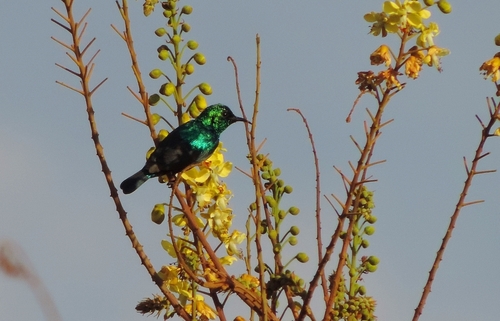 Purple-banded Sunbird
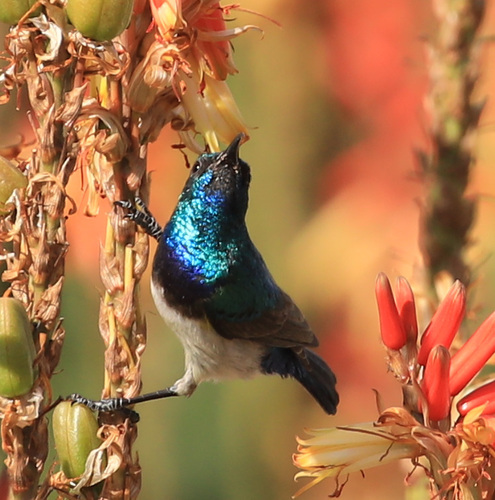 White-bellied Sunbird
In breve
Il modo più affidabile per separare il Purple-banded Sunbird dal White-bellied Sunbird è concentrarsi sulla colorazione delle parti inferiori nei maschi adulti: il Purple-banded mostra una distintiva banda petto purpurea su parti inferiori altrimenti bianche, mentre il White-bellied manca di questa banda e ha un ventre e un petto bianchi puliti. Entrambe le specie si sovrappongono ampiamente in termini di distribuzione e habitat, e le loro dimensioni e struttura sono molto simili, quindi i dettagli del piumaggio—soprattutto sulle parti inferiori—sono fondamentali. Gli uccelli immaturi e femminili sono molto più difficili da distinguere, poiché entrambi sono piccoli, slanciati e hanno proporzioni simili e differenze sottili. Sul campo, cerca sempre di ottenere una vista chiara del petto e del ventre, e fai attenzione ai maschi non adulti.
Consigli di identificazione
- Il modello delle parti inferiori del maschio adulto è il miglior segno sul campo: Cerca la distintiva e stretta banda purpurea sul petto superiore dei maschi di Purple-banded Sunbird. Se il petto è bianco pulito senza una banda, è probabile che tu stia vedendo un maschio di White-bellied Sunbird.
- Le femmine e gli immaturi sono molto simili: Entrambi mostrano parti inferiori chiare e mancano della banda petto del maschio adulto. In questi piumaggi, la separazione è estremamente difficile e non è affidabilmente possibile sul campo con le informazioni disponibili.
- Nessun modello distintivo di ali per i giovanili o immaturi: Nessuna delle due specie è descritta come avente segni unici sulle ali superiori o di volo nei piumaggi non adulti, quindi non fare affidamento sul modello delle ali per la separazione.
- Il becco e la struttura non sono affidabili: Entrambe le specie hanno becchi slanciati e ricurvi e proporzioni simili. La lunghezza del becco, la forma della coda e la formula delle ali non sono diagnostiche.
- Trappole del piumaggio: Fai attenzione che l'illuminazione possa oscurare o esagerare la banda petto purpurea dei maschi di Purple-banded Sunbird. In scarsa luce, la banda può apparire debole o assente; cerca sempre di confermare con una vista diretta e ben illuminata.
- I maschi di White-bellied Sunbird possono mostrare una leggera sfumatura verdastra o bluastro sul petto superiore, ma mai una banda distintiva: Se vedi qualche suggerimento di una banda, favorisci il Purple-banded, ma controlla attentamente per artefatti di illuminazione.
- L'habitat e la distribuzione non sono utili all'interno della zona di sovrapposizione: Entrambe le specie possono essere trovate negli stessi habitat e regioni dell'Africa meridionale e centrale.
- Il comportamento non è diagnostico: Entrambe le specie si nutrono in modo simile e si uniscono a stormi misti; non usare il comportamento per la separazione.
- La voce non è descritta come un separatore: Non sono state notate differenze vocali distintive nelle fonti.
- Se ti trovi in Africa orientale (ad es., Kenya, Etiopia, Somalia), è più probabile vedere il Purple-banded, ma il White-bellied è assente lì: Usa la distribuzione solo come ultima risorsa e conferma sempre con il piumaggio.
- Nei gruppi misti di sunbird, concentrati sul modello delle parti inferiori: Con diverse specie di Cinnyris presenti, la banda petto (o la sua assenza) è il segno più affidabile per queste due.
- Non fare affidamento su dimensioni o jizz: Entrambi sono ugualmente piccoli e attivi, e nessuno si distingue strutturalmente.
- Se sei incerto e non vedi un maschio adulto, considera di lasciare l'uccello non identificato: Le femmine e gli immaturi di sunbird sono notoriamente difficili, e queste due non fanno eccezione.
- Fotografa per una revisione successiva: Se possibile, scatta foto delle parti inferiori, poiché differenze sottili possono essere più facili da valutare in seguito.
- Consulta gli uccelli locali per recenti divisioni o cambiamenti tassonomici: Il Tsavo Sunbird è talvolta accorpato con il Purple-banded; controlla le liste locali se ti trovi in Africa orientale.
Taglia
Entrambe le specie sono piccoli, slanciati sunbirds tipici del genere Cinnyris. Nessuna differenza di dimensioni affidabile è notata nelle fonti; entrambe sono simili in lunghezza e massa complessive [wikipedia][avonet]. La lunghezza e la forma del becco sono anche simili, quindi la dimensione non è un utile segno sul campo per la separazione.
Piumaggio
I maschi adulti sono i più facilmente separabili: i maschi di Purple-banded Sunbird hanno una chiara e stretta banda purpurea sul petto superiore, nettamente distinta da un ventre bianco. I maschi di White-bellied Sunbird mancano di questa banda petto e mostrano invece un petto e un ventre bianchi uniformi, a volte con una leggera sfumatura verdastra o bluastro sul petto superiore, ma mai una banda distintiva. Le femmine e gli immaturi di entrambe le specie sono opachi, con parti inferiori chiare e parti superiori più opache, rendendo la separazione sul campo molto difficile senza la banda petto del maschio adulto. Nessuna differenza distintiva di modelli di ali superiori o di volo per giovanili o immaturi è descritta nelle fonti per entrambe le specie.
Comportamento
Entrambe le specie si comportano in modo simile: sono attive, spesso si uniscono a stormi misti e si nutrono di nettare e insetti. Entrambi possono essere visti catturare insetti nel tardo pomeriggio e raccogliere da fogliame. Nessuna differenza comportamentale è descritta in modo affidabile che possa aiutare a separarli sul campo.
Habitat
L'overlap dell'habitat è esteso. Entrambe le specie si trovano in una vasta gamma di habitat boschivi e cespugliosi in tutta l'Africa meridionale e centrale, inclusi Angola, Botswana, RDC, Eswatini, Malawi, Mozambico, Namibia, Sudafrica, Tanzania, Zambia e Zimbabwe [wikipedia]. Il Purple-banded Sunbird si estende anche nell'Africa orientale (ad es., Kenya, Etiopia, Uganda, Somalia, Gabon, Congo, Ruanda), ma all'interno della gamma condivisa, l'habitat non è un utile separatore.
Purple-banded Sunbird · White-bellied Sunbird · I miei uccelli difficili