

ヒメニシキタイヨウチョウ 対 カワリタイヨウチョウ
Cinnyris bifasciatus 対 Cinnyris venustus
ヒメニシキタイヨウチョウとカワリタイヨウチョウのクイズ
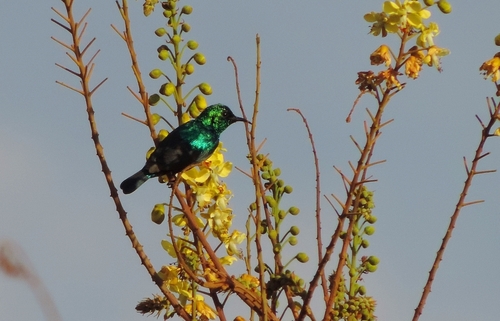 ヒメニシキタイヨウチョウ
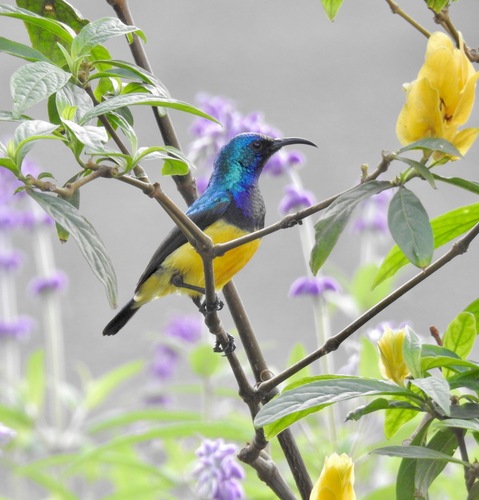 カワリタイヨウチョウ
要点
The most reliable field mark to separate Purple-banded Sunbird from Variable Sunbird is the male's breast band: Purple-banded males show a distinct purple band across the upper chest, while Variable males have a maroon band and a yellow (sometimes orange or white) belly. Females are trickier, but Variable Sunbird females have a clear pale supercilium and yellowish underparts, while Purple-banded females lack the strong supercilium. Both species are small, nectar-feeding sunbirds with similar structure and feeding behavior, so careful attention to plumage details—especially the color and placement of chest bands and underparts—is essential. Immature and eclipse males of Variable Sunbird resemble females but may show some green on the throat, which can help in subtle cases.
識別のコツ
- Male breast band color and placement: Look for a broad, purple band across the upper chest in Purple-banded Sunbird males; Variable Sunbird males have a narrower, maroon band lower on the breast.
- Male belly color: Variable Sunbird males usually have a bright yellow belly (sometimes orange or white in some subspecies), while Purple-banded males have a paler, less colorful belly below the purple band.
- Male upperparts: Both have glossy green heads and throats, but Variable Sunbird's green is more extensive, covering the nape and sometimes the upper breast above the maroon band.
- Female supercilium: Variable Sunbird females show a strong pale supercilium (eyebrow), which is lacking or much less distinct in Purple-banded females.
- Female underparts: Variable Sunbird females are yellowish below; Purple-banded females are generally duller and less distinctly yellow.
- Eclipse/immature males: Variable Sunbird eclipse males look like females but may show some green on the throat—watch for this subtle hint in transitional birds.
- Bill shape and length: Both have medium-length, down-curved bills typical of sunbirds; bill shape is not a separator.
- Flight style: Both species have fast, direct flight on short wings and often perch to feed; flight behavior is not a separator.
- Habitat clues: Variable Sunbird is more likely in cultivated areas and open woodland, but both can overlap widely in range and habitat.
- Vocalizations: If you hear a clear 'tew-tew-tew-tew-tew', it's Variable Sunbird; Purple-banded's call is not described here, so use with caution.
- Juvenile/immature plumage: No distinctive wing or flight pattern differences are described for immatures; rely on underpart color and supercilium.
- Overall impression: If you see a sunbird with a strong supercilium and yellow belly, Variable is likely; if the chest band is broad and purple, it's Purple-banded.
- Subspecies variation: Some Variable Sunbird males have orange or white bellies instead of yellow—do not rely solely on belly color in these areas, but check the breast band color and female supercilium.
- Pitfalls: Eclipse and immature males of Variable Sunbird can look very like females; watch for any green on the throat to avoid confusion.
- When in doubt: Focus on the combination of breast band color (purple vs maroon), belly color, and the presence or absence of a strong supercilium in females.
大きさ
Both species are very small sunbirds and similar in size, but the Variable Sunbird is documented at about 5.6 grams [wikidata]. No direct mass is given for Purple-banded Sunbird, but there is no evidence of a significant size difference in the field. Both have medium-length, thin, down-curved bills typical of sunbirds, and overall proportions are alike.
羽色
- Adult males: Purple-banded Sunbird males have a distinct purple band across the upper chest, separating the metallic green upperparts from the paler belly. Variable Sunbird males have a glossy green head, throat, and nape, a maroon breast band, and a yellow (sometimes orange or white) belly. The maroon band of Variable is usually narrower and lower than the broad purple band of Purple-banded.
- Females: Variable Sunbird females are grey-brown above with yellowish underparts and a prominent pale supercilium. Purple-banded Sunbird females lack the strong supercilium and are generally duller below.
- Eclipse/immature males: Variable Sunbird eclipse males resemble females but may show some green on the throat. There is no specific information on immature Purple-banded, but expect them to resemble females.
- Wing and flight pattern: No distinctive age-specific upperwing or flight marks are described for either species, so separation in flight relies on body and head plumage.
行動
Both species are active, fast-moving nectar feeders that typically perch to feed, though they can hover briefly like hummingbirds. Their flight is fast and direct, aided by short wings. Both will also take insects, especially when feeding young. Behavior is not a strong separator in the field.
生息環境
Purple-banded Sunbird is widespread in southern and eastern Africa, found in a variety of habitats across Angola, Kenya, South Africa, and neighboring countries. Variable Sunbird is a common resident breeder in equatorial Africa, favoring open woodland and cultivated areas. There is considerable overlap in range and habitat, so context alone is not diagnostic, but Variable Sunbird may be more likely in cultivated or edge habitats.
声
Variable Sunbird gives a clear 'tew-tew-tew-tew-tew' call. There is no specific vocal description for Purple-banded Sunbird in the provided notes, so voice is not a reliable separator unless the Variable's call is heard distinctly.