

Purple-banded Sunbird vs Variable Sunbird
Cinnyris bifasciatus contro Cinnyris venustus
Fai un quiz con Purple-banded Sunbird e Variable Sunbird
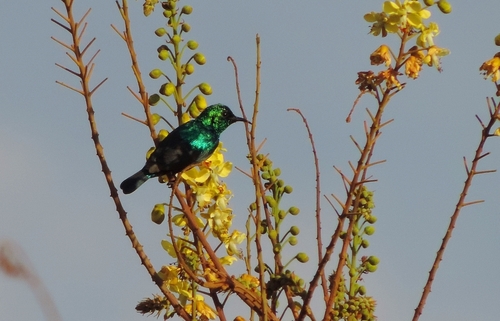 Purple-banded Sunbird
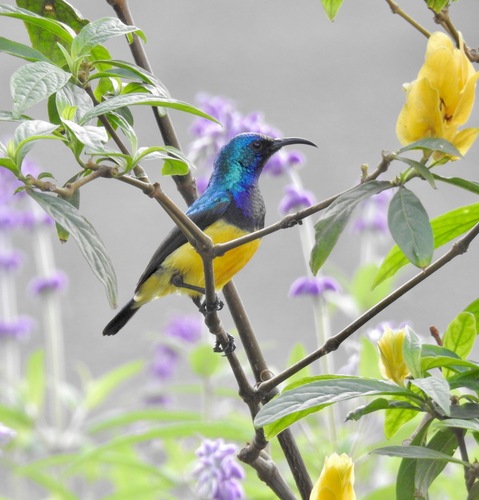 Variable Sunbird
In breve
Il segno di campo più affidabile per separare il Purple-banded Sunbird dal Variable Sunbird è la banda del petto del maschio: i maschi Purple-banded mostrano una banda viola distinta attraverso la parte superiore del petto, mentre i maschi Variable hanno una banda marrone e una pancia gialla (a volte arancione o bianca). Le femmine sono più difficili da distinguere, ma le femmine del Variable Sunbird hanno un sopracciglio chiaro e pallido e parti inferiori giallastre, mentre le femmine del Purple-banded mancano del forte sopracciglio. Entrambe le specie sono piccoli sunbirds che si nutrono di nettare con una struttura e un comportamento alimentare simili, quindi è essenziale prestare attenzione ai dettagli del piumaggio—specialmente il colore e la posizione delle bande del petto e delle parti inferiori. I maschi immaturi e in eclipse del Variable Sunbird assomigliano alle femmine ma possono mostrare un po' di verde sulla gola, il che può aiutare nei casi sottili.
Consigli di identificazione
- Colore e posizione della banda del petto maschile: Cerca una larga banda viola attraverso la parte superiore del petto nei maschi del Purple-banded Sunbird; i maschi del Variable Sunbird hanno una banda marrone più stretta più in basso sul petto.
- Colore della pancia maschile: I maschi del Variable Sunbird di solito hanno una pancia gialla brillante (a volte arancione o bianca in alcune sottospecie), mentre i maschi del Purple-banded hanno una pancia più pallida e meno colorata sotto la banda viola.
- Parti superiori maschili: Entrambi hanno teste e gole verdi lucide, ma il verde del Variable Sunbird è più esteso, coprendo la nuca e a volte la parte superiore del petto sopra la banda marrone.
- Sopracciglio femminile: Le femmine del Variable Sunbird mostrano un forte sopracciglio pallido (sopracciglio), che è assente o molto meno distinto nelle femmine del Purple-banded.
- Parti inferiori femminili: Le femmine del Variable Sunbird sono giallastre sotto; le femmine del Purple-banded sono generalmente più opache e meno distintamente gialle.
- Maschi in eclipse/immaturi: I maschi in eclipse del Variable Sunbird assomigliano alle femmine ma possono mostrare un po' di verde sulla gola—fai attenzione a questo indizio sottile negli uccelli in transizione.
- Forma e lunghezza del becco: Entrambi hanno becchi di lunghezza media, curvi verso il basso, tipici dei sunbirds; la forma del becco non è un separatore.
- Stile di volo: Entrambe le specie hanno un volo veloce e diretto su ali corte e spesso si posano per nutrirsi; il comportamento di volo non è un separatore.
- Indizi sull'habitat: Il Variable Sunbird è più probabile che si trovi in aree coltivate e boschi aperti, ma entrambi possono sovrapporsi ampiamente in termini di distribuzione e habitat.
- Vocalizzazioni: Se senti un chiaro 'tew-tew-tew-tew-tew', è il Variable Sunbird; il richiamo del Purple-banded non è descritto qui, quindi usalo con cautela.
- Piumaggio giovanile/immaturo: Non ci sono differenze distintive nei segni delle ali o nel volo per gli immaturi; fai affidamento sul colore delle parti inferiori e sul sopracciglio.
- Impressione generale: Se vedi un sunbird con un forte sopracciglio e una pancia gialla, è probabile che sia un Variable; se la banda del petto è larga e viola, è un Purple-banded.
- Variazione delle sottospecie: Alcuni maschi del Variable Sunbird hanno pance arancioni o bianche invece di gialle—non fare affidamento solo sul colore della pancia in queste aree, ma controlla il colore della banda del petto e il sopracciglio femminile.
- Trappole: I maschi in eclipse e immaturi del Variable Sunbird possono assomigliare molto alle femmine; fai attenzione a qualsiasi verde sulla gola per evitare confusione.
- Quando hai dubbi: Concentrati sulla combinazione di colore della banda del petto (viola vs marrone), colore della pancia e la presenza o assenza di un forte sopracciglio nelle femmine.
Taglia
Entrambe le specie sono sunbirds molto piccoli e simili in dimensioni, ma il Variable Sunbird è documentato a circa 5,6 grammi [wikidata]. Non è fornito un peso diretto per il Purple-banded Sunbird, ma non ci sono evidenze di una differenza di dimensioni significativa sul campo. Entrambi hanno becchi di lunghezza media, sottili e curvi verso il basso, tipici dei sunbirds, e le proporzioni generali sono simili.
Piumaggio
- Maschi adulti: I maschi del Purple-banded Sunbird hanno una banda viola distinta attraverso la parte superiore del petto, separando le parti superiori verdi metalliche dalla pancia più pallida. I maschi del Variable Sunbird hanno una testa, gola e nuca verdi lucidi, una banda marrone sul petto e una pancia gialla (a volte arancione o bianca). La banda marrone del Variable è di solito più stretta e più bassa rispetto alla larga banda viola del Purple-banded.
- Femmine: Le femmine del Variable Sunbird sono grigio-marroni sopra con parti inferiori giallastre e un sopracciglio pallido prominente. Le femmine del Purple-banded mancano del forte sopracciglio e sono generalmente più opache sotto.
- Maschi in eclipse/immaturi: I maschi in eclipse del Variable Sunbird assomigliano alle femmine ma possono mostrare un po' di verde sulla gola. Non ci sono informazioni specifiche sugli immaturi del Purple-banded, ma aspettati che assomiglino alle femmine.
- Ali e modello di volo: Non ci sono segni distintivi specifici per età sulle ali superiori o sul volo descritti per nessuna delle due specie, quindi la separazione in volo si basa sul piumaggio del corpo e della testa.
Comportamento
Entrambe le specie sono attive, si muovono rapidamente e si nutrono di nettare, tipicamente posandosi per nutrirsi, anche se possono sostare brevemente come i colibrì. Il loro volo è veloce e diretto, facilitato da ali corte. Entrambi prenderanno anche insetti, specialmente quando nutrono i giovani. Il comportamento non è un forte separatore sul campo.
Habitat
Il Purple-banded Sunbird è diffuso nell'Africa meridionale e orientale, trovato in una varietà di habitat in Angola, Kenya, Sudafrica e paesi vicini. Il Variable Sunbird è un comune nidificante residente nell'Africa equatoriale, preferendo boschi aperti e aree coltivate. C'è una considerevole sovrapposizione nella distribuzione e nell'habitat, quindi il contesto da solo non è diagnostico, ma il Variable Sunbird potrebbe essere più probabile in habitat coltivati o di margine.
Voce
Il Variable Sunbird emette un chiaro richiamo 'tew-tew-tew-tew-tew'. Non c'è una descrizione vocale specifica per il Purple-banded Sunbird nelle note fornite, quindi la voce non è un separatore affidabile a meno che il richiamo del Variable non venga udito distintamente.
Purple-banded Sunbird · Variable Sunbird · I miei uccelli difficili