

Motmot

カザリリュウキュウガモ 対 シロガオリュウキュウガモ

Dendrocygna eytoni 対 Dendrocygna viduata

カザリリュウキュウガモとシロガオリュウキュウガモのクイズ
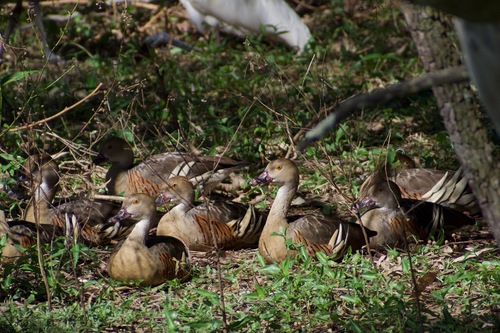
カザリリュウキュウガモ (Dendrocygna eytoni) カザリリュウキュウガモ
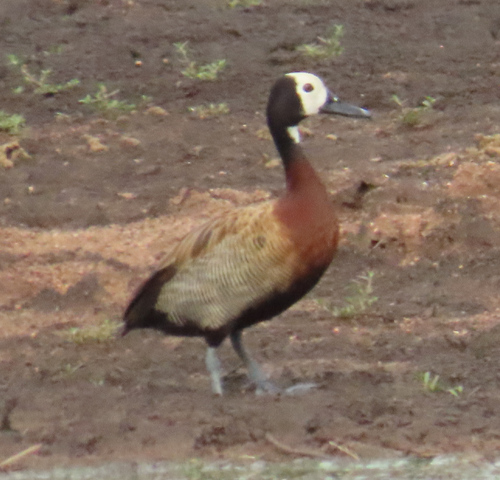
シロガオリュウキュウガモ (Dendrocygna viduata) シロガオリュウキュウガモ

メディア

読み込み中…

要点

プルームド・ウィスリングダックとシロガオ・ウィスリングダックを区別する最も信頼性の高いフィールドマークは、プルームド・ウィスリングダックの側面にある長い黒縁のバフの羽毛の存在です。これらはシロガオには常にありません。それに対して、シロガオ・ウィスリングダックは目を引く白い顔と黒い頭を示し、これはプルームド・ウィスリングダックには決して見られません。両種は長い首を持つ茶色のウィスリングダックですが、頭部と側面の模様はすべての年齢で診断的です。飛行中または静止中は、迅速な区別のために側面の羽毛と白い顔に焦点を当ててください。若いシロガオ・ウィスリングダックは頭部のコントラストが少ないことがありますが、プルームドの特徴的な羽毛は決して示しません。

識別のコツ

  1. Flank plumes: プルームド・ウィスリングダックは常に側面から黒縁のある長いバフの羽毛を示します。これは最も優れたフィールドマークであり、すべての年齢とすべての姿勢で見ることができます。シロガオ・ウィスリングダックはこれらの羽毛を決して示しません。
  2. Head pattern: シロガオ・ウィスリングダックは成鳥において大胆な白い顔と黒い頭/首を持ち、これはプルームド・ウィスリングダックには決して見られません。若鳥は鈍い顔を持つことがありますが、依然として側面の羽毛は欠けています。
  3. Chest and neck color: プルームド・ウィスリングダックは細かい黒い縞模様のある栗色の胸と、無地の茶色の頭/首を持っています。シロガオは豊かな栗色の首を持ちますが、黒い頭と白い顔があります。
  4. Bill and leg color: プルームド・ウィスリングダックはピンクがかった赤いくちばしと脚を持ち、シロガオは灰色のくちばしと脚を持っています。これは近距離で役立つことがあります。
  5. Upperparts and underparts: プルームドは上面が茶色で、下面が淡い色で、白い尾を持っています。シロガオは上面が暗く、側面に細かい白い縞模様のある黒い下面を持っています。
  6. Iris color: プルームド・ウィスリングダックは黄色の虹彩を持ち、近距離で見ることができます。シロガオでは虹彩の色は特徴的ではありません。
  7. Flight silhouette: プルームドはしばしば首を下げて短く丸い翼で飛びます。シロガオはより典型的なウィスリングダックの飛行姿勢を持ち、首はまっすぐです。
  8. Juvenile confusion: 若いシロガオ・ウィスリングダックは頭部のコントラストが少ないですが、依然として側面の羽毛は示しません。若いプルームド・ウィスリングダックはすでに特徴的な羽毛を示します。
  9. Sex differences: 両種は性別が同じであり、区別のために性別に頼るべきではありません。
  10. Habitat and range: オーストラリア、特に北部または東部で見られた場合、プルームドが期待されます。アフリカや南アメリカでは、シロガオがデフォルトです。迷子は稀です。
  11. Group size: 大規模な群れ(数千)はシロガオ・ウィスリングダックに典型的ですが、群れのサイズは診断的ではありません。
  12. Vocalizations: 両種は口笛を吹きますが、シロガオは明確な三音の呼び声を出します。声はあくまで補助的な証拠として使用してください。
  13. Perched vs. in flight: プルームドの側面の羽毛は、止まっているときも飛んでいるときも見えます。シロガオはどの姿勢でもそれを示しません。
  14. Pitfalls: 全体的な茶色の色合いやサイズに頼らないでください。両者は似ています。最初に頭部と側面の模様を確認してください。
  15. Season and molt: どちらの種でも、主要なフィールドマークに影響を与えるような季節的または換羽の違いはありません。

大きさ

プルームド・ウィスリングダックはシロガオ・ウィスリングダックよりもわずかに重い(平均790g)ですが(シロガオは平均674g)、この違いはフィールドでは微妙であり、信頼できる区別にはなりません。両者は中型で、長い首を持つダックで、全体的な比率は似ています。長さはかなり重なっているため、サイズだけで識別するべきではありません。

羽色

若鳥と成鳥のプルームド・ウィスリングダックは常に側面から黒い縁のある長い淡いバフの羽毛を示します。これはウィスリングダックの中で独特であり、すべての年齢で見ることができ、止まっているときも飛んでいるときも見えます。彼らの胸は栗色で細かい黒い縞模様があり、下面は淡い色です。頭部と首は無地の茶色で、目立つ顔の模様はありません。それに対して、成鳥のシロガオ・ウィスリングダックは鋭く定義された白い顔と黒い頭/首を持ち、豊かな栗色の首と暗い茶色から黒の上面を持っています。側面は黒で、細かい白い縞模様があります。若いシロガオ・ウィスリングダックは成鳥に似ていますが、鈍い、コントラストの少ない頭部の模様を持っていますが、依然として側面の羽毛は示しません。くちばしと脚の色も異なります。プルームドはピンクがかった赤いくちばしと脚を持ち、シロガオは灰色のくちばしと脚を持っています。両種の性別は似ています。

行動

両種は群れを成しており、大きな群れで見られることが多いですが、シロガオ・ウィスリングダックは特に大規模な群れを形成することで知られ、時には千を超えることもあります。プルームド・ウィスリングダックも社交的ですが、彼らの群れは一般的に小さいです。飛行中、プルームド・ウィスリングダックはしばしば首を下げて短く丸い翼を示し、シロガオ・ウィスリングダックはより典型的なウィスリングダックの飛行シルエットを持っています。両種は開けた湿地や草地で餌を食べますが、プルームドは高い草の中で草を食べているのが見られることが多いです。

生息環境

プルームド・ウィスリングダックはオーストラリアに生息しており、特に北部と東部の地域に多く、ニュージーランドや近隣の島々でも時折記録されています。シロガオ・ウィスリングダックはサハラ以南のアフリカと南アメリカの大部分に分布しています。彼らの生息域は野生では重ならないため、場所は強い手がかりとなります。両種は湿地、湖、草地を好みますが、プルームドは草の洪水平野により結びついています。

声

両種は騒がしく、口笛のような鳴き声を出します。プルームド・ウィスリングダックは特徴的な口笛を持ち、シロガオ・ウィスリングダックは明確な三音の口笛を出します。違いは微妙であり、特に距離がある場合や混合群れの中では常に信頼できる区別にはなりません。

より良い説明を送る

比較と同じ項目を使ってください。文章はすぐに公開されます。

The most reliable field mark to separate Plumed Whistling-Duck from White-faced Whistling-Duck is the presence of long, black-edged buff plumes on the flanks of the Plumed Whistling-Duck—these are always absent on White-faced. In contrast, White-faced Whistling-Duck shows a striking white face and black head, which is never matched by Plumed Whistling-Duck. Both species are long-necked, brownish whistling ducks, but their head and flank patterns are diagnostic at all ages. In flight or at rest, focus on the flank plumes versus the white face for a quick separation. Juvenile White-faced Whistling-Ducks can have less contrast on the head, but never show the distinctive plumes of Plumed.

  1. Flank plumes: Plumed Whistling-Duck always shows long, buff plumes edged with black projecting from the flanks—this is the single best field mark and is visible at all ages and in all postures. White-faced Whistling-Duck never shows these plumes.
  2. Head pattern: White-faced Whistling-Duck has a bold white face and black head/neck in adults, which is never matched by Plumed Whistling-Duck. Juveniles may have a duller face but still lack flank plumes.
  3. Chest and neck color: Plumed Whistling-Duck has a chestnut chest with fine black barring and a plain brown head/neck. White-faced has a rich chestnut neck but a black head and white face.
  4. Bill and leg color: Plumed Whistling-Duck has pinkish-red bill and legs; White-faced has a grey bill and legs. This can help at close range.
  5. Upperparts and underparts: Plumed is brown above with paler underparts and a white rump; White-faced is darker above and has black underparts with fine white barring on the flanks.
  6. Iris color: Plumed Whistling-Duck has a yellow iris, which can be visible at close range; iris color is not distinctive in White-faced.
  7. Flight silhouette: Plumed often flies with a lowered neck and short, rounded wings; White-faced has a more typical whistling duck flight with a straighter neck.
  8. Juvenile confusion: Juvenile White-faced Whistling-Ducks have less contrast on the head, but still never show flank plumes. Juvenile Plumed Whistling-Ducks already show the distinctive plumes.
  9. Sex differences: Both species are sexually monomorphic—do not rely on sex for separation.
  10. Habitat and range: If seen in Australia, especially in the north or east, Plumed is expected. In Africa or South America, White-faced is the default. Vagrancy is rare.
  11. Group size: Massive flocks (thousands) are more typical of White-faced Whistling-Duck, but flock size is not diagnostic.
  12. Vocalizations: Both species whistle, but White-faced gives a clear three-note call. Use voice only as supporting evidence.
  13. Perched vs. in flight: Flank plumes of Plumed are visible both perched and flying; White-faced never shows them in any posture.
  14. Pitfalls: Do not rely on overall brown coloration or size, as both are similar. Always check head and flank pattern first.
  15. Season and molt: No significant seasonal or molt differences affect the main field marks in either species.

Plumed Whistling-Duck is slightly heavier (average 790 g) than White-faced Whistling-Duck (average 674 g), but this difference is subtle in the field and not a reliable separator. Both are medium-sized, long-necked ducks with similar overall proportions. Length overlaps considerably, so size alone should not be used for identification.

Juvenile and adult Plumed Whistling-Ducks always show long, pale buff plumes with black edges projecting from the flanks—this is unique among whistling ducks and visible at all ages, both perched and in flight. Their chest is chestnut with fine black barring, and the underparts are pale. The head and neck are plain brown, lacking any bold facial pattern. In contrast, adult White-faced Whistling-Ducks have a sharply defined white face and black head/neck, with a rich chestnut neck and dark brown to black upperparts. The flanks are black with fine white barring. Juvenile White-faced Whistling-Ducks resemble adults but have a duller, less contrasting head pattern, yet still never show flank plumes. Bill and leg color also differ: Plumed has pinkish-red bill and legs, while White-faced has a grey bill and legs. Sexes are similar in both species.

Both species are gregarious and often found in large flocks, but White-faced Whistling-Duck is especially known for forming massive groups, sometimes numbering over a thousand. Plumed Whistling-Ducks are also social, but their flocks are generally smaller. In flight, Plumed Whistling-Ducks often show a lowered neck and short, rounded wings, while White-faced Whistling-Ducks have a more typical whistling duck flight silhouette. Both species feed in open wetlands and grasslands, but Plumed is more likely to be seen grazing in tall grass.

Plumed Whistling-Duck is resident in Australia, especially in the northern and eastern regions, with occasional records in New Zealand and nearby islands. White-faced Whistling-Duck is found in sub-Saharan Africa and much of South America. Their ranges do not overlap in the wild, so location is a strong clue. Both species prefer wetlands, lakes, and grassy areas, but Plumed is more tied to grassy floodplains.

Both species are noisy and produce whistling calls. Plumed Whistling-Duck has a characteristic whistle, while White-faced Whistling-Duck gives a clear, three-note whistling call. The difference is subtle and not always reliable for separation, especially at a distance or in mixed flocks.

変更を破棄しますか?

保存していない編集があります。今離れると失われます。

カザリリュウキュウガモ · シロガオリュウキュウガモ · 苦手な鳥