

Plumed Whistling-Duck vs Dendrocigna facciabianca
Dendrocygna eytoni contro Dendrocygna viduata
Fai un quiz con Plumed Whistling-Duck e Dendrocigna facciabianca
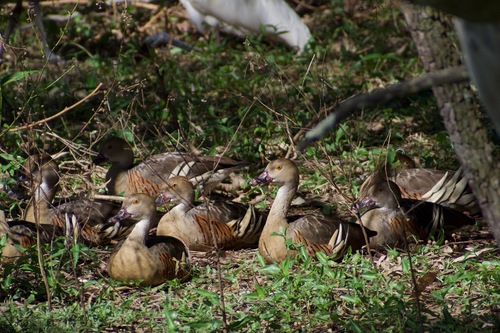 Plumed Whistling-Duck
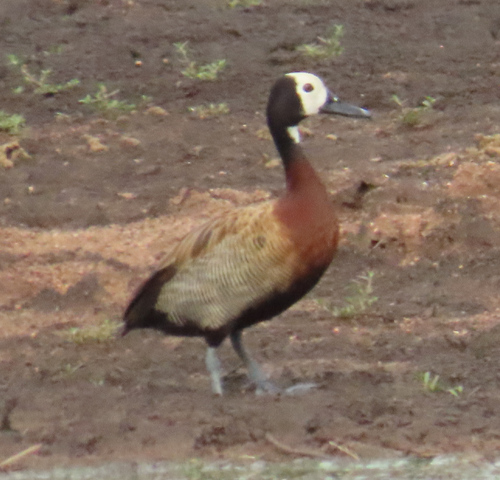 Dendrocigna facciabianca
In breve
Il segno di campo più affidabile per separare il Plumed Whistling-Duck dal Dendrocigna facciabianca è la presenza di lunghe piume color buff con bordi neri sui fianchi del Plumed Whistling-Duck—queste sono sempre assenti nel Dendrocigna facciabianca. Al contrario, il Dendrocigna facciabianca mostra un volto bianco sorprendente e una testa nera, che non è mai eguagliata dal Plumed Whistling-Duck. Entrambe le specie sono anatre fischianti dal collo lungo e di colore bruno, ma i loro schemi di testa e fianchi sono diagnostici a tutte le età. In volo o a riposo, concentrati sulle piume dei fianchi rispetto al volto bianco per una rapida separazione. I giovani Dendrocigna facciabianca possono avere meno contrasto sulla testa, ma non mostrano mai le piume distintive del Plumed.
Consigli di identificazione
- Flank plumes: Il Plumed Whistling-Duck mostra sempre lunghe piume color buff con bordi neri che sporgono dai fianchi—questo è il segno di campo migliore ed è visibile a tutte le età e in tutte le posture. Il Dendrocigna facciabianca non mostra mai queste piume.
- Head pattern: Il Dendrocigna facciabianca ha un volto bianco audace e una testa/collo neri negli adulti, che non è mai eguagliato dal Plumed Whistling-Duck. I giovani possono avere un volto più opaco ma mancano comunque delle piume sui fianchi.
- Chest and neck color: Il Plumed Whistling-Duck ha un petto castano con sottili barre nere e una testa/collo marrone uniforme. Il Dendrocigna facciabianca ha un collo castano ricco ma una testa nera e un volto bianco.
- Bill and leg color: Il Plumed Whistling-Duck ha un becco e zampe rosso-rosati; il Dendrocigna facciabianca ha un becco e zampe grigie. Questo può aiutare a distanza ravvicinata.
- Upperparts and underparts: Il Plumed è marrone sopra con parti inferiori più chiare e un sopracciglio bianco; il Dendrocigna facciabianca è più scuro sopra e ha parti inferiori nere con sottili barre bianche sui fianchi.
- Iris color: Il Plumed Whistling-Duck ha un'iride gialla, che può essere visibile a distanza ravvicinata; il colore dell'iride non è distintivo nel Dendrocigna facciabianca.
- Flight silhouette: Il Plumed vola spesso con il collo abbassato e ali corte e arrotondate; il Dendrocigna facciabianca ha un volo di anatra fischiante più tipico con un collo più dritto.
- Juvenile confusion: I giovani Dendrocigna facciabianca hanno meno contrasto sulla testa, ma non mostrano mai le piume sui fianchi. I giovani Plumed Whistling-Ducks mostrano già le piume distintive.
- Sex differences: Entrambe le specie sono sessualmente monomorfiche—non fare affidamento sul sesso per la separazione.
- Habitat and range: Se visti in Australia, specialmente nel nord o nell'est, ci si aspetta il Plumed. In Africa o Sud America, il Dendrocigna facciabianca è il default. La vaganza è rara.
- Group size: Flock massicce (migliaia) sono più tipiche del Dendrocigna facciabianca, ma la dimensione del gruppo non è diagnostica.
- Vocalizations: Entrambe le specie fischiano, ma il Dendrocigna facciabianca emette un chiaro richiamo a tre note. Usa la voce solo come prova di supporto.
- Perched vs. in flight: Le piume dei fianchi del Plumed sono visibili sia in posizione perche che in volo; il Dendrocigna facciabianca non le mostra mai in nessuna postura.
- Pitfalls: Non fare affidamento sulla colorazione marrone generale o sulla dimensione, poiché entrambe sono simili. Controlla sempre prima il modello di testa e fianchi.
- Season and molt: Non ci sono differenze stagionali o di muta significative che influenzano i principali segni di campo in nessuna delle due specie.
Taglia
Il Plumed Whistling-Duck è leggermente più pesante (media 790 g) rispetto al Dendrocigna facciabianca (media 674 g), ma questa differenza è sottile sul campo e non è un separatore affidabile. Entrambi sono anatre di dimensioni medie, dal collo lungo, con proporzioni complessive simili. La lunghezza si sovrappone considerevolmente, quindi la dimensione da sola non dovrebbe essere utilizzata per l'identificazione.
Piumaggio
I giovani e gli adulti Plumed Whistling-Ducks mostrano sempre lunghe piume color buff pallido con bordi neri che sporgono dai fianchi—questo è unico tra le anatre fischianti ed è visibile a tutte le età, sia in posizione perche che in volo. Il loro petto è castano con sottili barre nere, e le parti inferiori sono chiare. La testa e il collo sono marroni uniformi, privi di qualsiasi schema facciale audace. Al contrario, gli adulti Dendrocigna facciabianca hanno un volto bianco nettamente definito e una testa/collo neri, con un collo castano ricco e parti superiori di colore marrone scuro a nero. I fianchi sono neri con sottili barre bianche. I giovani Dendrocigna facciabianca somigliano agli adulti ma hanno un modello di testa più opaco e meno contrastante, eppure non mostrano mai le piume sui fianchi. Anche il colore del becco e delle zampe differisce: il Plumed ha un becco e zampe rosso-rosati, mentre il Dendrocigna facciabianca ha un becco e zampe grigie. I sessi sono simili in entrambe le specie.
Comportamento
Entrambe le specie sono gregarie e spesso si trovano in grandi gruppi, ma il Dendrocigna facciabianca è particolarmente noto per formare gruppi massicci, a volte numerando oltre mille. I Plumed Whistling-Ducks sono anche sociali, ma i loro gruppi sono generalmente più piccoli. In volo, i Plumed Whistling-Ducks mostrano spesso un collo abbassato e ali corte e arrotondate, mentre i Dendrocigna facciabianca hanno una silhouette di volo di anatra fischiante più tipica. Entrambe le specie si nutrono in zone umide aperte e praterie, ma il Plumed è più probabile che venga visto pascolare in erba alta.
Habitat
Il Plumed Whistling-Duck è residente in Australia, specialmente nelle regioni settentrionali ed orientali, con occasionali registrazioni in Nuova Zelanda e isole vicine. Il Dendrocigna facciabianca si trova nell'Africa subsahariana e in gran parte del Sud America. I loro areali non si sovrappongono in natura, quindi la posizione è un forte indizio. Entrambe le specie preferiscono zone umide, laghi e aree erbose, ma il Plumed è più legato a pianure alluvionali erbose.
Voce
Entrambe le specie sono rumorose e producono richiami fischianti. Il Plumed Whistling-Duck ha un fischio caratteristico, mentre il Dendrocigna facciabianca emette un chiaro richiamo fischiante a tre note. La differenza è sottile e non sempre affidabile per la separazione, specialmente a distanza o in gruppi misti.
Plumed Whistling-Duck · Dendrocigna facciabianca · I miei uccelli difficili