

Motmot

ギンザンマシコ 対 ナキイスカ

Pinicola enucleator 対 Loxia leucoptera

ギンザンマシコとナキイスカのクイズ
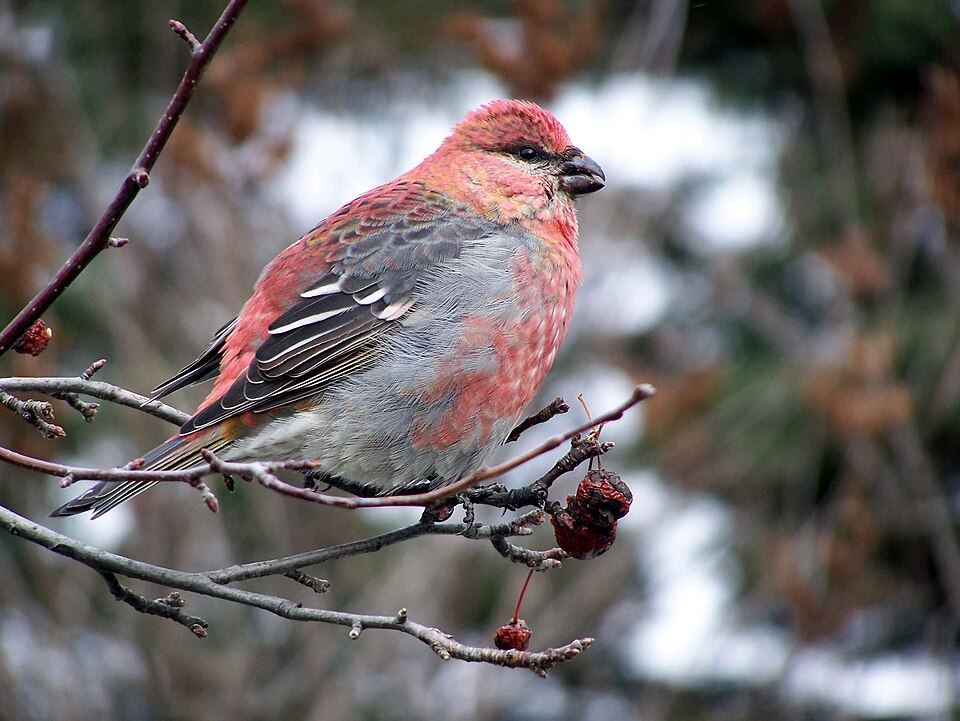
ギンザンマシコ (Pinicola enucleator) ギンザンマシコ
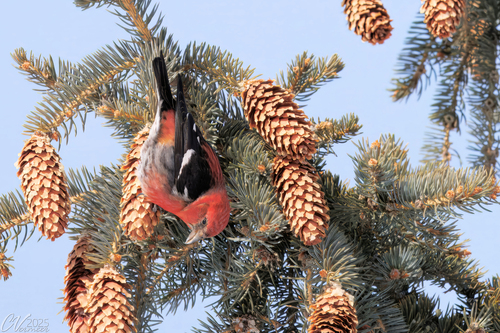
ナキイスカ (Loxia leucoptera) ナキイスカ

メディア

読み込み中…

要点

ギンザンマシコとナキイスカの最も信頼できるフィールドマークは、ナキイスカに見られる太い白い翼帯の存在で、すべての年齢で確認でき、特に飛行中に目立つ。ギンザンマシコにも翼帯はあるが、目立たず、全体的な翼の模様はよりシンプルである。構造的には、ギンザンマシコははるかに大きく、ずっしりとしており、太くてまっすぐな円錐形のくちばしを持っている。一方、ナキイスカは小さく、スリムで、特徴的な交差したくちばしを持っている。両種の成鳥オスは赤色になることがあるが、ギンザンマシコのオスはバラ色で大きく、ナキイスカのオスは小さく、ラズベリー色で、より対照的な翼の模様を持っている。両種の雌と幼鳥は黄味がかっているかオリーブ色だが、ギンザンマシコは常にずっしりとしており、crossbillの白い翼帯が欠けている。大きくてゆっくり動く、ウソのようなフィンチで、シンプルな翼と太いくちばしを持っているのがギンザンマシコであり、2つの白い翼帯を持つ小さくて活発な鋭いくちばしの鳥がナキイスカである。

識別のコツ

  1. 白い翼帯: すべての年齢と性別のナキイスカは、2つの太い白い翼帯と白い三次羽の先端を示し、止まっている時も飛んでいる時も確認できる。ギンザンマシコには白い翼帯があるが、目立たず、シャープな三次羽の先端が欠けている。全体的に翼はよりシンプルである。
  2. くちばしの形: ギンザンマシコは太くてまっすぐな円錐形のくちばしを持っている。ナキイスカは細くて交差したくちばしを持っている。crossbillの独特なくちばしの形は近距離で診断的だが、遠くや暗い場所では見えにくいことがある。
  3. サイズと構造: ギンザンマシコははるかに大きく、ずっしりとしており、重い体、大きな頭、長い尾を持っている。ナキイスカは小さく、スリムで、より活発で、短い尾と小さな頭を持っている。
  4. 成鳥オスの色: ギンザンマシコのオスは、頭、背中、尻に均一なバラ色の洗いがかかっている。ナキイスカのオスはラズベリー色で、しばしば明るく、よりピンクがかっており、赤い体と黒っぽい翼/翼帯の間に強いコントラストがある。
  5. 雌/幼鳥の色: 両種は雌と幼鳥に黄味がかっているかオリーブ色のトーンを示すことがあるが、ギンザンマシコは常にずっしりとしており、crossbillの白い翼帯が欠けている。ナキイスカの雌は上面が緑がかった黄色だが、常に翼帯を示す。
  6. 飛行中の翼の模様: ナキイスカの白い翼帯と三次羽の先端は飛行中に明らかで、黒っぽい翼との強いコントラストを作る。ギンザンマシコの翼はより均一で、コントラストが少ない。
  7. 尾: 両者ともに分かれた尾を持っているが、ギンザンマシコの尾は長く、より頑丈である。これは微妙で、他のマークと組み合わせて使用するのが最適である。
  8. 行動: ギンザンマシコは遅く、温和で、しばしば長時間直立している。ナキイスカは活発で、アクロバティックで、しばしば円錐からぶら下がって餌を食べる。
  9. 群れのサイズ: ナキイスカは特に暴発年に大きくて騒がしい群れを形成することが多い。ギンザンマシコはより小さなグループやペアでいることが多い。
  10. 生息地: 両者ともに針葉樹にいるが、ギンザンマシコは冬により多様な生息地、都市部を含む場所で見られることがある。ナキイスカは針葉樹の林により厳密に結びついている。
  11. 鳴き声: ギンザンマシコは遅い、口笛のような呼び声と短いさえずりを出す。ナキイスカは高く、弱いチップ音を持っている。鳥がよく見えない場合は、違いを聞くのが役立つ。
  12. 印象: ギンザンマシコはウソのような印象を与える:大きく、重く、遅い。ナキイスカは小さなフィンチのようで、素早く、敏捷で、エネルギッシュである。
  13. 落とし穴: 一部のRed Crossbillsは微かな翼帯を示すことがあるが、ナキイスカほど太くはない。ギンザンマシコは決してシャープな白い三次羽の先端や強い二重翼帯を示さない。
  14. 年齢の混乱: 幼いPine Grosbeaksはより毛羽立っていてシンプルで、強い翼の模様が欠けている。幼いTwo-barred Crossbillsは常に白い翼帯を示す。
  15. 性別の混乱: 両種の雌は鈍いが、構造と翼の模様は分離のために信頼できる。

大きさ

ギンザンマシコははるかに大きく、全長20–25.5 cm、体重52–78 g(平均56.4 g)である[wikipedia]。対照的に、ナキイスカは14.5–17 cm、25–40 gと非常に小さい[wikipedia]。フィールドでは、ギンザンマシコはずっしりとして重い体に見え、大きな頭と太くてまっすぐなくちばしを持っている。ナキイスカは明らかに小柄で、小さな頭と細くて交差したくちばしを持っている。サイズの違いは、並べて見たり、スケールのために馴染みのある種と一緒に見たりすると通常明らかである。

羽色

行動

ギンザンマシコは遅い動きで、しばしば小さなグループやペアで静かに餌を食べ、時には温和で鈍い印象を与える。彼らは直立して止まり、意図的に動く。ナキイスカははるかに活発で、しばしば群れで見られ、針葉樹の間を落ち着きなく動き、頻繁に逆さまになって種を取り出す。彼らの飛行は、grosbeakのより遅く、より直接的な飛行に比べて、より跳ねるようでエネルギッシュである。

生息環境

両種は北アメリカとユーラシアの北緯にある針葉樹林に関連している[wikipedia]。しかし、ギンザンマシコはより密な成熟した針葉樹の森で見られる可能性が高く、冬には開けた森や都市部にさえ出かけることがある。ナキイスカは針葉樹の林により厳密に結びついており、特にトウヒやカラマツに関連しており、特に暴発時には大きくてさまよう群れを形成する可能性が高い。

声

ギンザンマシコは口笛のような"pui pui pui"または"chii-vli"と短い音楽的なさえずりを出す[wikipedia]。ナキイスカはRed Crossbillに比べて高く、弱いチップ音を持っており、一般的によりシャープでフィンチのような呼び声である。呼び声の違いは、鳥がよく見えない場合に役立つが、両種は餌を食べているときは静かになることがある。

より良い説明を送る

比較と同じ項目を使ってください。文章はすぐに公開されます。

The most reliable field mark between Pine Grosbeak and Two-barred Crossbill is the presence of bold white wingbars on the Two-barred Crossbill, visible on all ages and especially striking in flight; Pine Grosbeak also has wingbars, but they are less prominent and the overall wing pattern is plainer. Structurally, Pine Grosbeak is much larger and bulkier with a thick, straight conical bill, while Two-barred Crossbill is smaller, slimmer, and has a distinctive crossed bill. Adult males of both species can be red, but Pine Grosbeak males are rose-red and larger, while Two-barred Crossbill males are smaller and raspberry-red with a more contrasting wing pattern. Females and immatures of both species are yellowish or olive, but Pine Grosbeak is always much bulkier and lacks the crossbill's white wingbars. If you see a large, slow-moving, bullfinch-like finch with a plain wing and thick bill, it's a Pine Grosbeak; a smaller, active, sharp-billed bird with two white wingbars is a Two-barred Crossbill.

  1. White wingbars: Two-barred Crossbill of all ages and sexes shows two bold white wingbars and white tertial tips, visible both perched and in flight. Pine Grosbeak has white wingbars, but they are less bold and lack the crisp tertial tips; overall, the wing is much plainer.
  2. Bill shape: Pine Grosbeak has a thick, straight, conical bill; Two-barred Crossbill has a slender, crossed bill. The crossbill's unique bill shape is diagnostic at close range but can be hard to see at distance or in poor light.
  3. Size and structure: Pine Grosbeak is much larger and bulkier, with a heavy body, large head, and long tail. Two-barred Crossbill is smaller, slimmer, and more active, with a shorter tail and smaller head.
  4. Adult male color: Pine Grosbeak males are rose-red with a uniform wash over head, back, and rump. Two-barred Crossbill males are raspberry-red, often brighter and more pinkish, with stronger contrast between the red body and blackish wings/wingbars.
  5. Female/immature color: Both species can show yellowish or olive tones in females and immatures, but Pine Grosbeak is always bulkier and lacks the crossbill's white wingbars. Two-barred Crossbill females are greenish-yellow above but always show the wingbars.
  6. Wing pattern in flight: Two-barred Crossbill's white wingbars and tertial tips are obvious in flight, making a strong contrast with the blackish wing. Pine Grosbeak's wing is more uniform, with less contrast.
  7. Tail: Both have forked tails, but Pine Grosbeak's is longer and more robust; this is subtle and best used in combination with other marks.
  8. Behavior: Pine Grosbeak is slow, tame, and often sits upright for long periods. Two-barred Crossbill is active, acrobatic, and often feeds hanging from cones.
  9. Flock size: Two-barred Crossbill often forms large, noisy flocks, especially in irruption years. Pine Grosbeak is more often in small groups or pairs.
  10. Habitat: Both in conifers, but Pine Grosbeak can be found in more varied habitats in winter, including urban areas. Two-barred Crossbill is more strictly tied to conifer stands.
  11. Vocalizations: Pine Grosbeak gives a slow, whistled call and a short warble; Two-barred Crossbill has a higher, weaker chip call. Listen for differences if the birds are not seen well.
  12. Jizz: Pine Grosbeak gives a bullfinch-like impression: big, heavy, slow. Two-barred Crossbill is more like a small finch: quick, agile, and energetic.
  13. Pitfalls: Some Red Crossbills can show faint wingbars, but never as bold as Two-barred Crossbill. Pine Grosbeak never shows the crisp white tertial tips or the strong double wingbar.
  14. Age confusion: Immature Pine Grosbeaks are shaggier and plainer, lacking any strong wing pattern; immature Two-barred Crossbills always show the white wingbars.
  15. Sex confusion: Both species' females are duller, but structure and wing pattern remain reliable for separation.

Pine Grosbeak is substantially larger, measuring 20–25.5 cm in length and weighing 52–78 g (average 56.4 g) [wikipedia]. In contrast, Two-barred Crossbill is much smaller at 14.5–17 cm and 25–40 g [wikipedia]. In the field, Pine Grosbeak appears bulky and heavy-bodied, with a large head and thick, straight bill. Two-barred Crossbill is noticeably more petite, with a smaller head and a slender, crossed bill. The size difference is usually obvious if seen side-by-side or with familiar species for scale.

  • Juveniles/immatures: Both species have less contrasting plumage when young, but Two-barred Crossbill always shows two bold white wingbars and white tertial tips, even in immature plumages. Pine Grosbeak immatures are overall shaggier and plainer, with less distinct wingbars and no white tertial tips.
  • Adult males: Pine Grosbeak males are rose-red on the head, back, and rump, with black wings and tail and a large conical bill. Their wingbars are present but not as sharply defined as on the crossbill. Two-barred Crossbill males are raspberry-red on the head and upperparts, with blackish scapulars edged pink and two prominent white wingbars. Their wings also show white tertial tips, making the pattern much more striking in flight or at rest.
  • Adult females: Pine Grosbeak females are olive-yellow on the head and rump, grey on the back and underparts, and lack any strong wing pattern. Two-barred Crossbill females are greenish-yellow above but always show the two white wingbars and white tertial tips.
  • Bill: Pine Grosbeak has a thick, straight, conical bill; Two-barred Crossbill has a slender, crossed bill, which is diagnostic at close range.
  • Tail: Both species have forked tails, but Pine Grosbeak's is longer and more robust.

Pine Grosbeak is slow-moving, often feeding quietly in small groups or pairs, sometimes appearing tame and sluggish. They perch upright and move deliberately. Two-barred Crossbill is much more active, often seen in flocks, moving restlessly among conifers, and frequently hanging upside down to extract seeds. Their flight is more bounding and energetic compared to the grosbeak's slower, more direct flight.

Both species are associated with coniferous forests in the northern latitudes of North America and the Palearctic [wikipedia]. However, Pine Grosbeak is more likely to be found in denser, mature conifer woods and sometimes ventures into open woods or even urban areas in winter. Two-barred Crossbill is more strictly tied to conifer stands, especially spruce and larch, and is more likely to form large, wandering flocks, especially during irruptions.

Pine Grosbeak gives a whistled "pui pui pui" or "chii-vli" and a short, musical warble as its song [wikipedia]. Two-barred Crossbill has a weaker, higher-pitched chip call compared to Red Crossbill; its calls are generally sharper and more finch-like. The difference in calls can be useful if birds are not seen well, but both species can be quiet when feeding.

変更を破棄しますか?

保存していない編集があります。今離れると失われます。

ギンザンマシコ · ナキイスカ · 苦手な鳥