

Motmot

アフリカスズメフクロウ 対 ヨコジマスズメフクロウ

Glaucidium perlatum 対 Glaucidium capense

アフリカスズメフクロウとヨコジマスズメフクロウのクイズ
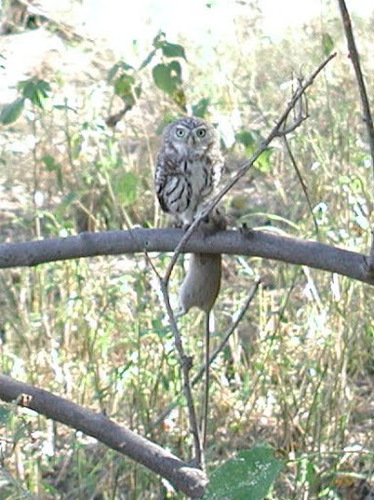
アフリカスズメフクロウ (Glaucidium perlatum) アフリカスズメフクロウ
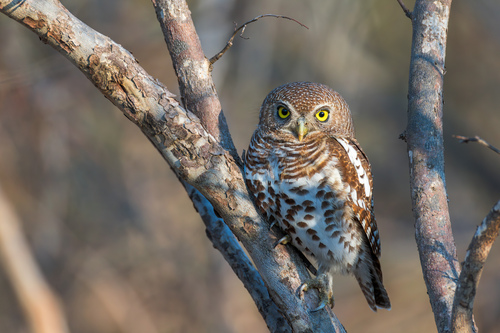
ヨコジマスズメフクロウ (Glaucidium capense) ヨコジマスズメフクロウ

メディア

読み込み中…

要点

ヨコジマスズメフクロウとアフリカスズメフクロウを区別する最も信頼できる方法は、頭の後ろにある太い黒と白の「偽の目」を探すことです。これは、すべての年齢のヨコジマスズメフクロウにのみ存在します。ヨコジマスズメフクロウは頭と背中に白い斑点を示し、アフリカスズメフクロウは上部が細かく縞模様で「目」がありません。飛行中、ヨコジマスズメフクロウの上面と尾は大胆に斑点と縞模様があり、アフリカスズメフクロウは細かい縞模様と白い肩のストライプを示します。どちらも小型の昼行性のフクロウですが、頭の模様と上面のマーキングに注意を払うことで、特に止まっているかよく見える鳥に対してはほとんどの混乱を解消できます。

識別のコツ

  1. False 'eyes' on nape: ヨコジマスズメフクロウは、頭の後ろに白で縁取られた2つの太い黒い斑点を常に示します。アフリカスズメフクロウはこれを示さず、これはすべての年齢と季節において最も信頼できるフィールドマークです。
  2. Head and back pattern: ヨコジマスズメフクロウは頭と背中に白い斑点が多く見られ、アフリカスズメフクロウは細かく縞模様で斑点がありません。
  3. Shoulder stripe: アフリカスズメフクロウは止まっているときに肩(肩羽と大覆羽)に白いストライプを示しますが、ヨコジマスズメフクロウはこれを欠いています。
  4. Upperwing and tail in flight: ヨコジマスズメフクロウは、飛行中や止まっているときに茶色の飛行羽と尾に斑点を形成する太い白い斑点を示します。アフリカスズメフクロウは、赤褐色のトーンで細かい均一な縞模様を示し、大きな白い斑点はありません。
  5. Facial disc and eyebrow: ヨコジマスズメフクロウはオフホワイトの顔の円盤を持ち、明確な眉はありません。アフリカスズメフクロウは目の上に狭い白い眉を持ち、より「縞模様」の外観を与えます。
  6. Breast and underparts: ヨコジマスズメフクロウは縞模様のある胸を持ち、アフリカスズメフクロウは細かく縞模様のある胸と白い腹部に茶色の斑点やしみがあります。
  7. Tail behavior: ヨコジマスズメフクロウは警戒したり興奮したりすると尾をしばしば振ったり揺らしたりします。これは見られた場合の有用な行動の手がかりです。
  8. Roosting behavior: アフリカスズメフクロウは木の空洞や密な覆いの中で止まることを好みますが、ヨコジマスズメフクロウはしばしば茂みや低木の下でよりオープンに止まります。
  9. Juvenile confusion: 若いヨコジマスズメフクロウでも「偽の目」を保持しますが、頭と背中の斑点は減少することがあります。幼いアフリカスズメフクロウはこれらの「目」を示しません。
  10. Bill and feet color: 両種は緑がかった黄色のくちばしと黄色の足を持っているため、これは信頼できる区別にはなりません。
  11. Eye color: 両方とも黄色の目を持っているため、これを区別に使用しないでください。
  12. Size and structure: 両方ともサイズと形が似ているため、直接比較がない限り、これに頼らないでください。
  13. Habitat: 重複は広範ですが、ヨコジマスズメフクロウはオープンな森林やサバンナで見られる可能性が高く、アフリカスズメフクロウは森林や森林の端、時には深い森林に生息します。
  14. Mobbed by small birds: 両方とも頻繁に小鳥に襲われるため、これは診断的ではありません。
  15. Vocalization: メモには記載されていません。地元の知識がない限り、声を区別に使用しないでください。

大きさ

両種はサイズが非常に似ており、ヨコジマスズメフクロウは平均約82g、長さは17〜21 cmで、アフリカスズメフクロウは約17 cmです。ヨコジマスズメフクロウの雌はやや重い場合があります(最大100g)が、これは信頼できるフィールドマークではありません。構造的には、両方ともコンパクトで短い尾と丸い翼を持ち、サイズだけではフィールドでの有用な区別にはなりません。

羽色

幼鳥と成鳥のヨコジマスズメフクロウは、常に白で縁取られた2つの目立つ黒い「偽の目」を首の後ろに示し、これは独特で診断的な特徴です。彼らの上面はシナモン色の茶色で、明確な白い斑点があります。尾と飛行羽は茶色で、大きな白い斑点がバーを形成しています。幼鳥は頭と背中の斑点が減少することがありますが、「偽の目」は明らかに残ります。対照的に、すべての年齢のアフリカスズメフクロウはこれらの「目」を欠き、代わりに灰褐色の上面に細かいバフの縞模様があり、狭い白い眉と肩に白いストライプ(肩羽と大覆羽によって形成される)があります。胸は細かく縞模様があり、胸部/側面は白で茶色の斑点があります。飛行中、アフリカスズメフクロウの翼と尾は赤褐色で細かく縞模様があり、白い肩のストライプは止まっている鳥に見えます。両方の下羽は白ですが、上羽のパターンはヨコジマスズメフクロウではより斑点が多く、アフリカスズメフクロウでは縞模様です。両方とも黄色の目と緑がかった黄色のくちばしを持っていますが、ヨコジマスズメフクロウの顔の円盤はよりオフホワイトです。

行動

両種は部分的に昼行性で、オープンで低い位置に止まっているのがよく見られます。ヨコジマスズメフクロウは特に昼間に活発で、警戒したり興奮したりすると尾をしばしば振ったり揺らしたりし、邪魔されると止まり木を変えます。アフリカスズメフクロウも昼間に活動しますが、覆いの中で止まる傾向があり、しばしば木の空洞に生息し、夕暮れや夜明けに呼ぶ可能性が高いです。両方とも発見されると頻繁に小鳥に襲われます。ヨコジマスズメフクロウは昼間に水浴びをしているのが見られることがあり、狩りをしているときに頭を上下に動かしたり尾を振ったりします。アフリカスズメフクロウは、獲物を探してオープンに止まっているのが見られる可能性が高いですが、両方とも低い止まり木から狩りをし、小型の脊椎動物や無脊椎動物のさまざまな種類を捕まえます。

生息環境

両種はサハラ以南のアフリカに生息し、一部の地域で分布が重なっています。ヨコジマスズメフクロウはオープンな森林やサバンナに広く分布し、通常は小さな茂みや低木の下で止まります。アフリカスズメフクロウは南部、中央、東部アフリカの多くに見られ、しばしば森林や森林の端に生息し、止まるためや巣を作るために木の空洞を使用する可能性が高いです。生息地の重複は一般的であり、文脈だけでは診断的ではありません。

より良い説明を送る

比較と同じ項目を使ってください。文章はすぐに公開されます。

The most reliable way to separate Pearl-spotted Owlet from African Barred Owlet is by looking for the bold black-and-white 'false eyes' on the back of the head—present only on Pearl-spotted Owlet of all ages. Pearl-spotted shows white spots on the head and back, while African Barred Owlet is finely barred above and lacks the 'eyes.' In flight, Pearl-spotted Owlet’s upperparts and tail are boldly spotted and barred, while African Barred Owlet shows fine barring and a white shoulder stripe. Both are small, diurnal owlets, but careful attention to head pattern and upperpart markings will resolve most confusion, especially with perched or well-seen birds.

  1. False 'eyes' on nape: Pearl-spotted Owlet always shows two bold black spots outlined in white on the back of the head. African Barred Owlet never shows these; this is the single most reliable field mark for all ages and seasons.
  2. Head and back pattern: Pearl-spotted is heavily spotted white on the head and back, while African Barred is finely barred with buff and lacks any spots.
  3. Shoulder stripe: African Barred Owlet shows a white stripe across the shoulder (scapulars and greater coverts) when perched, which Pearl-spotted lacks.
  4. Upperwing and tail in flight: Pearl-spotted shows bold white spots forming bars on brown flight feathers and tail, visible in flight and when perched. African Barred shows fine, even barring with rufous tones and no large white spots.
  5. Facial disc and eyebrow: Pearl-spotted has an off-white facial disc and no distinct eyebrow. African Barred has a narrow white eyebrow above the eye, adding to a more 'barred' look.
  6. Breast and underparts: Pearl-spotted has a streaked breast, while African Barred has a finely barred chest and white underparts with brown spots or blotches.
  7. Tail behavior: Pearl-spotted often flicks or wags its tail when alarmed or excited, a useful behavioral clue if seen.
  8. Roosting behavior: African Barred Owlet prefers to roost in tree cavities or dense cover, while Pearl-spotted often roosts more openly under bushes or shrubs.
  9. Juvenile confusion: Even young Pearl-spotted Owlets retain the 'false eyes,' though head and back spots may be reduced. Juvenile African Barred Owlet never shows these 'eyes.'
  10. Bill and feet color: Both species have greenish-yellow bills and yellow feet, so this is not a reliable separator.
  11. Eye color: Both have yellow eyes; do not use this as a separator.
  12. Size and structure: Both are similar in size and shape; do not rely on this unless you have direct comparison.
  13. Habitat: Overlap is extensive, but Pearl-spotted is more likely in open woodland and savanna, African Barred in woodland and forest edge, sometimes deeper forest.
  14. Mobbed by small birds: Both are frequently mobbed, so this is not diagnostic.
  15. Vocalization: Not described in the notes; do not use voice for separation unless you have local knowledge.

Both species are very similar in size, with Pearl-spotted Owlet averaging around 82g and 17–21 cm in length, and African Barred Owlet at about 17 cm long. Pearl-spotted Owlet females can be slightly heavier (up to 100g), but this is not a reliable field mark. Structurally, both are compact with short tails and rounded wings, and size alone is not a useful separator in the field.

Juvenile and adult Pearl-spotted Owlets always show two prominent black 'false eyes' outlined in white on the nape, a unique and diagnostic feature. Their upperparts are cinnamon-brown with distinct white spotting, and the tail and flight feathers are brown with large white spots forming bars. Juveniles may have reduced head and back spots but the 'false eyes' remain obvious. In contrast, African Barred Owlet of all ages lacks these 'eyes' and instead has fine buff barring across the greyish-brown upperparts, with a narrow white eyebrow and a white stripe across the shoulder (formed by scapulars and greater coverts). The chest is finely barred, and the breast/flanks are white with brown spots. In flight, African Barred Owlet’s wings and tail are finely barred with rufous, and the white shoulder stripe is visible on perched birds. Underwings are white in both, but the upperwing pattern is more spotted in Pearl-spotted and barred in African Barred. Both have yellow eyes and greenish-yellow bills, but Pearl-spotted’s facial disc is more off-white.

Both species are partly diurnal and often seen perched in open, low positions. Pearl-spotted Owlet is especially active by day, often flicking or wagging its tail when alarmed or excited, and will change perches if disturbed. African Barred Owlet is also active during the day but tends to roost within cover, often in tree cavities, and is more likely to call at dusk and dawn. Both are frequently mobbed by small birds when discovered. Pearl-spotted Owlet may be seen bathing by day and often bobs its head or flicks its tail while hunting. African Barred Owlet is more likely to be seen perched openly scanning for prey, but both hunt from low perches and take a variety of small vertebrates and invertebrates.

Both species occur in sub-Saharan Africa with overlapping ranges in some regions. Pearl-spotted Owlet is widespread in open woodland and savanna, typically roosting below canopies of small bushes or shrubs. African Barred Owlet is found in much of southern, central, and eastern Africa, often in woodland and forest edge, and is more likely to use tree cavities for roosting and nesting. Habitat overlap is common, so context alone is rarely diagnostic.

変更を破棄しますか?

保存していない編集があります。今離れると失われます。

アフリカスズメフクロウ · ヨコジマスズメフクロウ · 苦手な鳥