

Pearl-spotted Owlet vs African Barred Owlet
Glaucidium perlatum contro Glaucidium capense
Fai un quiz con Pearl-spotted Owlet e African Barred Owlet
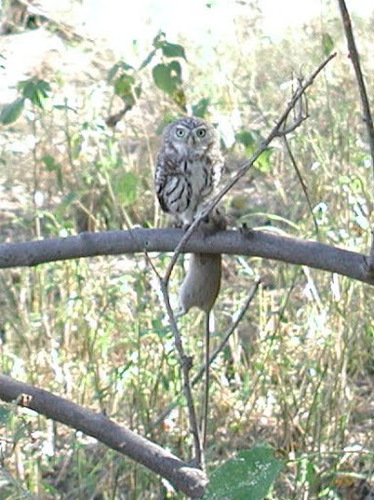 Pearl-spotted Owlet
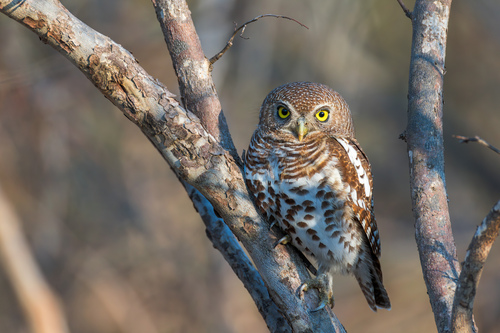 African Barred Owlet
In breve
Il modo più affidabile per separare il Pearl-spotted Owlet dall'African Barred Owlet è cercare i bold black-and-white 'false eyes' sulla parte posteriore della testa—presenti solo sul Pearl-spotted Owlet di tutte le età. Il Pearl-spotted mostra macchie bianche sulla testa e sulla schiena, mentre l'African Barred Owlet è finemente barrato sopra e manca degli 'occhi.' In volo, le parti superiori e la coda del Pearl-spotted Owlet sono audacemente macchiate e barrate, mentre l'African Barred Owlet mostra una fine barratura e una striscia bianca sulla spalla. Entrambi sono piccoli, owlets diurni, ma un'attenta attenzione al modello della testa e ai segni delle parti superiori risolverà la maggior parte della confusione, specialmente con uccelli posati o ben visibili.
Consigli di identificazione
- False 'eyes' on nape: Il Pearl-spotted Owlet mostra sempre due audaci macchie nere contornate di bianco sulla parte posteriore della testa. L'African Barred Owlet non mostra mai questi; questo è il segno di campo più affidabile per tutte le età e stagioni.
- Head and back pattern: Il Pearl-spotted è pesantemente macchiato di bianco sulla testa e sulla schiena, mentre l'African Barred è finemente barrato con buff e manca di macchie.
- Shoulder stripe: L'African Barred Owlet mostra una striscia bianca sulla spalla (scapolari e copritrici maggiori) quando è posato, che il Pearl-spotted manca.
- Upperwing and tail in flight: Il Pearl-spotted mostra audaci macchie bianche che formano barre sulle piume di volo marroni e sulla coda, visibili in volo e quando è posato. L'African Barred mostra una barratura fine e uniforme con toni rufous e nessuna grande macchia bianca.
- Facial disc and eyebrow: Il Pearl-spotted ha un disco facciale off-white e nessuna sopracciglia distinta. L'African Barred ha una stretta sopracciglia bianca sopra l'occhio, che contribuisce a un aspetto più 'barrato'.
- Breast and underparts: Il Pearl-spotted ha un petto striato, mentre l'African Barred ha un petto finemente barrato e parti inferiori bianche con macchie o macchie marroni.
- Tail behavior: Il Pearl-spotted spesso muove o scossa la coda quando è allarmato o eccitato, un utile indizio comportamentale se visto.
- Roosting behavior: L'African Barred Owlet preferisce posarsi in cavità degli alberi o in copertura densa, mentre il Pearl-spotted spesso si posiziona più apertamente sotto cespugli o arbusti.
- Juvenile confusion: Anche i giovani Pearl-spotted Owlets mantengono i 'false eyes,' anche se le macchie sulla testa e sulla schiena possono essere ridotte. Il giovane African Barred Owlet non mostra mai questi 'occhi.'
- Bill and feet color: Entrambe le specie hanno becchi giallo-verdastri e piedi gialli, quindi questo non è un separatore affidabile.
- Eye color: Entrambi hanno occhi gialli; non usare questo come separatore.
- Size and structure: Entrambi sono simili in dimensioni e forma; non fare affidamento su questo a meno che tu non abbia un confronto diretto.
- Habitat: L'overlap è esteso, ma il Pearl-spotted è più probabile in boschi aperti e savana, l'African Barred in boschi e margini forestali, a volte in foreste più profonde.
- Mobbed by small birds: Entrambi sono frequentemente molestati, quindi questo non è diagnostico.
- Vocalization: Non descritto nelle note; non usare la voce per la separazione a meno che tu non abbia conoscenze locali.
Taglia
Entrambe le specie sono molto simili in dimensioni, con il Pearl-spotted Owlet che pesa in media circa 82g e misura 17–21 cm di lunghezza, e l'African Barred Owlet di circa 17 cm di lunghezza. Le femmine del Pearl-spotted Owlet possono essere leggermente più pesanti (fino a 100g), ma questo non è un segno di campo affidabile. Strutturalmente, entrambi sono compatti con code corte e ali arrotondate, e la dimensione da sola non è un separatore utile sul campo.
Piumaggio
I giovani e gli adulti Pearl-spotted Owlets mostrano sempre due prominenti 'false eyes' nere contornate di bianco sulla nuca, una caratteristica unica e diagnostica. Le loro parti superiori sono marroni-cannella con macchie bianche distinte, e la coda e le piume di volo sono marroni con grandi macchie bianche che formano barre. I giovani possono avere macchie sulla testa e sulla schiena ridotte, ma i 'false eyes' rimangono evidenti. Al contrario, l'African Barred Owlet di tutte le età manca di questi 'occhi' e ha invece una fine barratura buff sulle parti superiori grigio-marroni, con una stretta sopracciglia bianca e una striscia bianca sulla spalla (formata da scapolari e copritrici maggiori). Il petto è finemente barrato, e il petto/i fianchi sono bianchi con macchie marroni. In volo, le ali e la coda dell'African Barred Owlet sono finemente barrate con rufous, e la striscia bianca sulla spalla è visibile sugli uccelli posati. Le ali inferiori sono bianche in entrambi, ma il modello delle ali superiori è più macchiato nel Pearl-spotted e barrato nell'African Barred. Entrambi hanno occhi gialli e becchi giallo-verdastri, ma il disco facciale del Pearl-spotted è più off-white.
Comportamento
Entrambe le specie sono parzialmente diurne e spesso viste posate in posizioni aperte e basse. Il Pearl-spotted Owlet è particolarmente attivo durante il giorno, spesso muovendo o scotendo la coda quando è allarmato o eccitato, e cambierà posato se disturbato. L'African Barred Owlet è anche attivo durante il giorno ma tende a posarsi all'interno della copertura, spesso in cavità degli alberi, ed è più probabile che chiami al crepuscolo e all'alba. Entrambi sono frequentemente molestati da piccoli uccelli quando vengono scoperti. Il Pearl-spotted Owlet può essere visto fare il bagno durante il giorno e spesso muove la testa o scossa la coda mentre caccia. L'African Barred Owlet è più probabile che venga visto posato apertamente a cercare prede, ma entrambi cacciano da posatoi bassi e prendono una varietà di piccoli vertebrati e invertebrati.
Habitat
Entrambe le specie si trovano nell'Africa sub-sahariana con aree sovrapposte in alcune regioni. Il Pearl-spotted Owlet è diffuso in boschi aperti e savana, tipicamente posandosi sotto le chiome di piccoli cespugli o arbusti. L'African Barred Owlet si trova in gran parte dell'Africa meridionale, centrale e orientale, spesso in boschi e margini forestali, ed è più probabile che utilizzi cavità degli alberi per posarsi e nidificare. L'overlap dell'habitat è comune, quindi il contesto da solo è raramente diagnostico.
Pearl-spotted Owlet · African Barred Owlet · I miei uccelli difficili