

Motmot

サケイ 対 シロハラサケイ

Syrrhaptes paradoxus 対 Pterocles alchata

サケイとシロハラサケイのクイズ
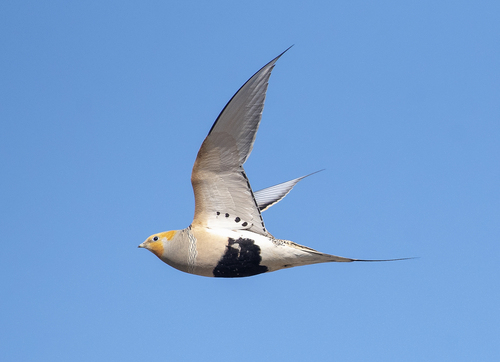
サケイ (Syrrhaptes paradoxus) サケイ
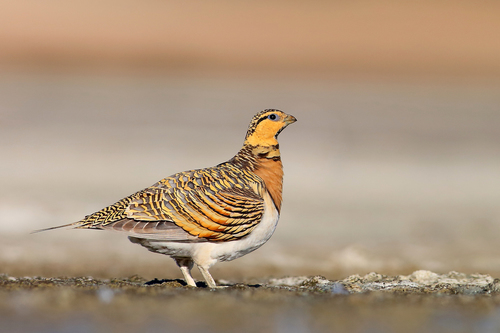
シロハラサケイ (Pterocles alchata) シロハラサケイ

メディア

読み込み中…

要点

サケイとシロハラサケイを区別する最も信頼できるフィールドマークは、飛行中のアンダーウィングと腹部のパターンです:Pallas'sは特徴的な黒い腹部の斑点と淡いアンダーウィングを示し、シロハラサケイは明るい白い下部とアンダーウィングを持ち、黒い腹部はありません。Pallas'sの成鳥オスは灰色の頭と胸にオレンジ色の顔を持ち、シロハラサケイのオスは黄緑色の頭と首に赤褐色の胸帯を示します。両種は長い尖った翼と尾を持っていますが、シロハラサケイのオスは特に長い中央の尾のストリーマーを持っています。両種の雌は鈍い色合いですが、Pallas'sの雌は上部により多くの斑点があり、胸帯がありません。すべての年齢において、最も迅速に区別するためには、飛行中のアンダーウィングと腹部のパターンに注目してください。

識別のコツ

  1. Flight underwing and belly pattern (all ages): サケイは常に大胆な黒い腹部の斑点と淡いアンダーウィングを示します;シロハラサケイは白い下部とアンダーウィングを持ち、黒い腹部はありません。
  2. Tail shape and length (males): シロハラサケイのオスは非常に長いスレートグレーの中央尾ストリーマーを持ち、ピンテールの外観を与えます;Pallas'sは長く尖った尾を持っていますが、そのような際立ったストリーマーはありません。
  3. Head and face (adult males): Pallas'sのオスは灰色の頭と胸にオレンジ色の顔と灰色の胸帯を持ち、シロハラサケイのオスは黄緑色の頭と首、黄色い頬、薄い黒い縁の赤褐色の胸帯を持っています。
  4. Breast band (adult males): Pallas'sのオスの胸帯は灰色です;シロハラサケイのオスの胸帯は赤褐色で黒い縁があります。
  5. Upperpart barring (females and non-breeding): Pallas'sの雌は上部により多くの斑点があり、胸帯がありません;シロハラサケイの雌は鈍く、頬と首は金色のバフで、複数の黒い胸のストライプがあります。
  6. Underwing coverts in flight: シロハラサケイは明るい白いアンダーウィングカバーと白い下部を示し、Pallas'sのアンダーウィングは淡いですがそれほど明るくなく、常に黒い腹部の斑点があります。
  7. Wing pattern in flight: シロハラサケイは淡い縁のある黒い一次羽を持ち、翼の前縁と後縁に黒い縁を作ります;これはPallas'sには記載されていません。
  8. Bill and feet: Pallas'sは小さな足を持ち、後ろの指がなく、前の指が融合していて、爪のような外観をしていますが、これはフィールドではめったに見えません。
  9. Jizz in flight: 両種は速く、直接的な飛行を持ち、長い尖った翼を持っていますが、シロハラサケイはオスの尾のストリーマーのためにより細長く見えることがあります。
  10. Voice: 大きな「kattar-kattar」または「ga-ga-ga」の呼び声が聞こえたら、それはシロハラサケイです;Pallas'sはあまり声を出さないか、記載されていません。
  11. Habitat: 両種は開けた乾燥した平原を使用するため、片方の種の通常の範囲外でない限り、ハビタットだけに頼らないでください。
  12. Seasonal changes: シロハラサケイのオスは繁殖期の外で黒い喉の斑点を失い、上部がより斑点が増えます;Pallas'sのオスは年間を通して黒い腹部と淡いアンダーウィングを保持します。
  13. Sex differences: 両種の雌は鈍い色合いですが、Pallas'sの雌は胸帯がなく、上部により多くの斑点があります;シロハラサケイの雌は尾が短く、複数の胸のストライプがあります。
  14. Flock size: Pallas'sは非常に大きな群れ(数千)を形成することができ、これは突発年の手がかりになるかもしれません。
  15. Pitfalls: 未成熟および雌のシロハラサケイは全体的な鈍さのためにPallas'sと混同されることがありますが、飛行中のアンダーウィングと腹部のパターンは診断的です。

大きさ

両種は中型から大型のサケイで、コンパクトで頑丈な体と小さな鳩のような頭を持っています。シロハラサケイは約237.5gの平均体重が記録されており、典型的な長さは約35cmです。サケイは長さが似ており(30〜41cm)、直接的な体重の数値は利用できません。全体的に、サイズはフィールドでの強力な区別要因ではなく、両種はかなり重なり合い、似たような比率を持っています。

羽色

行動

両種は群れで行動し、特に夜明けや夕暮れに水飲み場に飛ぶときによく見られます。サケイは非常に大きな群れ(時には数千)で知られ、水を求めて長い往復(最大121km)を行うことができます。両種は速く、直接的な飛行を持ち、長い尖った翼を持っています。サケイのオスは、雛に水を運ぶために胸の羽毛を濡らすことで知られていますが、これはシロハラサケイには特に記載されていません。両種は地面に巣を作り、一部は部分的な移動性を持ち、Pallas'sにはいくつかの突発的な動きがあります。

生息環境

両種は乾燥した開けた無木の平原やステップで繁殖します。サケイは中央アジアのステップとより関連しており、シロハラサケイは南ヨーロッパ、北西アフリカ、中東、アジアの一部に生息しています。両種は植生が少ない開けた乾燥した生息地を好みます。生息地だけでは、範囲が重なっている場所や迷子の個体の区別には信頼できません。

声

シロハラサケイは通常地面では静かですが、飛行中に大きな「kattar-kattar」、鼻にかかった「ga-ga-ga」、低音の「gang gang」を発します。サケイの声は提供された情報源で詳細に記載されていません。したがって、声はシロハラサケイの特徴的な呼び声が聞こえた場合にのみ信頼できる区別要因です。

より良い説明を送る

比較と同じ項目を使ってください。文章はすぐに公開されます。

The most reliable field mark to separate Pallas's Sandgrouse from Pin-tailed Sandgrouse is the underwing and belly pattern in flight: Pallas's shows a distinctive black belly patch and pale underwings, while Pin-tailed has bright white underparts and underwings without a black belly. Adult males of Pallas's have a grey head and breast with an orange face, whereas Pin-tailed males show a yellowish-green head and neck with a reddish-brown breast band. Both species have long pointed wings and tails, but Pin-tailed males have especially long central tail streamers. Females of both are duller, but Pallas's females have more upperpart barring and lack the breast band. In all ages, focus on the underwing and belly pattern in flight for the quickest separation.

  1. Flight underwing and belly pattern (all ages): Pallas's Sandgrouse always shows a bold black belly patch and pale underwings; Pin-tailed Sandgrouse has white underparts and underwings with no black belly.
  2. Tail shape and length (males): Pin-tailed males have very long, slate-grey central tail streamers, giving a pin-tailed look; Pallas's has a long, pointed tail but lacks such pronounced streamers.
  3. Head and face (adult males): Pallas's male has a grey head and breast with an orange face and grey breast band; Pin-tailed male has a yellowish-green head and neck, yellow cheeks, and a reddish-brown breast band with thin black borders.
  4. Breast band (adult males): Pallas's male breast band is grey; Pin-tailed male's is reddish-brown with black borders.
  5. Upperpart barring (females and non-breeding): Pallas's female is more heavily barred above and lacks a breast band; Pin-tailed female is duller, golden-buff on cheeks and neck, and has multiple black breast stripes.
  6. Underwing coverts in flight: Pin-tailed shows bright white underwing coverts and white underparts; Pallas's underwings are pale but not as bright, and always with a black belly patch.
  7. Wing pattern in flight: Pin-tailed has black primaries with pale edges, creating a black rim to the wing's leading and trailing edges; this is not described for Pallas's.
  8. Bill and feet: Pallas's has small feet lacking a hind toe, with fused front toes and a paw-like appearance, but this is rarely visible in the field.
  9. Jizz in flight: Both species have fast, direct flight with long pointed wings, but Pin-tailed may appear more elongated due to the tail streamers in males.
  10. Voice: If you hear a loud "kattar-kattar" or "ga-ga-ga" call, it's Pin-tailed; Pallas's is less vocal or not described.
  11. Habitat: Both use open, dry plains, so do not rely on habitat alone unless you are outside the normal range of one species.
  12. Seasonal changes: Pin-tailed males lose the black throat patch and become more barred above outside the breeding season; Pallas's males retain the black belly and pale underwing year-round.
  13. Sex differences: Both species' females are duller, but Pallas's female lacks the breast band and is more barred above; Pin-tailed female has a shorter tail and multiple breast stripes.
  14. Flock size: Pallas's can form exceptionally large flocks (thousands), which may be a clue in irruption years.
  15. Pitfalls: Immature and female Pin-tailed may be confused with Pallas's due to overall dullness, but the underwing and belly pattern in flight remains diagnostic.

Both species are medium-large sandgrouse with a compact, sturdy body and small pigeon-like head. Pin-tailed Sandgrouse has a recorded average mass of about 237.5 g [wikidata], and a typical length of around 35 cm. Pallas's Sandgrouse is similar in length (30–41 cm), but no direct mass figure is available. Overall, size is not a strong separator in the field, as both overlap considerably and have similar proportions.

  • Juvenile/Immature/Non-breeding (flight views):
  • Pallas's Sandgrouse of all ages shows a bold black belly patch and pale underwings in flight. The upperparts are buff with barring, and the tail is long and pointed. Females and immatures are duller, with more upperpart barring and lacking the male's breast band.
  • Pin-tailed Sandgrouse of all ages shows bright white underparts and underwings in flight, with no black belly patch. The tail is long, with especially long central streamers in males. The upperparts are barred black and brownish-yellow outside breeding season; females are duller and better camouflaged, with a shorter tail than males.
  • Adult breeding males:
  • Pallas's: Grey head and breast, orange face, grey breast band, black belly patch, pale underwings.
  • Pin-tailed: Yellowish-green head and neck, yellow cheeks, reddish-brown breast band with thin black borders, white underparts, white underwing coverts, black primaries with pale edges creating black leading/trailing edge in flight, chestnut-edged outer wing coverts, long slate-grey central tail feathers.
  • Adult females:
  • Pallas's: Duller overall, more upperpart barring, lacks breast band, retains black belly patch and pale underwings.
  • Pin-tailed: Duller, golden-buff cheeks and neck, black eye-stripe, white chin, multiple black breast stripes, back and wings grey barred with black, shorter central tail feathers than male, white underparts and underwings.

Both species are gregarious and often seen in flocks, especially when flying to watering holes at dawn or dusk. Pallas's Sandgrouse is known for exceptionally large flocks (sometimes thousands) and can make long round trips (up to 121 km) to water. Both species have fast, direct flight with long pointed wings. Males of Pallas's Sandgrouse are noted for soaking their breast feathers to carry water to chicks, a behavior not specifically described for Pin-tailed. Both species nest in ground scrapes and are partial migrants, with some irruptive movements in Pallas's.

Both species breed on dry, open, treeless plains or steppes. Pallas's Sandgrouse is more associated with the central Asian steppes, while Pin-tailed Sandgrouse occurs in southern Europe, northwestern Africa, the Middle East, and parts of Asia. Both prefer open, arid habitats with little vegetation. Habitat alone is not a reliable separator where ranges overlap or for vagrants.

Pin-tailed Sandgrouse is described as usually silent on the ground but gives a loud "kattar-kattar", nasal "ga-ga-ga", and low-pitched "gang gang" in flight. Pallas's Sandgrouse's vocalizations are not described in detail in the sources provided. Thus, voice is only a reliable separator if Pin-tailed's distinctive calls are heard.

変更を破棄しますか?

保存していない編集があります。今離れると失われます。

サケイ · シロハラサケイ · 苦手な鳥