

Sirratte vs Grandule
Syrrhaptes paradoxus contro Pterocles alchata
Fai un quiz con Sirratte e Grandule
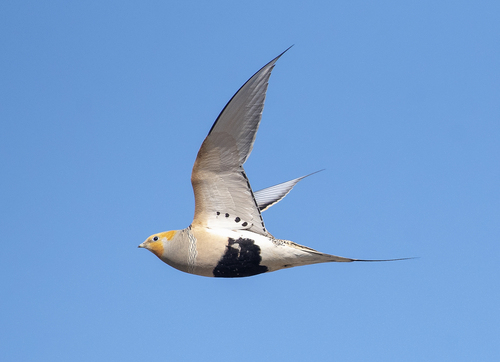 Sirratte
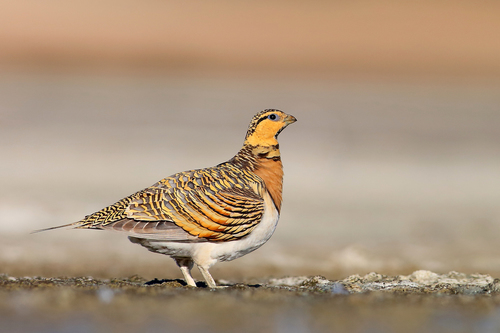 Grandule
In breve
Il segno distintivo più affidabile per separare Sirratte da Grandule è il motivo delle ali inferiori e del ventre in volo: Sirratte mostra una caratteristica macchia nera sul ventre e ali inferiori chiare, mentre Grandule ha parti inferiori e ali inferiori bianche brillanti senza una macchia nera sul ventre. I maschi adulti di Sirratte hanno una testa e un petto grigi con un volto arancione, mentre i maschi di Grandule mostrano una testa e un collo giallo-verde con una banda petto marrone-rossiccia. Entrambe le specie hanno ali e code lunghe e appuntite, ma i maschi di Grandule hanno streamer centrali della coda particolarmente lunghi. Le femmine di entrambe sono più opache, ma le femmine di Sirratte hanno più barre sulla parte superiore e mancano della banda petto. In tutte le età, concentrati sul motivo delle ali inferiori e del ventre in volo per la separazione più rapida.
Consigli di identificazione
- Motivo delle ali inferiori e del ventre in volo (tutte le età): Sirratte mostra sempre una macchia nera audace sul ventre e ali inferiori chiare; Grandule ha parti inferiori e ali inferiori bianche senza ventre nero.
- Forma e lunghezza della coda (maschi): I maschi di Grandule hanno streamer centrali della coda molto lunghi e grigio ardesia, dando un aspetto di coda a pin; Sirratte ha una coda lunga e appuntita ma manca di streamer così pronunciati.
- Testa e volto (maschi adulti): Il maschio di Sirratte ha una testa e un petto grigi con un volto arancione e una banda petto grigia; il maschio di Grandule ha una testa e un collo giallo-verde, guance gialle e una banda petto marrone-rossiccia con bordi neri sottili.
- Banda petto (maschi adulti): La banda petto del maschio di Sirratte è grigia; quella del maschio di Grandule è marrone-rossiccia con bordi neri.
- Barre sulla parte superiore (femmine e non in riproduzione): La femmina di Sirratte è più pesantemente barrata sopra e manca di una banda petto; la femmina di Grandule è più opaca, di un buff dorato sulle guance e sul collo, e ha più strisce nere sul petto.
- Copritrici delle ali inferiori in volo: Grandule mostra copritrici delle ali inferiori bianche brillanti e parti inferiori bianche; le ali inferiori di Sirratte sono chiare ma non così brillanti, e sempre con una macchia nera sul ventre.
- Motivo delle ali in volo: Grandule ha primarie nere con bordi chiari, creando un bordo nero ai bordi anteriori e posteriori dell'ala; questo non è descritto per Sirratte.
- Becco e piedi: Sirratte ha piedi piccoli privi di un dito posteriore, con dita anteriori fuse e un aspetto simile a una zampa, ma questo è raramente visibile sul campo.
- Jizz in volo: Entrambe le specie hanno un volo veloce e diretto con ali lunghe e appuntite, ma Grandule può apparire più allungato a causa degli streamer della coda nei maschi.
- Voce: Se senti un forte richiamo "kattar-kattar" o "ga-ga-ga", è Grandule; Sirratte è meno vocale o non è descritto.
- Habitat: Entrambe usano pianure aperte e secche, quindi non fare affidamento solo sull'habitat a meno che tu non sia al di fuori dell'area normale di una specie.
- Cambiamenti stagionali: I maschi di Grandule perdono la macchia nera sulla gola e diventano più barrati sopra al di fuori della stagione di riproduzione; i maschi di Sirratte mantengono il ventre nero e le ali inferiori chiare tutto l'anno.
- Differenze sessuali: Le femmine di entrambe le specie sono più opache, ma la femmina di Sirratte manca della banda petto ed è più barrata sopra; la femmina di Grandule ha una coda più corta e più strisce sul petto.
- Dimensione del gruppo: Sirratte può formare gruppi eccezionalmente grandi (migliaia), il che può essere un indizio negli anni di irruzione.
- Trappole: I giovani e le femmine di Grandule possono essere confusi con Sirratte a causa dell'opacità generale, ma il motivo delle ali inferiori e del ventre in volo rimane diagnostico.
Taglia
Entrambe le specie sono di dimensioni medio-grandi con un corpo compatto e robusto e una testa piccola simile a quella di un piccione. Grandule ha una massa media registrata di circa 237,5 g [wikidata], e una lunghezza tipica di circa 35 cm. Sirratte è simile in lunghezza (30–41 cm), ma non è disponibile un dato diretto sulla massa. In generale, la dimensione non è un forte separatore sul campo, poiché entrambe si sovrappongono considerevolmente e hanno proporzioni simili.
Piumaggio
- Giovanile/Immaturi/Non in riproduzione (viste in volo):
- Sirratte di tutte le età mostra una macchia nera audace sul ventre e ali inferiori chiare in volo. Le parti superiori sono di un buff con barre, e la coda è lunga e appuntita. Le femmine e gli immaturi sono più opachi, con più barre sulla parte superiore e privi della banda petto del maschio.
- Grandule di tutte le età mostra parti inferiori e ali inferiori bianche brillanti in volo, senza macchia nera sul ventre. La coda è lunga, con streamer centrali particolarmente lunghi nei maschi. Le parti superiori sono barrate di nero e giallo-marrone al di fuori della stagione di riproduzione; le femmine sono più opache e meglio camuffate, con una coda più corta rispetto ai maschi.
- Maschi adulti in riproduzione:
- Sirratte: testa e petto grigi, volto arancione, banda petto grigia, macchia nera sul ventre, ali inferiori chiare.
- Grandule: testa e collo giallo-verde, guance gialle, banda petto marrone-rossiccia con bordi neri sottili, parti inferiori bianche, copritrici delle ali inferiori bianche, primarie nere con bordi chiari creando un bordo nero in volo, copritrici esterne delle ali bordate di castagno, lunghe piume centrali della coda grigio ardesia.
- Femmine adulte:
- Sirratte: più opaca nel complesso, più barre sulla parte superiore, manca della banda petto, mantiene la macchia nera sul ventre e le ali inferiori chiare.
- Grandule: più opaca, guance e collo di un buff dorato, striscia nera sull'occhio, mento bianco, più strisce nere sul petto, schiena e ali grigie barrate di nero, piume centrali della coda più corte rispetto ai maschi, parti inferiori e ali inferiori bianche.
Comportamento
Entrambe le specie sono gregarie e spesso viste in gruppi, specialmente quando volano verso i punti d'acqua all'alba o al tramonto. Sirratte è nota per gruppi eccezionalmente grandi (a volte migliaia) e può fare lunghi viaggi (fino a 121 km) per bere. Entrambe le specie hanno un volo veloce e diretto con ali lunghe e appuntite. I maschi di Sirratte sono noti per inzuppare le piume del petto per portare acqua ai pulcini, un comportamento non specificamente descritto per Grandule. Entrambe le specie nidificano in scavi nel terreno e sono migratori parziali, con alcuni movimenti irruenti in Sirratte.
Habitat
Entrambe le specie nidificano su pianure o steppe secche, aperte e senza alberi. Sirratte è più associata alle steppe dell'Asia centrale, mentre Grandule si trova nel sud Europa, nel nord-ovest dell'Africa, nel Medio Oriente e in alcune parti dell'Asia. Entrambe preferiscono habitat aperti e aridi con poca vegetazione. L'habitat da solo non è un separatore affidabile dove gli areali si sovrappongono o per i vagabondi.
Voce
Grandule è descritta come solitamente silenziosa a terra ma emette un forte "kattar-kattar", un "ga-ga-ga" nasale e un "gang gang" a bassa frequenza in volo. Le vocalizzazioni di Sirratte non sono descritte in dettaglio nelle fonti fornite. Pertanto, la voce è un separatore affidabile solo se si sentono i richiami distintivi di Grandule.