

Motmot

シベリアセンニュウ 対 ヤチセンニュウ

Helopsaltes certhiola 対 Locustella naevia

シベリアセンニュウとヤチセンニュウのクイズ
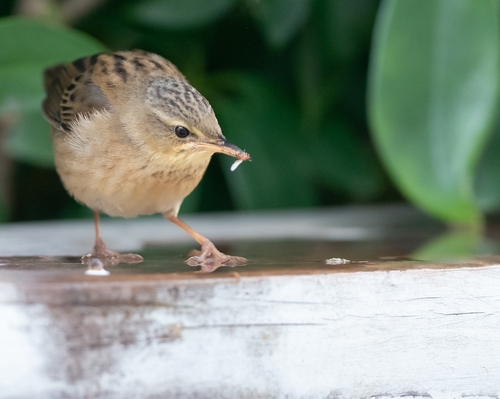
シベリアセンニュウ (Helopsaltes certhiola) シベリアセンニュウ
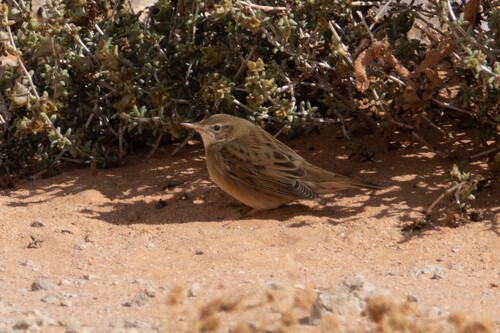
ヤチセンニュウ (Locustella naevia) ヤチセンニュウ

メディア

読み込み中…

要点

シベリアセンニュウとヤチセンニュウを区別する最も信頼できるフィールドマークは、Pallas'sに見られる尾と三次羽の白い先端の存在であり、Commonにはありません。Pallas'sはまた、より暖かい錆色の臀部と、ストライプのない白灰色の腹部を示し、Commonはより淡いオリーブブラウンの背中、ストライプのある腹部、より均一な尾を持っています。若いPallas'sは下側がより黄色いですが、両種は秘密主義的で見つけにくいことがあります。歌は重要な違いです:Pallas'sは多様でメロディックな歌を歌い、Commonは機械的で昆虫のようなリール音を出します。

識別のコツ

  1. 白い尾と三次羽の先端(Pallas'sのみ): 鳥が尾を扇いだり、飛んでいるのが見えたりする場合、どの角度からでも尾と三次羽の白い先端を探してください。これはすべての年齢のPallas'sにとって最も信頼できるマークです。
  2. 臀部の色: Pallas'sはより暖かい錆色の臀部を示し、Commonはより均一な赤褐色で、時には淡いバーがあります。これは微妙ですが、良い光や飛行中に見ることができます。
  3. 腹部のストライピング: Pallas'sは白灰色で、ほとんどストライプのない腹部を持っています(いくつかの尾羽のストライプを除く)。Commonはクリーム色または黄褐色の腹部を持ち、胸部と側面に明確な暗いストライプや斑点があり、ストライプのある尾羽の覆いがあります。下側に重いストライピングが見られる場合、ほぼ確実にCommonです。
  4. 若い個体の色合い: 若いPallas'sは大人よりも下側が黄色いですが、Commonの重い腹部のストライピングは欠けています。若いCommonは黄褐色ですが、下側に少なくともいくつかのストライプを示すべきです。
  5. 飛行中の尾のパターン: 飛行中、Pallas'sは白い尾の先端を見せることがあります;Commonの尾はより均一で白がありません。
  6. 頬と顔: Commonは灰色がかった頬と淡い目のストライプを持っています;Pallas'sの顔のパターンはあまり目立たず、より均一です。
  7. 歌: 歌っている場合、Pallas'sは多様でメロディックなさえずりを出します;Commonは長く、機械的なリール音を出します。歌はよく聞こえた場合、最も簡単な区別要因です。
  8. 行動: 両者は非常に秘密主義的ですが、Commonはしばしば尾を広げてストライプのある尾羽の覆いを見せます。Pallas'sはそうする可能性が低く、尾羽はストライプが少ないです。
  9. 生息地と範囲: ヨーロッパまたは西パレアクティックにいる場合、ほぼ確実にCommonです。極東アジアでは、Pallas'sの可能性が高いです。インドでは、両者が渡りや冬に発生する可能性があるため、羽毛と歌を使用してください。
  10. サイズ: Pallas'sはわずかに大きいですが、これは両者が並んでいない限り、あまり役に立ちません。
  11. 脚の色: 両者は淡い黄褐色の脚を持っています;これは役に立つ区別要因ではありません。
  12. 飛行スタイル: 両者は低く短い飛行をし、すぐに隠れ場所に戻ります。尾に白いフラッシュが見えた場合、Pallas'sを優先してください。
  13. 性別と年齢: 両種の両性は似ています;年齢の違いは主に腹部の色にあります(Pallas'sの若い個体はより黄色く、Commonの若い個体は黄褐色でストライプがあります)。
  14. 上部のストライピング: 両者はストライプのある茶色の背中を持っていますが、Commonのものはより淡いオリーブブラウンで、各羽は中央にストライプがあります。Pallas'sはより暗く、より均一です。
  15. 落とし穴: 一般的な茶色の色や秘密主義的な行動に頼らないでください;自信を持って識別するために、尾と三次羽のパターン、腹部のストライピング、歌に焦点を当ててください。

大きさ

シベリアセンニュウはヤチセンニュウよりわずかに大きいですが、違いは微妙で、現場で診断的であることは稀です。両者は中型のウグイスであり、並んで見ない限り、サイズは信頼できる区別要因ではありません。成鳥のヤチセンニュウは約12.5 cmの長さで、体重は11.5〜16グラムです [wikipedia]。Pallas'sは「わずかに大きい」と説明されていますが、ソースには正確な数字は示されていません。

羽色

最も診断的な羽毛の特徴は、シベリアセンニュウ(すべての年齢)の尾と三次羽の白い先端であり、Commonには欠けています。Pallas'sはまた、より暖かい錆色の臀部を持ち、Commonの尾はより均一な赤褐色で淡いバーがあります。両者の上部は茶色のストライプがありますが、Commonのものはより淡いオリーブブラウンで、各羽は中央にストライプがあり、頬は灰色がかっています。腹部は異なります:Pallas'sは白灰色で、ほとんどストライプのない腹部を持っています(尾羽を除く)、一方Commonは胸部と側面に明確な暗いストライプや斑点があるクリーム色または黄褐色の腹部を示し、ストライプのある尾羽の覆いがあります。若いPallas'sは下側がより黄色く、若いCommonの黄褐色のトーンと重なることがありますが、白い尾の先端とストライプのない腹部は依然として役に立ちます。飛行中は、Pallas'sの尾と三次羽の白を探してください;Commonはこれらのコントラストが欠けています。

行動

両種は非常に秘密主義的で、密な草や低い植生の中を這うことを好み、歌っているとき以外はほとんど姿を見せません。両者は茎に沿って走ったり、急いだりすることがあります。ヤチセンニュウは高いステップの歩行と尾を広げる傾向があり、ストライプのある尾羽の覆いを見せることで知られています。Pallas'sも同様に秘密主義的ですが、歌っているときにより簡単に見られることがあります。両者の飛行は短く低いですが、Pallas'sは追い立てられた場合に白い尾の先端を見せることがあります。

生息環境

シベリアセンニュウは東パレアクティック(アルタイ山脈からモンゴル、北東中国、韓国、近隣の島々)で繁殖し、インドからインドネシアまで冬を越します。ヤチセンニュウは温帯ヨーロッパと西パレアクティック全体で繁殖し、北部熱帯アフリカとインドの一部で冬を越します。両者は密で粗い草や茂みのある地域を好みますが、彼らの範囲は中央アジアとインドの一部でのみ重なります。生息地の構造は似ており、カバーのある湿ったまたは乾燥した草、湿地の端、開けた場所、または若いプランテーションがあります。

声

シベリアセンニュウは、Acrocephalusウグイスを思わせるメロディックで創造的な歌を持ち、Locustellaの機械的なリール音ではありません。ヤチセンニュウは長く、高音のリール音(釣り人のリールや遠くの芝刈り機のよう)を出し、連続的で、腹話術的で、非常に特定しにくいです。この歌は、よく聞こえた場合に診断的です:Pallas'sは決してリール音を出さず、Commonはメロディックなさえずりを出しません。

より良い説明を送る

比較と同じ項目を使ってください。文章はすぐに公開されます。

The most reliable field mark to separate Pallas's Grasshopper Warbler from Common Grasshopper Warbler is the presence of white tips to the tail and tertial feathers on Pallas's, which are absent in Common. Pallas's also shows a warmer, rusty-brown rump and unstreaked, whitish-grey underparts, while Common has a paler olive-brown back, streaked underparts, and a more uniform tail. Juvenile Pallas's are yellower below, but both species can be secretive and hard to see. The song is a key difference: Pallas's gives a varied, melodic song, while Common produces a mechanical, insect-like reeling.

  1. White tail and tertial tips (Pallas's only): Look for white tips on the tail and tertials in any view, especially if the bird fans its tail or is seen in flight. This is the single most reliable mark for Pallas's of all ages.
  2. Rump color: Pallas's shows a warmer, rusty-brown rump, while Common's is more uniformly reddish-brown, sometimes with faint bars. This is subtle but can be seen in good light or flight.
  3. Underpart streaking: Pallas's has whitish-grey, mostly unstreaked underparts (except for some undertail streaks). Common has cream or yellowish-buff underparts with clear dark streaks or spots on the breast and flanks, and streaked undertail coverts. If you see heavy streaking below, it's likely Common.
  4. Juvenile coloration: Young Pallas's are yellower below than adults, but still lack the heavy underpart streaking of Common. Juvenile Common can be buffy but should show at least some streaks below.
  5. Tail pattern in flight: In flight, Pallas's may flash white tail tips; Common's tail is more uniform and lacks white.
  6. Cheek and face: Common has greyish cheeks and a faint eye-stripe; Pallas's facial pattern is less marked and more uniform.
  7. Song: If singing, Pallas's gives a varied, melodic warble; Common produces a long, mechanical reeling trill. Song is often the easiest separator if heard well.
  8. Behavior: Both are very skulking, but Common often flares its tail to show streaked undertail coverts. Pallas's is less likely to do so, and the undertail is less streaked.
  9. Habitat and range: If in Europe or western Palearctic, it's almost certainly Common. In far eastern Asia, Pallas's is more likely. In India, both may occur in migration or winter, so use plumage and song.
  10. Size: Pallas's is slightly larger, but this is rarely useful unless both are side by side.
  11. Leg color: Both have pale yellowish-brown legs; not a useful separator.
  12. Flight style: Both fly low and briefly, soon diving back into cover. If you see a white flash in the tail, favor Pallas's.
  13. Sex and age: Both sexes are similar in both species; age differences are mainly in underpart color (Pallas's juveniles yellower, Common juveniles buffy and streaked).
  14. Upperpart streaking: Both have streaked brown backs, but Common's is paler olive-brown with each feather centrally streaked. Pallas's is darker and more uniform.
  15. Pitfall: Do not rely on general brownish color or secretive behavior; focus on tail and tertial pattern, underpart streaking, and song for confident ID.

Pallas's Grasshopper Warbler is slightly larger than Common Grasshopper Warbler, but the difference is subtle and rarely diagnostic in the field. Both are medium-sized warblers, and unless seen side by side, size is not a reliable separator. Adult Common Grasshopper Warbler measures about 12.5 cm in length and weighs 11.5–16 grams [wikipedia]. Pallas's is described as 'slightly larger' but no precise figures are given in the sources.

The most diagnostic plumage feature is the white tips to the tail and tertials in Pallas's Grasshopper Warbler (all ages), which are lacking in Common. Pallas's also has a warmer, rusty-brown rump, while Common's tail is more uniformly reddish-brown with faint bars. The upperparts of both are streaked brown, but Common's are paler olive-brown with each feather centrally streaked, and its cheeks are greyish. Underparts differ: Pallas's has whitish-grey, largely unstreaked underparts (except for the undertail), while Common shows cream or yellowish-buff underparts with distinct dark streaks or spots on the breast and flanks, and streaked undertail coverts. Juvenile Pallas's are yellower below, which can overlap with the buff tones of young Common, but the white tail tips and unstreaked belly remain useful. In flight, look for the white in Pallas's tail and tertials; Common lacks these contrasts.

Both species are extremely skulking and prefer to creep through dense grass or low vegetation, rarely showing themselves except when singing. Both may scurry or run along stems. Common Grasshopper Warbler is noted for its high-stepping gait and tendency to flare its tail, showing off its streaked undertail coverts. Pallas's is similarly secretive but may be seen more easily when singing. Flight is brief and low in both, but Pallas's may show white tail tips if flushed.

Pallas's Grasshopper Warbler breeds in the eastern Palearctic (from the Altai Mountains through Mongolia, NE China, Korea, and nearby islands) and winters from India to Indonesia. Common Grasshopper Warbler breeds across temperate Europe and the western Palearctic, wintering in northern tropical Africa and locally in India. Both favor dense, rough grass or bushy areas, but their ranges overlap only in parts of central Asia and India. Habitat structure is similar: damp or dry grass with cover, edges of fens, clearings, or young plantations.

Pallas's Grasshopper Warbler has a melodic, inventive song reminiscent of Acrocephalus warblers, not the mechanical reeling of Locustella. Common Grasshopper Warbler gives a long, high-pitched reeling trill (like an angler's reel or distant mower), which is continuous, ventriloquial, and very difficult to pinpoint. This song is diagnostic where heard well: Pallas's never reels, Common never gives a melodic warble.

変更を破棄しますか?

保存していない編集があります。今離れると失われます。

シベリアセンニュウ · ヤチセンニュウ · 苦手な鳥