

Motmot

シロハラユミハチドリ 対 シマノドユミハチドリ

Phaethornis anthophilus 対 Phaethornis striigularis

シロハラユミハチドリとシマノドユミハチドリのクイズ

シロハラユミハチドリ (Phaethornis anthophilus) シロハラユミハチドリ
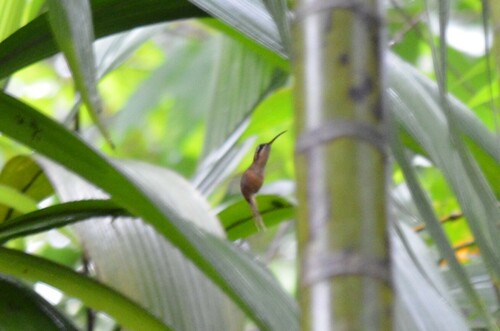
シマノドユミハチドリ (Phaethornis striigularis) シマノドユミハチドリ

メディア

読み込み中…

要点

シロハラユミハチドリとシマノドユミハチドリの最も信頼できるフィールドマークはサイズです:シロハラは明らかに大きくて重く、体が目に見えて長く、より頑丈な印象を与えます。近くで見ると、腹部も診断的です—シロハラユミハチドリは淡い灰色の腹部を示し、シマノドユミハチドリはバフ色の脇腹と腹部、灰褐色でしばしばかすかに縞模様の喉を持っています。くちばしの形と色はさらに手がかりを提供します:シロハラユミハチドリのオスはほぼ真っ直ぐなくちばしを持ち、シマノドユミハチドリは下顎の基部が黄色い長く湾曲したくちばしを持っています。幼鳥のシマノドユミハチドリは完全に淡い赤褐色の背中を持っており、これはシロハラでは見られない特徴です。両種は黒いマスクとバフ色の眉斑を共有していますが、全体的な印象と微妙な羽毛の違いが自信を持った識別の鍵となります。

識別のコツ

  1. Size is the first clue: If the bird appears large and robust for a hermit, favor Pale-bellied; if small and dainty, Stripe-throated is more likely.
  2. Juvenile back color: Any hermit with an entirely pale rufous back is a juvenile シマノドユミハチドリ—Pale-bellied never shows this.
  3. Underparts color: シロハラユミハチドリ has pale gray underparts, while シマノドユミハチドリ shows buff flanks and belly with a grayish-brown throat.
  4. Throat streaking: Look for small, dark streaks on the throat of シマノドユミハチドリ (though these can be faint); シロハラユミハチドリ's throat is mostly white and unstreaked.
  5. Face pattern: Both have a black mask and buffy supercilium, but Stripe-throated's malar and supercilium are whitish-buff, and the mask may appear more 'bandit-like.'
  6. Bill shape: Male Pale-bellied Hermits have an almost straight bill; シマノドユミハチドリ always has a long, decurved bill. Female Pale-bellied also has a decurved bill, so this is most useful for males.
  7. Bill color: シマノドユミハチドリ shows a yellow base to the lower mandible (otherwise black); Pale-bellied's bill is not described as bicolored.
  8. Tail pattern: シマノドユミハチドリ has a blackish tail with whitish to ochraceous tips; Pale-bellied's tail pattern is not highlighted as distinctive.
  9. Rump color: シマノドユミハチドリ has a pale rufous rump, which can be a useful field mark in good light; シロハラユミハチドリ does not.
  10. Jizz in flight: シロハラユミハチドリ appears heavier and more elongated in flight; Stripe-throated is quicker and more agile.
  11. Lekking and song: If you observe a hermit singing a high-pitched, squeaky, monotonous song at a lek, it's シマノドユミハチドリ.
  12. Geographic context: In Central America north of Panama, only Stripe-throated is expected; in Colombia and Panama, both occur but Stripe-throated is more widespread and common.
  13. Sex differences: Both species are sexually similar in plumage, but bill shape differences (straighter in male Pale-bellied) can help with sexed individuals.
  14. Subspecies variation: Some シロハラユミハチドリ subspecies (P. a. hyalinus) are more bluish green above and paler below, but this does not overlap with Stripe-throated's rufous and buff tones.
  15. When in doubt: Focus on overall size, underparts color, and bill shape/color for the most reliable separation in the field.

大きさ

シロハラユミハチドリは明らかに大きくて重いです:長さ約13 cm、質量5.9 g(オス4.5–5.5 g、メス4–5 g)。シマノドユミハチドリははるかに小さく、9–10 cmで、わずか2–3 gです。フィールドでは、シロハラはより頑丈で長く見え、シマノドは明らかに小柄で繊細です。このサイズのギャップは、特に地元のユミハチドリの典型的なサイズ範囲に慣れている場合、直接比較なしでもしばしば明らかです。

羽色

行動

両種は行動において典型的なユミハチドリであり、しばしば孤独で花の間をトラップラインで餌を探します。シマノドユミハチドリのオスはレックを形成し、メスを引き寄せるために歌いますが、この行動は資料ではシロハラユミハチドリには特に記載されていません。飛行中、シロハラユミハチドリはそのサイズのためにより重く、より直接的に見えることがありますが、シマノドはより敏捷で速く見える可能性が高く、その小さな体格に合っています。

生息環境

両種はコロンビアとパナマの重複する地域に生息していますが、シマノドユミハチドリは中米の北部にさらに広がり、一般的により広範囲にわたります。シロハラユミハチドリはコロンビア、パナマ、ベネズエラで見られます。両者は湿った森林地域に生息していますが、地元の豊富さや微小生息地の好みは異なる場合があります—シマノドは一般的にかなり普通であると記述されています。

声

シマノドユミハチドリのオスは高音でキュートな単調な歌を持ち、簡単に聞こえ、地理的に変化します。資料ではシロハラユミハチドリの声の記述は提供されていないため、声はシマノドの特徴的な歌に慣れていない限り、信頼できる識別子ではありません。

より良い説明を送る

比較と同じ項目を使ってください。文章はすぐに公開されます。

The most reliable field mark between Pale-bellied Hermit and Stripe-throated Hermit is size: Pale-bellied is distinctly larger and heavier, with a noticeably longer body and more robust jizz. In close views, the underparts are also diagnostic—Pale-bellied Hermit shows pale gray underparts, while Stripe-throated Hermit has buff flanks and belly with a grayish-brown, often faintly streaked throat. Bill shape and color provide further clues: Pale-bellied Hermit males have a nearly straight bill, while Stripe-throated Hermit has a long, decurved bill with a yellowish base to the lower mandible. Juvenile Stripe-throated Hermits are unique in having an entirely pale rufous back, a feature not seen in Pale-bellied. Both species share a black mask and buffy supercilium, but overall impression and subtle plumage differences are key for confident separation.

  1. Size is the first clue: If the bird appears large and robust for a hermit, favor Pale-bellied; if small and dainty, Stripe-throated is more likely.
  2. Juvenile back color: Any hermit with an entirely pale rufous back is a juvenile Stripe-throated Hermit—Pale-bellied never shows this.
  3. Underparts color: Pale-bellied Hermit has pale gray underparts, while Stripe-throated Hermit shows buff flanks and belly with a grayish-brown throat.
  4. Throat streaking: Look for small, dark streaks on the throat of Stripe-throated Hermit (though these can be faint); Pale-bellied Hermit's throat is mostly white and unstreaked.
  5. Face pattern: Both have a black mask and buffy supercilium, but Stripe-throated's malar and supercilium are whitish-buff, and the mask may appear more 'bandit-like.'
  6. Bill shape: Male Pale-bellied Hermits have an almost straight bill; Stripe-throated Hermit always has a long, decurved bill. Female Pale-bellied also has a decurved bill, so this is most useful for males.
  7. Bill color: Stripe-throated Hermit shows a yellow base to the lower mandible (otherwise black); Pale-bellied's bill is not described as bicolored.
  8. Tail pattern: Stripe-throated Hermit has a blackish tail with whitish to ochraceous tips; Pale-bellied's tail pattern is not highlighted as distinctive.
  9. Rump color: Stripe-throated Hermit has a pale rufous rump, which can be a useful field mark in good light; Pale-bellied Hermit does not.
  10. Jizz in flight: Pale-bellied Hermit appears heavier and more elongated in flight; Stripe-throated is quicker and more agile.
  11. Lekking and song: If you observe a hermit singing a high-pitched, squeaky, monotonous song at a lek, it's Stripe-throated Hermit.
  12. Geographic context: In Central America north of Panama, only Stripe-throated is expected; in Colombia and Panama, both occur but Stripe-throated is more widespread and common.
  13. Sex differences: Both species are sexually similar in plumage, but bill shape differences (straighter in male Pale-bellied) can help with sexed individuals.
  14. Subspecies variation: Some Pale-bellied Hermit subspecies (P. a. hyalinus) are more bluish green above and paler below, but this does not overlap with Stripe-throated's rufous and buff tones.
  15. When in doubt: Focus on overall size, underparts color, and bill shape/color for the most reliable separation in the field.

Pale-bellied Hermit is significantly larger and heavier: about 13 cm in length and 5.9 g in mass (males 4.5–5.5 g, females 4–5 g). Stripe-throated Hermit is much smaller, at 9–10 cm and only 2–3 g. In the field, Pale-bellied appears more robust and elongated, while Stripe-throated is noticeably petite and delicate. This size gap is often apparent even without direct comparison, especially if you are familiar with the typical size range of local hermits.

  • Juvenile/immature birds: Stripe-throated Hermit juveniles have an entirely pale rufous back, which is unique and not matched by Pale-bellied Hermit at any age. If you see a small hermit with a rufous back, it's Stripe-throated.
  • Adults: Pale-bellied Hermit has dark green to olive upperparts and light gray underparts. The face shows a black mask, buffy supercilium, and mostly white throat. Stripe-throated Hermit adults have dull iridescent green upperparts, a pale rufous rump, buff flanks and belly, and a pale grayish-brown throat with small, often faint dark streaks. The face pattern is similar (black mask, whitish-buff supercilium and malar), but the throat streaking (even if faint) and buffy underparts help separate Stripe-throated from the cleaner, paler Pale-bellied.
  • Tail: Stripe-throated Hermit has a blackish tail with whitish to ochraceous tips (depending on subspecies), while Pale-bellied Hermit's tail pattern is not described as distinctive in the sources.
  • Bill: Pale-bellied Hermit males have a nearly straight bill; Stripe-throated Hermit has a long, decurved bill with a yellow base to the lower mandible (otherwise black).

Both species are typical hermits in behavior, often solitary and feeding by trap-lining between flowers. Stripe-throated Hermit males form leks and sing to attract females, a behavior not specifically noted for Pale-bellied Hermit in the sources. In flight, Pale-bellied Hermit may appear heavier and more direct due to its size, while Stripe-throated is likely to seem more agile and quick, matching its smaller build.

Both species occur in overlapping regions of Colombia and Panama, but Stripe-throated Hermit ranges farther north into Central America and is generally more widespread. Pale-bellied Hermit is found in Colombia, Panama, and Venezuela. Both inhabit humid forested areas, but local abundance and microhabitat preferences may differ—Stripe-throated is described as generally fairly common.

Stripe-throated Hermit males have a high-pitched, squeaky, monotonous song, which is easily overheard and varies geographically. No vocal description is provided for Pale-bellied Hermit in the sources, so voice is not a reliable separator unless you are familiar with Stripe-throated's distinctive song.

変更を破棄しますか?

保存していない編集があります。今離れると失われます。

シロハラユミハチドリ · シマノドユミハチドリ · 苦手な鳥