

Pale-bellied Hermit vs Stripe-throated Hermit
Phaethornis anthophilus contro Phaethornis striigularis
Fai un quiz con Pale-bellied Hermit e Stripe-throated Hermit
 Pale-bellied Hermit
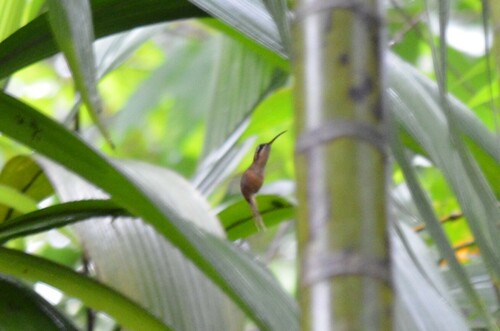 Stripe-throated Hermit
In breve
Il segno di campo più affidabile tra Pale-bellied Hermit e Stripe-throated Hermit è la dimensione: Pale-bellied è decisamente più grande e pesante, con un corpo visibilmente più lungo e una corporatura più robusta. In vista ravvicinata, le parti inferiori sono anche diagnostiche: Pale-bellied Hermit mostra parti inferiori grigio chiaro, mentre Stripe-throated Hermit ha fianchi e ventre color buff con una gola grigio-marrone, spesso leggermente striata. La forma e il colore del becco forniscono ulteriori indizi: i maschi di Pale-bellied Hermit hanno un becco quasi dritto, mentre Stripe-throated Hermit ha un becco lungo e curvato con una base giallastra per la mandibola inferiore. I giovani Stripe-throated Hermits sono unici per avere un dorso completamente rufous chiaro, una caratteristica non vista in Pale-bellied. Entrambe le specie condividono una maschera nera e un supercilium color buff, ma l'impressione generale e le sottili differenze nel piumaggio sono fondamentali per una separazione sicura.
Consigli di identificazione
- La dimensione è il primo indizio: Se l'uccello appare grande e robusto per un eremita, favorire Pale-bellied; se piccolo e delicato, Stripe-throated è più probabile.
- Colore del dorso dei giovani: Qualsiasi eremita con un dorso completamente rufous chiaro è un giovane Stripe-throated Hermit—Pale-bellied non mostra mai questo.
- Colore delle parti inferiori: Pale-bellied Hermit ha parti inferiori grigio chiaro, mentre Stripe-throated Hermit mostra fianchi e ventre color buff con una gola grigio-marrone.
- Striature sulla gola: Cerca piccole striature scure sulla gola di Stripe-throated Hermit (anche se queste possono essere deboli); la gola di Pale-bellied Hermit è per lo più bianca e senza striature.
- Schema del viso: Entrambi hanno una maschera nera e un supercilium color buff, ma il malar e il supercilium di Stripe-throated sono bianco-buff, e la maschera può apparire più 'da bandito'.
- Forma del becco: I maschi di Pale-bellied Hermits hanno un becco quasi dritto; Stripe-throated Hermit ha sempre un becco lungo e curvato. Anche la femmina di Pale-bellied ha un becco curvato, quindi questo è più utile per i maschi.
- Colore del becco: Stripe-throated Hermit mostra una base gialla per la mandibola inferiore (altrimenti nera); il becco di Pale-bellied non è descritto come bicolore.
- Schema della coda: Stripe-throated Hermit ha una coda nerastra con punte bianche a ocra; il pattern della coda di Pale-bellied non è evidenziato come distintivo.
- Colore del cuneo: Stripe-throated Hermit ha un cuneo rufous chiaro, che può essere un utile segno di campo in buona luce; Pale-bellied Hermit non lo ha.
- Jizz in volo: Pale-bellied Hermit appare più pesante e più allungato in volo; Stripe-throated è più veloce e più agile.
- Lekking e canto: Se osservi un eremita cantare un canto acuto, stridulo e monotono in un lek, è Stripe-throated Hermit.
- Contesto geografico: In America Centrale a nord di Panama, ci si aspetta solo Stripe-throated; in Colombia e Panama, entrambe le specie si trovano ma Stripe-throated è più diffuso e comune.
- Differenze sessuali: Entrambe le specie sono sessualmente simili nel piumaggio, ma le differenze nella forma del becco (più dritto nel maschio di Pale-bellied) possono aiutare con individui sessati.
- Variazione delle sottospecie: Alcune sottospecie di Pale-bellied Hermit (P. a. hyalinus) sono più bluastre sopra e più chiare sotto, ma questo non si sovrappone con le tonalità rufous e buff di Stripe-throated.
- Quando hai dubbi: Concentrati su dimensioni complessive, colore delle parti inferiori e forma/color del becco per la separazione più affidabile sul campo.
Taglia
Pale-bellied Hermit è significativamente più grande e pesante: circa 13 cm di lunghezza e 5.9 g di massa (maschi 4.5–5.5 g, femmine 4–5 g). Stripe-throated Hermit è molto più piccolo, a 9–10 cm e solo 2–3 g. Sul campo, Pale-bellied appare più robusto e allungato, mentre Stripe-throated è visibilmente piccolo e delicato. Questo divario di dimensioni è spesso evidente anche senza confronto diretto, specialmente se sei familiare con l'intervallo di dimensioni tipico degli eremiti locali.
Piumaggio
- Uccelli giovani/immaturi: I giovani Stripe-throated Hermit hanno un dorso completamente rufous chiaro, che è unico e non corrisponde a Pale-bellied Hermit a nessuna età. Se vedi un piccolo eremita con un dorso rufous, è Stripe-throated.
- Adulti: Pale-bellied Hermit ha parti superiori verde scuro a oliva e parti inferiori grigio chiaro. Il viso mostra una maschera nera, un supercilium color buff e una gola per lo più bianca. Gli adulti di Stripe-throated Hermit hanno parti superiori verde iridescente opaco, un cuneo rufous chiaro, fianchi e ventre color buff, e una gola grigio-marrone chiaro con piccole striature scure, spesso deboli. Il pattern del viso è simile (maschera nera, supercilium e malar bianco-buff), ma le striature sulla gola (anche se deboli) e le parti inferiori color buff aiutano a separare Stripe-throated dal più pulito e chiaro Pale-bellied.
- Coda: Stripe-throated Hermit ha una coda nerastra con punte bianche a ocra (a seconda della sottospecie), mentre il pattern della coda di Pale-bellied Hermit non è descritto come distintivo nelle fonti.
- Becco: I maschi di Pale-bellied Hermit hanno un becco quasi dritto; Stripe-throated Hermit ha un becco lungo e curvato con una base gialla per la mandibola inferiore (altrimenti nera).
Comportamento
Entrambe le specie sono tipici eremiti nel comportamento, spesso solitari e si nutrono passando da un fiore all'altro. I maschi di Stripe-throated Hermit formano lek e cantano per attrarre le femmine, un comportamento non specificamente notato per Pale-bellied Hermit nelle fonti. In volo, Pale-bellied Hermit può apparire più pesante e più diretto a causa della sua dimensione, mentre Stripe-throated è probabile che sembri più agile e veloce, corrispondendo alla sua corporatura più piccola.
Habitat
Entrambe le specie si trovano in regioni sovrapposte di Colombia e Panama, ma Stripe-throated Hermit si estende più a nord nell'America Centrale ed è generalmente più diffuso. Pale-bellied Hermit si trova in Colombia, Panama e Venezuela. Entrambi abitano aree forestali umide, ma l'abbondanza locale e le preferenze di microhabitat possono differire—Stripe-throated è descritto come generalmente abbastanza comune.
Voce
I maschi di Stripe-throated Hermit hanno un canto acuto, stridulo e monotono, che è facilmente udibile e varia geograficamente. Nessuna descrizione vocale è fornita per Pale-bellied Hermit nelle fonti, quindi la voce non è un separatore affidabile a meno che tu non sia familiare con il canto distintivo di Stripe-throated.
Pale-bellied Hermit · Stripe-throated Hermit · I miei uccelli difficili