

Motmot

シロハラユミハチドリ 対 ショウドウツバメ

Phaethornis anthophilus 対 Riparia riparia

シロハラユミハチドリとショウドウツバメのクイズ

シロハラユミハチドリ (Phaethornis anthophilus) シロハラユミハチドリ
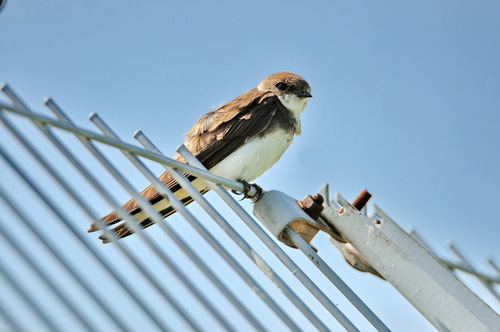
ショウドウツバメ (Riparia riparia) ショウドウツバメ

メディア

読み込み中…

要点

シロハラユミハチドリとショウドウツバメを区別する最も信頼できる方法は、構造によるものです:シロハラユミハチドリは中型のハチドリで、長く、ほぼまっすぐまたは下向きのくちばしと緑がかった上面を持っています。一方、ショウドウツバメは小型のツバメで、短い黒いくちばし、茶色の上面、特徴的な茶色の胸帯を持っています。幼鳥のショウドウツバメは翼の覆羽と二次羽に赤褐色の先端を示しますが、シロハラユミハチドリには決して存在しません。飛行中、ショウドウツバメの素早く、ぎこちないツバメの飛行と長く尖った翼は、シロハラユミハチドリのホバリングまたは急降下の飛行と強く対照的です。両種は長さは似ていますが、ショウドウツバメはより重く、がっしりとしています。生息地も強い手がかりです:ショウドウツバメは開けた水域や砂浜の上に見られ、シロハラユミハチドリは森林の縁や下層を好みます。

識別のコツ

  1. Bill shape: シロハラユミハチドリは常に長く、ほぼまっすぐ(オス)または下向き(メス)のくちばしを持っています;ショウドウツバメは短い黒い円錐形のくちばしを持っています。くちばしの形は遠くからでも見え、診断的です。
  2. Upperparts color: シロハラユミハチドリは上面が濃緑からオリーブグリーンです;ショウドウツバメは上面が単色の茶色です。どの年齢のショウドウツバメも緑がかった上面を示しません。
  3. Underparts color: シロハラユミハチドリは下部が明るい灰色です;ショウドウツバメは下部が白で、狭い茶色の胸帯があります。胸帯はシロハラユミハチドリには決して存在しません。
  4. Facial pattern: シロハラユミハチドリは大胆な黒いマスクと淡い眉斑、主に白い喉を持っています;ショウドウツバメは白い喉を持つ平坦な顔で、マスクや眉斑はありません。
  5. Juvenile wing pattern: 幼鳥のショウドウツバメは翼の覆羽と二次羽に赤褐色の先端を持っています;シロハラユミハチドリは翼に赤褐色を示しません。
  6. Flight style: ショウドウツバメは素早く、ぎこちない羽ばたきで飛び、しばしば群れで滑空します;シロハラユミハチドリは花の上でホバリングしたり、通常は一羽またはペアで植生の中を急降下します。
  7. Perched posture: ショウドウツバメはワイヤーや露出した枝に直立して止まります;シロハラユミハチドリは植生の中で低く止まり、しばしばくちばしを下向きにします。
  8. Size and bulk: ショウドウツバメは重く(11–16 g)翼が広いです;シロハラユミハチドリはスリムで軽い(約5.9 g)です。
  9. Tail shape: 詳細には説明されていませんが、ショウドウツバメは通常短く四角い尾を持っています;シロハラユミハチドリの尾は長く、段階的で、ハチドリに典型的です。
  10. Habitat: ショウドウツバメは開けた水域、砂浜、または野原の上に見られます;シロハラユミハチドリは森林の縁、開けた場所、または下層にいます。
  11. Group size: ショウドウツバメは飛行中に群れで見られることが多いです;シロハラユミハチドリは孤独またはペアでいます。
  12. Vocalization: ショウドウツバメは飛行中にざらざらしたツイッター音を出し、警戒時には厳しい警報音を出します;シロハラユミハチドリの声は記載されていないため、ショウドウツバメの鳴き声をポジティブな手がかりとして使用します。
  13. Sex differences: シロハラユミハチドリのメスはより下向きのくちばしを持っています;ショウドウツバメにはフィールドで見える強い性的二形はありません。
  14. Seasonal context: ショウドウツバメは渡り鳥で、渡りの際に大量に見られることがあります;シロハラユミハチドリはその範囲内に常駐しています。
  15. Common pitfalls: ショウドウツバメの茶色の背中と胸帯をシロハラユミハチドリのマスクと混同しないでください;シロハラユミハチドリの緑がかった上面と顔のパターンは、どの年齢のショウドウツバメとも一致しません。

大きさ

両種は長さは似ています(約13 cm)が、ショウドウツバメはシロハラユミハチドリ(約5.9 g)に比べてはるかに重い(11–16 g、時には渡り前に19.5 gまで)です。ショウドウツバメはまた、シロハラユミハチドリのよりコンパクトな体型に対して、はるかに長い翼幅(26.5–29 cm)を持っています。手に取ったり、良い視界で見ると、ショウドウツバメはがっしりとして翼が広いように見え、シロハラユミハチドリはスリムでより繊細です。

羽色

幼鳥のショウドウツバメは翼の覆羽と二次羽に赤褐色の先端を持っており、この特徴はどの年齢のシロハラユミハチドリにも見られません。成鳥のショウドウツバメは上面が茶色で、下面が白、狭い茶色の胸帯と白い喉を持っています;背中は単色の茶色です。シロハラユミハチドリは上面が濃緑からオリーブ色で、下面が明るい灰色で、黒い顔のマスク、淡い眉斑、主に白い喉を持っています。シロハラユミハチドリの上面は常に緑がかっており、決して茶色ではなく、下面は純白ではなく灰色です。ショウドウツバメの茶色の胸帯は重要な特徴であり、シロハラユミハチドリの顔のパターン(黒いマスク、淡い眉斑)は独特です。ショウドウツバメのどの年齢や性別も顔のマスクや緑がかった上面を示しません。シロハラユミハチドリの亜種はわずかに異なる色合い(例:より青みがかった緑や淡い下面)を示すことがありますが、常に緑/灰色のスペクトル内です。

行動

ショウドウツバメは非常に空中で活動的で、群れで見られることが多く、水面や開けた地面の上を素早く、ぎこちない羽ばたきで飛びます。彼らの飛行は直接的でツバメのようで、長い滑空と素早いターンを伴います。シロハラユミハチドリは通常、孤独またはゆるいペアで、花の上でホバリングしたり、森林の縁や下層を急降下します。彼らの飛行はよりフラッターし、頻繁にホバリングを伴います。止まっているとき、ショウドウツバメはワイヤーや枝に直立して止まり、シロハラユミハチドリは植生の中で低く止まり、しばしばくちばしを下向きにします。

生息環境

ショウドウツバメは川、湖、または海岸近くの砂浜にコロニーを作って繁殖し、開けた水域や野原の上を飛んでいるのがよく見られます。彼らは密な森林や深い下層ではめったに見られません。シロハラユミハチドリはコロンビア、パナマ、ベネズエラの森林の縁、開けた場所、下層に見られ、開けた水域や砂浜とは関連していません。もし花がたくさんある密で陰のある場所で鳥を見たら、それはほぼ確実にシロハラユミハチドリです;開けた水域や砂浜のコロニーの上にいる場合、それはショウドウツバメです。

声

ショウドウツバメは飛行中に連続したざらざらしたツイッター音を出し、止まっているときには会話のようなトーンで鳴き、警戒時には厳しい警報音を出します。シロハラユミハチドリの鳴き声は提供されたメモには記載されていないため、声はショウドウツバメのツイッター音や警報を聞いた場合のみ診断的です。

より良い説明を送る

比較と同じ項目を使ってください。文章はすぐに公開されます。

The most reliable way to separate Pale-bellied Hermit from Sand Martin is by structure: the hermit is a medium-sized hummingbird with a long, nearly straight or decurved bill and greenish upperparts, while the sand martin is a small swallow with a short, black bill, brown upperparts, and a distinctive brown breast band. Juvenile sand martins show rufous tips to their wing coverts and secondaries, which are never present on hermits. In flight, the sand martin's quick, jerky swallow flight and long, pointed wings contrast strongly with the hovering or darting flight of the hermit. Both species are similar in length, but the sand martin is heavier and bulkier. Habitat is also a strong clue: sand martins are found over open water or sandy banks, while pale-bellied hermits frequent forest edges and understory.

  1. Bill shape: Pale-bellied hermit always has a long, nearly straight (male) or decurved (female) bill; sand martin has a short, black, conical bill. Bill shape is visible even at a distance and is diagnostic.
  2. Upperparts color: Hermit is dark green to olive green above; sand martin is plain brown above. No sand martin shows greenish upperparts at any age.
  3. Underparts color: Hermit has light gray underparts; sand martin is white below with a narrow brown breast band. The breast band is never present on hermit.
  4. Facial pattern: Hermit has a bold black mask with a buffy supercilium and mostly white throat; sand martin has a plain face with a white throat and no mask or supercilium.
  5. Juvenile wing pattern: Juvenile sand martins have rufous tips to wing coverts and secondaries; hermits never show rufous in the wing.
  6. Flight style: Sand martin flies with quick, jerky wingbeats and glides, often in groups; hermit hovers at flowers or darts through vegetation, usually alone or in pairs.
  7. Perched posture: Sand martin perches upright on wires or exposed branches; hermit perches low in vegetation, often with bill angled down.
  8. Size and bulk: Sand martin is heavier (11–16 g) and broader-winged; hermit is slimmer and lighter (about 5.9 g).
  9. Tail shape: Not described in detail, but sand martin typically has a short, square tail; hermit’s tail is longer and may be graduated, typical of hermits.
  10. Habitat: Sand martin is found over open water, sand banks, or fields; hermit is in forest edge, clearings, or understory.
  11. Group size: Sand martins are often in flocks, especially in flight; hermits are solitary or in pairs.
  12. Vocalization: Sand martin gives a gravelly twitter in flight and a harsh alarm; hermit’s voice is not described, so use sand martin’s call as a positive clue.
  13. Sex differences: Hermit females have a more decurved bill; no strong sexual dimorphism in sand martin visible in the field.
  14. Seasonal context: Sand martins are migratory and may be seen in large numbers during migration; hermits are resident in their range.
  15. Common pitfalls: Do not confuse the sand martin’s brown back and breast band for a hermit’s mask; the hermit’s greenish upperparts and facial pattern are never matched by sand martin at any age.

Both species are similar in length (about 13 cm), but the sand martin is much heavier (11–16 g, sometimes up to 19.5 g before migration) compared to the pale-bellied hermit (about 5.9 g). The sand martin also has a much longer wingspan (26.5–29 cm) versus the hermit's more compact build. In the hand or with a good view, the sand martin will appear stockier and broader-winged, while the hermit is slimmer and more delicate.

Juvenile sand martins have rufous tips to their wing coverts and margins to the secondaries, a feature never seen on pale-bellied hermit of any age. Adult sand martins are brown above and white below, with a narrow brown breast band and a white throat; their back is plain brown. Pale-bellied hermits have dark green to olive upperparts and light gray underparts, with a black facial mask, buffy supercilium, and mostly white throat. The hermit’s upperparts are always greenish, never brown, and the underparts are gray rather than pure white. The sand martin’s brown breast band is a key mark, while the hermit’s face pattern (black mask, buffy supercilium) is unique. No age or sex of sand martin shows a facial mask or greenish upperparts. Subspecies of hermit may show slightly different tones (e.g., more bluish green or paler underparts), but always within the green/gray spectrum.

Sand martins are highly aerial, often seen in groups, flying rapidly and with quick, jerky wingbeats over water or open ground. Their flight is direct and swallow-like, with long glides and rapid turns. Pale-bellied hermits are typically solitary or in loose pairs, hovering at flowers or darting through forest edges and understory. Their flight is more fluttery and involves frequent hovering. Perched, the sand martin sits upright on wires or branches, while the hermit perches low in vegetation, often with the bill angled downward.

Sand martins breed in colonies in sandy banks near rivers, lakes, or coasts, and are often seen flying over open water or fields. They are rarely found in dense forest or deep understory. Pale-bellied hermits are found in forest edges, clearings, and understory in Colombia, Panama, and Venezuela, and are not associated with open water or sand banks. If you see the bird in a dense, shady area with lots of flowers, it is almost certainly a hermit; if over open water or in a colony on a sandy bank, it is a sand martin.

Sand martins give a continuous gravelly twittering in flight and a conversational undertone when perched, with a harsh alarm call when alarmed. Pale-bellied hermit vocalizations are not described in the provided notes, so voice is only diagnostic if you hear the sand martin’s twittering or alarm.

変更を破棄しますか?

保存していない編集があります。今離れると失われます。

シロハラユミハチドリ · ショウドウツバメ · 苦手な鳥